
Seeing an elephant family, a black rhino or a secretarybird on safari can be a highlight of your journey. What is less obvious is that animals encountered in protected areas may still face serious threats across their wider range.
Some endangered species remain relatively visible in particular parks. Others require a carefully planned trip to a specific region, and even then a sighting is uncertain. A successful encounter does not mean the species is secure.
This guide introduces 10 endangered animals you might see on safari, explains where to consider looking for them and shows how to plan respectful wildlife viewing in 2027 or 2028.
For travellers exploring Tanzania with Eddy Tours & Safaris, the list includes animals that may be encountered on conventional game drives, alongside species requiring forest trekking or a separate East Africa itinerary.
Conservation-status note: This article includes animals assessed as Endangered or Critically Endangered. The categories below reflect published assessments available when preparing the guide; they are not predictions of future 2027–2028 assessments.
What Does “Endangered” Mean?
The IUCN Red List assesses extinction risk using defined criteria.
Endangered and Critically Endangered are different categories. Critically Endangered indicates a higher level of extinction risk.
A global assessment also differs from the condition of one local population. You may see many elephants in a well-protected park while the species faces declines elsewhere.
This distinction explains why an animal can feel familiar on safari and still need substantial conservation work.
Ten Animals at a Glance
| Animal | Published global status | Safari planning focus |
|---|---|---|
| African savanna elephant | Endangered | Suitable savannah parks |
| Black rhinoceros | Critically Endangered | Protected rhino areas |
| African wild dog | Endangered | Areas with current pack activity |
| Grevy’s zebra | Endangered | Northern Kenya |
| Chimpanzee | Endangered | Guided forest trekking |
| Mountain gorilla | Endangered, at subspecies level | Permit-based trekking in Uganda or Rwanda |
| Grey crowned crane | Endangered | Wetlands and nearby grasslands |
| Secretarybird | Endangered | Open savannah |
| White-backed vulture | Critically Endangered | Savannah wildlife areas |
| Lappet-faced vulture | Endangered | Open-country wildlife areas |
These animals are not all found on one standard Tanzania safari. The locations and activities required are part of choosing a suitable itinerary.
1. African Savanna Elephant
Scientific name: Loxodonta africana
Conservation status: Endangered
Elephants can be conspicuous in suitable safari areas, but local visibility should not be confused with continental security.
IUCN recognises African savanna elephants and African forest elephants as separate species. Its assessment lists the savanna elephant as Endangered and the forest elephant as Critically Endangered, following declines linked to ivory poaching and habitat loss.
Where to Consider Looking
Tarangire is worth discussing for a Tanzania itinerary with a strong elephant interest. In Kenya, Amboseli is another option associated with elephant viewing.
Choose enough time in the relevant park rather than relying on one short drive.
How to Watch Responsibly
Allow elephants space, especially when young animals are present.
Do not ask your driver to approach between members of a family group or block their route. Watching feeding, movement and interactions from a suitable distance is often more rewarding than pushing for a close photograph.
2. Black Rhinoceros
Scientific name: Diceros bicornis
Conservation status: Critically Endangered
Black rhinos are among the most significant wildlife encounters many safari travellers hope for.
They face severe pressure from poaching and require sustained protection. Their conservation status is distinct from that of white rhinos, so a general reference to “rhinos” can obscure important differences.
Where to Consider Looking
Ngorongoro Crater is an option to discuss in Tanzania. Kenya offers protected rhino areas such as Ol Pejeta and Lake Nakuru.
No location guarantees a sighting. Animals may be distant, concealed or outside the areas accessible during your visit.
What Makes the Encounter Special?
Take time to observe rather than focusing only on proximity.
Binoculars help when animals remain far from the road. Follow your guide’s instructions and respect restrictions around protected rhino areas.
3. African Wild Dog
Scientific name: Lycaon pictus
Conservation status: Endangered
African wild dogs are social predators with distinctive coat patterns and rounded ears.
Their movements can make them difficult to locate. A pack seen recently may be far away by the time your safari begins.
The IUCN’s 2025 assessment retains the species as Endangered.
Where to Consider Looking
For Tanzania, discuss Nyerere National Park and current local pack activity. Tanzania National Parks identifies wild dogs among the species protected there.
Wild-dog-focused travel benefits from recent guiding knowledge and several nights in a suitable area.
Planning Advice
Tell your operator if wild dogs are a major priority.
Ask how the proposed camp and daily route support that interest. Avoid accepting a promise based solely on an old photograph or a previous guest’s sighting.
Do not pressure a guide to pursue animals beyond permitted routes.
4. Grevy’s Zebra
Scientific name: Equus grevyi
Conservation status: Endangered
Grevy’s zebra is different from the plains zebra commonly seen on many East African safaris.
Its narrow stripes, large rounded ears and pale belly help distinguish it, although a guide’s explanation is useful when identifying animals in the field.
Where to Consider Looking
Northern Kenya is the relevant planning region, including suitable areas around Samburu and other parts of the species’ range.
Grevy’s Zebra Trust works with communities across northern Kenya to conserve the endangered species. Its work highlights why conservation extends beyond the boundaries of individual reserves.
Why Route Choice Matters
A conventional Serengeti safari should not be sold as a Grevy’s zebra trip.
If the species is important to you, request a Kenya route that specifically considers its range and recent observations.
Learn more through Grevy’s Zebra Trust.
5. Chimpanzee
Scientific name: Pan troglodytes
Conservation status: Endangered
Chimpanzee viewing is a forest experience rather than a standard savannah game drive.
The species is assessed as Endangered, although some subspecies have a higher threat category. The western chimpanzee, for example, is classified as Critically Endangered.
Where to Consider Looking
In Tanzania, Gombe and Mahale are established destinations for guided chimpanzee trekking. Tanzania National Parks describes habituated communities and guided viewing in these forest settings.
These destinations need their own access and accommodation planning. They are not simple additions to a short northern road safari.
Prepare for Walking
Trek duration and difficulty depend on where the chimpanzees are found.
Discuss your walking ability before booking. Follow instructions about distance, group behaviour and illness, since responsible viewing includes protecting the animals’ health.
Read more about Mahale Mountains National Park.
6. Mountain Gorilla
Scientific name: Gorilla beringei beringei
Conservation status: Endangered subspecies
Mountain gorillas require a specialist trekking itinerary.
They are a subspecies of the eastern gorilla. The subspecies’ Endangered classification should not be confused with the broader eastern gorilla species assessment.
IUCN moved mountain gorillas from Critically Endangered to Endangered in 2018 following conservation progress. That improvement reflects sustained protection, not the disappearance of threats.
Where to Consider Looking
For East Africa travel, discuss permit-based trekking in Uganda or Rwanda.
This is not an activity available within Tanzania’s Serengeti or Ngorongoro safari circuit.
Booking Considerations
Confirm the destination, permit availability, walking requirements and applicable visitor rules before booking flights.
Follow ranger instructions throughout the visit. If you are unwell, inform the operator rather than trying to conceal symptoms.
A Tanzania–gorilla trekking holiday needs clear transport connections and responsibility for each country’s arrangements.
7. Grey Crowned Crane
Scientific name: Balearica regulorum
Conservation status: Endangered
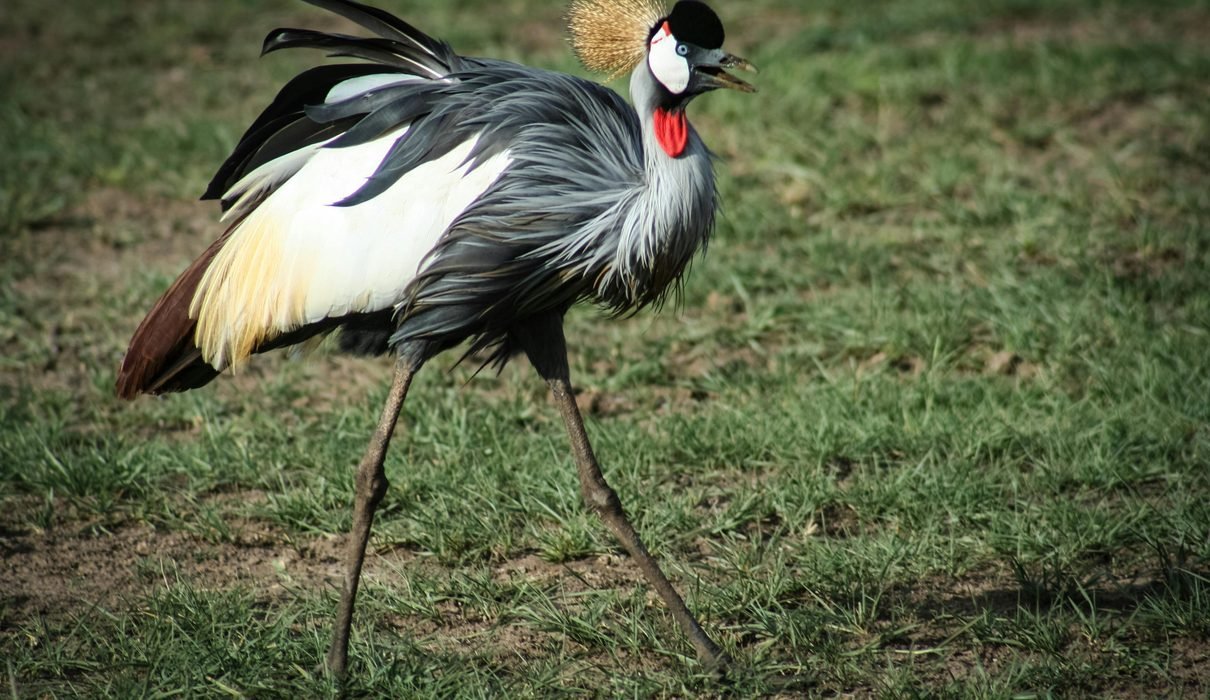
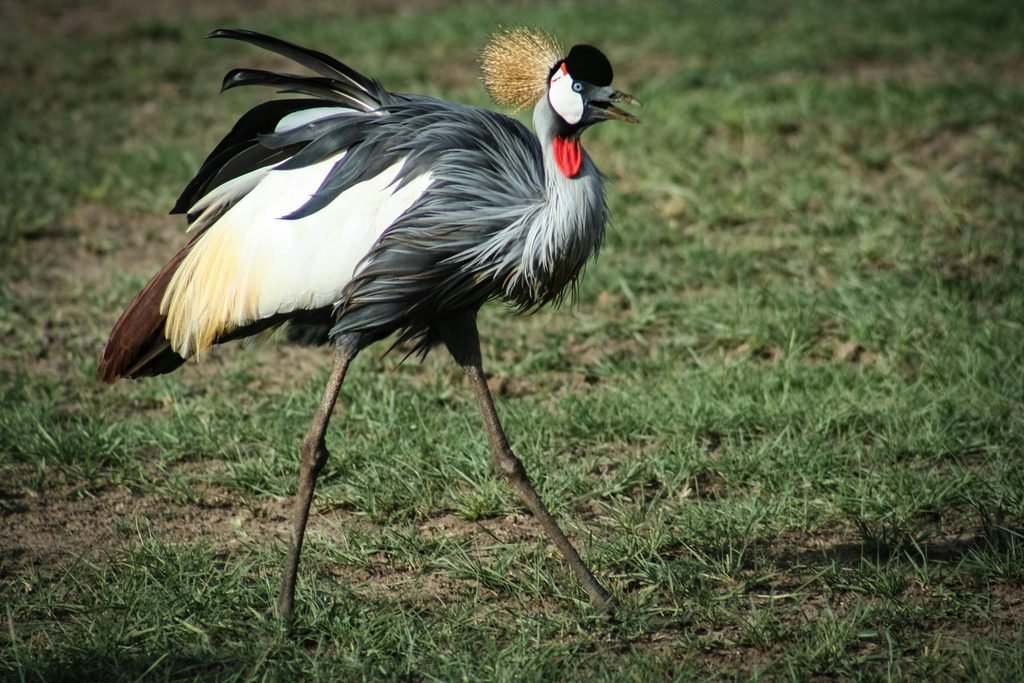
The grey crowned crane is recognisable by its golden crown and striking plumage.
Its appearance can make it a favourite with photographers, yet wetland loss and illegal capture have contributed to serious declines. BirdLife’s assessment identifies it as Endangered.
Where to Consider Looking
Discuss suitable wetlands and adjacent grasslands along your East Africa route. Ngorongoro’s habitats can form part of a Tanzania birdwatching itinerary, depending on conditions.
A bird-focused drive should allow time to scan marshes and open ground, rather than treating birds as brief stops between mammal sightings.
Viewing Advice
Avoid approaching nesting birds or asking a guide to make them fly for a photograph.
Binoculars and a longer camera lens help you observe without changing their behaviour.
8. Secretarybird
Scientific name: Sagittarius serpentarius
Conservation status: Endangered
Secretarybirds spend much of their time walking through open country, searching the ground for prey.
Their long legs and upright posture make them memorable safari birds. However, their wide distribution does not mean populations are secure.
BirdLife identifies the secretarybird as globally Endangered, with habitat deterioration among the major concerns.
Where to Consider Looking
Open savannah destinations such as Serengeti and the Maasai Mara are areas to discuss with your guide.
Look across the grassland as well as into trees and the sky. A walking bird can be overlooked when attention is focused on distant mammals.
Make Time for Birds
Tell your guide that raptors interest you.
A patient stop can reveal hunting behaviour and movement that a passing photograph misses.
9. White-Backed Vulture
Scientific name: Gyps africanus
Conservation status: Critically Endangered
White-backed vultures are important scavengers, helping process carcasses in safari ecosystems.
They may be seen soaring, resting or feeding, but their presence at a sighting should not hide the severity of their wider decline.
BirdLife identifies white-backed vultures as Critically Endangered and highlights poisoning as a major conservation problem affecting African vultures.
Where to Consider Looking
Suitable savannah areas in Tanzania and Kenya may provide opportunities, including parts of the Serengeti–Mara ecosystem.
Identification can be challenging, particularly among mixed groups. Ask your guide to explain the features rather than assuming every large vulture is the same species.
Respect Feeding Birds
Keep an appropriate distance from a carcass and avoid repeatedly disturbing birds.
Observe from permitted positions and allow feeding activity to continue naturally.
10. Lappet-Faced Vulture
Scientific name: Torgos tracheliotos
Conservation status: Endangered
The lappet-faced vulture is a large scavenger with a powerful bill and distinctive head.
It shares several pressures affecting other African vultures, including poisoning and habitat changes. BirdLife lists it as Endangered, a different category from the Critically Endangered white-backed vulture.
Where to Consider Looking
Discuss suitable open-country habitats with your guide.
These vultures may be encountered during a broader safari, but a sighting cannot be assumed from visiting a particular park.
Why Identification Matters
Understanding which species you see makes the experience more meaningful.
A guide can help compare head shape, size and plumage with other vultures. A distant observation through binoculars may reveal more than a hurried close-up.
Learn about regional conservation through BirdLife International.
Can You See All Ten on One Safari?
Not on a conventional short Tanzania itinerary.
The list brings together animals from different habitats and regions:
| Safari interest | Planning approach |
|---|---|
| Savanna elephants, rhinos and threatened birds | Suitable Tanzania or Kenya wildlife route |
| African wild dogs | A route informed by current pack activity |
| Grevy’s zebra | Northern Kenya itinerary |
| Chimpanzees | Dedicated forest trekking arrangements |
| Mountain gorillas | Uganda or Rwanda permit-based extension |
Trying to include every species can create an expensive, rushed journey.
Choose a few priorities and build enough time around them. Let other sightings add variety rather than expecting the operator to complete a checklist.
How Your Safari Choices Can Help
Respect Wildlife Space
Follow local rules and your guide’s instructions.
Do not crowd animals, block their movement or disturb nests for photographs.
Ask About Conservation Claims
If a camp promotes conservation work, ask what it supports.
Clear information about partnerships, fees and projects is more useful than a general promise that every stay “saves wildlife.”
Avoid Wildlife Products
Do not purchase items made from protected wildlife.
Be cautious about encounters that encourage handling, feeding or posing with animals without a clear, legitimate conservation purpose.
Include Local People
Ask how community visits are organised and how hosts participate.
Respect photography preferences and avoid treating people as part of a wildlife display.
Planning for 2027–2028
Conservation assessments, access arrangements and visitor rules can change.
Before booking, confirm current information about your main target species and the relevant destination.
Send your operator:
- Preferred dates.
- Available travel days.
- Group size.
- Main wildlife interests.
- Accommodation budget.
- Walking ability for trekking activities.
- Photography requirements.
Ask which sightings are realistic opportunities and which would be unusual.
A clear answer is more useful than a guarantee.
Frequently Asked Questions
Does endangered mean an animal is rarely seen?
Not necessarily. Some species remain visible in protected areas while facing serious declines across their wider range.
Are all African elephants in the same category?
No. IUCN assesses savanna and forest elephants separately.
Are plains zebras and Grevy’s zebras the same?
No. They are different species, and a common plains-zebra sighting does not count as a Grevy’s zebra encounter.
Are mountain gorillas found in Tanzania?
No. A Tanzania holiday needs a separate regional extension for mountain-gorilla trekking.
Why include birds?
Birds are animals, and several species seen on safari face severe conservation threats.
Can an operator guarantee these sightings?
No. Wildlife movements, conditions and access affect what can be seen.
Plan a Thoughtful Wildlife Safari
A rewarding safari combines realistic expectations with time to observe the animals present.
For a Tanzania safari in 2027 or 2028, tell Eddy Tours & Safaris which species and habitats interest you. Our team can discuss a suitable route and confirm the arrangements needed for any specialist extension.
Explore our Tanzania safari options, or contact Eddy Tours & Safaris for a personalised proposal.
Website: eddytours-safaris.com
Email: eddytoursandsafaris@gmail.com
Sales: sales@eddytours-safaris.com
Phone and WhatsApp: +255 711 906 664