
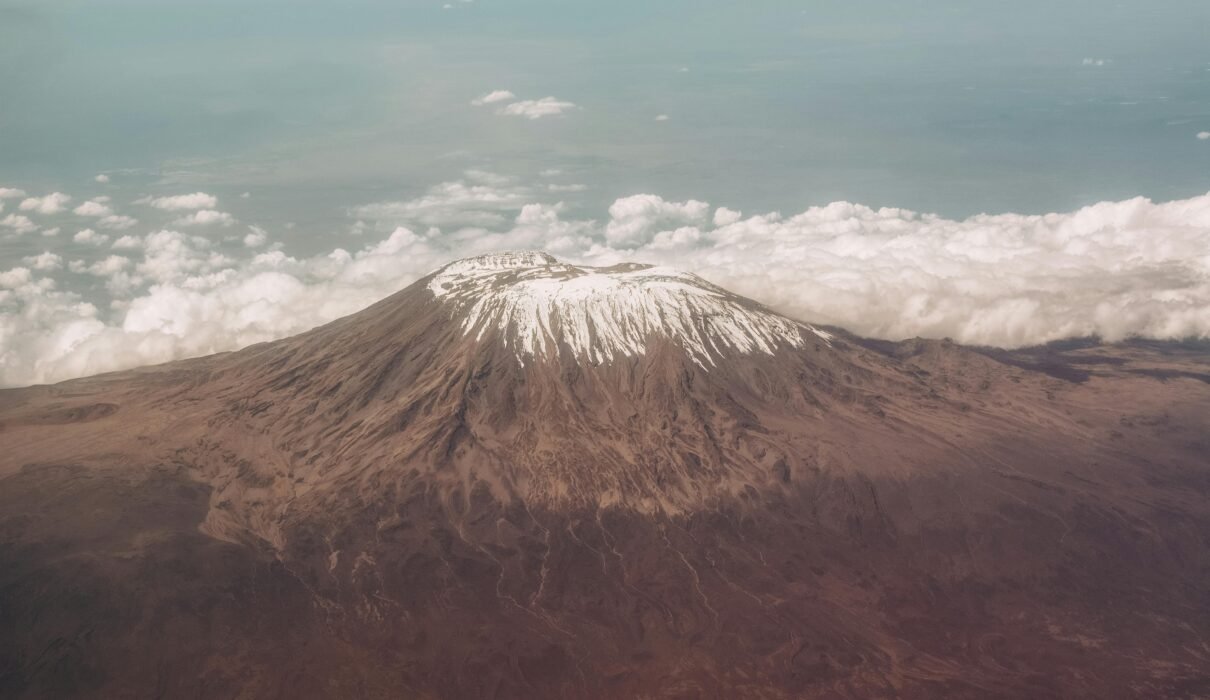
15 Amazing Facts About Mount Kilimanjaro reveal far more than a beautiful snow-capped peak rising above the plains of northern Tanzania. This mountain is a living laboratory of climate science, geology, ecology and human endurance, and it continues to attract researchers, conservationists and travelers from around the world who want to understand how nature, culture and science meet on a single, powerful landscape.
This article explores the most fascinating and reliable facts about the mountain using trusted scientific and conservation sources. If you are planning your journey with a professional local operator such as Eddy Tours & Safaris, knowing these facts will help you appreciate Kilimanjaro beyond the photos and understand why responsible travel plays such an important role in protecting this iconic place.
15 Amazing Facts About Mount Kilimanjaro – geology, landforms and natural history
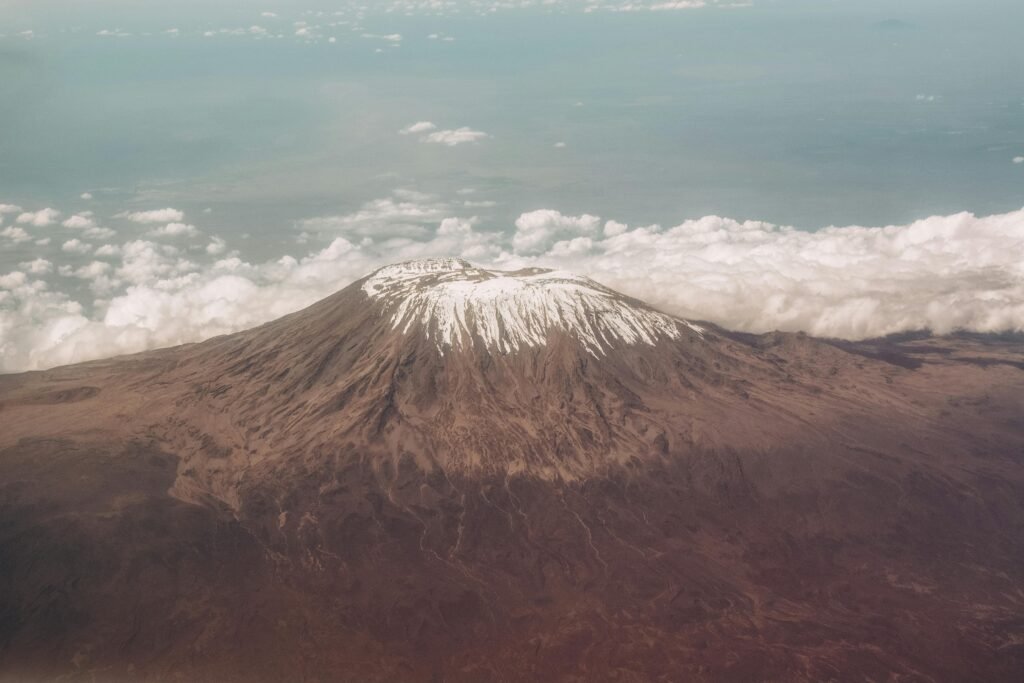
Fact 1. One of the most surprising points in the story of 15 Amazing Facts About Mount Kilimanjaro is that the mountain is not a single volcano. It is a massive volcanic complex made of three main cones. Geological research published by the United States Geological Survey explains how Kibo, Mawenzi and Shira formed through different volcanic phases that shaped the present landscape.
Fact 2. Kilimanjaro is classified as a stratovolcano, meaning it was built by layers of lava, ash and volcanic debris. This structure is studied globally through earth science platforms such as Frontiers in Earth Science and academic research distributed by ScienceDirect, helping scientists understand how large volcanic mountains evolve over time.
Fact 3. The crater and summit landscape continue to change through erosion and weathering. Long-term land monitoring projects supported by the USGS Land Change Program show how wind, temperature variation and rainfall reshape high-altitude rock formations every year.
Fact 4. Kilimanjaro is one of the best known isolated mountains in the world. Climate and atmospheric scientists from NASA Climate explain that isolated high mountains strongly influence local weather patterns, cloud formation and air circulation around their slopes.
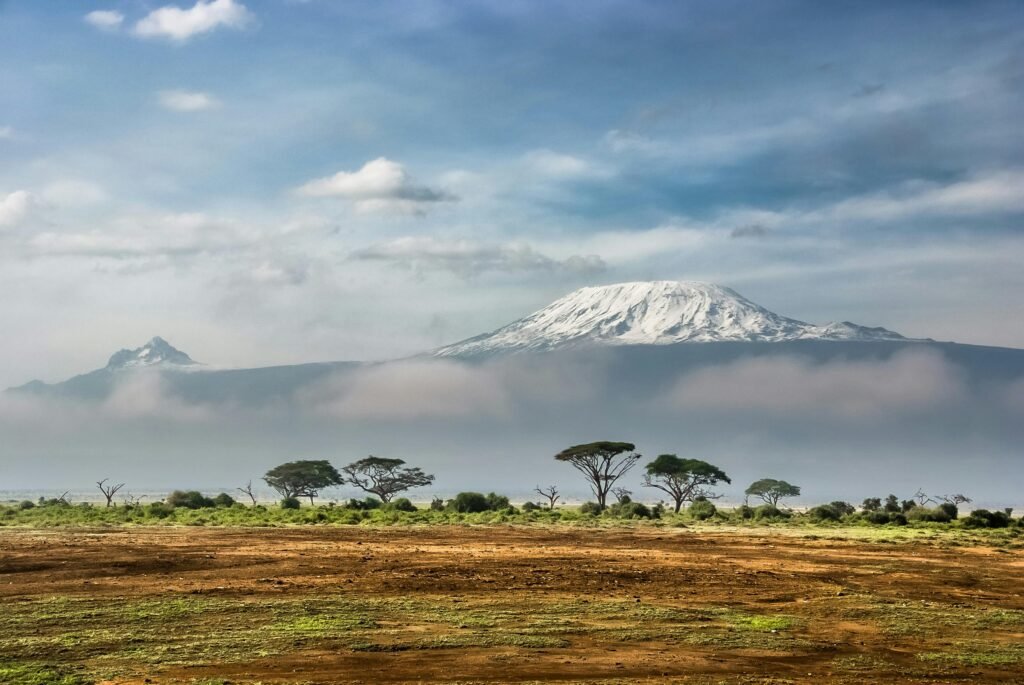
Fact 5. The mountain rises from savannah to alpine desert and glacial zones within a short horizontal distance. This dramatic ecological gradient is frequently used in environmental education by the United Nations Environment Programme as an example of how climate controls ecosystems across altitude.
15 Amazing Facts About Mount Kilimanjaro – climate, glaciers and environmental change
Fact 6. A central theme in 15 Amazing Facts About Mount Kilimanjaro is the famous ice fields near the summit. Scientific assessments produced by the Intergovernmental Panel on Climate Change and climate studies shared by NASA show that tropical glaciers are extremely sensitive to small temperature and humidity changes.
Fact 7. Kilimanjaro’s glaciers are among the most studied in Africa. Long-term monitoring and environmental reporting supported by the UN Environment Programme and conservation science promoted by the International Union for Conservation of Nature use the mountain as a reference site for climate impact research.
Fact 8. High-altitude vegetation zones around Kilimanjaro are extremely fragile. Conservation organizations such as the World Wide Fund for Nature and the Conservation International warn that small disturbances in alpine ecosystems can take decades to recover.
Fact 9. Kilimanjaro forms part of wider East African ecological systems that support wildlife movement and water regulation. Regional conservation work led by the African Wildlife Foundation and the Wildlife Conservation Society shows how mountain landscapes contribute to biodiversity protection far beyond their immediate boundaries.
Fact 10. The mountain’s forests help regulate water availability for nearby communities and ecosystems. Forest and land-use research promoted by the Food and Agriculture Organization of the United Nations highlights the importance of montane forests in stabilizing soils and supporting downstream agriculture.
15 Amazing Facts About Mount Kilimanjaro – human science, culture and conservation value
Fact 11. In the collection of 15 Amazing Facts About Mount Kilimanjaro, one of the most important is how the mountain is used in high-altitude health research. Medical guidance from the Centers for Disease Control and Prevention and scientific work promoted by the International Society for Mountain Medicine help explain how the human body adapts to reduced oxygen.
Fact 12. Clinical and physiological studies available through PubMed and research resources from Johns Hopkins Medicine often use Kilimanjaro as a natural setting to study acclimatization, hydration and fatigue at altitude.
Fact 13. Kilimanjaro is also an important outdoor classroom for environmental education. Learning frameworks promoted by UNESCO and academic field research supported by Harvard University research programmes highlight the value of protected landscapes for global education.
Fact 14. Responsible tourism around Kilimanjaro supports community livelihoods and conservation. Labour and fair-employment standards promoted by the International Labour Organization and social development initiatives led by Oxfam International show how ethical operations improve safety and long-term sustainability.
Fact 15. Kilimanjaro is increasingly important for international research cooperation. Scientific collaboration and open research platforms such as Nature Research and interdisciplinary studies published through Frontiers Journals depend on responsible access to sensitive high-altitude environments.
For travelers who want to experience these extraordinary landscapes respectfully, professional safari and mountain programs designed by Tanzania travel specialists help connect visitors to the science, culture and conservation story behind the mountain.
Many climbers combine their wildlife journey with a carefully planned mountain adventure through responsible Kilimanjaro climbing programs, ensuring safety, ethical operations and environmental care from start to finish.
If you would like to build a trip that reflects the real meaning behind 15 Amazing Facts About Mount Kilimanjaro, you can speak directly with local professionals using personal travel consultation support. Local knowledge helps you experience the mountain in a way that respects science, communities and the fragile environment that makes Kilimanjaro so special.
Understanding 15 Amazing Facts About Mount Kilimanjaro transforms your visit from a simple adventure into a deeper connection with one of the most scientifically and environmentally important mountains on Earth. Every step on the trail becomes part of a much larger story of climate change, conservation and human responsibility.