
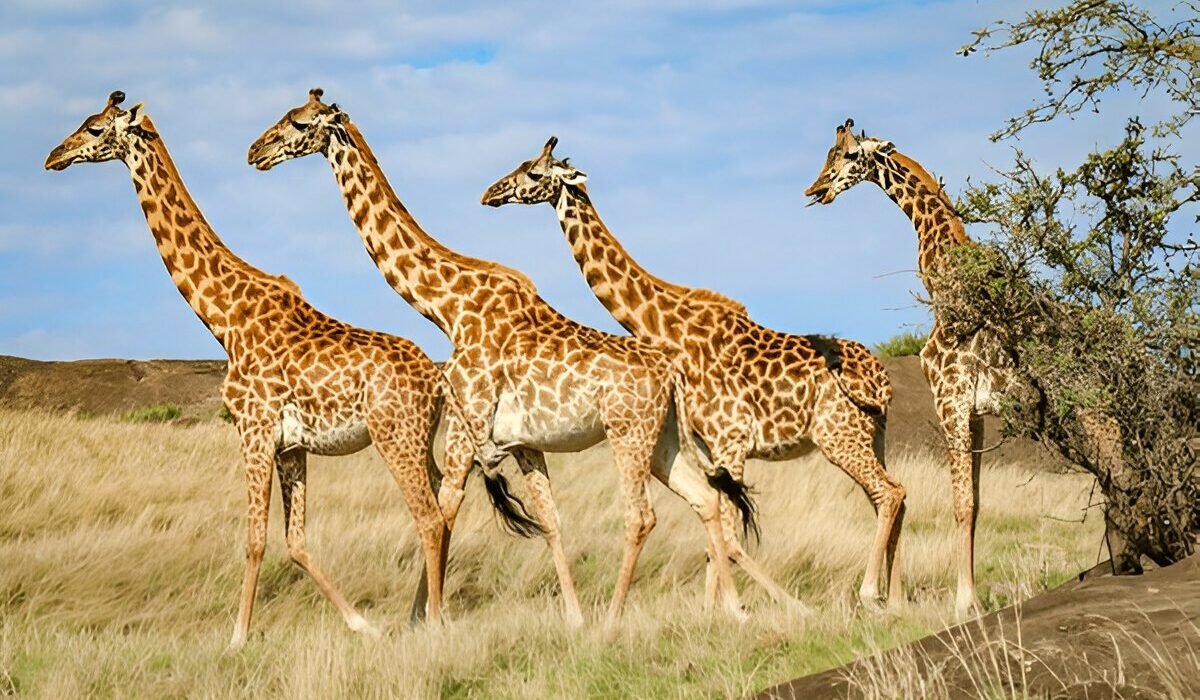
This 4-day Tanzania joining group safari is a focused Northern Circuit adventure for travellers who want to share a safari vehicle, keep costs practical and still visit three of the country’s most rewarding wildlife areas: Tarangire National Park, Serengeti National Park and the Ngorongoro Crater. It is ideal for solo travellers, couples and friends who want the atmosphere of a small group departure without losing the quality of a professional guide, reliable 4×4 vehicle and well-planned route.
Four days is a short safari, so the itinerary must be honest about driving time. You will travel from Arusha to Tarangire, continue through the Ngorongoro highlands to Central Serengeti, then return through the crater on the final day. The reward is a strong cross-section of Tanzania: elephant country and baobabs, wide Serengeti plains and a full game drive in the volcanic Ngorongoro caldera.
Safari at a glance
- Duration: 4 days / 3 nights
- Start and finish: Arusha
- Destinations: Tarangire, Central Serengeti and Ngorongoro Crater
- Style: Joining group departure; private safari available on request
- Vehicle: 4×4 Land Cruiser with pop-up roof
- Accommodation: Budget camping or lodge/tented camp upgrade, depending on the confirmed departure
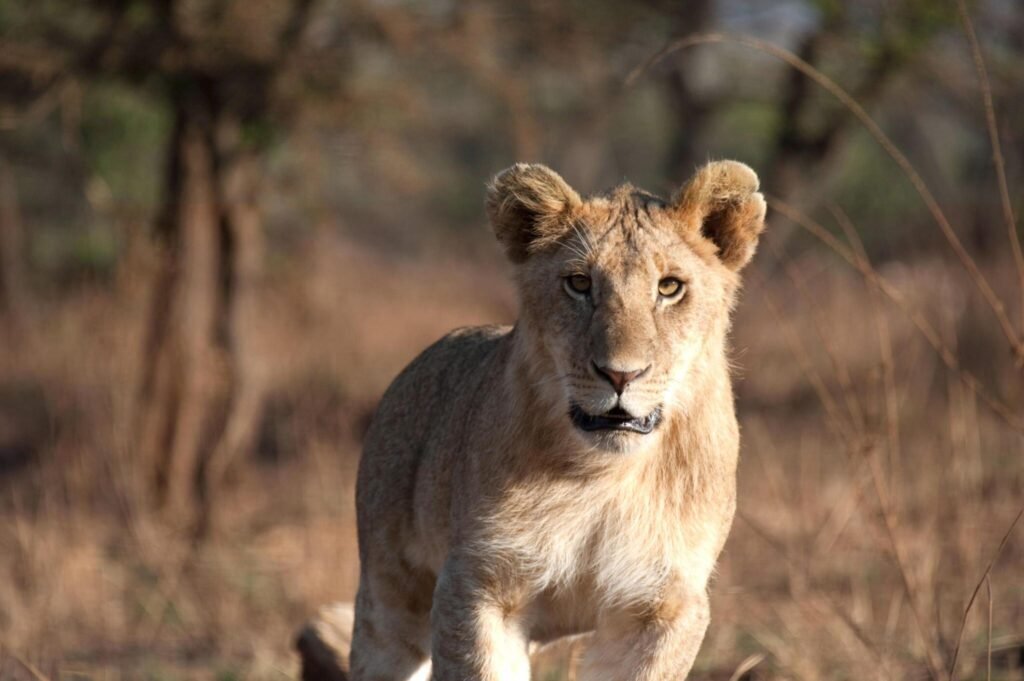
What does a joining group safari mean?
On a joining group safari, guests from different bookings share the same safari vehicle, driver-guide and itinerary. It is an economical way to visit Tanzania’s parks and can be particularly good for a solo traveller who does not want to pay for a whole vehicle. The safari is shared, so every guest should be ready on time and respect the guide’s plan for meal stops and game drives.
It is different from a private safari. A private booking gives one party exclusive use of the vehicle and greater freedom to change the pace. This group itinerary follows a fixed route, but the guide still looks for wildlife carefully and makes sensible adjustments according to weather, road conditions and animal movement. Confirm current departure dates, group size, accommodation category and price before booking flights.
Detailed 4-day group safari itinerary
Day 1: Arusha to Tarangire National Park
Meet your driver-guide and fellow travellers in Arusha after breakfast. Leave the city behind and drive southwest toward Tarangire National Park. The journey normally takes around two to three hours, depending on the meeting point and road traffic. Once at the park gate, begin the first game drive of the safari.
Tarangire has a very recognisable landscape: large baobab trees, open woodland and seasonal river systems. Elephant herds are a major attraction, especially in dry months when the Tarangire River becomes an important source of water. You may also see giraffe, zebra, buffalo, wildebeest, impala, warthog and many bird species. Lions and leopards occur in the park, but no animal is guaranteed.
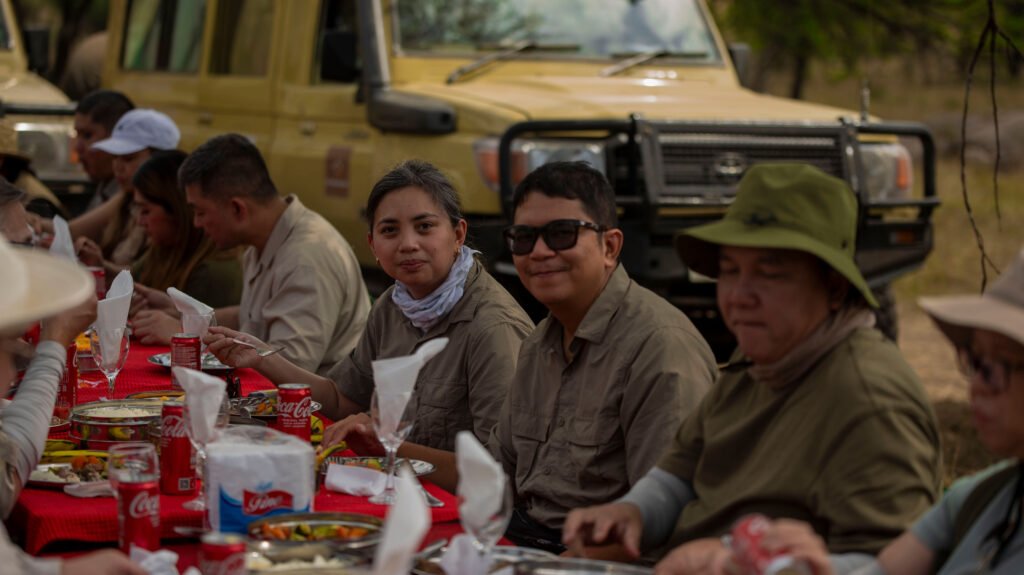
Enjoy a packed lunch at a designated picnic site and continue with an afternoon drive. Your guide will explain the wildlife behaviour and habitats rather than simply racing between sightings. Later, leave the park and travel toward the Mto wa Mbu or Karatu area for dinner and overnight.
Meals: Lunch and dinner
Overnight: Budget camp or lodge near Mto wa Mbu / Karatu
Day 2: Karatu to Central Serengeti
After an early breakfast, travel through the Ngorongoro Conservation Area toward Serengeti National Park. The journey is long, but it is part of the safari. The road crosses highland scenery before opening into the grasslands of the Serengeti. Keep your camera close: wildlife may be seen before you reach the main central game-viewing area.
Enter the Serengeti and enjoy a game drive en route to camp. Central Serengeti, also called Seronera, is known for year-round resident wildlife. Its river valleys, kopjes and grasslands support lions, leopards, cheetahs, hyenas, giraffes, buffalo, zebra and many antelope species. Have a packed lunch on the way, then continue the afternoon drive.
Arrive at your camp or lodge in the late afternoon. After dinner, follow staff directions around the camp. In remote wildlife areas, animals may pass nearby after dark, so moving between tents should always be done safely.
Meals: Breakfast, lunch and dinner
Overnight: Central Serengeti camp or lodge
Day 3: Central Serengeti game drive – Ngorongoro Highlands
Start early for a morning game drive in Central Serengeti. Early light is good for photography and many animals are more active before the heat rises. Your guide may search river lines for leopard, open plains for cheetah and kopjes for resting lions. Spotted hyena, jackal, mongoose, hippo, hartebeest, topi and numerous birds add to the day.
After a packed lunch, begin the gradual journey east toward the Ngorongoro Highlands. You continue to look for wildlife as you travel; this is not simply a transfer. Migration herds may be in the wider Serengeti ecosystem at certain times of year, but their movement follows rain and grass, so no responsible guide can promise a particular crossing or herd location.
Arrive in Karatu or near the crater rim for dinner and overnight. Rest well because the final day begins early to make the most of the Ngorongoro Crater.
Meals: Breakfast, lunch and dinner
Overnight: Karatu or Ngorongoro Highlands camp/lodge
Day 4: Ngorongoro Crater game drive – return to Arusha
After breakfast, enter the Ngorongoro Conservation Area and descend into the crater. The floor contains grassland, woodland, swamps and Lake Magadi, creating a remarkable concentration of wildlife in one volcanic setting. Lion, buffalo, zebra, wildebeest, hippo, hyena, jackal and many birds are regularly possible. Elephants may be found near Lerai Forest. Black rhino is present but rare, so it should be treated as a fortunate sighting rather than a promise.
Enjoy a picnic lunch at the official crater site, then complete the game drive and ascend to the rim. Continue to Arusha, arriving late afternoon or early evening depending on sightings and road conditions. If you have an international flight, a late departure or an extra Arusha night is advisable.
Meals: Breakfast and lunch
End of safari: Arusha hotel or agreed drop-off
What is included?
- Shared 4×4 safari vehicle with pop-up roof
- Professional English-speaking driver-guide
- Three nights’ accommodation in the selected group category
- Meals as stated in the itinerary
- Drinking water in the vehicle
- Park entry fees and Ngorongoro conservation / crater fees for the route
- Game drives in Tarangire, Serengeti and Ngorongoro Crater
- Arusha pick-up and drop-off as confirmed
- Government taxes and VAT where applicable
What is excluded?
- International flights and visa fees
- Travel and medical insurance
- Alcoholic beverages, soft drinks and personal snacks unless stated
- Tips for the guide and camp/lodge staff
- Balloon safari and other optional activities
- Laundry, telephone calls, souvenirs and personal purchases
- Extra hotel nights before or after safari unless quoted
Accommodation and comfort level
Budget group departures often use either public camping or simple tented camps. Public camping is the lowest-cost option and involves tents, a cook and shared facilities. Tented camps commonly provide beds and more comfort while retaining a close-to-nature atmosphere. Lodge upgrades provide en-suite rooms, more reliable hot water and added facilities. The confirmed package should name the property or clearly state the accommodation category.
Budget does not need to mean poor planning. A good group safari prioritises safe transport, a qualified guide, adequate meals, sensible camp locations and enough time in each park. These are more important than decorative extras.
Wildlife and responsible expectations
This route offers opportunities for elephants, giraffes, buffalo, zebra, wildebeest, lions, hyenas, hippos, warthogs, antelope and many birds. Leopard, cheetah and rhino are possible but cannot be guaranteed. The animals are wild, and the guide will work with tracks, habitat, weather and local knowledge rather than a fixed script.
Respectful game viewing protects the experience. Keep your voice low, do not feed animals, never request off-road driving where prohibited and follow the guide’s instructions. Great safari photographs come from patience and good light, not from crowding an animal.
Best time to join this Tanzania group safari
The itinerary can run year-round. June to October is generally dry, popular and good for all-round viewing. January and February can be warm and rewarding; in those months, travellers focused on the migration calving season may choose a different route that includes Ndutu. March to May is greener and quieter but may have rain and slower roads. November and December often bring shorter rains and fresh scenery.
Book according to the dates you can travel, then allow the itinerary to be matched to expected seasonal conditions. Avoid anyone who guarantees a specific migration event or exact animal sighting.
Useful packing list
Bring neutral-coloured clothes, a warm fleece for dawn drives and Ngorongoro evenings, sunscreen, sunglasses, hat, closed shoes, light rain jacket and a small day bag. Carry a power bank, camera, binoculars if you have them and any personal medication. Soft bags are easier than large hard suitcases, especially if you later take a domestic flight.
Before you book a group departure
Ask for the exact departure date, group size, vehicle seating, accommodation standard and cancellation terms. Confirm whether the departure is already guaranteed or requires more guests. Arrive in Arusha at least one night before the safari, and allow a recovery or buffer night after it if you have an important flight.
Check visa, passport, travel-insurance and health requirements with the relevant official sources before travel. Tell us in advance about dietary needs, children, celebrations or mobility requirements so we can confirm that the group arrangement is suitable.
Why the early starts are worthwhile
Safari mornings often begin before sunrise, and this is not done only to fit more activities into the timetable. The first hours of daylight are cooler, which means many animals are moving, feeding or returning from a night hunt. The light is softer for photographs and the roads are quieter. You may leave camp with a hot drink, see mist over the grass and watch the landscape wake up before most vehicles arrive.
Midday is warmer, so the group may have a picnic lunch under shade or take a break at camp when the itinerary allows. Afternoon drives then take advantage of cooler conditions again. The guide keeps the schedule practical; wildlife sightings are not controlled by a clock, but a well-timed day improves your chances considerably.
How the guide adds value to the trip
A safari guide is more than a driver. They know which habitats suit different animals, how to read fresh tracks, how birds and prey species signal danger, and how weather changes the roads. A good guide also protects the group experience by communicating clearly, keeping the vehicle comfortable and following conservation rules.
Ask questions during the drives. Find out why zebras and wildebeest move together, how lions use a kopje, or how the Ngorongoro Crater formed. These conversations turn a sequence of photographs into a real understanding of the place. Guides cannot command an animal to appear, but their observation and patience give you the strongest possible wildlife experience.
Extend a four-day group safari
This itinerary is excellent for a limited holiday, but it can also be extended. Add Lake Manyara for groundwater forest, baboons, birdlife and the lakeshore. Add an extra Serengeti night if big cats or migration movement are a priority. Travellers with a week or more can slow down the route, spend more time in one location and avoid packing every morning.
After safari, Zanzibar is a natural contrast. Several beach nights provide time to rest, swim and explore Stone Town after early bush mornings. A domestic flight can be arranged from the safari circuit, reducing the need to return over the same roads. If you are considering both safari and beach time, tell us your total available nights from the start.
Food and drinking water on safari
Meals are arranged according to the confirmed accommodation category. On game-drive days, lunch is usually a packed picnic with sandwiches, fruit, snacks and drinks, or a prepared lunch box. Camps and lodges serve breakfast and dinner. Vegetarian, vegan, halal, gluten-free and allergy-related needs should be shared before booking so suitable meals can be planned.
Drinking water is supplied in the vehicle, but carrying a reusable bottle is useful. The sun can be strong even on cool-looking days, and a game drive involves more exposure than many guests expect. Bring personal snacks if you have specific preferences, especially for long transfer days.
Frequently asked questions
Can I join alone?
Yes. Joining group safaris are a good choice for solo travellers. You share the vehicle and guide with other guests, and we can advise on single-room or shared-room options according to the accommodation arrangement.
Is it possible to book this as a private safari?
Yes. The same route can be booked privately for a couple, family or small group. A private safari gives you exclusive use of the vehicle and more flexibility over the pace.
Will I see the Big Five?
There is strong wildlife potential, particularly in Ngorongoro and Serengeti, but no animal can be guaranteed. Black rhino and leopard are especially elusive. The goal is a respectful, well-guided wildlife experience rather than a fixed checklist.
How much luggage can I bring?
Keep luggage compact. A soft-sided bag is recommended, and the final allowance should be confirmed with your booking details. Large hard cases use valuable vehicle space on a shared departure.
Travel with respect for Tanzania’s protected areas
Safari tourism supports conservation when it is carried out responsibly. National park fees contribute to managing roads, ranger work and protected wildlife habitats. As a guest, you can help by staying quiet at sightings, keeping litter in the vehicle, avoiding single-use plastics where possible and accepting the guide’s decision to keep an appropriate distance from animals.
Do not ask the guide to chase, block or surround wildlife for a better photograph. A lion walking naturally across the plain, a giraffe browsing without disturbance or elephants given space near the road is a far better experience than an anxious animal surrounded by vehicles. The best safari memories usually come from these natural moments.
How to prepare your travel documents
Before travelling, check that your passport has enough validity for Tanzania, confirm whether you require a visa and arrange suitable travel insurance. Requirements can change, so use official sources and qualified travel-health advice rather than relying on an old online post. Carry a digital and paper copy of essential bookings, insurance details and any prescription information.
Arrive with a little flexibility. Road travel in Tanzania does not always run to minute-by-minute international schedules, and animals do not keep appointments. A well-organised operator manages this calmly, keeps you informed and makes decisions that protect your comfort and safety.
That balanced approach keeps the adventure enjoyable for every member of the shared group from start to finish.
It also respects the parks.
Book your 2027–2029 Tanzania joining group safari
For current group dates, available places and a detailed quotation, contact Eddy Tours & Safaris. The same four-day route can be arranged as a private safari if you want your own vehicle.
Visit our contact page, call or WhatsApp +255 711 906 664, or email eddytoursandsafaris@gmail.com or sales@eddytours-safaris.com. For a Kilimanjaro climb before or after safari, see Kilimanjaro Climb Specialist.