
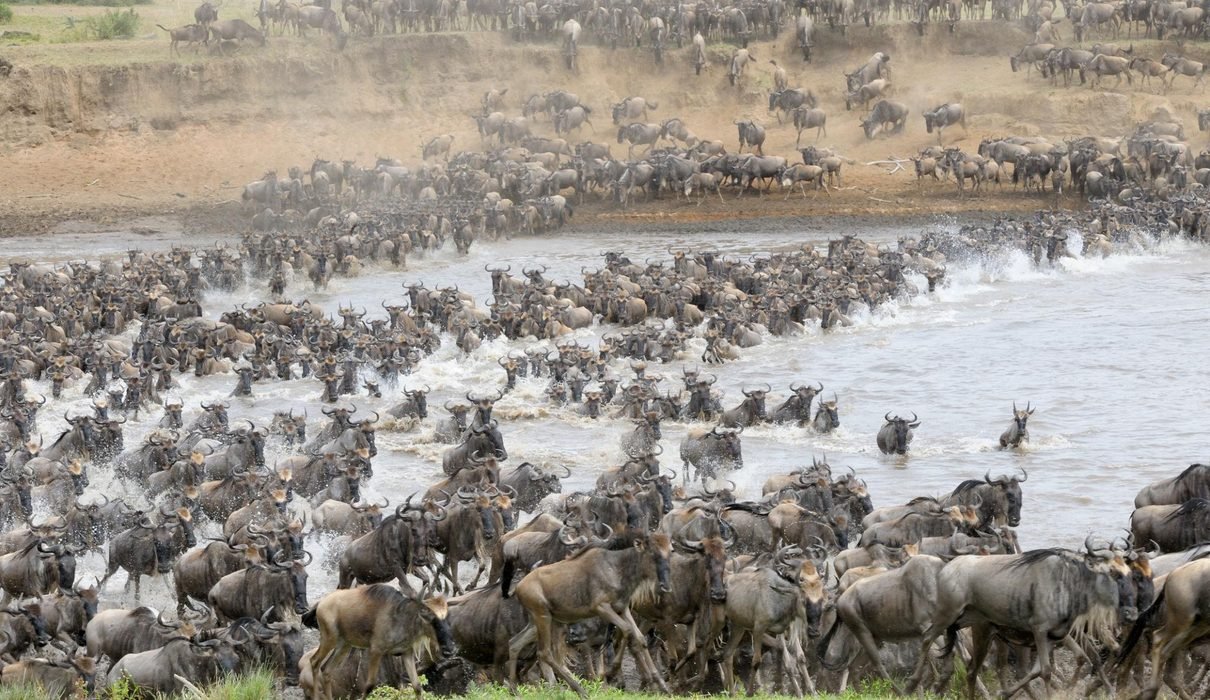
Experience Tanzania’s famous wildlife destinations on this 6-day Serengeti Great Migration and Ngorongoro Crater safari, a journey through some of Africa’s most remarkable natural landscapes. From the open plains of Serengeti National Park to the wildlife-rich floor of Ngorongoro Crater, this safari offers opportunities to see wildebeest, zebras, lions, elephants, giraffes, buffaloes, and many other animals living in their natural habitats.
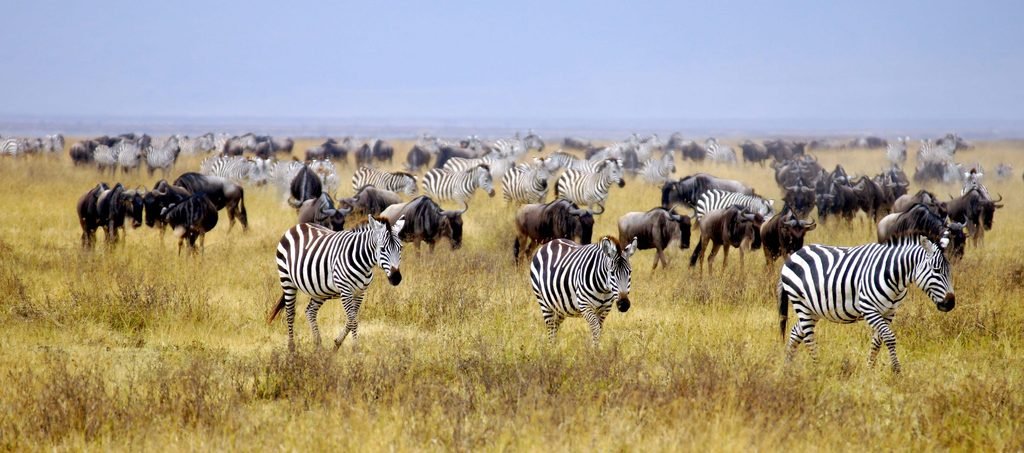
The Serengeti Great Migration is one of the main reasons travelers visit Tanzania. Every year, large herds of wildebeest, accompanied by zebras and gazelles, move through the Serengeti ecosystem in search of fresh grass and water. Their movements are influenced by seasonal rainfall, meaning the best location for watching the migration changes throughout the year. Some travelers visit during the calving season in the southern Serengeti, while others prefer the northern plains during the period when herds may cross the Mara River.
This six-day Tanzania safari combines the excitement of searching for the Great Migration with a visit to Ngorongoro Crater, one of the country’s most famous wildlife destinations. Along the way, you will travel through the beautiful landscapes of northern Tanzania, enjoy guided game drives, and spend your evenings at carefully selected safari accommodation. The itinerary can be arranged as a private safari for couples, families, friends, or small groups.
At Eddy Tours & Safaris, we organize Tanzania wildlife safaris for travelers planning their holidays in 2027, 2028, and 2029. Our team can help you select the best Serengeti region for your travel dates, arrange suitable accommodation, and prepare a safari itinerary that matches your interests and budget.
6-Day Serengeti Great Migration and Ngorongoro Safari Overview
| Safari details | Information |
|---|---|
| Safari package | 6-Day Serengeti Great Migration and Ngorongoro Safari |
| Destination | Northern Tanzania |
| Travel years | 2027, 2028 and 2029 |
| Duration | 6 days / 5 nights |
| Starting point | Arusha |
| Ending point | Arusha |
| Main destinations | Serengeti National Park and Ngorongoro Crater |
| Safari activities | Wildlife game drives, photography and sightseeing |
| Main wildlife | Wildebeest, zebras, lions, elephants, buffaloes, giraffes and other animals |
| Accommodation | Budget, mid-range or luxury safari lodges and camps |
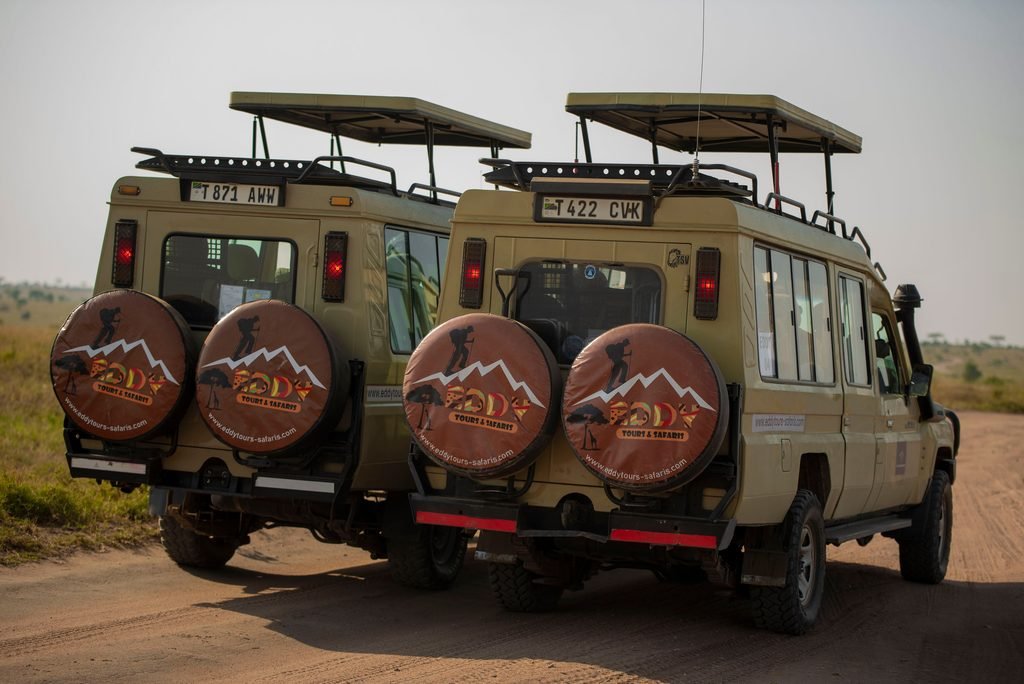
| Transport | Private 4×4 safari vehicle |
| Safari type | Private guided wildlife safari |
| Best for | Couples, families, photographers and wildlife enthusiasts |
| Price | Available on request |
Important: This is a sample six-day itinerary focused on central Serengeti and Ngorongoro. For travelers visiting during the northern migration season, the itinerary can be adjusted to include northern Serengeti, although longer driving distances may reduce game-viewing time. The exact route will be confirmed according to your dates and the expected location of the herds.
Why Choose This 6-Day Tanzania Great Migration Safari?
A six-day Tanzania safari gives travelers time to explore the Serengeti while also visiting Ngorongoro Crater. Rather than spending the entire holiday moving quickly between several national parks, this itinerary focuses on two major wildlife destinations. It allows several game drives in the Serengeti, where wildlife is spread across vast grasslands, rivers, rocky outcrops, and woodland areas.
One of the main attractions is the chance to observe the wildebeest migration. Large herds can stretch across the plains, creating remarkable scenes as animals move together in search of grazing areas. Depending on the season, you may encounter newborn calves, herds traveling through the central plains, or animals gathering near rivers. Lions, hyenas, cheetahs, and other predators also live in the Serengeti, making the park a rewarding destination even when the largest migrating herds are elsewhere.
Ngorongoro Crater adds another experience to the safari. Unlike the enormous open landscapes of the Serengeti, the crater contains a relatively compact area of grasslands, wetlands, forests, and a soda lake. These different habitats support many animal species, allowing visitors to explore a wide range of environments during a single game drive.
With Eddy Tours & Safaris, the itinerary can be customized according to your travel dates, accommodation preferences, and wildlife interests. Travelers looking for a comfortable mid-range safari can choose established lodges and tented camps, while those seeking a more exclusive experience can request luxury accommodation.
Complete 6-Day Serengeti Great Migration and Ngorongoro Safari Itinerary
Day 1: Arusha to Serengeti National Park – First Wildlife Game Drive
Your Tanzania safari begins in Arusha, where your professional safari guide meets you at your hotel after breakfast. Following a short briefing about the journey, you depart in a comfortable 4×4 safari vehicle and begin traveling toward Serengeti National Park. The drive takes you through the scenic landscapes of northern Tanzania, passing local communities, agricultural areas, and the highlands surrounding the Ngorongoro Conservation Area.
As you continue toward the Serengeti, the scenery gradually changes from green highlands to open grasslands stretching toward the horizon. The journey itself offers an introduction to the different landscapes of northern Tanzania, with opportunities to stop at designated viewpoints and rest areas. Your guide will explain the geography of the region, the wildlife you may encounter, and the importance of the Serengeti ecosystem.
After entering Serengeti National Park, you begin your first game drive while traveling toward your accommodation. Depending on the route and time of arrival, you may see zebras, giraffes, wildebeest, gazelles, elephants, or predators resting in the shade. The central Serengeti is particularly well known for its resident wildlife, making it a rewarding place to begin your safari even when the main migration herds are moving through other areas.
In the late afternoon, you arrive at your selected safari lodge or tented camp. After checking in, you can relax, enjoy dinner, and listen to the sounds of the African wilderness. Your guide will discuss the following day’s activities and explain how the game drives will be organized according to wildlife movements and park conditions.
Meals: Lunch and dinner
Accommodation: Safari lodge or tented camp in Serengeti
Main activity: Scenic drive and afternoon game viewing
Day 2: Full-Day Serengeti Safari – Searching for the Great Migration
After an early breakfast, you leave your accommodation for a full-day game drive in Serengeti National Park. The morning is an excellent time to explore because temperatures are often cooler and many animals are active. Your guide will choose the day’s route based on recent wildlife observations, road conditions, and the areas most likely to offer interesting sightings.
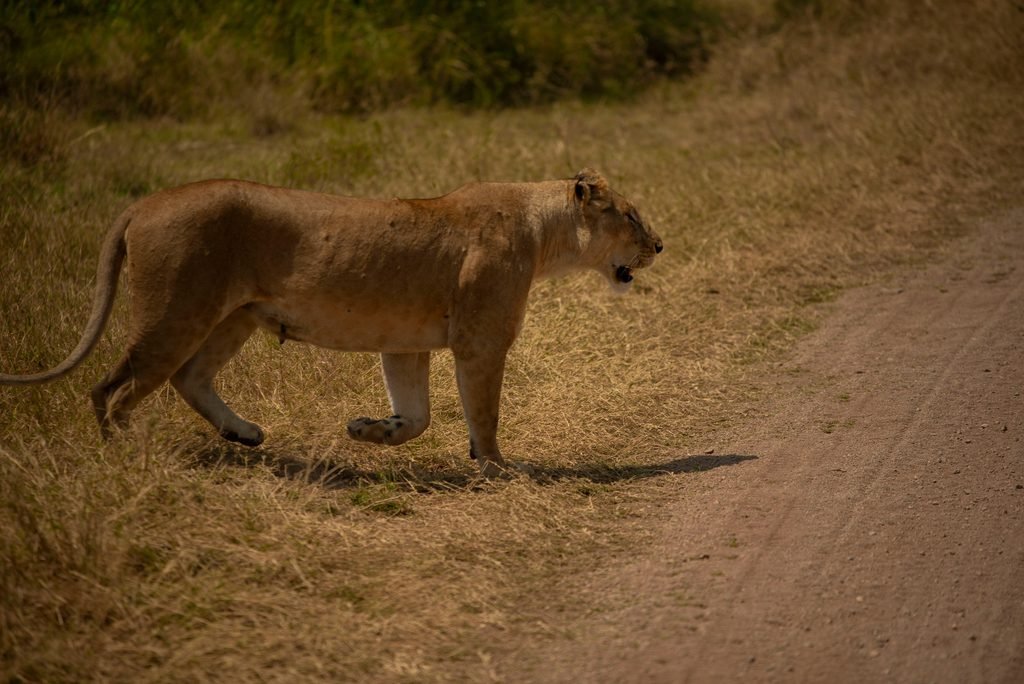
The Serengeti is famous for its large grasslands, but the park also contains rivers, woodlands, and rocky formations known as kopjes. These different habitats support a wide variety of animals. Lions may be seen resting on rocks or beneath trees, while giraffes feed on acacia leaves and elephants move through woodland areas. The park is also home to cheetahs, leopards, hyenas, buffaloes, antelopes, and many bird species.
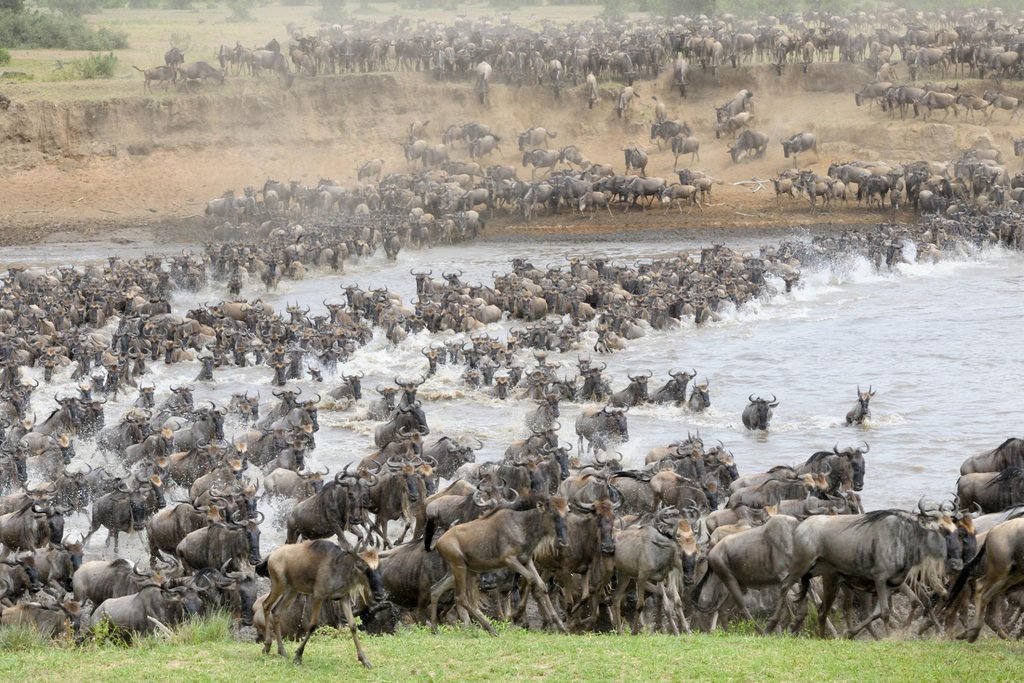
If the migrating herds are in the area, you may spend part of the day watching wildebeest and zebras grazing or moving across the plains. Seeing large numbers of animals traveling together is one of the highlights of a Serengeti migration safari. However, the migration is a natural event, and herd locations cannot be guaranteed for any particular date.
You will enjoy a picnic lunch at an appropriate designated location before continuing with the afternoon game drive. Your guide may explore different sections of the park depending on wildlife activity and the time available. In the evening, you return to your accommodation for dinner and an overnight stay.
Meals: Breakfast, lunch and dinner
Accommodation: Safari lodge or tented camp in Serengeti
Main activity: Full-day Serengeti wildlife game drive
Day 3: Serengeti National Park – Exploring the Migration Plains
The third day provides another opportunity to explore Serengeti National Park without rushing to the next destination. After breakfast, you depart for a game drive through the park’s open plains, river valleys, and woodland areas. Having additional time in the Serengeti is valuable because wildlife movements change throughout the day, and sightings depend on weather, animal behavior, and the experience of your guide.
During the game drive, your guide will search for different wildlife species while explaining their behavior and relationship with the surrounding environment. You may encounter elephants moving in family groups, buffaloes grazing in large herds, or giraffes walking across the grasslands. Predators such as lions and cheetahs are also important attractions, although their presence and activity cannot be predicted.
For travelers visiting during the migration season, this day may be used to explore areas where wildebeest herds have recently been observed. If you are traveling during the calving season, a customized itinerary may place you closer to the southern Serengeti and Ndutu plains. During the northern migration season, travelers may instead choose accommodation farther north, allowing more time to search for herds near the Mara River.
After a picnic lunch, the safari continues with an afternoon game drive. The changing light creates excellent opportunities for wildlife photography, particularly when animals move across the open plains. You return to your accommodation in the evening, where dinner and a relaxing night await.
Meals: Breakfast, lunch and dinner
Accommodation: Safari lodge or tented camp in Serengeti
Main activity: Full-day game drive and migration tracking
Day 4: Serengeti Wildlife Safari – More Time with Tanzania’s Famous Animals
Today is dedicated to another full day in Serengeti National Park. The additional time allows you to explore different wildlife areas rather than relying on a single game drive. Your guide may recommend an early departure to take advantage of the cooler morning conditions, when animals are often more active and the light is suitable for photography.
Depending on the season, you may visit areas with large concentrations of grazing animals or explore habitats known for resident predators. The Serengeti is an enormous ecosystem, and each game drive can produce a different experience. One day may be dominated by large herds of wildebeest and zebras, while another may offer opportunities to observe lions, elephants, giraffes, or smaller animals that are easily overlooked.
If your main interest is the Great Migration, your guide will use available local information to select suitable viewing areas. However, it is important to understand that no safari company can control the movement of wild animals. River crossings, predator hunts, and other dramatic wildlife encounters are natural events that may or may not happen during your visit.
After enjoying lunch, you continue exploring the park before returning to your accommodation in the late afternoon. This is your final full day in the Serengeti, giving you time to appreciate the landscapes and wildlife that make the park one of Tanzania’s most visited safari destinations.
Meals: Breakfast, lunch and dinner
Accommodation: Safari lodge or tented camp in Serengeti
Main activity: Full-day wildlife safari
Day 5: Serengeti National Park to Ngorongoro Conservation Area
After breakfast, you leave your safari accommodation and begin traveling toward the Ngorongoro Conservation Area. Depending on your departure time and accommodation location, you may enjoy wildlife viewing along the way as you travel through the Serengeti. This journey provides another opportunity to observe animals moving across the plains before leaving the park.
As you approach the Ngorongoro highlands, the landscape gradually changes. The wide grasslands of the Serengeti give way to higher elevations, rolling hills, and greener vegetation. The Ngorongoro Conservation Area is known for its natural beauty, wildlife habitats, and the presence of local pastoral communities. Your guide will explain the importance of the area and how its conservation arrangements differ from those of a national park.
Depending on the day’s schedule and permitted stops, you may visit a designated viewpoint overlooking Ngorongoro Crater. From the crater rim, the landscape opens into an enormous volcanic caldera, with grasslands, forests, wetlands, and Lake Magadi visible below when conditions are clear. The view provides an introduction to the wildlife environment you will explore the following day.
You then continue to your selected accommodation in the Ngorongoro highlands or nearby Karatu area. After checking in, you can relax and enjoy dinner while your guide explains the arrangements for the early morning crater game drive.
Meals: Breakfast, lunch and dinner
Accommodation: Lodge in Ngorongoro highlands or Karatu
Main activity: Scenic transfer and optional crater viewpoint
Day 6: Ngorongoro Crater Game Drive – Return to Arusha
Your final safari day begins with an early breakfast before departing for Ngorongoro Crater. After completing the required entry procedures, you descend along the designated road toward the crater floor. The descent offers beautiful views of the surrounding highlands and the different habitats within the caldera.
Ngorongoro Crater is one of Tanzania’s best-known wildlife areas because it supports a remarkable variety of animals within a relatively compact landscape. During your game drive, you may see zebras, wildebeest, buffaloes, elephants, hippos, and several antelope species. Lions and spotted hyenas also live in the crater, while black rhinos may occasionally be seen, although sightings are uncommon and never guaranteed.
The crater floor contains open grasslands, woodland, marshes, and Lake Magadi, which attract different animals and bird species. Your guide will explore the permitted game-viewing routes while explaining the wildlife and natural history of the area. Depending on conditions, you may stop for a picnic lunch at an approved location before continuing your visit.
After completing the game drive, you ascend from the crater and begin the return journey to Arusha. The drive passes through the beautiful highlands and rural landscapes of northern Tanzania. You arrive in Arusha later in the day, where your guide drops you at your hotel or another agreed location, marking the end of your six-day Serengeti Great Migration and Ngorongoro safari.
Meals: Breakfast and lunch
Accommodation: Not included unless specified
Main activity: Ngorongoro Crater game drive and transfer to Arusha
Six-Day Tanzania Safari Itinerary Summary
| Day | Destination | Main activity | Overnight |
|---|---|---|---|
| 1 | Arusha to Serengeti | Scenic transfer and game drive | Serengeti |
| 2 | Serengeti National Park | Full-day wildlife safari | Serengeti |
| 3 | Serengeti National Park | Migration tracking and game drive | Serengeti |
| 4 | Serengeti National Park | Full-day game viewing | Serengeti |
| 5 | Serengeti to Ngorongoro | Scenic transfer and optional viewpoint | Ngorongoro/Karatu |
| 6 | Ngorongoro Crater to Arusha | Crater game drive and return transfer | End of safari |
Best Time to See the Serengeti Great Migration in 2027, 2028 and 2029
The Serengeti Great Migration takes place throughout the year, but the location of the wildebeest herds changes according to rainfall and grazing conditions. Understanding the seasonal movement is important when planning a migration safari because travelers visiting at different times of the year may need to stay in different parts of the Serengeti.
From January to March, large herds are commonly found in the southern Serengeti and Ndutu area, where the calving season takes place. This period is particularly interesting for travelers who want to see newborn wildebeest and the predators that follow the herds. The landscape is often green, and the open plains provide opportunities to observe large groups of grazing animals.
Between April and June, the migration generally moves through the central and western parts of the Serengeti. During this period, travelers may encounter long columns of wildebeest moving toward fresh grazing areas. The Western Corridor and Grumeti River become important locations as the herds continue their seasonal movement.
From July to October, many travelers focus on northern Serengeti, particularly the Kogatende and Mara River areas. During this period, wildebeest may gather near the river and attempt crossings. However, crossings cannot be scheduled or guaranteed, and travelers who want to focus on this experience should consider spending several nights in northern Serengeti.
Between November and December, the herds generally begin returning toward the central and southern plains as seasonal rains encourage new grass growth. The exact timing varies from year to year, which is why migration safari itineraries should be planned around the travel month rather than a fixed assumption about herd locations.
Serengeti Great Migration Calendar
| Travel period | Main migration area | Wildlife experience |
|---|---|---|
| January–March | Southern Serengeti and Ndutu | Calving season and predator activity |
| April–May | Central and western Serengeti | Moving herds and green landscapes |
| June–July | Western Corridor and northern movement routes | Large herds and possible Grumeti crossings |
| July–October | Northern Serengeti and Mara River | Possible river crossings |
| November–December | Central, eastern and southern Serengeti | Returning herds and seasonal movement |
Travel advice: For a six-day safari focused on Mara River crossings, ask Eddy Tours & Safaris about a customized northern Serengeti itinerary. A fly-in option or additional safari days may be worthwhile because traveling between Arusha, northern Serengeti, and Ngorongoro by road takes considerable time.
Wildlife You May See During This Tanzania Safari
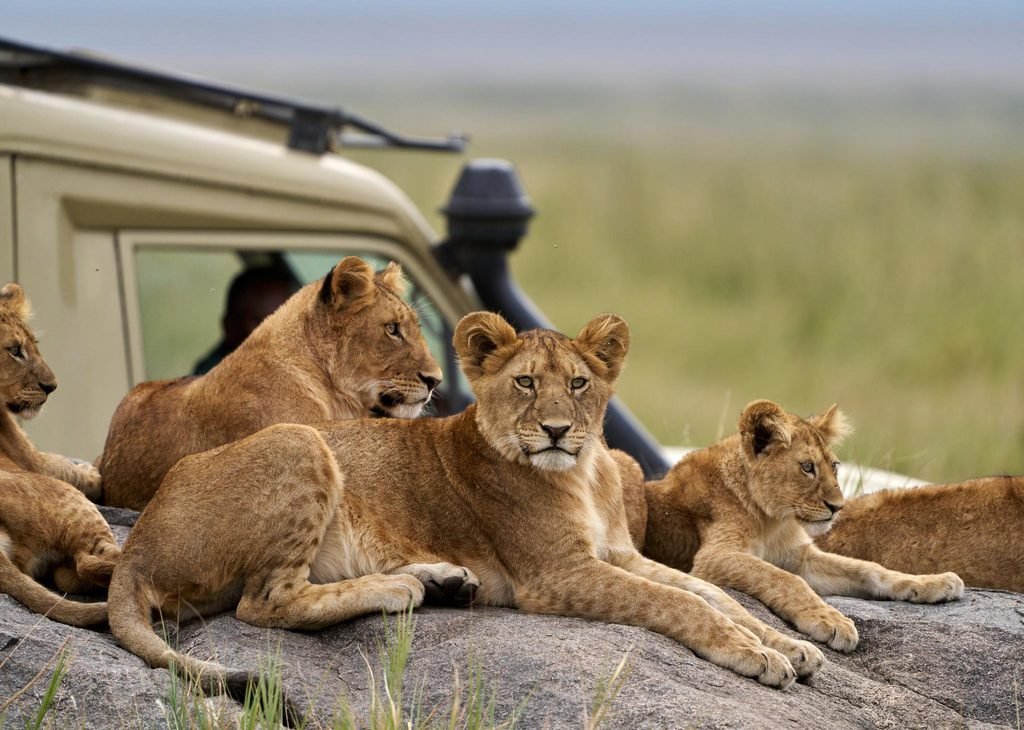
The Serengeti and Ngorongoro are home to many of Tanzania’s best-known wildlife species. The Serengeti is particularly famous for its large populations of grazing animals and the predators that depend on them. Wildebeest and zebras are the main attractions during the migration, but visitors may also encounter elephants, giraffes, buffaloes, gazelles, topis, hartebeests, and other antelopes.
Predators are another major attraction. Lions are frequently associated with the Serengeti’s open plains and rocky outcrops, while cheetahs may be seen in areas where visibility is good. Leopards are more difficult to find because they often rest in trees or remain hidden in vegetation. Spotted hyenas and jackals are also part of the ecosystem, and their behavior can be particularly interesting during periods when large herds are present.
Ngorongoro Crater offers a different wildlife experience. Its grasslands and wetlands support buffaloes, zebras, wildebeest, hippos, and several predator species. The crater is also known as one of the places in northern Tanzania where visitors may have an opportunity to see the endangered black rhino. However, all wildlife sightings depend on natural animal movements and cannot be guaranteed.
Accommodation Options for Your 6-Day Tanzania Safari
Eddy Tours & Safaris can arrange different accommodation categories according to your preferred comfort level and budget. Budget safari options may include simple camps and basic facilities, while mid-range packages generally use established lodges or tented camps with private rooms or tents, comfortable beds, and meals. Luxury safaris offer higher-end accommodation, often with spacious rooms, additional amenities, and locations selected for their scenery or proximity to wildlife-viewing areas.
Accommodation location is particularly important during the Great Migration. Travelers visiting during the calving season may benefit from staying near Ndutu or the southern Serengeti, while those interested in Mara River crossings should consider accommodation in northern Serengeti. Choosing a camp close to the expected migration area can reduce driving time and provide more opportunities for wildlife viewing.
For 2027, 2028, and 2029, accommodation availability and prices should be confirmed before booking. Popular camps in northern Serengeti may receive strong demand during the river-crossing season, so early planning is recommended.
What Is Included in the 6-Day Serengeti and Ngorongoro Safari?
The exact inclusions depend on the selected accommodation category and confirmed quotation. A typical private safari package may include transport in a 4×4 safari vehicle, a professional English-speaking safari guide, accommodation during the safari, meals specified in the itinerary, drinking water during game drives, and the applicable national park and conservation area fees.
Travelers should also confirm whether the quotation includes Ngorongoro Crater vehicle descent fees, airport transfers, and accommodation in Arusha before or after the safari. These services can affect the total package price and should be clearly stated in writing.
Items commonly excluded unless specifically mentioned include international flights, Tanzania visa fees, travel insurance, personal purchases, alcoholic drinks, tips, optional cultural activities, and additional hotel nights. Always review the full package details before making a payment.
How Much Does a 6-Day Great Migration and Ngorongoro Safari Cost?
The cost of a six-day Tanzania safari depends on several factors, including the time of year, accommodation category, number of travelers, transport arrangements, and the Serengeti region included in the itinerary. A private safari for two people may cost more per person than a similar trip for a larger group because vehicle and guiding expenses are shared among fewer travelers.
Accommodation is another important factor. Budget and mid-range camps generally cost less than luxury lodges, while properties close to popular migration areas may have higher rates during peak travel periods. A northern Serengeti itinerary can also cost more because of longer travel distances or additional flight arrangements.
For 2027, 2028, and 2029, it is better to request a current quotation than rely on outdated online prices. Park fees, accommodation rates, and other operating expenses may change before your departure.
To receive a personalized quotation, contact Eddy Tours & Safaris with your travel dates, number of travelers, and preferred accommodation category.
Is Six Days Enough for a Serengeti Great Migration Safari?
Six days can provide a rewarding Tanzania safari, particularly when the itinerary focuses on the Serengeti and Ngorongoro rather than attempting to visit too many destinations. With several days dedicated to the Serengeti, travelers have opportunities to explore different wildlife areas and adjust game drives according to animal activity.
However, the suitability of a six-day itinerary depends on your main objective. If you want to enjoy general Serengeti wildlife and visit Ngorongoro Crater, six days can work well. If your main goal is to spend several days searching for Mara River crossings in northern Serengeti, a longer itinerary or a fly-in safari may be more practical.
The best approach is to tell your safari operator what you most want to see. This makes it easier to select the right Serengeti region and avoid spending too much of your holiday traveling between distant locations.
What to Pack for a Serengeti and Ngorongoro Safari
Packing for a Tanzania safari is relatively simple, but a few items can make your trip more comfortable. Lightweight clothing in neutral colors is useful for daytime game drives, while a warm jacket or fleece is recommended for early mornings and evenings. The Ngorongoro highlands can be particularly cool, especially before sunrise, so bringing an additional warm layer is sensible.
Comfortable closed shoes, sunglasses, sunscreen, a hat, and a reusable water bottle are also useful. Travelers interested in photography should bring a camera with suitable lenses, spare batteries, and enough storage for photographs. Binoculars can improve wildlife viewing, particularly when animals are resting far from the road.
If you are traveling during the rainy season, include a lightweight waterproof jacket and protect electronic equipment from moisture. It is also advisable to carry personal medication, travel documents, and any essential items in your hand luggage.
Frequently Asked Questions About the 6-Day Great Migration Safari
1. Is six days enough for a Tanzania safari?
Yes. Six days can provide a rewarding safari in Serengeti National Park and Ngorongoro Crater, especially when the itinerary is planned around your interests.
2. Can I see the Great Migration in 2027?
Yes, you can plan a safari around the expected migration season, but exact herd locations and sightings cannot be guaranteed.
3. Can I book this safari for 2028 or 2029?
Yes. You can request a quotation for either year, subject to accommodation availability and confirmation of rates.
4. What is the best month for the Serengeti Great Migration?
The best month depends on what you want to see. January to March is commonly associated with calving, while July to October is popular for possible Mara River crossings.
5. Are Mara River crossings guaranteed?
No. River crossings are natural events that depend on animal movements and environmental conditions.
6. Where is the best place to see wildebeest calving?
The southern Serengeti and Ndutu area are important calving-season destinations.
7. Is Ngorongoro Crater included in this safari?
Yes. The itinerary includes a Ngorongoro Crater game drive on the final day.
8. Can I see the Big Five?
The Serengeti and Ngorongoro support several Big Five species, but seeing all five during one safari is not guaranteed.
9. Are there lions in Serengeti National Park?
Yes. Lions live throughout the Serengeti ecosystem, although sightings depend on their location and behavior.
10. Can I see black rhinos in Ngorongoro Crater?
Black rhinos live in the crater, but sightings are uncommon and cannot be guaranteed.
11. Is the safari suitable for families?
Yes. A private safari can be arranged for families, with accommodation and daily activities selected according to the travelers’ needs.
12. Can children join this safari?
Children can join many safari arrangements, although age restrictions may apply at particular accommodations or activities.
13. What type of vehicle is used?
Private safaris commonly use a 4×4 safari vehicle designed for wildlife viewing.
14. Are game drives private?
The itinerary can be arranged as a private safari, subject to the confirmed booking.
15. What accommodation is available?
Budget, mid-range, and luxury accommodation options can be discussed when requesting a quotation.
16. Is the safari available throughout the year?
Yes, although the most suitable Serengeti region depends on seasonal wildlife movements and road conditions.
17. Do I need a Tanzania visa?
Visa requirements depend on your nationality. Check the applicable entry rules before traveling.
18. Is travel insurance necessary?
Travel insurance is strongly recommended to cover medical emergencies, travel disruptions, and other relevant risks.
19. Can I start the safari from Kilimanjaro International Airport?
Airport transfers and arrival arrangements can be discussed when booking.
20. Can I combine this safari with Zanzibar?
Yes. A Zanzibar beach holiday can be arranged after your wildlife safari.
21. Can I combine the safari with Mount Kilimanjaro climbing?
Yes. Many travelers choose to climb Kilimanjaro before continuing with a Tanzania wildlife safari.
22. What should I wear during game drives?
Comfortable, lightweight clothing is suitable for most daytime activities, with warm layers for cooler mornings and evenings.
23. Are meals included?
Meals can be included according to the confirmed safari package and accommodation arrangements.
24. How far is Serengeti from Arusha?
The distance depends on the Serengeti region and route used. Driving to central Serengeti generally takes much of the day, while northern Serengeti is farther away.
25. How do I book this safari?
Contact Eddy Tours & Safaris with your preferred travel dates, number of travelers, and accommodation preferences to request a personalized quotation.
Book Your 6-Day Serengeti Great Migration and Ngorongoro Safari for 2027, 2028 or 2029
A six-day Serengeti Great Migration and Ngorongoro safari offers a wonderful opportunity to explore two of Tanzania’s most famous wildlife destinations. From the vast grasslands of the Serengeti to the unique environment of Ngorongoro Crater, the journey brings together beautiful landscapes, exciting game drives, and opportunities to observe animals in their natural habitats.
The best migration safari is one that matches your travel dates with the most suitable wildlife-viewing areas. Whether you are interested in the calving season, the movement of large wildebeest herds, or possible Mara River crossings, choosing the right Serengeti region is an important part of planning your holiday.
At Eddy Tours & Safaris, we help travelers arrange private Tanzania safaris for 2027, 2028, and 2029. Our team can assist with accommodation selection, travel arrangements, safari routes, and customized itineraries based on your interests and budget.
Request Your 6-Day Tanzania Safari Quotation
Chat with Eddy Tours & Safaris on WhatsApp
Email: sales@eddytours-safaris.com
Plan your Serengeti Great Migration and Ngorongoro safari with a local Tanzania tour operator and discover the wildlife experiences that make northern Tanzania such a special destination.
2 Comments
Comments are closed.