
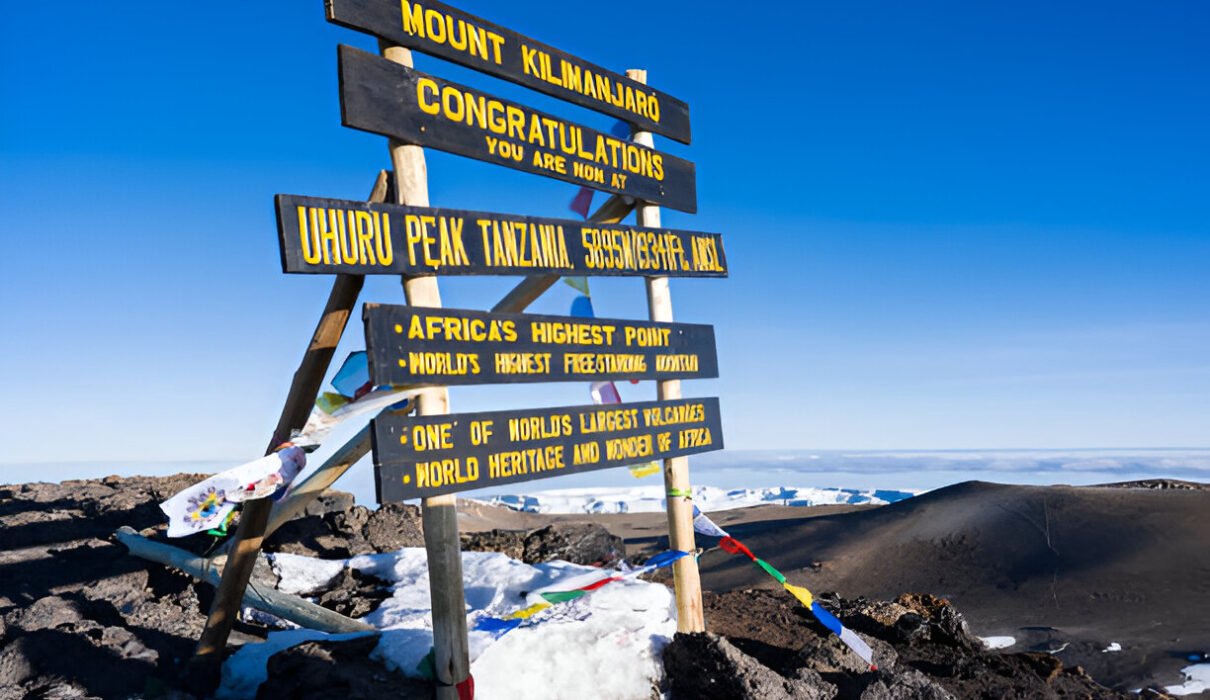
The 6-day Marangu Route Kilimanjaro climb combines shared mountain-hut accommodation with an additional acclimatisation day at Horombo. It is an option to consider if you prefer sleeping in huts and want more mountain time than the five-day Marangu schedule provides.
However, hut accommodation does not make Kilimanjaro an easy climb. You still face sustained walking, a demanding summit attempt and the effects of high altitude.
If you are researching the 6-day Marangu success rate for 2027, 2028 or 2029, look carefully at how any percentage is calculated. Future results cannot be known in advance, and historical figures do not guarantee your individual outcome.
This guide explains the six-day itinerary, the purpose of the Horombo day, what shared huts involve and how to compare a proposal from Eddy Tours & Safaris.
Package Overview
| Detail | Proposed arrangement |
|---|---|
| Destination | Mount Kilimanjaro, Tanzania |
| Route | Marangu |
| Mountain duration | 6 trekking days and 5 nights |
| Planning years | 2027, 2028 and 2029 |
| Summit objective | Uhuru Peak, 5,895 metres |
| Accommodation | Shared mountain huts |
| Starting and finishing point | Marangu Gate |
| Main overnight locations | Mandara, Horombo and Kibo |
| Additional itinerary day | Acclimatisation programme based at Horombo |
| Departure format | Private climb or an available confirmed group departure |
| Hotel nights and transfers | Included only as specified in your quotation |
TANAPA identifies Mandara, Horombo and Kibo as the mountain huts used on Marangu. Kilimanjaro’s highest point reaches 5,895 metres.
The six mountain days should be listed separately from arrival, briefing and departure arrangements.
What Is the 6-Day Marangu Success Rate?
No universal, independently verified six-day Marangu success percentage is established in this guide. A useful figure must relate to a defined group of expeditions.
If an operator advertises a summit rate, ask for:
- The number of climbers who started.
- The number who reached Uhuru Peak.
- The reporting period.
- The exact itinerary covered.
- Whether early descents are included.
- Whether the records were independently checked.
A figure covering several routes or durations cannot automatically describe six-day Marangu.
Uhuru Peak and Gillman’s Point Are Different Outcomes
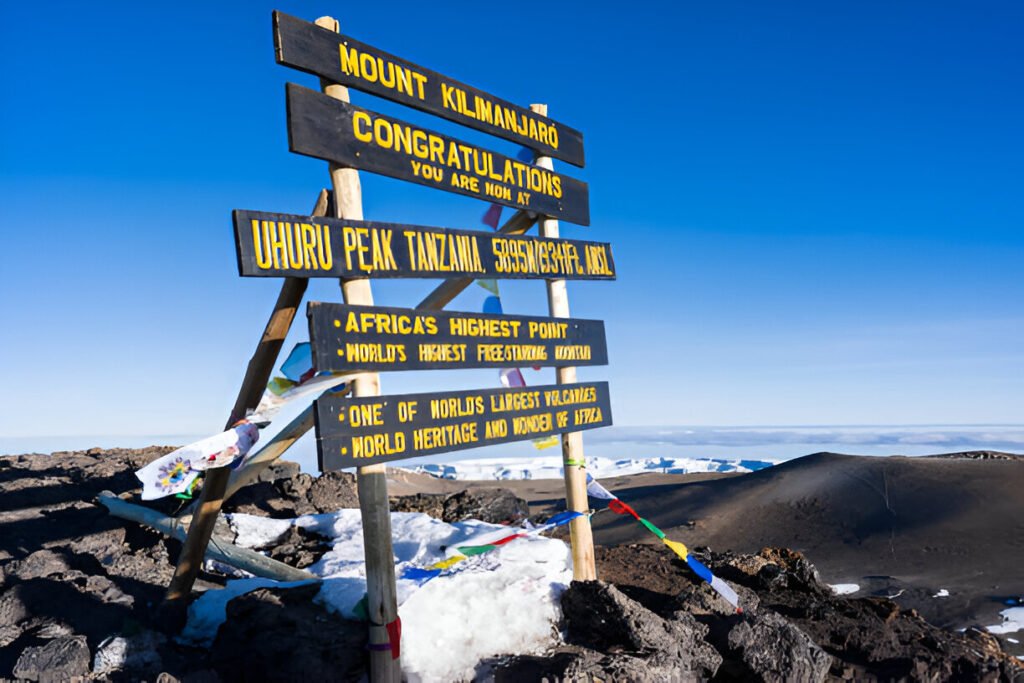
Gillman’s Point is a crater-rim milestone on the usual Marangu summit approach. Uhuru Peak is the summit objective.
Ask whether an advertised percentage counts Uhuru Peak only or includes reaching other points. Different definitions can make apparently similar figures difficult to compare.
What About Eddy Tours & Safaris?
No verified Eddy Tours & Safaris six-day Marangu summit percentage is supplied here.
Request supporting records if a numerical claim forms part of your booking proposal. Assess the itinerary, guiding arrangements and emergency procedures alongside any historical result.
Can Anyone Predict the 2027–2029 Results?
No. Actual percentages for those years will only exist after the relevant expeditions take place and results are recorded.
An operator can explain its proposed services and procedures. It cannot promise your response to altitude, weather conditions or a successful summit.
Why Choose Six Days Instead of Five?
The standard six-day Marangu itinerary includes an additional day based at Horombo before continuing towards Kibo.
That difference gives you more time on the mountain, although the benefit depends on the programme and your individual response.
| Consideration | Five-day Marangu | Six-day Marangu |
|---|---|---|
| Mountain nights | 4 | 5 |
| Additional Horombo day | Usually omitted | Included |
| Accommodation | Shared huts | Shared huts |
| Overall schedule | More compressed | Additional mountain day |
| Summit guarantee | None | None |
CDC guidance recommends allowing additional time on Kilimanjaro, particularly when reviewing itineraries promoted as four- to six-day trips. More time supports acclimatisation but does not remove altitude risk.
For travellers comparing Marangu versions, the six-day schedule is a sensible starting point for discussion. Also ask whether a longer alternative would better suit your circumstances.
What Are Marangu’s Huts Like?
Mountain huts provide a different experience from tent camping, but they should not be confused with private hotel rooms.
Expect shared sleeping arrangements. Confirm what bedding is provided, whether you need your own sleeping bag and what facilities apply at each overnight location.
Ask about:
- Sleeping arrangements for your departure.
- Sleeping-bag requirements and rental options.
- Toilet and washing facilities.
- Meal arrangements.
- Charging availability.
- Storage for your belongings.
Treat charging as something to verify rather than rely on. Bring enough power for essential equipment, particularly your headlamp.
Choose Marangu because its accommodation suits you, while assessing the altitude and walking demands separately.
Before the Trek: Arrival and Briefing
Allow time for the agreed briefing and equipment check before your mountain departure.
Your proposal should identify the hotel, airport transfer, mountain transport and luggage-storage arrangements.
At the briefing, confirm the daily routine and how the guiding team manages different walking speeds. Ask how concerns are assessed and who accompanies a climber who needs to descend early.
Inspect rental equipment while you still have time to resolve problems. Organise your daypack so that layers, water, personal medication and other essentials remain accessible.
Full 6-Day Marangu Route Itinerary
Elevations and walking times are approximate. Conditions, group pace and guide decisions can change the programme.
Day 1: Marangu Gate to Mandara Hut
Approximate elevations: 1,860 metres to 2,700 metres
Typical walking time: 4–6 hours
Overnight: Mandara Hut
After the transfer and entry formalities, start the forest walk towards Mandara.
Use the first stage to establish a comfortable rhythm with your guide. Avoid walking quickly simply because you feel energetic at the beginning.
Pay attention to your footwear and daypack. Report discomfort early so that small issues do not become persistent problems.
At the hut, organise your sleeping area and prepare for the following morning. Follow the agreed meal and briefing programme.
Day 2: Mandara Hut to Horombo Hut
Approximate overnight elevation: 3,720 metres
Typical walking time: 6–8 hours
Overnight: Horombo Hut
Continue towards Horombo as the route leaves the forest and enters more open terrain.
This is a substantial walking day. Keep your pace consistent and use breaks to adjust layers.
Tell the guide how you feel rather than comparing yourself with faster members of the group. Walking speed is not a measure of how well someone is adjusting to altitude.
Prepare your equipment for the next day’s programme before settling down for the night.
Day 3: Horombo Acclimatisation Day
Overnight elevation: Approximately 3,720 metres
Activity: Guide-led acclimatisation outing, adjusted to your condition
Overnight: Horombo Hut
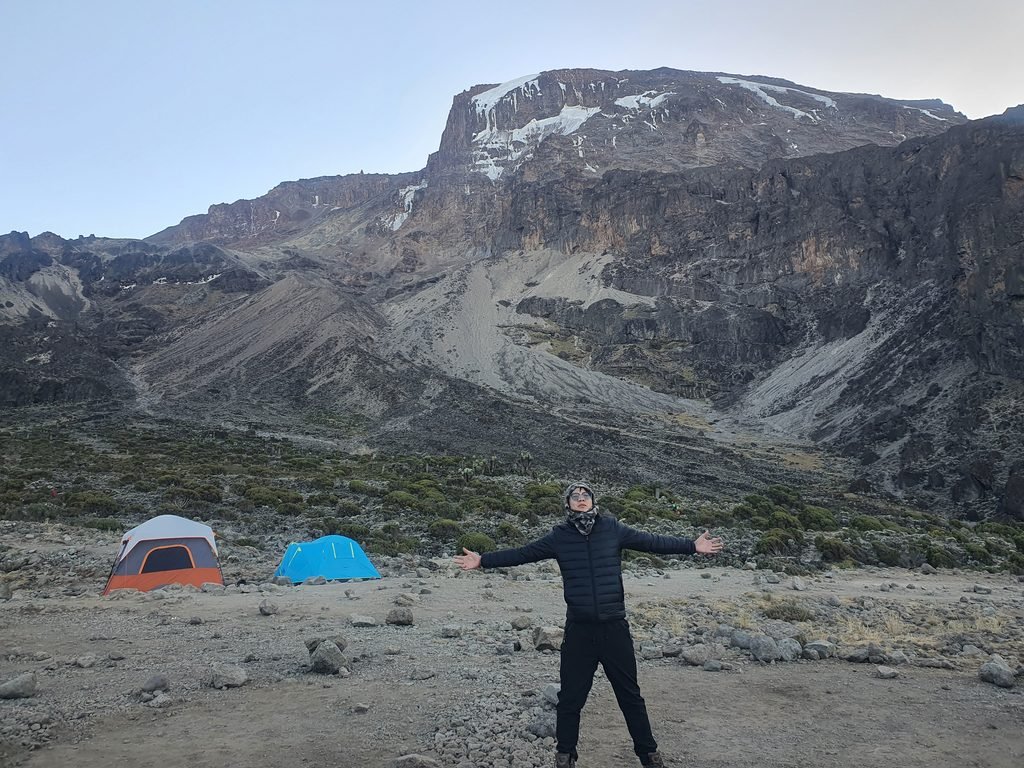
Remain based at Horombo. A common programme includes an outing towards Zebra Rocks or the Mawenzi direction, followed by a return to the same hut.
This is not a technical ascent of Mawenzi.
Your guide should explain the intended outing and adjust it according to conditions and your health. Do not treat the day as a fitness test.
Use the additional time to report concerns, organise equipment and understand the next stage.
Day 4: Horombo Hut to Kibo Hut
Approximate overnight elevation: 4,700 metres
Typical walking time: 6–8 hours
Overnight: Kibo Hut
Continue across the saddle towards Kibo, the staging point for the usual Marangu summit attempt.
Maintain a manageable pace and communicate clearly with the guide.
On arrival, prepare your summit equipment. Check your headlamp, spare power, gloves, warm layers and water-carrying arrangements.
The guide should explain the proposed departure time and circumstances that would change the plan. Rest according to the expedition schedule.
Day 5: Kibo Hut to Uhuru Peak and Descent to Horombo
Summit objective: Uhuru Peak, 5,895 metres
Approximate overnight elevation: 3,720 metres
Typical total walking time: Around 12–16 hours, including breaks and descent
Overnight: Horombo Hut
The standard summit attempt begins during the night, climbs towards Gillman’s Point and continues along the crater rim towards Uhuru Peak if conditions and health permit. Descend through Kibo towards Horombo afterwards.
This is the expedition’s longest and most demanding stage.
Follow your guide’s instructions and focus on your condition. A particular summit time or sunrise photograph cannot be guaranteed.
Turning around may be necessary. Remember that the descent requires attention and energy even after the summit objective has been reached.
Day 6: Horombo Hut to Marangu Gate
Approximate finishing elevation: 1,860 metres
Typical walking time: 6–8 hours
Finish: Marangu Gate
Complete the descent via Mandara and return to Marangu Gate for the agreed formalities and transfer.
Continue walking carefully until the trek is finished.
Confirm the post-climb hotel and onward transport arrangements before departure. Allow practical time between the descent and any international flight.
How to Prepare for Six-Day Marangu
Train for Sustained Walking
Build preparation around regular hikes and progressively longer walking days. Practise descents and consecutive days where appropriate.
Use the boots, socks and daypack you intend to bring. Familiarity helps you identify problems before the expedition.
Assess Altitude Separately
Fitness helps with physical effort, but it does not protect against altitude illness. Ascent rate and individual susceptibility remain important.
Ask for the daily overnight elevations and discuss relevant medical conditions or previous altitude illness with a clinician familiar with high-altitude travel.
Report Symptoms Promptly
Do not hide concerns to protect your summit attempt.
CDC guidance advises against ascending with altitude-illness symptoms. Worsening symptoms at the same elevation require descent. Confusion, loss of coordination or breathlessness at rest require urgent attention and emergency descent arrangements.
Understand these procedures before leaving the hotel.
Proposed Package Inclusions
Request written confirmation of:
- Six-day mountain itinerary.
- Required park and hut charges.
- Guide, porter and cook arrangements.
- Mountain meals and drinking-water provision.
- Transfers to and from Marangu Gate.
- Hotel nights, where included.
- Airport transfers, where included.
- Specified equipment and rentals.
- Health-monitoring and emergency-response arrangements.
The booking documents should identify the actual services rather than relying on general website descriptions.
Expenses to Confirm Separately
Unless included in your quotation, allow for:
- International flights.
- Visa and entry-related costs.
- Travel insurance.
- Tips.
- Personal trekking equipment.
- Sleeping-bag and other rentals.
- Additional hotel nights and meals.
- Optional safari or Zanzibar extensions.
Ask how early descent, itinerary changes and extra transfers affect costs.
Confirm with your insurer that the policy covers your planned trekking altitude and relevant medical and evacuation arrangements.
Prices and Departures for 2027/2028/2029
Request a quotation for your exact dates, group size and preferred departure format.
A private climb can be proposed for your party. A shared departure requires confirmation of its schedule, status, group size and operating arrangements.
This page does not establish a confirmed calendar or fixed future-year price.
Compare complete quotations and check their validity, payment conditions and cancellation terms before booking.
Frequently Asked Questions
What is the exact six-day Marangu success rate?
A defensible figure requires a defined dataset. No universal or verified Eddy Tours & Safaris percentage is established here.
Is Marangu the easiest Kilimanjaro route?
Huts may suit your accommodation preference, but they do not remove altitude or physical demands. Assess the actual itinerary.
Does six-day Marangu include a Horombo day?
The standard version described here does. Confirm that it appears explicitly in your proposal.
Are the huts private?
Expect shared arrangements unless a different arrangement is specifically confirmed.
Does the package contain six mountain nights?
No. Six trekking days normally include five mountain nights. Hotel nights are additional.
Can the summit be guaranteed?
No. Health, altitude response, weather and conditions remain uncertain.
Request Your Six-Day Marangu Proposal
Contact Eddy Tours & Safaris with your dates, group size, hiking experience and accommodation preference.
Request the full itinerary, complete quotation, guiding arrangements and supporting information behind any summit-success claim.
Website: eddytours-safaris.com
Sales email: sales@eddytours-safaris.com
Alternative email: eddytoursandsafaris@gmail.com
Phone and WhatsApp: +255 711 906 664