
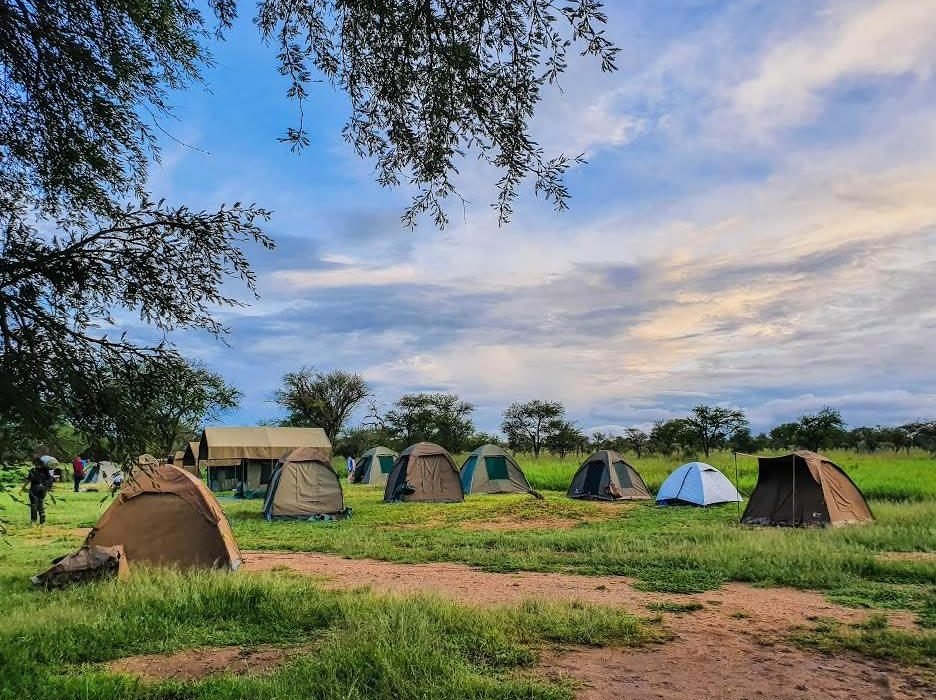
A 6 Days Tanzania Camping Safari is one of the most affordable ways to explore Tanzania’s famous wildlife parks without spending a large amount of money on luxury accommodation. This six-day adventure takes you through Tarangire National Park, Lake Manyara National Park, Serengeti National Park, and Ngorongoro Crater, giving you the opportunity to see elephants, lions, giraffes, zebras, wildebeest, buffaloes, and many other wild animals. Instead of staying in expensive lodges, you spend your nights at designated campsites, where you can enjoy the natural surroundings while keeping your safari expenses manageable.
For travellers planning a Tanzania safari in 2027, 2028, or 2029, camping is a practical choice because it allows you to visit several national parks while spending less on accommodation. Your days are spent exploring wildlife areas in a safari vehicle with an experienced driver-guide, while your evenings are spent at campsites where meals are prepared and tents are arranged for overnight stays. You still visit the same national parks as travellers staying in luxury lodges, and you have opportunities to observe the same wildlife, although sightings depend on the season and the animals’ movements.
This safari begins and ends in Arusha, the main starting point for northern Tanzania wildlife tours. The route combines four different destinations, each offering something different. Tarangire is known for its elephants and baobab trees, Lake Manyara has forests and birdlife, Serengeti offers extensive plains and predators, and Ngorongoro Crater provides wildlife viewing within a large volcanic caldera. The itinerary is suitable for solo travellers, couples, friends, students, and small groups looking for a reasonably priced Tanzania wildlife holiday.
Eddy Tours & Safaris, a local tour company in Arusha, Tanzania, arranges camping safaris for visitors who want to explore the country’s national parks with professional guides and organised transport. You can review our existing six-day Tanzania camping safari package or explore our Tanzania safari packages for 2027, 2028 and 2029 to compare different travel options.
6 Days Tanzania Camping Safari Overview
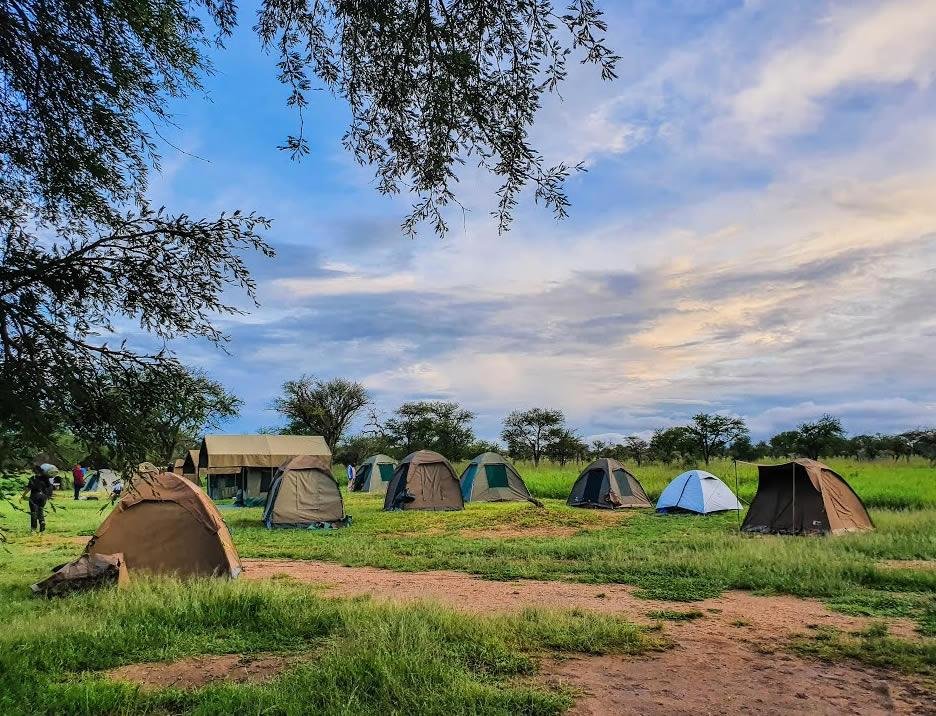
This six-day Tanzania camping safari is designed for travellers who want to visit several national parks within a reasonable period while keeping accommodation expenses lower than those of a lodge-based safari. The itinerary combines game drives, scenic road journeys, camping accommodation, and opportunities to observe different wildlife habitats. Travellers will spend two nights in the Serengeti area, allowing more time to explore the park rather than visiting it for only a few hours.
Camping safaris normally use a four-wheel-drive safari vehicle with a pop-up roof for wildlife viewing and photography. An experienced driver-guide accompanies the group throughout the journey, explaining the animals, landscapes, and different places visited. Camping equipment and meals are arranged according to the package, and a safari cook may accompany the group or provide meal services through the operator’s camping arrangements.
| Safari Information | Details |
|---|---|
| Safari name | 6 Days Tanzania Camping Safari |
| Travel years | 2027, 2028 and 2029 |
| Duration | 6 days and 5 nights |
| Starting point | Arusha, Tanzania |
| Ending point | Arusha, Tanzania |
| Safari destinations | Tarangire, Lake Manyara, Serengeti and Ngorongoro Crater |
| Accommodation | Budget camping at designated campsites |
| Transport | 4×4 safari vehicle with a pop-up roof |
| Safari type | Budget camping safari |
| Suitable for | Solo travellers, couples, friends and small groups |
| Main activities | Wildlife game drives, photography and camping |
| Availability | Throughout the year, subject to arrangements |
| Booking | Advance reservation recommended |
The main advantage of this itinerary is the combination of wildlife destinations. Each national park has different scenery and animal habitats, so visitors have opportunities to experience more than one type of landscape during their holiday. However, this is an active road safari with some long driving days, particularly when travelling to and from the Serengeti. Travellers who prefer a slower pace may wish to add another day.
Detailed 6 Days Tanzania Camping Safari Itinerary
Day 1: Arusha to Tarangire National Park – Elephants and Baobab Trees
Your six-day Tanzania camping safari begins in Arusha, where your driver-guide will collect you from your hotel or another agreed meeting point after breakfast. After a short briefing about the itinerary and the national parks you will visit, you will travel towards Tarangire National Park. The journey normally takes approximately two to three hours, depending on traffic, road conditions, and the location of your accommodation in Arusha. Along the way, you will pass through towns, villages, and rural areas where farming and livestock keeping are common activities.
After arriving at Tarangire National Park, your guide will complete the necessary entrance procedures before beginning your first game drive. Tarangire is particularly famous for its elephants, and visitors often have opportunities to observe them feeding, walking between woodland areas, or gathering near water sources. The park also supports giraffes, zebras, buffaloes, wildebeest, antelopes, lions, and numerous bird species. Its large baobab trees are another distinctive feature, giving the landscape a different appearance from the open grasslands of the Serengeti.
During the dry season, the Tarangire River becomes an important water source for animals living in the surrounding ecosystem. Wildlife may gather near the river, providing opportunities to observe different species in the same area. Your guide will select suitable routes according to animal movements and the time available. Lunch will be arranged during the day, normally at an authorised picnic area, before continuing with wildlife viewing in the afternoon.
After the game drive, you will leave the park and travel to your campsite in the Tarangire or Mto wa Mbu area, depending on the confirmed accommodation arrangements. Your camping equipment will be prepared, and dinner will be served before you settle into your tent for the night. This first evening gives you an opportunity to become familiar with the camping arrangements and prepare for the following day’s activities.
Accommodation: Budget campsite near Tarangire or Mto wa Mbu.
Meals: Lunch and dinner.
Main activity: Tarangire National Park game drive.
For more information about the park, visit the official Tarangire National Park website.
Day 2: Lake Manyara National Park – Forest Wildlife and Birdwatching
After breakfast at the campsite, you will travel towards Lake Manyara National Park, located near the town of Mto wa Mbu. This park is considerably smaller than the Serengeti but contains several different habitats, including groundwater forest, woodland, open areas, and the lake environment. These changing landscapes make Lake Manyara an interesting destination for travellers who want to observe wildlife in a different setting from Tarangire.
Your game drive begins through areas of forest where monkeys, baboons, and other animals may be encountered. As you continue through the park, the vegetation changes, and you may see elephants, buffaloes, giraffes, zebras, and different antelope species. Lake Manyara is also known for its birdlife, with various waterbirds and woodland species occurring throughout the park. Flamingos may be present around the lake when environmental conditions are suitable, although their numbers change with water levels and food availability.
Lake Manyara has also been associated with tree-climbing lions, but visitors should understand that these animals are not guaranteed to be seen during a game drive. Your guide will concentrate on suitable wildlife areas while explaining the park’s habitats and the animals that live there. Lunch will be arranged during the day, followed by additional wildlife viewing before leaving the park.
In the afternoon, you will travel towards Karatu or another suitable camping location along the route to Ngorongoro. The evening will be spent at the campsite, where dinner will be prepared and you can rest before the longer journey to the Serengeti the following morning. Depending on the campsite’s facilities, shared toilets and showers may be available, although standards vary between properties.
Accommodation: Budget campsite near Karatu or Mto wa Mbu.
Meals: Breakfast, lunch and dinner.
Main activity: Lake Manyara National Park game drive.
Travellers interested in comparing different safari durations can also read our guide to Tanzania safari packages that offer good value for money.
Day 3: Karatu to Serengeti National Park – Journey Through Ngorongoro Highlands
After an early breakfast, you will leave the campsite and begin the journey towards Serengeti National Park. The route passes through the Ngorongoro Conservation Area, where the landscape changes from agricultural land around Karatu to forested highlands and open grassland. Weather permitting, there may be opportunities to stop at authorised viewpoints and enjoy the scenery before continuing towards the Serengeti.
This is one of the longer driving days of the safari, so an early departure is important. The journey provides opportunities to observe different landscapes, including highland vegetation, grazing areas, and the open plains leading towards the Serengeti. Your guide will explain the geography of the region and the importance of the Serengeti ecosystem for wildlife conservation. Depending on the route, road conditions, and stops, the journey to the central Serengeti can take much of the day.
After entering Serengeti National Park, you will begin a game drive while travelling towards your campsite. The Serengeti is famous for its extensive grasslands and large populations of wild animals. You may encounter wildebeest, zebras, giraffes, elephants, buffaloes, lions, cheetahs, or other wildlife along the way. The animals you see will depend on the season, the location of the herds, and the routes available during your visit.
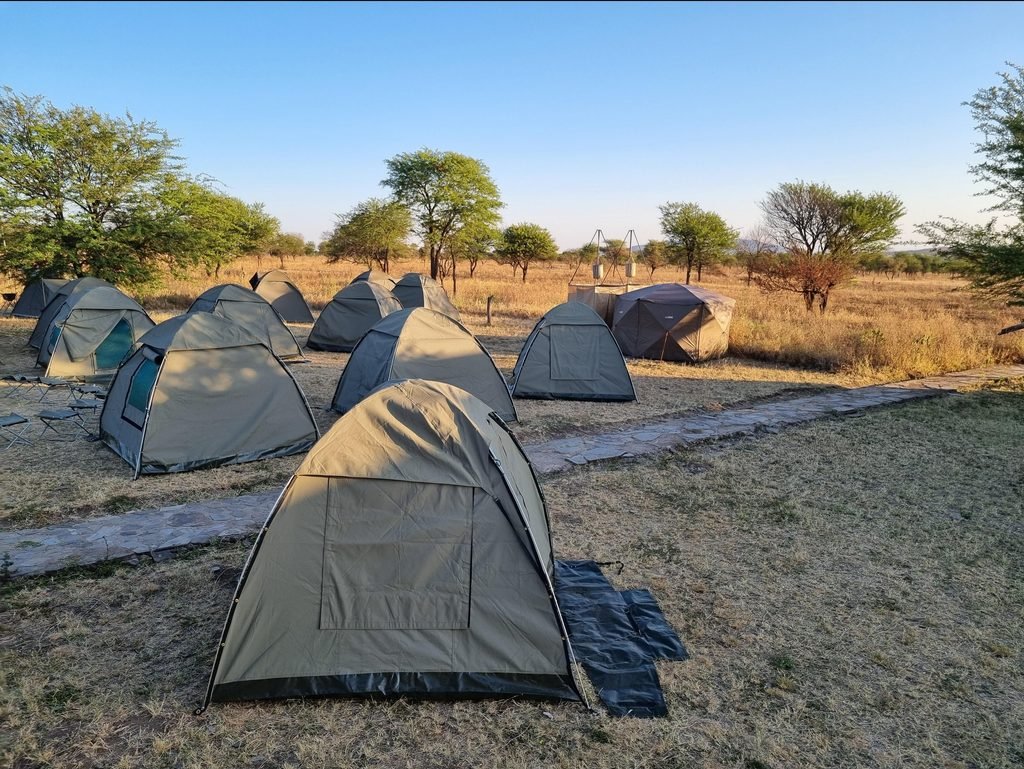
In the late afternoon, you will arrive at a designated public campsite in the Serengeti, such as a campsite in the Seronera area, subject to availability and the confirmed itinerary. Your tents will be arranged, and dinner will be prepared before you settle in for the night. Camping inside the Serengeti provides an opportunity to spend the evening in the national park rather than travelling outside the protected area for accommodation. Because wild animals may move near campsites, visitors must follow the instructions of their guide and campsite staff.
Accommodation: Public campsite in Serengeti National Park.
Meals: Breakfast, lunch and dinner.
Main activity: Scenic transfer and Serengeti game drive.
For official visitor information, including road access and camping arrangements, see the Serengeti National Park Visitor Guide.
Day 4: Full-Day Serengeti National Park Safari – Lions, Leopards and Wildebeest
Today is dedicated to exploring Serengeti National Park, one of Tanzania’s most important wildlife destinations. After breakfast, you will depart from the campsite with your guide for a game drive through selected areas of the park. The central Serengeti, particularly the Seronera region, is known for its resident wildlife populations, including lions, leopards, cheetahs, elephants, giraffes, buffaloes, and several antelope species.
Your guide will choose the game-drive routes according to recent animal movements, road conditions, and the time available. Some areas contain open grassland where zebras, wildebeest, and gazelles may be seen feeding, while other areas include woodland and rocky formations that provide habitats for different species. Lions may be encountered resting beneath trees or moving through the grassland, while leopards are sometimes seen in trees or woodland areas. Wildlife sightings remain unpredictable, and patience is an important part of the safari experience.
The Serengeti is also associated with the Great Wildebeest Migration, which involves the seasonal movement of large herds through the wider Serengeti-Mara ecosystem. However, the migrating herds are not always located in the central Serengeti. During some months, they may be concentrated in the southern plains, western corridor, or northern Serengeti. A standard six-day camping safari does not automatically include these distant regions, so travellers whose main priority is a particular migration event should discuss their travel dates and preferred location before booking.
Lunch will be arranged during the day, and you will continue exploring the park in the afternoon. Your guide may stop at suitable viewpoints or spend additional time observing animals when conditions allow. Later, you will return to the campsite for dinner and your second night in the Serengeti. Spending two nights in the park provides more time for game drives than a brief overnight visit and reduces the need to rush through the wildlife-viewing experience.
Accommodation: Public campsite in Serengeti National Park.
Meals: Breakfast, lunch and dinner.
Main activity: Full-day Serengeti game drive.
The Serengeti is recognised as a UNESCO World Heritage Site because of its ecological importance and exceptional wildlife populations. Additional information is available through UNESCO’s Serengeti National Park listing.
Day 5: Serengeti to Ngorongoro Conservation Area – Morning Wildlife Viewing
After breakfast, you will enjoy another game drive in the Serengeti before beginning the journey towards Ngorongoro Conservation Area. The morning provides an opportunity to search for animals that may not have been seen during the previous day, although wildlife movements remain unpredictable. Depending on your route, you may encounter lions, giraffes, zebras, elephants, wildebeest, and other species while travelling through the park.
As you leave the central Serengeti, the landscape gradually changes, and the journey continues towards the Ngorongoro highlands. This is another relatively long driving day, but the route provides opportunities to appreciate the differences between the Serengeti grasslands and the higher elevations of Ngorongoro. Your guide will explain the area’s natural history and conservation importance while ensuring that the journey follows the permitted roads and park regulations.
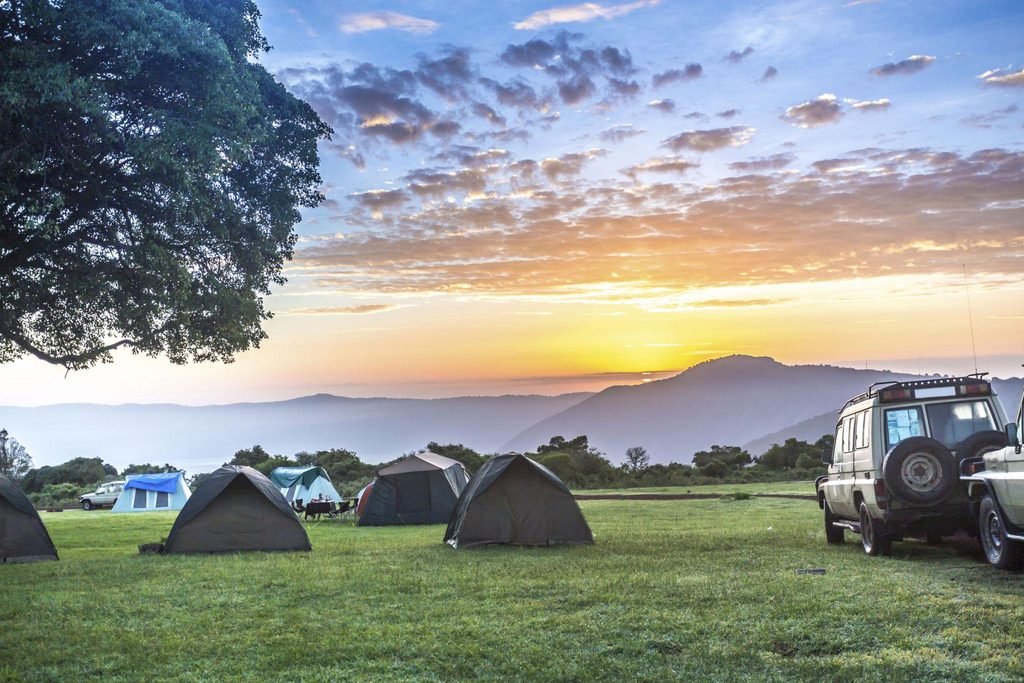
Depending on the confirmed campsite arrangements, you may spend the night at a designated campsite on the Ngorongoro Crater rim, such as Simba Public Campsite. The crater rim is considerably higher and often cooler than the Serengeti plains, so a warm jacket, long trousers, and suitable sleeping equipment are particularly important. Temperatures can drop noticeably during the evening and early morning.
Dinner will be served at the campsite, and your guide will explain the arrangements for the following day’s crater game drive. Visitors should remain within authorised campsite areas and avoid walking around after dark without permission or guidance, as wildlife may move through the surrounding environment.
Accommodation: Designated campsite in Ngorongoro Conservation Area.
Meals: Breakfast, lunch and dinner.
Main activity: Serengeti game drive and transfer to Ngorongoro.
Day 6: Ngorongoro Crater Game Drive – Return to Arusha
Your final safari day begins with an early breakfast before descending into Ngorongoro Crater for a game drive. The crater is one of Tanzania’s most popular wildlife destinations because it supports a wide variety of animals within a relatively compact area. The crater floor contains grassland, woodland, wetlands, and water sources that provide suitable habitats for different wildlife species.
During the game drive, you may encounter lions, elephants, buffaloes, zebras, wildebeest, hippos, hyenas, and numerous bird species. Ngorongoro is also one of the places in Tanzania where visitors may have an opportunity to observe the endangered black rhinoceros, although sightings are not guaranteed. The crater’s varied habitats make it possible to observe several animal species during the same visit, depending on their movements and the routes selected.
Your guide will explore suitable wildlife areas while following the conservation area’s regulations. A picnic lunch will be arranged at an authorised location before continuing with the remaining game drive or beginning the journey out of the crater. The crater visit is normally limited by the applicable permit and operating rules, so the schedule should be agreed with your guide in advance.
After ascending from the crater, you will travel back towards Arusha, passing through Karatu and other towns along the route. Arrival in Arusha is generally expected later in the afternoon or evening, depending on road conditions and the time spent in the crater. Travellers planning an international departure on the same day should confirm that their flight schedule allows sufficient time for the transfer; otherwise, an additional night in Arusha is advisable.
Accommodation: Not included after the safari unless arranged separately.
Meals: Breakfast and lunch.
Main activity: Ngorongoro Crater game drive and return to Arusha.
For more information about the area and its attractions, visit the official Ngorongoro Conservation Area Authority.
6 Days Tanzania Camping Safari Price for 2027, 2028 and 2029
The cost of a six-day Tanzania camping safari depends on the number of travellers, travel season, national park fees, campsite charges, and transport arrangements. Camping is generally more affordable than staying in luxury lodges because accommodation costs are lower, but important expenses such as park entrance fees, conservation charges, fuel, and guiding services still apply.
Eddy Tours & Safaris has published the following indicative camping prices for its existing six-day itinerary. These figures are useful for early budgeting, but they should not be treated as guaranteed prices for 2027, 2028, or 2029.
Estimated Safari Prices Per Person
| Number of Travellers | Indicative Price Per Person |
|---|---|
| 2 travellers | USD 2,150 |
| 4 travellers | USD 1,850 |
| 6 travellers | USD 1,650 |
| Solo private traveller | USD 2,950 |
These figures come from the company’s published six-day camping safari package. They are not confirmed 2029 prices, and they should not be confused with fixed-departure joining-group rates. A confirmed quotation may be higher or lower depending on the number of people sharing the vehicle, travel dates, and services requested.
Travellers should request a personalised quotation before making payment. The final price should clearly state the number of people, accommodation arrangements, park fees, transport services, and any additional expenses.
What Is Included in the 6 Days Tanzania Camping Safari?
A standard organised camping safari usually includes transport, professional guiding, camping accommodation, meals during the safari, and the necessary camping equipment. However, inclusions vary between packages, so travellers should review their quotation carefully rather than assuming every service is automatically covered.
For this six-day itinerary, the proposed package includes:
- Transport in a 4×4 safari vehicle with a pop-up roof.
- Professional English-speaking driver-guide.
- Five nights of camping accommodation.
- Camping tents and basic sleeping equipment.
- Meals during the safari as specified in the itinerary.
- Drinking water during game drives.
- National park entrance fees and applicable conservation charges.
- Ngorongoro Crater vehicle service fees.
- Camping fees at the designated campsites.
- Game drives in Tarangire, Lake Manyara, Serengeti, and Ngorongoro Crater.
- Pick-up and drop-off in Arusha at agreed locations.
All inclusions must be confirmed in the final booking document, particularly where campsite arrangements, equipment, or fees differ from the standard package.
What Is Not Included in the Safari Price?
Certain expenses are normally paid separately unless they are specifically included in the quotation. These may include international flights, Tanzania visas, travel insurance, personal purchases, alcoholic beverages, tips, and accommodation before or after the safari.
Optional activities, such as cultural visits or a hot-air balloon safari, are also generally excluded from a standard budget camping package. Travellers who want to add these activities should request the price in advance so that they can calculate the total cost of their holiday.
Airport transfers should also be confirmed separately because some safari packages include them while others begin with collection from a hotel in Arusha.
Why Choose a Camping Safari Instead of a Lodge Safari?
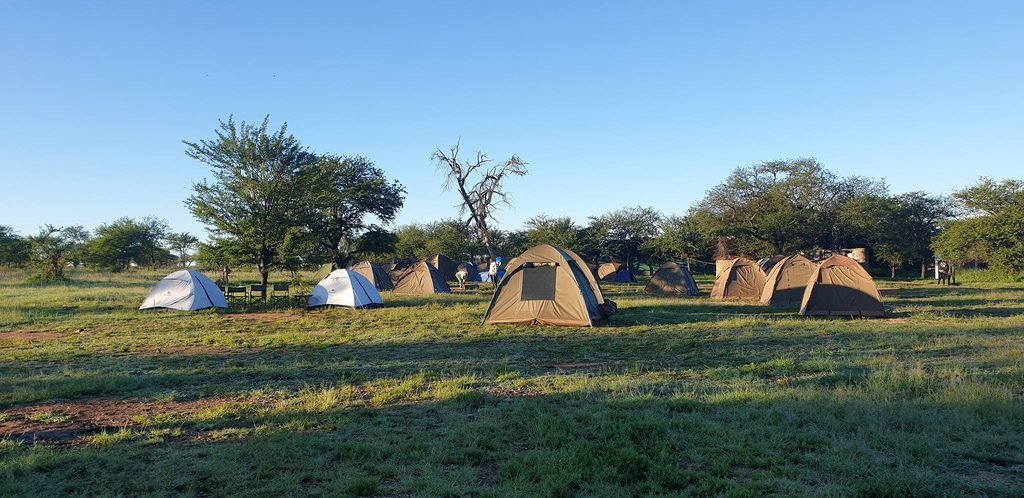
The main reason travellers choose camping is to reduce accommodation expenses while still visiting Tanzania’s national parks. A camping safari provides opportunities to observe the same wildlife habitats as a lodge safari, but overnight accommodation is simpler. Instead of private hotel rooms, guests sleep in tents at designated campsites, where facilities may include shared toilets, showers, and dining areas.
Camping can also appeal to travellers who enjoy spending time outdoors and prefer a straightforward travel experience. After a day of game drives, guests return to the campsite for dinner and rest before the following morning’s activities. The experience is different from staying in a lodge, but it can be rewarding for visitors who are comfortable with basic facilities and changing weather conditions.
However, camping is not the best choice for everyone. Travellers who require private bathrooms, hotel-style beds, or additional comfort may prefer a mid-range lodge safari. Families with young children and visitors with particular accessibility needs should also discuss their requirements before booking. Choosing the right accommodation category is important because the lowest price does not always provide the most suitable experience.
Our Tanzania safari packages for different budgets provide additional options for travellers comparing camping, mid-range, and luxury accommodation.
Best Time for a 6 Days Tanzania Camping Safari in 2027–2029
A six-day Tanzania camping safari can be arranged throughout the year, but weather conditions and wildlife movements change between seasons. The most suitable travel period depends on whether you prefer relatively dry conditions, green landscapes, birdwatching, or the possibility of observing seasonal wildebeest movements.
June to October: Dry-Season Camping Safaris
June to October is generally a popular period for wildlife viewing in northern Tanzania. Rainfall is often lower, vegetation may be less dense, and animals frequently gather near available water sources. Tarangire can be particularly rewarding during the dry season because elephants and other wildlife may concentrate near the Tarangire River.
Camping conditions are often more convenient during relatively dry weather, although nights can be cold, especially around Ngorongoro. This period is also popular with international travellers, so campsites and safari services should be booked in advance.
November to March: Green Landscapes and Wildlife Viewing
November to March can provide attractive green landscapes and good birdwatching opportunities in many areas. The southern Serengeti and Ndutu region are particularly important during the wildebeest calving season, usually around January and February.
However, the standard six-day itinerary described here concentrates on the central Serengeti rather than travelling to Ndutu. Travellers who specifically want to see the calving season should request an adjusted itinerary with accommodation closer to the southern plains.
April and May: Rainy-Season Safaris
April and May are generally wetter months in much of northern Tanzania. The parks remain attractive, with green vegetation and fewer visitors in some areas, but heavy rainfall may affect road conditions and camping comfort.
Travellers visiting during these months should bring suitable waterproof clothing and confirm that their selected campsites and access roads are operating normally.
What Wildlife Can You See During a Six-Day Tanzania Safari?
One of the main advantages of visiting four different destinations is the opportunity to observe wildlife in several habitats. Tarangire is particularly associated with elephants and baobab woodland, Lake Manyara supports forest and lake-associated species, Serengeti is known for predators and grazing animals, and Ngorongoro Crater contains a mixture of wildlife within its volcanic landscape.
Visitors may encounter lions, leopards, cheetahs, elephants, buffaloes, giraffes, zebras, wildebeest, hippos, hyenas, warthogs, and numerous antelope species. Birdwatchers may also observe eagles, vultures, ostriches, hornbills, herons, and other birds depending on the season and location.
Although the itinerary includes areas where members of the Big Five occur, seeing all five animals is not guaranteed. Rhinoceroses are particularly difficult to observe, and leopards can be difficult to locate because of their behaviour and camouflage. A professional guide can help identify suitable wildlife areas, but animals move freely and cannot be expected to appear at particular times.
Camping Facilities and Accommodation During the Safari
Camping facilities vary between locations, but public campsites in Tanzania’s safari areas generally provide designated spaces for tents and basic shared facilities. Some campsites have toilet blocks, showers, and communal dining areas, while others offer simpler arrangements. Water availability, electricity, and shower conditions can vary, so travellers should confirm what is available at each campsite before departure.
The tents used on an organised camping safari are normally arranged by the operator, together with sleeping equipment according to the booking agreement. Travellers should confirm whether mattresses, sleeping bags, pillows, and other personal items are provided or whether they need to bring their own. A sleeping bag suitable for cooler temperatures is particularly important for nights near Ngorongoro Crater.
Camping inside wildlife areas requires attention to safety. Food should be stored properly, tents should remain closed when not in use, and visitors should avoid walking around campsites after dark without permission or guidance. Wild animals may pass near designated camping areas, and travellers must follow the instructions of their guide and park staff at all times.
What to Pack for a 6 Days Tanzania Camping Safari
Packing for a camping safari is different from preparing for a lodge holiday because travellers spend more time outdoors and may have limited access to laundry facilities. Comfortable clothing, practical footwear, and personal hygiene items are particularly important.
Lightweight clothes are suitable for daytime game drives, while a warm jacket, fleece, and long trousers are useful during early mornings and cooler evenings. Neutral-coloured clothing is generally practical for wildlife viewing, and a rain jacket may be useful depending on the season. Comfortable closed shoes are recommended for moving around campsites and designated walking areas.
Other useful items include a small torch or headlamp, sunscreen, insect repellent, sunglasses, a hat, personal medication, a reusable water bottle, binoculars, and a camera. A power bank can also be helpful because charging facilities may be limited at some campsites.
Travellers should pack their belongings in soft-sided bags where practical and avoid bringing unnecessary luggage. Those arriving from international flights should keep important documents, medication, and valuable items in their hand luggage.
Is a 6 Days Tanzania Camping Safari Suitable for Solo Travellers?
Yes. A six-day camping safari can be suitable for solo travellers who want to explore Tanzania’s national parks without paying for luxury accommodation. Joining-group departures may provide an opportunity to share vehicle and guiding costs with other travellers, although availability depends on the dates and itinerary offered by the operator.
Solo travellers should confirm whether they will share a tent, whether a single-person supplement applies, and how many people will be travelling in the safari vehicle. It is also useful to ask whether the departure is guaranteed or depends on reaching a minimum number of participants.
Private camping safaris are another option for solo travellers who prefer greater flexibility, although the cost is usually higher because vehicle and guiding expenses are not shared.
How to Save Money on Your Tanzania Camping Safari
The best way to reduce safari costs is to make sensible decisions about accommodation, travel dates, and the number of people sharing the vehicle. Camping already helps lower accommodation expenses, but transport and park fees remain important parts of the total cost. Travelling with friends or joining a group can reduce the amount each person pays towards vehicle and guiding services.
Choosing a well-planned route is equally important. The six-day itinerary combines Tarangire, Lake Manyara, Serengeti, and Ngorongoro in a logical sequence, reducing unnecessary backtracking. However, travellers who want to spend more time in the Serengeti may prefer to remove Lake Manyara and use that day for additional wildlife viewing rather than increasing the overall safari duration.
It is also important to compare quotations carefully. A cheaper package may exclude park fees, camping equipment, drinking water, or other services that another operator includes. Travellers should request a complete written quotation and check the accommodation arrangements, vehicle type, number of participants, meals, and payment conditions before confirming their booking.
Tanzania National Park Fees for 2027, 2028 and 2029
National park entrance fees, camping charges, and conservation fees form an important part of the total safari cost. These charges are generally set by the relevant authorities and may vary according to visitor nationality, age, season, and the type of activity.
The fees for Serengeti, Tarangire, and Lake Manyara are administered by Tanzania National Parks Authority, while Ngorongoro Conservation Area has its own fee arrangements. A camping safari may involve entrance fees, camping fees, vehicle charges, and the applicable Ngorongoro Crater service fees.
Travellers should not assume that fees published for earlier years will remain unchanged in 2027, 2028, or 2029. Updated charges should be confirmed when preparing the final quotation, and the operator should explain whether all required fees are included in the safari price.
Official information can be found through the Tanzania National Parks tariff page and the Ngorongoro Conservation Area Authority website. These are useful references when reviewing park charges and visitor regulations.
Why Book Your Camping Safari with a Local Tour Company in Arusha?
Arusha is the main starting point for many northern Tanzania safaris because of its location near Tarangire, Lake Manyara, Ngorongoro, and the routes leading to Serengeti National Park. Booking with a local operator based in Arusha can make it easier to discuss itinerary details, accommodation arrangements, vehicle availability, and transfers before beginning your journey.
A reliable safari operator should provide a clear itinerary, explain the accommodation category, confirm the number of participants, and identify the services included in the price. Travellers should also receive information about payment arrangements, cancellation conditions, and any additional costs that may apply.
Eddy Tours & Safaris arranges Tanzania wildlife holidays for visitors interested in budget camping, mid-range accommodation, and private safari experiences. Travellers can explore our all-inclusive Tanzania safari options or request an itinerary based on their preferred dates and budget.
Frequently Asked Questions About the 6 Days Tanzania Camping Safari
How Much Does a 6 Days Tanzania Camping Safari Cost?
The price depends on the number of travellers, travel dates, camping arrangements, and services included. Eddy Tours & Safaris has published indicative prices starting from USD 1,650 per person for a six-person booking of its existing six-day package. These are planning figures rather than guaranteed 2027–2029 rates, so travellers should request a current quotation before booking.
Is Six Days Enough for a Tanzania Camping Safari?
Yes. Six days provides enough time to visit several important destinations on Tanzania’s northern safari circuit, including Tarangire, Lake Manyara, Serengeti, and Ngorongoro. However, the itinerary involves some long driving days, so travellers who prefer a slower pace may benefit from adding one or two extra days.
Can I See the Big Five During This Safari?
The itinerary visits areas where lions, leopards, elephants, buffaloes, and rhinoceroses occur, but seeing all five animals cannot be guaranteed. Ngorongoro Crater provides an opportunity to search for black rhinoceroses, while Serengeti is particularly well known for its predators.
Is Camping Safe in Serengeti National Park?
Camping is permitted at designated campsites, but visitors must follow park regulations and the instructions of their guides. Wild animals may move near camping areas, so travellers should avoid walking around after dark without guidance and must never approach or feed wildlife.
Are Toilets and Showers Available at the Campsites?
Many public campsites provide shared toilet and shower facilities, although the standard and availability of these services vary. Travellers should confirm the facilities at each campsite before booking, particularly if they have specific accommodation requirements.
What Is the Best Month for a Budget Camping Safari?
June to October is generally popular for wildlife viewing and relatively dry conditions. January and February can also be rewarding, particularly for travellers interested in the southern Serengeti calving season. April and May may offer quieter travel periods, but rainfall can affect camping conditions.
Can I Join a Group Camping Safari as a Solo Traveller?
Yes, joining-group camping safaris may be available on selected dates. Solo travellers should confirm departure availability, group size, tent-sharing arrangements, and any single supplement before booking.
Does the Safari Include Food and Drinking Water?
Organised camping packages normally include meals during the safari and drinking water, but the exact arrangements should be stated in the quotation. Travellers with dietary requirements should inform the operator before departure.
Can I Upgrade the Camping Safari to a Lodge Safari?
Yes. The itinerary can generally be adjusted to include mid-range lodges or tented camps instead of public campsites, subject to availability and additional costs. Travellers can request a comparison between camping and lodge accommodation before choosing their preferred package.
Can I Book This Safari for 2027, 2028 or 2029?
Yes, travellers can enquire about departures for these years. Final availability and prices depend on the travel dates, campsite arrangements, park fees, and the services requested. Advance booking is recommended, especially during popular safari seasons.
Book Your 6 Days Tanzania Camping Safari for 2027, 2028 or 2029
A 6 Days Tanzania Camping Safari is a practical choice for travellers who want to visit Tanzania’s famous national parks while keeping accommodation expenses lower than those of a lodge-based holiday. The itinerary combines wildlife viewing in Tarangire, Lake Manyara, Serengeti, and Ngorongoro Crater with five nights of camping, giving visitors an opportunity to experience different landscapes and animal habitats during one journey.
Camping allows you to spend your days exploring the national parks and your evenings at designated campsites, with meals and accommodation arranged as part of the safari. Whether you are travelling alone, with your partner, or with a group of friends, the itinerary can be adjusted according to your preferred travel dates, accommodation requirements, and available budget.
Eddy Tours & Safaris is a local tour company in Arusha, Tanzania, offering professionally guided wildlife safaris, Kilimanjaro climbing trips, and private holidays. Our team can help you arrange a six-day Tanzania camping safari for 2027, 2028, or 2029, including transport, camping accommodation, park visits, and the necessary safari arrangements.
To begin planning your holiday, visit the Eddy Tours & Safaris official website or contact our safari team for a quotation.
Contact Eddy Tours & Safaris
Location: Arusha, Tanzania
Email: sales@eddytours-safaris.com
Phone/WhatsApp: +255 711 906 664
2 Comments
Comments are closed.