
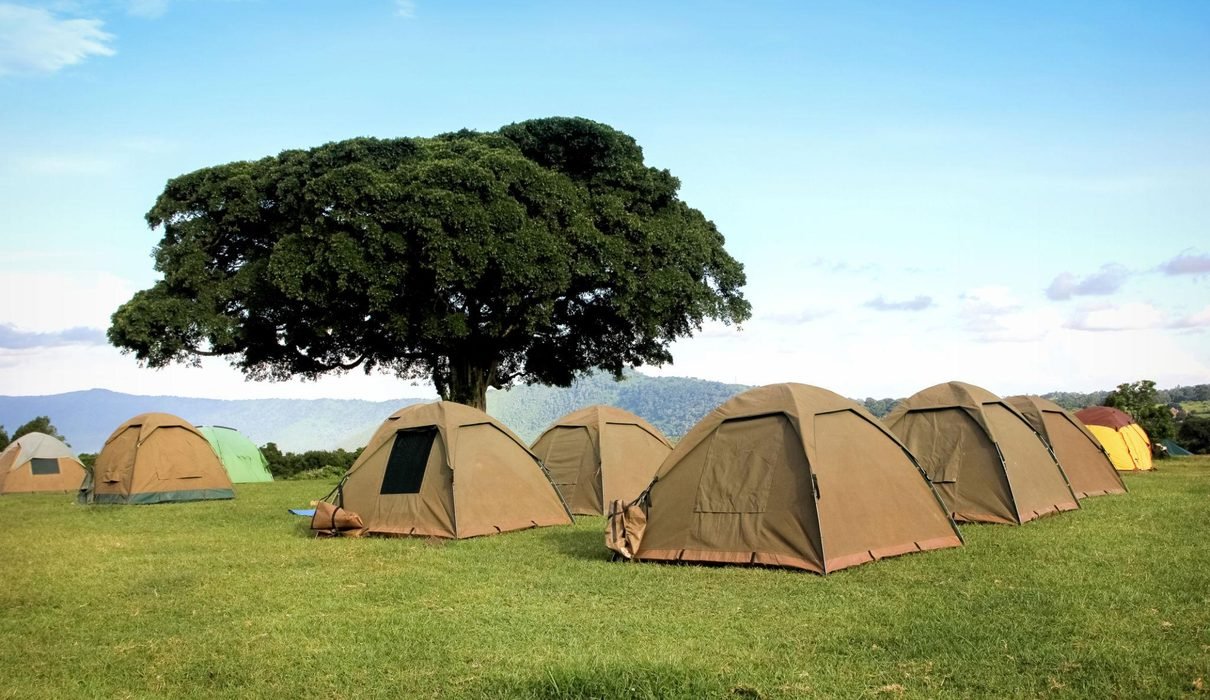
A 7-day private camping safari in Tanzania is an excellent way to explore the country’s famous national parks while keeping your travel arrangements simple and your accommodation costs reasonable. Whether you are starting your holiday in Moshi, Arusha, Kilimanjaro International Airport, Arusha Airport, or Karatu, this seven-day safari takes you through some of the best wildlife destinations in northern Tanzania, including Tarangire National Park, Lake Manyara National Park, Serengeti National Park, and Ngorongoro Crater.
Unlike a joining-group safari, a private camping safari gives you your own safari vehicle and professional driver-guide. You can travel with your partner, family, or friends without sharing the vehicle with other tourists. Your guide follows an agreed itinerary while allowing reasonable flexibility for wildlife sightings, photography, and rest stops. At the end of each day, you stay at designated campsites, where you can enjoy dinner and spend the night surrounded by the natural environment.
Camping is particularly attractive to travellers who prefer spending their money on wildlife experiences rather than expensive accommodation. You still visit the same national parks as travellers staying in luxury lodges, use established game-drive routes, and have opportunities to observe lions, elephants, giraffes, zebras, buffaloes, cheetahs, leopards, and many other animals. The main difference is the accommodation style, which is simpler and generally more affordable.
This 7-day Tanzania private camping safari for 2027, 2028, and 2029 has been designed for travellers who want to experience several national parks without making unnecessary journeys. The route begins with Tarangire, continues to Lake Manyara and Serengeti, and finishes with Ngorongoro Crater before returning to your preferred drop-off location. The exact order and overnight arrangements can be adjusted depending on where you begin your safari.
At Eddy Tours & Safaris, we arrange private Tanzania wildlife safaris for travellers arriving through different northern Tanzania locations. Our team can help you choose suitable camping arrangements, organise your pickup, and prepare a quotation based on your travel dates and group size.
Overview of the 7-Day Tanzania Private Camping Safari
This safari follows Tanzania’s northern wildlife circuit, which connects several important national parks through Arusha, Mto wa Mbu, Karatu, and the Ngorongoro highlands. The itinerary combines different landscapes, from Tarangire’s baobab woodland and Lake Manyara’s groundwater forest to the open plains of the Serengeti and the volcanic landscape of Ngorongoro Crater.
Seven days provide enough time to explore these destinations, although some days involve considerable driving. The itinerary is particularly suitable for travellers who want to experience the central Serengeti alongside other northern Tanzania parks. Visitors whose main interest is the northern Serengeti’s Mara River crossings should consider extending their safari or changing the route because reaching that region requires additional travel time.
Safari at a Glance
| Safari Information | Details |
|---|---|
| Safari name | 7-Day Private Camping Safari in Tanzania |
| Travel years | 2027, 2028 and 2029 |
| Safari duration | 7 days / 6 nights |
| Safari type | Private wildlife safari |
| Accommodation | Public campsites or other prearranged camping facilities |
| Transport | Private 4×4 safari vehicle |
| Main destinations | Tarangire, Lake Manyara, Serengeti and Ngorongoro Crater |
| Pickup locations | Moshi, Arusha, Kilimanjaro International Airport, Arusha Airport or Karatu |
| Drop-off locations | Arusha, Moshi, Karatu or an agreed airport |
| Suitable for | Couples, families, friends and solo travellers |
| Main activities | Wildlife game drives, photography and camping |
| Meals | According to the confirmed full-board camping package |
| Guide | Professional English-speaking safari driver-guide |
| Departure dates | Private departures arranged according to availability |
Why Choose a Private Camping Safari in Tanzania?
A private camping safari offers a practical balance between independence, wildlife viewing, and cost. Unlike group safaris that operate according to fixed departure schedules, private safaris can usually be arranged around your preferred dates. This is particularly helpful if you are arriving in Tanzania after climbing Mount Kilimanjaro, travelling with children, or planning your holiday around international flights.
Your private vehicle also allows you to spend more time observing animals that interest you. For example, if your guide finds a pride of lions resting near a rocky outcrop, you may decide to remain there for a reasonable period rather than immediately continuing to another location. Wildlife viewing must still follow national park rules, but the flexibility of a private safari can make the experience more comfortable.
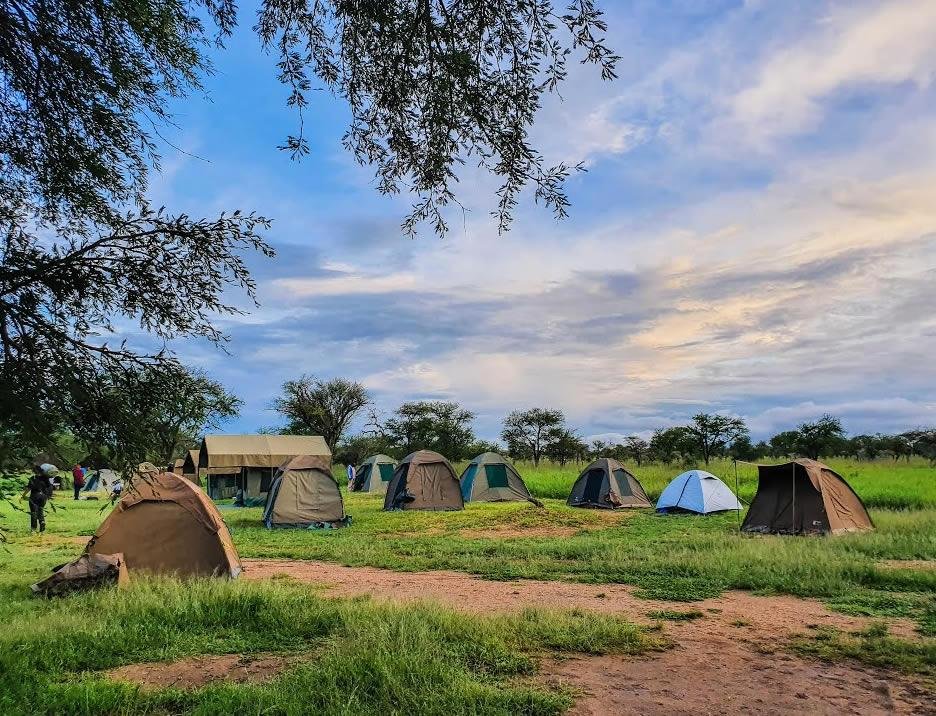
Camping is another important part of this holiday. Instead of spending every evening inside a lodge, you stay at designated campsites where you can hear the natural sounds of the surrounding environment. Camping in wildlife areas requires proper safety arrangements, suitable equipment, and respect for park regulations. Your guide and camping team will explain the rules, including where you may walk and how food and personal belongings should be stored.
Travellers comparing different safari styles can read more about private Tanzania safari tours or explore the company’s Tanzania camping safari options before deciding which arrangement suits their needs.
Where Can You Start Your 7-Day Tanzania Camping Safari?
One of the advantages of this itinerary is that it can be arranged from several locations in northern Tanzania. However, your pickup point affects the first day’s travel time, so the itinerary should be adjusted accordingly rather than treating every departure location as identical.
Starting from Arusha
Arusha is the most convenient starting point for many northern Tanzania safaris because it is located along the main route towards Tarangire, Lake Manyara, Ngorongoro, and Serengeti. Travellers staying in Arusha can usually begin their journey after breakfast and reach Tarangire in time for a game drive, depending on traffic and park entry procedures.
Starting from Arusha also makes it easier to arrange equipment, supplies, and final safari preparations before leaving town. For travellers arriving the previous day, spending one night in Arusha is often a practical choice.
Starting from Moshi
Moshi is particularly convenient for travellers who have completed a Mount Kilimanjaro climb or are staying near the mountain. A safari beginning in Moshi normally involves travelling towards Arusha before continuing to the national parks. This adds driving time compared with an Arusha departure, so an early pickup is recommended.
For travellers combining mountain trekking with wildlife viewing, it is important to allow enough recovery time after the climb. A seven-day safari can be arranged immediately after your trek, but you may prefer a rest day in Moshi before beginning the journey.
Starting from Kilimanjaro International Airport
Kilimanjaro International Airport, commonly known as JRO, is one of the main arrival points for international visitors travelling to northern Tanzania. Airport pickup can be included in the safari arrangements, but the first day’s activities depend on your arrival time.
If your flight arrives early in the morning, it may be possible to continue towards Tarangire after immigration procedures and collecting your luggage. Travellers arriving in the afternoon or evening should generally plan an overnight stay before beginning the full safari programme.
Starting from Arusha Airport
Arusha Airport, commonly known as ARK, serves domestic and regional flight connections. Travellers arriving through this airport can be collected and transferred directly towards the safari route when the flight schedule allows.
Because domestic flights can arrive at different times, the first day’s game drive should be planned around the confirmed arrival schedule. Your safari operator should also allow time for luggage collection and any necessary preparations.
Starting from Karatu
Karatu is located near the Ngorongoro highlands and is a convenient starting point for travellers already staying in the area. However, Karatu lies farther along the northern circuit than Arusha, so the route may need to be rearranged.
For example, a safari starting in Karatu may begin with Lake Manyara or Ngorongoro before continuing towards Serengeti and Tarangire. This helps avoid unnecessary driving back towards Arusha at the beginning of the trip.
Detailed 7-Day Private Camping Safari Itinerary
The following itinerary is based on a morning departure from Arusha or Moshi. Airport arrivals and Karatu departures can be adjusted according to the pickup location, flight schedule, and campsite availability.
Day 1: Pickup from Moshi, Arusha or Airport – Tarangire National Park
Your seven-day private camping safari begins with pickup from your hotel or another agreed location. After meeting your safari driver-guide and checking your luggage, you will travel towards Tarangire National Park. Travellers departing from Arusha normally have a shorter journey, while those starting in Moshi should expect additional driving time. If you are arriving at an airport, the day’s schedule will depend on your flight arrival and the time required to complete airport formalities.
Tarangire National Park is famous for its large elephant populations, baobab trees, and seasonal wildlife concentrations. As you begin your game drive, you may encounter elephants moving through woodland, giraffes feeding on trees, zebras grazing in open areas, and buffaloes gathering near water sources. Lions, antelopes, warthogs, and many bird species also occur in the park, although sightings depend on animal movements and environmental conditions.
The Tarangire River is an important feature of the park, particularly during the dry season when water becomes less available in surrounding areas. Your guide will explore suitable wildlife routes while explaining the behaviour of different animals and the natural features of the landscape. Lunch will be arranged according to the safari schedule, and you will continue with wildlife viewing before travelling to your campsite.
After arriving at the campsite, the camping team will prepare dinner while you settle into your accommodation. Depending on the selected campsite, you may spend the night inside the park or at a designated camping facility outside its boundaries. Your final quotation will confirm the campsite location and facilities.
Accommodation: Camping near or within Tarangire National Park.
Meals: Lunch and dinner, with breakfast depending on pickup arrangements.
For official information about park access, camping facilities, and wildlife regulations, see the Tarangire National Park visitor guide.
Day 2: Tarangire Area to Lake Manyara National Park
After breakfast at the campsite, you will travel towards Lake Manyara National Park, located near Mto wa Mbu at the base of the Great Rift Valley escarpment. The journey passes through rural settlements and agricultural landscapes before reaching the park entrance. Lake Manyara offers a different environment from Tarangire, with groundwater forest, open areas, wetlands, and lake habitats supporting a wide range of wildlife.
During the game drive, your guide will search for elephants, buffaloes, giraffes, zebras, monkeys, and various bird species. The forested sections of the park are particularly interesting because they provide opportunities to observe primates and other animals living in a different habitat from the open savannah. Lake Manyara is also associated with tree-climbing lions, although seeing this behaviour is uncommon and should not be expected during every visit.
The lake environment attracts waterbirds, including flamingos when conditions are suitable. Bird numbers change according to water levels, food availability, and seasonal movements, so the experience varies throughout the year. Your guide will select appropriate viewing areas while following park regulations and avoiding restricted routes.
After completing the game drive, you will continue towards your campsite in the Mto wa Mbu or Karatu area. The afternoon and evening provide time to rest, enjoy dinner, and prepare for the longer journey towards Serengeti National Park the following day.
Accommodation: Camping near Mto wa Mbu or Karatu.
Meals: Breakfast, lunch and dinner.
Visitors interested in the park’s different habitats can consult the official Lake Manyara visitor guide.
Day 3: Karatu to Serengeti National Park via Ngorongoro Highlands
After an early breakfast, you will begin the journey towards Serengeti National Park. The road passes through the Ngorongoro highlands, where the landscape changes from agricultural areas and forested slopes to open grasslands. Depending on weather conditions, there may be opportunities to stop at designated viewpoints and appreciate the scenery before continuing towards the Serengeti.
The journey takes several hours, so this day combines travelling with wildlife viewing rather than a full day of game drives. Your guide will manage the route according to road conditions, entry procedures, and the location of your campsite. As you approach the Serengeti, the landscape gradually opens into extensive grasslands, providing a first impression of the park’s size.
After entering Serengeti National Park, you will begin searching for wildlife while travelling towards your campsite. The central Serengeti is known for its resident populations of lions, leopards, cheetahs, elephants, giraffes, buffaloes, and many other animals. Depending on the season, wildebeest and zebra herds may also be present in the area.
The afternoon game drive will continue as time permits before you reach the campsite. After arriving, you will settle into your tent and enjoy dinner prepared by the camping team. Spending the night at an authorised Serengeti campsite provides a different experience from staying in a town or lodge, but visitors must follow all campsite safety instructions because wild animals may move through the surrounding area.
Accommodation: Designated campsite in Serengeti National Park.
Meals: Breakfast, lunch and dinner.
Day 4: Full-Day Game Drive in Serengeti National Park
Your fourth day is dedicated to exploring Serengeti National Park. After breakfast, you will leave the campsite with your driver-guide for a full day of wildlife viewing. The exact route will depend on seasonal animal movements, weather conditions, and the areas accessible from your campsite. Your guide may explore open grasslands, riverine habitats, and rocky areas where different wildlife species are commonly found.
The Serengeti is particularly famous for its predators. Lions may be observed resting beneath trees or moving across the plains, while cheetahs are often associated with open areas where they can search for prey. Leopards are more difficult to locate because they are solitary and well camouflaged, but they may occasionally be seen resting in trees or moving through woodland. The park also supports elephants, buffaloes, giraffes, hyenas, jackals, zebras, and numerous antelope species.
One of the advantages of a private safari is the opportunity to spend more time at suitable wildlife sightings. If your guide locates interesting animal behaviour, you may remain in the area while respecting park regulations and the needs of other visitors. Photography enthusiasts can take advantage of different lighting conditions, while travellers interested in animal behaviour can learn about the relationships between predators, herbivores, and their habitats.
Lunch will be arranged at an authorised picnic area or another permitted location according to the day’s schedule. After lunch, you will continue exploring the park before returning to the campsite later in the afternoon. Dinner will be served at the campsite, followed by an overnight stay in the Serengeti.
Accommodation: Designated campsite in Serengeti National Park.
Meals: Breakfast, lunch and dinner.
For independent information about park access, accommodation and visitor regulations, see the Serengeti National Park visitor guide.
Day 5: Another Full Day Exploring the Serengeti
After breakfast, you will begin another day of game drives in Serengeti National Park. Having two full days in the park provides more time to explore different habitats and observe wildlife without rushing towards the next destination. Your guide can adjust the day’s route according to recent animal sightings, weather conditions, and your interests.
If you are visiting during a period when migrating wildebeest herds are present in the central Serengeti, you may encounter large groups of animals moving through the grasslands. However, the Great Migration follows rainfall and grazing conditions, and the herds are not always found in the same region. During some months, large concentrations may be in the southern Serengeti, western corridor, or northern Serengeti rather than near Seronera.
Even when the main migration herds are elsewhere, the central Serengeti offers opportunities to observe resident wildlife. Lions, leopards, cheetahs, giraffes, elephants, and numerous bird species remain important attractions throughout the year. Your guide may also explore different areas from those visited on the previous day, providing a broader understanding of the park’s landscape.
After completing the day’s game drive, you will return to the campsite for dinner and your final night in the Serengeti. Travellers interested specifically in the northern Serengeti’s Mara River crossings should discuss a modified itinerary before booking, as reaching Kogatende requires additional travel time and may not fit comfortably into this standard seven-day route.
Accommodation: Designated campsite in Serengeti National Park.
Meals: Breakfast, lunch and dinner.
For travellers planning their holiday around seasonal wildebeest movements, our Tanzania Great Migration safari guide explains how the expected location of the herds affects itinerary planning.
Day 6: Serengeti National Park to Ngorongoro Conservation Area
After breakfast, you will leave the campsite and begin travelling towards Ngorongoro Conservation Area. Depending on your campsite location and the time available, you may enjoy wildlife viewing while driving through the Serengeti before exiting the park. This journey provides another opportunity to observe animals and appreciate the changing landscape as you move from the open plains towards the Ngorongoro highlands.
The road between Serengeti and Ngorongoro passes through areas of considerable natural and geological interest. Your guide will explain the landscape and make suitable stops where permitted. The journey is relatively long, and road conditions can vary, so travellers should expect several hours inside the safari vehicle.
Ngorongoro Conservation Area is different from a conventional national park because it includes protected wildlife habitats alongside areas where local communities live and maintain traditional livelihoods. The conservation area contains volcanic highlands, grasslands, forest, and the famous Ngorongoro Crater, which you will visit the following day.
After arriving at your designated campsite near the crater rim or another approved camping location, you will settle in for the evening. Temperatures around Ngorongoro can be considerably cooler than those experienced in the Serengeti, particularly at night and early in the morning. Warm clothing is therefore important, even if you are travelling during Tanzania’s warmer months.
Accommodation: Designated campsite in the Ngorongoro highlands.
Meals: Breakfast, lunch and dinner.
Day 7: Ngorongoro Crater Game Drive and Return to Arusha, Moshi, Airport or Karatu
Your final safari day begins early with breakfast at the campsite before travelling towards Ngorongoro Crater. The crater is one of Tanzania’s most famous wildlife destinations and is known for the concentration of animals living within its grasslands, woodland, wetlands, and freshwater habitats. Descending into the crater provides opportunities to observe wildlife in a landscape that differs considerably from the Serengeti.
During the game drive, you may encounter lions, elephants, buffaloes, zebras, wildebeest, hippos, hyenas, and numerous bird species. Ngorongoro is also one of the places in Tanzania where visitors may have an opportunity to observe the endangered black rhinoceros, although sightings are never guaranteed. Your guide will explore suitable areas while following the crater’s established visitor regulations.
After completing the game drive and enjoying lunch according to the schedule, you will ascend from the crater and begin travelling towards your selected drop-off location. Travellers returning to Karatu have a relatively short transfer, while those travelling to Arusha or Moshi should expect additional driving. Airport drop-offs must be arranged carefully because the journey from Ngorongoro takes several hours, and sufficient time is needed for airline check-in and security procedures.
If your international flight departs early or in the afternoon, an additional overnight stay may be necessary. Your safari operator should confirm the feasibility of the transfer before finalising the itinerary.
Accommodation: Not included after the safari unless requested.
Meals: Breakfast and lunch.
For official information about Ngorongoro’s wildlife activities and visitor arrangements, consult the Ngorongoro Conservation Area Authority.
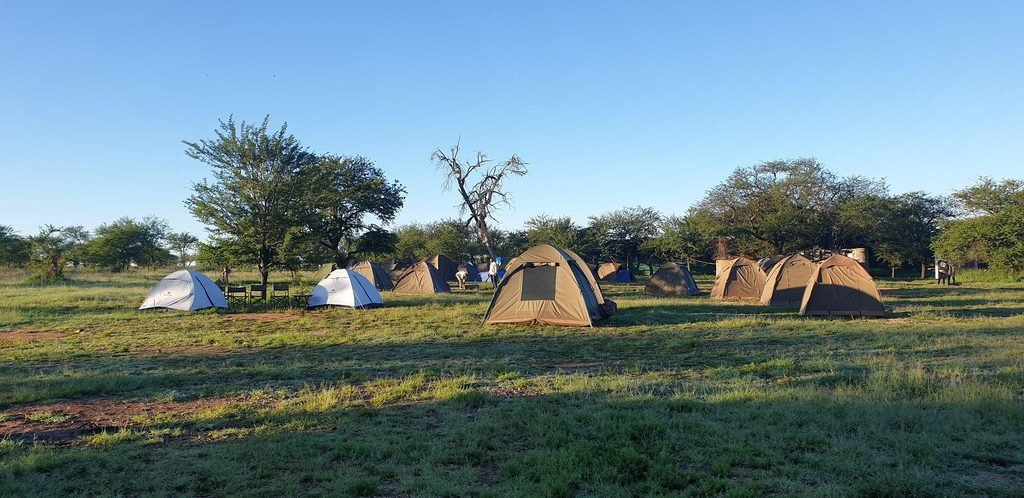
Where Will You Sleep During the Private Camping Safari?
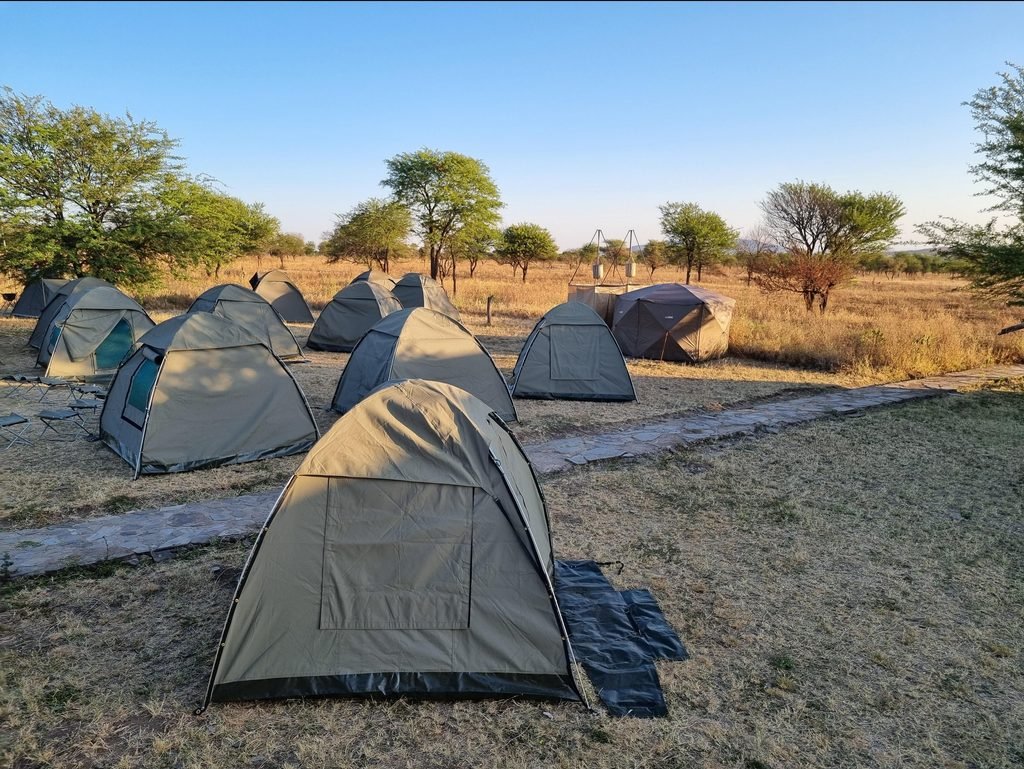
Accommodation is an important part of a camping safari, particularly for travellers who have never stayed overnight in a wildlife area. This itinerary is based on camping at authorised facilities in or near the national parks. Depending on the selected package, accommodation may include public campsites with shared toilet and shower facilities, or other approved camping locations with different levels of service.
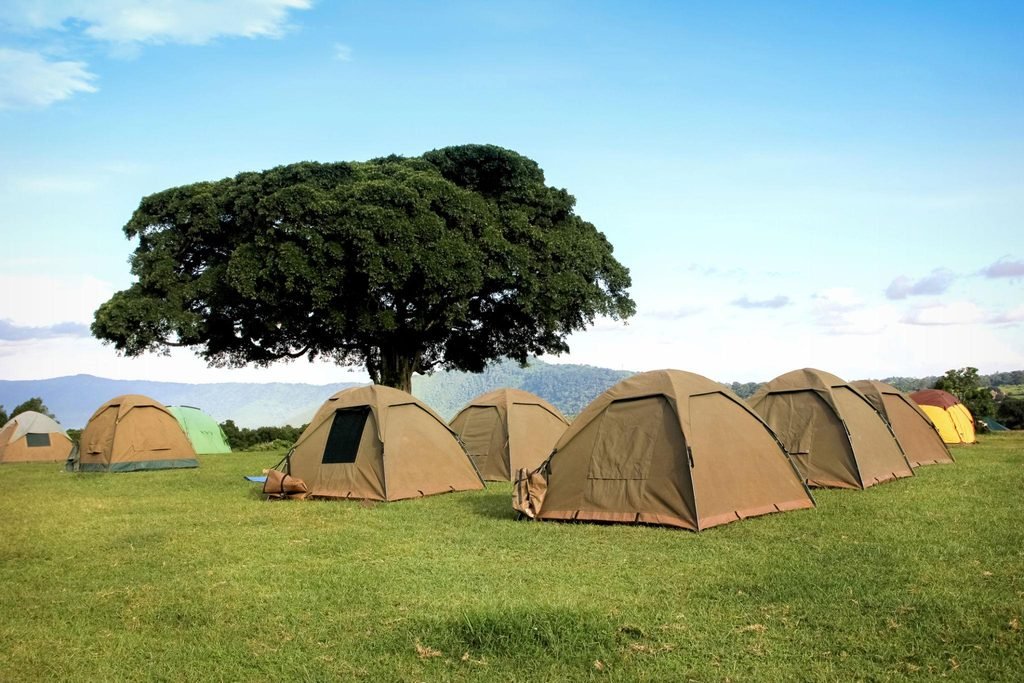
At public campsites, guests generally sleep in camping tents rather than permanent lodge rooms. Suitable sleeping mattresses and camping equipment should be provided according to the agreed package. Meals may be prepared by a safari cook, and the camping team manages the equipment needed for the trip. However, the exact arrangements depend on the package booked, so travellers should confirm whether a dedicated cook, sleeping bags, pillows, and other equipment are included.
A private camping safari does not necessarily mean that the entire campsite is reserved exclusively for your group. Other travellers may be staying at the same public campsite, even though your safari vehicle and guide are private. Visitors who want exclusive camping facilities should ask about special campsites and the additional costs involved.
It is also important to distinguish basic camping from permanent tented camps. Many permanent tented camps provide proper beds, private bathrooms, and lodge-style services, while basic camping involves simpler facilities. Travellers who prefer additional comfort can request an upgraded accommodation package before booking.
For more information about accommodation differences, read our Tanzania safari planning guide.
What Is Included in the 7-Day Private Camping Safari?
A complete private camping safari quotation should clearly explain the services included in the price. The standard arrangements for this proposed itinerary can include a private 4×4 safari vehicle, a professional driver-guide, camping accommodation, meals during the safari, park entry fees, applicable camping and conservation charges, and agreed pickup and drop-off transfers.
The safari vehicle should be suitable for wildlife viewing and have enough space for the number of travellers booked. Many northern Tanzania safari vehicles have a pop-up roof that allows passengers to stand while observing and photographing animals when conditions permit. Your guide is responsible for driving, explaining wildlife behaviour, following park regulations, and helping manage the daily travel schedule.
Meals are another important part of a camping safari. A typical full-board arrangement includes breakfast, lunch, and dinner, with drinking water provided according to the package. Travellers with dietary requirements should communicate them before departure so that suitable arrangements can be discussed.
Proposed Safari Inclusions
| Service | Proposed Arrangement |
|---|---|
| Private safari vehicle | Included |
| Professional driver-guide | Included |
| Game drives | Included |
| Camping accommodation | Included |
| Camping equipment | Included, subject to the confirmed equipment list |
| Meals during safari | Included as specified in the itinerary |
| Park entry fees | Included in a fully inclusive quotation |
| Ngorongoro conservation and crater charges | Included in a fully inclusive quotation |
| Drinking water | Included according to the package |
| Pickup and drop-off | Included from agreed locations |
| Camping cook | Confirmed according to the package |
| Sleeping bags and pillows | Confirmed before booking |
These are the intended arrangements for a complete camping package, not a substitute for the final written quotation. The booking confirmation should list the actual inclusions and any additional charges.
What Is Not Included in the Safari Price?
Although the main safari arrangements can be organised in advance, some expenses are normally excluded unless specifically requested. These may include international flights, Tanzania visa fees, travel insurance, alcoholic beverages, personal shopping, guide and cook tips, and optional activities.
Accommodation before the safari begins or after the final day may also be excluded. This is particularly important for travellers arriving at Kilimanjaro International Airport in the evening or departing on an early flight after the safari.
Optional activities, such as a Serengeti hot-air balloon safari or cultural visits, should be discussed before booking. Their availability depends on the destination, season, operating arrangements, and applicable fees.
How Much Does a 7-Day Private Camping Safari in Tanzania Cost in 2027, 2028 and 2029?
The cost of a seven-day private camping safari depends on the number of travellers, travel season, campsite arrangements, pickup location, and services included. Because the safari vehicle and guide are reserved for your group, the price per person generally decreases when several travellers share the same vehicle.
A couple travelling privately will usually pay more per person than a family or group of friends sharing the same safari arrangements. However, accommodation, park entry fees, meals, and other charges remain linked to the number of travellers, so the savings are not simply proportional.
For 2027, 2028, and 2029, travellers should request a personalised quotation rather than relying on an old published price. National park fees, camping charges, fuel costs, and other operating expenses may change before the departure date.
The Eddy Tours & Safaris homepage currently advertises a seven-day northern circuit safari starting from US$2,052 per person, but that listing is not specifically a confirmed price for this private camping itinerary or for all three future travel years. A separate written quotation is needed to establish the actual camping price, services, and booking conditions.
Travellers should also confirm whether the quoted price includes all applicable national park, camping, and Ngorongoro fees. Official park information is available from Tanzania National Parks Authority, while Ngorongoro visitor arrangements are managed by the Ngorongoro Conservation Area Authority.
Best Time for a 7-Day Private Camping Safari in Tanzania
Tanzania’s northern national parks can be visited throughout the year, but the experience changes according to rainfall, vegetation, and seasonal wildlife movements. The dry season, generally from June to October, is particularly popular because animals often gather near available water sources and vegetation may be less dense in some areas. This period is especially attractive for Tarangire, where elephants and other animals may concentrate around the Tarangire River.
January and February are also good months for a Tanzania safari. During this period, large wildebeest herds often gather on the southern Serengeti and Ndutu plains for the calving season. However, travellers following this standard seven-day route should understand that the central Serengeti is not always the best location for viewing the main migration herds. The itinerary may need to be adjusted towards Ndutu if migration viewing is your main priority.
March to May generally brings more rainfall to many parts of northern Tanzania. The landscape becomes greener, and some areas may be quieter, but heavy rain can affect road conditions and camping comfort. Travellers choosing these months should prepare for changing weather and allow flexibility in their daily activities.
Tanzania Safari Seasonal Guide for 2027–2029
| Travel Period | General Conditions | Main Attractions |
|---|---|---|
| January–February | Often warm, with seasonal rainfall | Southern Serengeti calving season and resident wildlife |
| March–May | Wetter conditions in many areas | Green landscapes, birdlife and quieter travel periods |
| June–July | Generally drier conditions | Tarangire wildlife and seasonal Serengeti movements |
| August–September | Popular dry-season travel period | Wildlife viewing and possible northern Serengeti migration activity |
| October | Late dry-season conditions | Wildlife near water sources |
| November–December | Short rains may occur | Green landscapes and seasonal herd movements |
The migration calendar is approximate because animal movements depend on rainfall and grazing conditions. Travellers interested in a particular migration event should discuss the appropriate Serengeti region before confirming their safari.
Is Seven Days Enough for Serengeti, Ngorongoro, Tarangire and Lake Manyara?
Seven days can provide a good introduction to Tanzania’s northern safari circuit, especially when the itinerary is arranged in a logical order. However, it is important to understand that the journey includes substantial driving between destinations. Tarangire and Lake Manyara are relatively close to Arusha compared with the Serengeti, while travelling to the Serengeti through the Ngorongoro highlands takes much longer.
The proposed itinerary provides one day in Tarangire, one day in Lake Manyara, several days in the Serengeti, and a final game drive in Ngorongoro Crater. This allows visitors to experience different landscapes while spending more time in the Serengeti, which is one of the largest and most important destinations on the route.
For travellers whose main interest is wildlife photography or the Great Migration, spending additional time in the Serengeti may be more valuable than including every park. A private safari can be adjusted to prioritise the destinations that matter most to you.
Travellers considering other itineraries can compare this route with our 6-day Tanzania joining-group safari or read our guide to planning a Tanzania safari.
What Wildlife Can You See During This Safari?
The northern Tanzania safari circuit supports a wide variety of wildlife, but each national park offers different habitats and animal populations. Tarangire is particularly well known for elephants, giraffes, zebras, buffaloes, and seasonal concentrations of grazing animals. Lake Manyara offers forest habitats, monkeys, elephants, buffaloes, and birdlife, while the Serengeti is famous for lions, leopards, cheetahs, wildebeest, zebras, and many other species.
Ngorongoro Crater provides opportunities to observe wildlife within a relatively compact area. Lions, elephants, buffaloes, hippos, zebras, and wildebeest occur in the crater, and visitors may occasionally encounter black rhinoceroses. However, seeing every member of the Big Five during one safari cannot be guaranteed.
Birdwatching is another important part of the experience. Depending on the habitats visited, travellers may observe eagles, vultures, hornbills, ostriches, storks, flamingos, and many other species. Your guide can help identify birds and explain how different species use the surrounding environment.
The variety of habitats visited during this seven-day safari is one of its main advantages. Rather than spending the entire holiday in one landscape, travellers experience woodland, forest, grassland, wetlands, and volcanic highlands within the same journey.
What Should You Pack for a Private Camping Safari?
Packing for a camping safari requires slightly more preparation than staying in lodges because you will spend several nights in tents and use shared or basic camping facilities. Comfortable clothing, suitable footwear, and a warm layer are important, particularly for early morning game drives and overnight stays near Ngorongoro Crater.
Neutral-coloured clothing is practical for safari activities, while a hat, sunglasses, sunscreen, and insect repellent can help you remain comfortable during the day. A small backpack is useful for carrying personal items inside the safari vehicle, and a camera or binoculars can improve your wildlife-viewing experience.
Travellers should also bring personal toiletries, medication, a flashlight or headlamp, and suitable charging equipment. Campsite electricity may be limited or unavailable, so a power bank can be useful. If your package does not include sleeping bags or pillows, these should be arranged before departure rather than purchased at the last minute.
A warm jacket is particularly important for Ngorongoro, where temperatures can be cool at night. Visitors travelling during the rainy season should also bring a lightweight waterproof jacket and protect electronic equipment from moisture.
Is a Private Camping Safari Safe?
Camping in Tanzania’s wildlife areas can be a rewarding experience when it is organised properly and visitors follow the instructions of their guide and campsite staff. However, wild animals may move through or near campsites, and visitors should never assume that a campsite is completely separated from wildlife.
Guests should remain within authorised camping areas, avoid walking away from their tents at night without following the campsite’s procedures, and never feed or approach wild animals. Food should be stored according to the instructions provided by the camping team, and rubbish must be disposed of properly.
During game drives, travellers should remain inside the safari vehicle except at authorised stopping points. Wildlife should be observed from a safe distance, and animals must never be blocked, chased, or disturbed for photographs.
A professional safari guide plays an important role in maintaining safety, but travellers also have a responsibility to follow instructions and respect national park regulations.
Can You Combine This Camping Safari with Kilimanjaro Climbing?
Yes. A seven-day private camping safari can be combined with a Mount Kilimanjaro climbing trip, particularly for travellers staying in Moshi before or after their trek. Many visitors choose to climb Kilimanjaro first and then continue to Tanzania’s national parks, although the order can be adjusted according to travel dates and personal preferences.
After completing a mountain climb, travellers should consider their physical condition before beginning a safari. Kilimanjaro trekking can be demanding, and some people prefer spending a rest day in Moshi before travelling towards Tarangire or Serengeti.
A combined mountain and wildlife holiday also requires careful planning around airport transfers, accommodation, and the total number of days available. Travellers should allow enough time for both activities rather than trying to fit a long trek and a full safari into an excessively short holiday.
For information about Tanzania’s mountain trekking options, visit the Eddy Tours & Safaris Kilimanjaro and safari website.
Can You Finish Your Safari in Zanzibar?
Travellers who want to combine wildlife viewing with a beach holiday can arrange a Zanzibar extension after completing their seven-day safari. Zanzibar offers opportunities to relax beside the Indian Ocean, explore Stone Town, and enjoy coastal activities after several days of game drives.
However, the standard itinerary ends in northern Tanzania, so additional transport is required to reach Zanzibar. Depending on flight schedules, travellers may fly from Arusha or Kilimanjaro International Airport, or arrange another suitable connection.
A Zanzibar extension should be planned before the safari begins so that accommodation, flights, and airport transfers can be coordinated. Travellers should also consider whether they prefer to finish the safari in Arusha or make different arrangements to reduce unnecessary travel.
Frequently Asked Questions About the 7-Day Private Camping Safari
Can I Start My Tanzania Camping Safari from Moshi?
Yes. Pickup can be arranged from Moshi, particularly for travellers who have completed a Kilimanjaro climb or are staying near the mountain. Because Moshi is farther from the northern safari parks than Arusha, an early departure is recommended.
Can I Start the Safari Directly from Kilimanjaro International Airport?
Yes, provided your flight arrival time allows the first day’s journey to proceed safely. Travellers arriving later in the day may need an overnight stay before beginning the safari.
Can I Start the Safari from Karatu?
Yes. A Karatu departure can be arranged, but the itinerary may need to be reorganised to avoid unnecessary driving. Your operator should confirm the route and camping locations before booking.
Is This a Private Safari or a Group Safari?
This itinerary is designed as a private safari, meaning your vehicle and driver-guide are reserved for your booking. However, public campsites may also accommodate other travellers.
Do I Need to Bring My Own Tent?
Not necessarily. Camping equipment can be included in the safari package, but you should confirm the exact equipment list before booking, including tents, mattresses, sleeping bags, and pillows.
Will There Be Toilets and Showers at the Campsites?
Many public campsites provide shared toilet and washing facilities, but the standard and availability of services vary. Your operator should confirm the facilities at each selected campsite.
Can I See the Big Five During This Safari?
The itinerary visits parks that support the Big Five, but seeing all five species cannot be guaranteed. Rhinoceroses and leopards can be particularly difficult to observe.
Is the Great Wildebeest Migration Included?
The itinerary visits Serengeti National Park, which forms part of the Great Migration ecosystem. However, the location of the migrating herds changes throughout the year, so the standard route does not guarantee migration sightings.
How Much Does a Seven-Day Private Camping Safari Cost?
The price depends on the number of travellers, travel dates, campsite arrangements, and services included. Request a written quotation for your preferred dates in 2027, 2028, or 2029.
Can Families with Children Book This Safari?
Yes. A private safari can be arranged for families, but parents should consider the children’s ages, long driving distances, campsite facilities, and safety requirements before confirming the itinerary.
Is a Camping Safari Cheaper Than a Lodge Safari?
Camping is often more affordable than staying in permanent lodges or luxury tented camps. However, the total price still depends on transport, park fees, group size, equipment, and other operating expenses.
Can the Itinerary Be Changed?
Yes. Private safari itineraries can generally be adjusted before booking according to your interests, available time, pickup location, and budget. Changes after confirmation may affect accommodation availability and the total price.
Book Your 7-Day Private Camping Safari in Tanzania for 2027, 2028 or 2029
A seven-day private camping safari provides an opportunity to explore some of Tanzania’s most important wildlife destinations while travelling with your own guide and vehicle. From the elephant habitats of Tarangire and the forest landscapes of Lake Manyara to the extensive Serengeti plains and Ngorongoro Crater, this itinerary combines different wildlife experiences within one carefully arranged journey.
Starting your safari from Moshi, Arusha, Kilimanjaro International Airport, Arusha Airport, or Karatu gives you flexibility when planning your Tanzania holiday. The most important step is choosing a departure arrangement that matches your arrival time and allows enough time for wildlife viewing without unnecessary rushing.
Eddy Tours & Safaris is a local tour company in Arusha, Tanzania, highly recommended by travellers who have toured with us. We arrange professionally guided Tanzania wildlife safaris, Kilimanjaro climbing trips, and private holidays, with itineraries planned according to our guests’ interests, travel dates, and budgets.
If you are planning a 7-day private camping safari in Tanzania for 2027, 2028, or 2029, our team can help you organise a suitable route, confirm camping arrangements, and prepare a quotation based on your group size and preferred pickup location.
To request your safari quotation, please share your travel dates, number of travellers, preferred pickup location, and any special requirements.
Contact Eddy Tours & Safaris
Location: Arusha, Tanzania
Phone/WhatsApp: +255 711 906 664
Email: sales@eddytours-safaris.com
Website: Eddy Tours & Safaris
Safari enquiries: Request Your Private Camping Safari Quote