
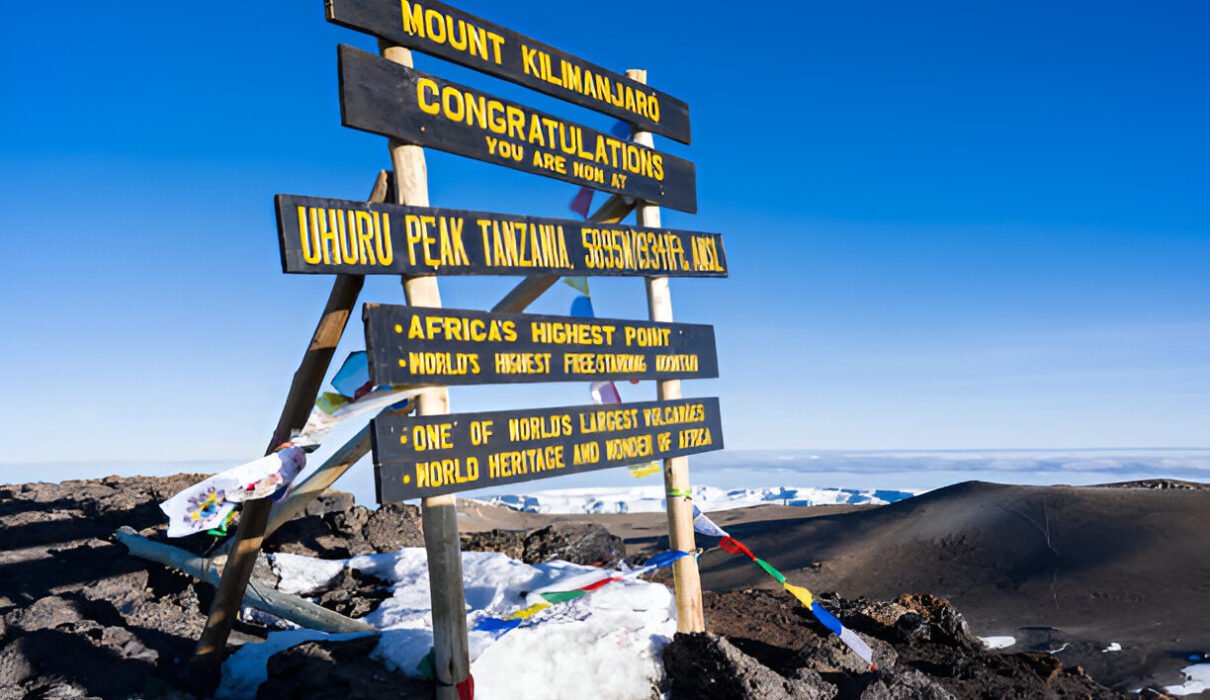
Close the year with a mountain journey on this 7-day Rongai Route Kilimanjaro climb, planned for a summit attempt on December 31. Approach Kilimanjaro from its northern side, camp beneath the rugged slopes of Mawenzi, and cross the high saddle toward Kibo before attempting Uhuru Peak.
The Rongai experience offers changing scenery throughout the expedition. The trail begins near cultivated land and forest, climbs into open moorland, and eventually reaches the sparse alpine landscape beneath the summit.
This seven-day itinerary includes two nights at Mawenzi Tarn, with a separate acclimatisation day before continuing to Kibo. After the summit attempt, descend through Horombo and finish at Marangu Gate, experiencing a different side of the mountain on the way down.
Your planned summit takes place on the morning of New Year’s Eve, followed by descent to Horombo Camp. You spend the final night of the year lower on the mountain and complete the trek on January 1.
Plan your expedition with Eddy Tours & Safaris, with your departure year, accommodation arrangements, equipment, and supporting services confirmed before booking.
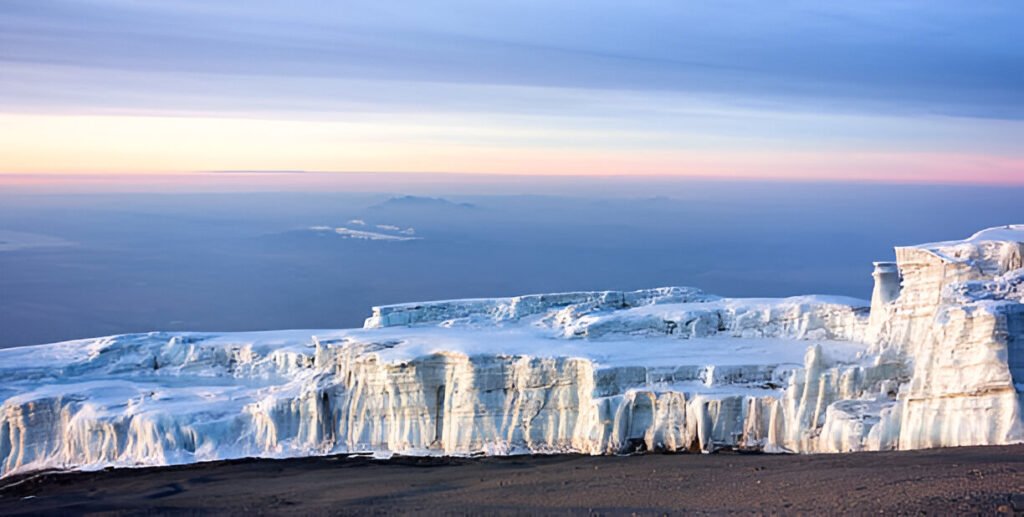
7-Day Rongai Route Kilimanjaro Expedition Overview
| Detail | Proposed arrangement |
|---|---|
| Mountain | Mount Kilimanjaro, Tanzania |
| Ascent route | Rongai |
| Summit approach | Kibo to Gillman’s Point, then Uhuru Peak |
| Descent route | Marangu |
| Duration on the mountain | 7 days / 6 nights |
| Trek start | December 26 |
| Planned summit attempt | December 31 |
| Trek finish | January 1 |
| Highest point | Uhuru Peak, 5,895 m |
| Mountain accommodation | Camping |
| Acclimatisation day | Mawenzi Tarn |
| Arrival and departure base | Moshi |
| Expedition format | Private climb; group departures by enquiry |
For a 2027/2028 expedition, begin trekking on December 26, 2027, attempt the summit on December 31, 2027, and finish on January 1, 2028.
The dates are a proposed schedule. Route access, permits, staffing, and availability must be confirmed, and mountain conditions or health concerns may require changes.
Seven-Day Rongai Itinerary at a Glance
Elevations and walking times are approximate. Individual pace, weather, trail conditions, and the precise campsite affect the daily schedule.
| Day | Date | Trekking stage | Overnight elevation | Approximate walking time |
|---|---|---|---|---|
| 1 | December 26 | Rongai trailhead to Simba Camp | 2,650 m | 3–4 hours |
| 2 | December 27 | Simba Camp via Second Cave to Kikelewa Camp | 3,600 m | 6–8 hours |
| 3 | December 28 | Kikelewa Camp to Mawenzi Tarn | 4,300 m | 3–5 hours |
| 4 | December 29 | Acclimatisation day at Mawenzi Tarn | 4,300 m | Short guided walk, as appropriate |
| 5 | December 30 | Mawenzi Tarn to Kibo Camp | 4,700 m | 5–6 hours |
| 6 | December 31 | Kibo to Uhuru Peak, then Horombo | 3,720 m | About 12–16 hours in total |
| 7 | January 1 | Horombo to Marangu Gate | About 1,860 m at the gate | 5–7 hours |
Simba Camp is also described as First Cave or Rongai Cave Camp in some itineraries. Confirm the exact camp names in your final expedition documents.
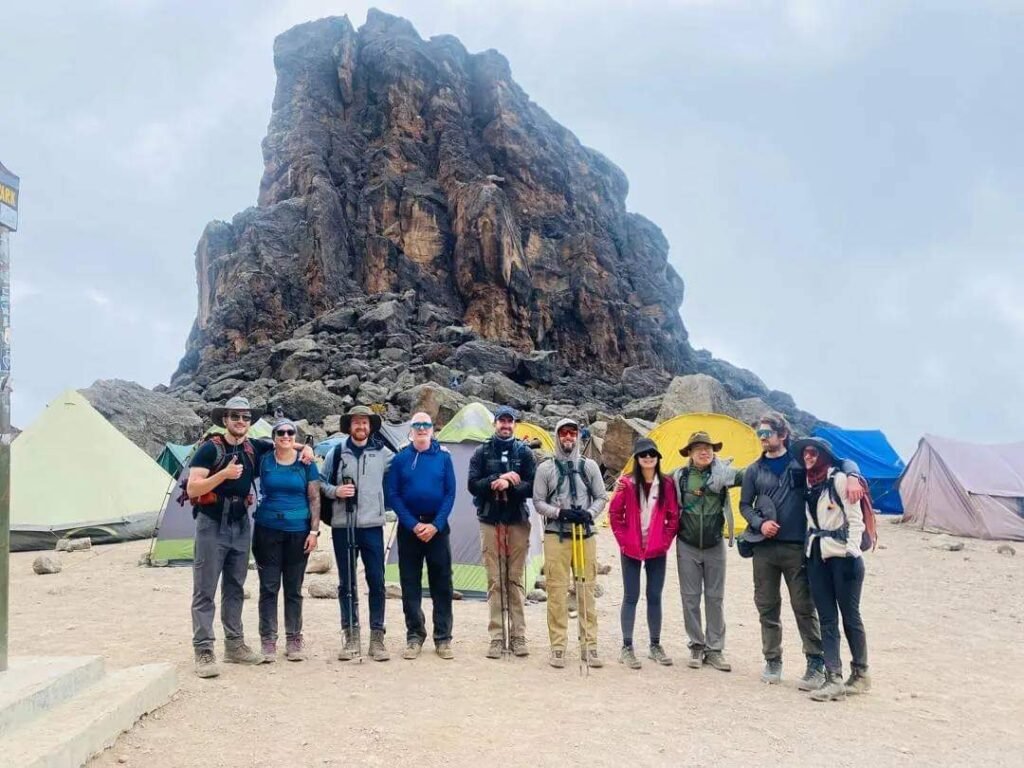
Why Choose Rongai for an End-of-Year Climb?
Rongai provides a northern approach to Kilimanjaro, followed by descent on the southeastern side. This creates a varied journey rather than returning along the same trail.
TANAPA identifies Rongai as a northern access route to Kilimanjaro National Park.
The early stages offer forest and moorland scenery, while Mawenzi Tarn brings you close to one of the mountain’s most striking landscapes. The crossing toward Kibo then introduces a broad, exposed high-altitude environment.
This itinerary also avoids the Barranco Wall encountered on several southern routes. However, that does not make Rongai an easy climb. The altitude, summit ascent, cold, and long descent remain demanding.
The additional night at Mawenzi Tarn gives you more time before moving to summit camp. It supports acclimatisation planning without guaranteeing a particular altitude response.
Before the Climb: Arrival and Briefing
Arrive in Moshi by December 25, preferably earlier if your travel schedule allows.
Your pre-climb briefing covers the daily route, mountain routines, meals, luggage, equipment, and summit preparation. Tell the team about previous trekking experience, relevant health concerns, and dietary requirements.
Check your boots, waterproof layers, sleeping bag, insulated clothing, gloves, and headlamp before departure. Essential equipment should be ready before you travel to the trailhead.
Airport transfers and hotel nights before and after the trek can be included in your full quotation. They are additional to the seven mountain days.
Day 1: December 26 — Rongai Trailhead to Simba Camp
Begin on Kilimanjaro’s Northern Side
After breakfast, leave Moshi and travel toward the Rongai trailhead. Registration arrangements and transfer timing are confirmed during your briefing.
The road journey takes several hours, so departure should be early enough to allow a comfortable start to the walk.
Begin trekking at approximately 2,000 metres. The opening trail passes through the northern foothills and forest, gradually carrying you away from the cultivated landscape below.
Walk at a steady pace and use the first day to settle into the expedition routine. Your guide introduces practical habits for breaks, clothing adjustments, and communication on the trail.
Weather permitting, occasional openings provide views across the surrounding country.
Arrive at Simba Camp, settle into your tent, and enjoy dinner. Organise your daypack for the following morning and keep your warm layer accessible as the temperature falls.
Starting elevation: Approximately 2,000 m
Sleeping elevation: Approximately 2,650 m
Walking time: Approximately 3–4 hours
Habitat: Forest transitioning into heath
Meals: Lunch and dinner
Day 2: December 27 — Simba Camp to Kikelewa Camp
Through Second Cave and into Open Moorland
After breakfast, continue uphill toward Second Cave.
The landscape becomes more open, with wider views when the weather is clear. The scale of Kibo begins to feel more apparent as you gain elevation.
Continue beyond Second Cave toward Kikelewa Camp, following the branch leading toward Mawenzi.
Today is substantially longer than the opening stage. Maintain a manageable pace, take regular breaks, and avoid trying to match someone else’s walking speed.
Your guide may arrange a picnic lunch or another suitable meal stop according to the day’s progress.
As you approach camp, the surroundings become quieter and more distinctly mountainous. Eat well, rest, and tell your guide how you feel after the day’s elevation gain.
Starting elevation: Approximately 2,650 m
Sleeping elevation: Approximately 3,600 m
Walking time: Approximately 6–8 hours
Habitat: Heath and moorland
Meals: Breakfast, lunch, and dinner
Day 3: December 28 — Kikelewa Camp to Mawenzi Tarn
Climb Toward Mawenzi’s Rugged Slopes
Today’s walk is shorter, but the elevation gain makes it an important stage.
The trail climbs through increasingly sparse vegetation toward Mawenzi Tarn. Walk slowly and take time to notice the changing terrain.
On clear days, Mawenzi’s jagged profile dominates the landscape. The campsite provides a dramatic setting beneath the mountain’s rocky slopes.
Arrive with time to eat, rest, and settle in. A short additional walk may be suggested if your guide considers it appropriate.
The aim is to arrive in reasonable condition rather than to finish the stage quickly.
Starting elevation: Approximately 3,600 m
Sleeping elevation: Approximately 4,300 m
Walking time: Approximately 3–5 hours
Habitat: Moorland transitioning into alpine terrain
Meals: Breakfast, lunch, and dinner
Day 4: December 29 — Acclimatisation at Mawenzi Tarn
Spend a Second Night at the Same Elevation
Remain at Mawenzi Tarn for a separate acclimatisation day.
Depending on weather and your condition, take a short guided walk to a higher point before returning to camp. This is not an ascent of Mawenzi’s technical summit.
Keep the outing measured. The purpose is further time at altitude and suitable activity, followed by rest.
Use the afternoon to organise clothing, check equipment, and prepare for the crossing to Kibo. Eat regularly and follow the team’s drinking-water guidance.
Report symptoms promptly. The CDC explains that ascent rate affects altitude-illness risk and that physical fitness does not protect against it. Additional time helps with planning, but does not guarantee successful acclimatisation.
Sleeping elevation: Approximately 4,300 m
Activity: Guided acclimatisation walk if appropriate, followed by rest
Meals: Breakfast, lunch, and dinner
Day 5: December 30 — Mawenzi Tarn to Kibo Camp
Cross the Saddle and Prepare for the Summit
Leave Mawenzi Tarn after breakfast and cross the saddle between Mawenzi and Kibo.
The terrain is broad, exposed, and sparsely vegetated. Wind and cloud can change the atmosphere quickly, so keep suitable layers accessible.
Although sections may appear relatively gentle, the altitude makes walking more tiring than the terrain suggests. Continue steadily and conserve energy.
Arrive at the camping area near Kibo Hut, eat, and rest.
Your guide reviews the summit plan, including clothing, equipment, departure timing, and turnaround decisions. Familiarise yourself with the camp while it is light.
Prepare your headlamp, insulated layers, gloves, warm hat, snacks, and water arrangements. The summit departure generally takes place late on December 30 or around midnight, depending on conditions and the team.
Starting elevation: Approximately 4,300 m
Sleeping elevation before the attempt: Approximately 4,700 m
Walking time: Approximately 5–6 hours
Habitat: Alpine desert
Meals: Breakfast, lunch, and dinner
Day 6: December 31 — Kibo to Uhuru Peak, Then Horombo
Attempt the Summit on New Year’s Eve
Begin the ascent in darkness, moving slowly up the steep trail above Kibo.
The climb involves loose ground and sustained uphill effort. Cold, fatigue, and altitude make this the most demanding stage of the expedition.
Continue toward Gillman’s Point on the crater rim. Reaching this point is a significant achievement, but it is not the same as reaching Uhuru Peak.
If your condition, weather, and timing allow, continue along the rim toward Stella Point and Uhuru Peak.
At 5,895 metres, Uhuru Peak is Kilimanjaro’s highest point. The planned visit is on the morning of December 31, although sunrise timing cannot be guaranteed.
Spend only a short time at the summit before descending. Your guide may turn you around earlier if continuing is unsuitable.
Return to Kibo for food and a rest, then descend to Horombo.
This remains a long day after the summit attempt. Walk carefully, use your poles appropriately, and keep communicating with the guide.
Spend New Year’s Eve at Horombo Camp. Dinner and rest are likely to be the priorities after many hours on your feet. Midnight is spent at the lower camp, not at Uhuru Peak.
Highest point: Uhuru Peak, 5,895 m
Overnight elevation: Approximately 3,720 m
Walking time: Approximately 12–16 hours in total, sometimes longer
Meals: Pre-ascent refreshments or breakfast, lunch, and dinner
Day 7: January 1 — Horombo to Marangu Gate
Descend Through the Forest on New Year’s Day
After breakfast, continue down the Marangu trail.
Pass through moorland and the Mandara area before entering denser forest. The warmer air and changing vegetation mark your return to lower elevations.
The descent is lengthy, and tired legs still require careful footing. Mud and wet sections can make the trail slippery.
Reach Marangu Gate, complete the exit procedures, and receive any qualifying certificate according to the highest point reached.
Meet your transfer vehicle and return to Moshi.
A post-climb hotel night allows a comfortable finish, with time for a shower, a meal, and recovery before onward travel.
Starting elevation: Approximately 3,720 m
Gate elevation: Approximately 1,860 m
Walking time: Approximately 5–7 hours
Meals: Breakfast and lunch, according to the confirmed arrangement
Mountain Accommodation
This package is planned as a camping expedition.
The use of locations named Kibo Hut and Horombo Hut does not automatically mean sleeping inside those huts. Confirm the camping arrangements at Kibo and Horombo in your quotation.
The proposal should identify tent occupancy, sleeping mats, dining facilities, and toilet arrangements. Sleeping bags, private toilet tents, and upgraded equipment should be listed clearly where offered.
Preparation and Equipment
Prepare with regular walking, longer hill days, and practice using your daypack and trekking boots.
Training helps you manage the physical effort, but altitude remains a separate consideration. Discuss personal health questions and any medication with a qualified clinician before travel.
Bring waterproof clothing, insulating layers, a suitable sleeping bag, gloves, a warm hat, trekking poles, and a dependable headlamp.
December conditions may include rain, wind, snow, and slippery ground. Rongai’s northern approach should not be treated as a promise of dry weather.
Package Inclusions and Price
Request a quotation covering:
- Applicable park, camping, and compulsory charges.
- Mountain guides, cooks, and porters.
- Six nights of camping.
- Meals during the trek.
- Drinking-water treatment arrangements.
- Transport to the Rongai trailhead and from Marangu Gate.
- Group camping equipment.
- The specified communication and emergency equipment.
Confirm separately whether hotel nights, airport transfers, rentals, private toilet facilities, and additional services are included.
Flights, visa costs, personal equipment, gratuities, and suitable travel insurance are generally separate unless stated otherwise.
The price depends on the departure year, group size, equipment, and service arrangements. Request a complete proposal for your party rather than relying on an unspecified starting price.
Porter Welfare and Expedition Support
Ask about crew pay, workloads, food, shelter, equipment, and support when a team member becomes ill.
Confirm your luggage allowance and the tipping process before departure. Respectful communication and recognition of the crew’s work are part of a well-run expedition.
Also establish how the group is supported if one climber needs to descend early.
Frequently Asked Questions
When does the seven-day New Year climb start?
December 26, with the summit attempt planned for December 31 and the trek finishing January 1.
Is the summit at midnight?
No. This itinerary targets the morning of December 31. Midnight is spent at Horombo after descent.
What is the extra day used for?
A second night at Mawenzi Tarn, with a suitable acclimatisation walk and rest.
Is Rongai easy?
No. The opening terrain can feel more gradual than some alternatives, but the altitude and summit stage remain demanding.
Is reaching Uhuru Peak guaranteed?
No. Weather, health, and individual altitude response determine how far it is appropriate to continue.
Can we add a safari or Zanzibar afterward?
Yes. Allow recovery time and arrange onward travel around the actual trek finish.
Plan Your End-of-Year Rongai Expedition
Contact Eddy Tours & Safaris with your preferred year, number of climbers, previous trekking experience, and available travel days.
For official destination guidance, visit Kilimanjaro National Park. For altitude preparation, review the CDC’s high-altitude travel guidance.
Website: eddytours-safaris.com
Email: sales@eddytours-safaris.com
Alternative email: eddytoursandsafaris@gmail.com
Phone and WhatsApp: +255 711 906 664