
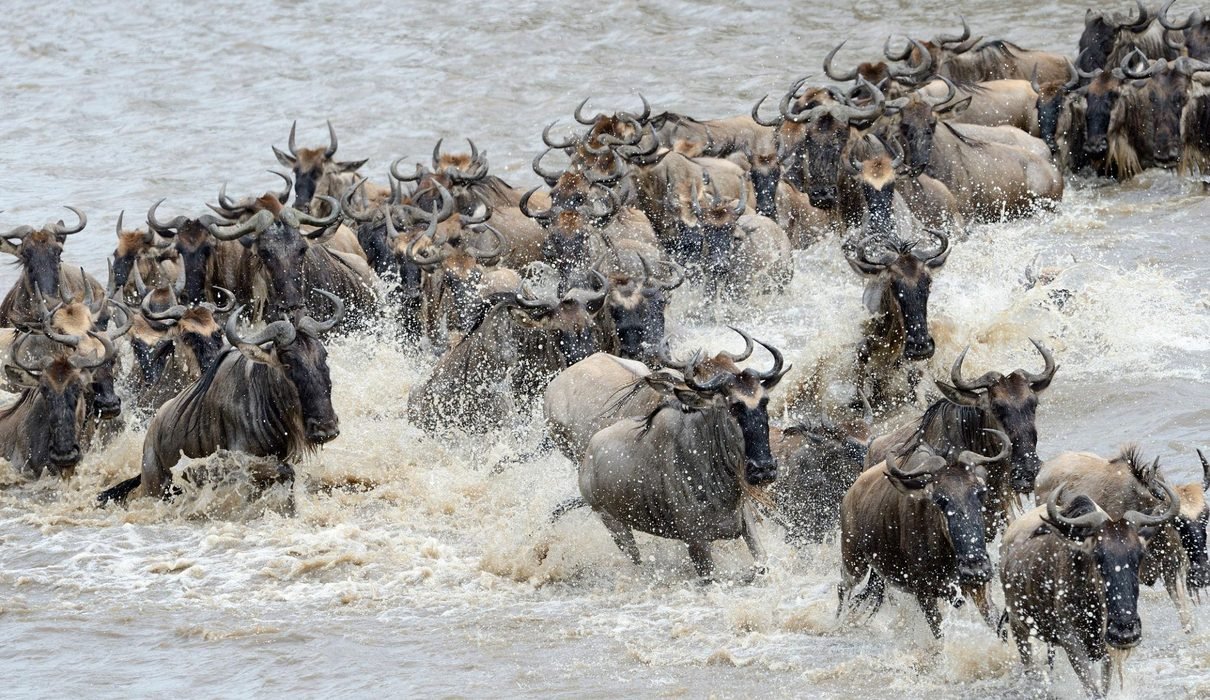
The 7 Days Tanzania Migration Tracking Safari is designed for travellers who want to spend more time following the wildebeest migration across the Serengeti rather than rushing between several national parks. This safari takes you through northern Tanzania’s famous wildlife areas, where large herds of wildebeest, zebras and gazelles move across the grasslands in search of fresh grazing and water. Along the way, you may encounter lions, cheetahs, elephants, giraffes, hyenas and many other animals that make the Serengeti one of Africa’s leading wildlife destinations.
Organised by Eddy Tours & Safaris, this seven-day journey combines extended game drives, comfortable accommodation, experienced local guiding and enough time to explore different parts of the Serengeti. The main advantage of a migration-tracking safari is flexibility. Instead of following exactly the same route throughout the year, the itinerary can be adjusted according to the season and the areas where the migrating herds are most likely to be found.
The Great Migration does not happen in one particular month or location. It is a continuous movement across the Serengeti ecosystem and Kenya’s Maasai Mara, influenced mainly by rainfall, pasture and water availability. This means that travellers visiting Tanzania in January may see a completely different stage of the migration from those arriving in July or September. Understanding these seasonal movements is important when planning your safari, especially if your main interest is witnessing large gatherings of wildebeest, newborn calves or the famous river crossings.
7 Days Tanzania Migration Tracking Safari Overview
- Safari duration: 7 days and 6 nights
- Starting point: Arusha, Tanzania
- Ending point: Arusha, Tanzania
- Main destinations: Serengeti National Park and Ngorongoro Conservation Area
- Safari type: Private wildlife and migration-tracking safari
- Transport: 4×4 safari Land Cruiser with a pop-up roof
- Accommodation: Mid-range lodges and tented safari camps, with upgrades available
- Best travel period: Year-round, depending on the migration stage
- Suitable for: Couples, families, small groups, photographers and wildlife enthusiasts
The safari can be arranged as a private journey, allowing travellers to spend longer at interesting wildlife sightings and adjust daily game drives according to conditions. Accommodation locations are selected based on the planned route, the season and availability. Travellers interested in other wildlife experiences can also explore the safari options offered through Eddy Tours & Safaris before choosing the most suitable itinerary.
Detailed 7 Days Tanzania Migration Tracking Safari Itinerary
Day 1: Arrival in Arusha – Welcome to Tanzania
Your safari begins upon arrival at Kilimanjaro International Airport or Arusha Airport, where a representative from Eddy Tours & Safaris will welcome you and arrange your transfer to your accommodation in Arusha. Depending on your arrival time, you may have an opportunity to explore a small part of the city, visit a local market or simply relax at the hotel after your journey. Arusha is the main starting point for northern Tanzania safaris and provides convenient access to the Serengeti, Ngorongoro and several other well-known wildlife areas.
Later in the day, your safari guide will explain the planned journey, expected driving distances, accommodation arrangements and the general movement of the migration during your travel period. This is also a good opportunity to discuss particular wildlife interests, photography preferences and any special requirements. Although the safari follows a prepared itinerary, the guide will consider recent wildlife information when deciding which parts of the Serengeti deserve the most attention. Dinner and overnight accommodation will be arranged in Arusha, allowing you to rest before travelling into the national parks the following morning.
Accommodation: Mid-range hotel in Arusha
Meals: Dinner, subject to arrival time
Day 2: Arusha to Serengeti National Park – Entering the Wildlife Plains
After an early breakfast, you will leave Arusha and travel towards Serengeti National Park, passing through the beautiful highlands of the Ngorongoro Conservation Area. The journey offers changing scenery, from cultivated land and local villages to highland forests and open grasslands. Your guide will make suitable stops along the way, including scenic viewpoints where permitted, giving you time to enjoy the landscape and take photographs. As you approach the Serengeti, the countryside gradually opens into the broad savannah that has made this national park famous around the world.
After entering Serengeti National Park, the journey continues as a game drive towards your accommodation. Depending on wildlife movements, you may encounter zebras, giraffes, elephants, buffaloes, antelopes and predators before reaching the camp. The central Serengeti, particularly the Seronera area, supports a wide variety of resident wildlife throughout the year and is an excellent starting point for understanding the wider migration ecosystem. Your guide will use observations from the afternoon drive to help plan the following days. You will arrive at your lodge or tented camp in time for dinner and a peaceful evening surrounded by the sounds of the African bush.
Accommodation: Serengeti safari lodge or tented camp
Meals: Breakfast, lunch and dinner
Day 3: Central Serengeti – Full-Day Wildlife and Migration Tracking
Today is dedicated to exploring the central Serengeti and searching for wildlife across its open plains, river valleys and scattered woodland areas. After breakfast, you will depart with a packed lunch for an extended game drive, allowing plenty of time to visit different wildlife habitats without returning to camp during the middle of the day. The Seronera Valley is especially well known for its resident lions, leopards and other predators, while the surrounding grasslands attract zebras, gazelles, wildebeest and numerous bird species.
Your guide will pay attention to fresh tracks, animal behaviour, grazing patterns and information from other professional guides when deciding where to drive. During certain months, migrating herds may be found moving through the central Serengeti, while at other times the main concentrations may be farther north, west or south. Even when the largest herds are elsewhere, this region offers excellent wildlife viewing because many animals remain throughout the year. You may spend time watching a pride of lions resting beneath acacia trees, elephants feeding near a watercourse or cheetahs searching for prey across the grasslands. In the late afternoon, you will return to your accommodation for dinner and overnight rest.
Accommodation: Serengeti safari lodge or tented camp
Meals: Breakfast, lunch and dinner
Day 4: Serengeti Migration Corridor – Following the Great Herds
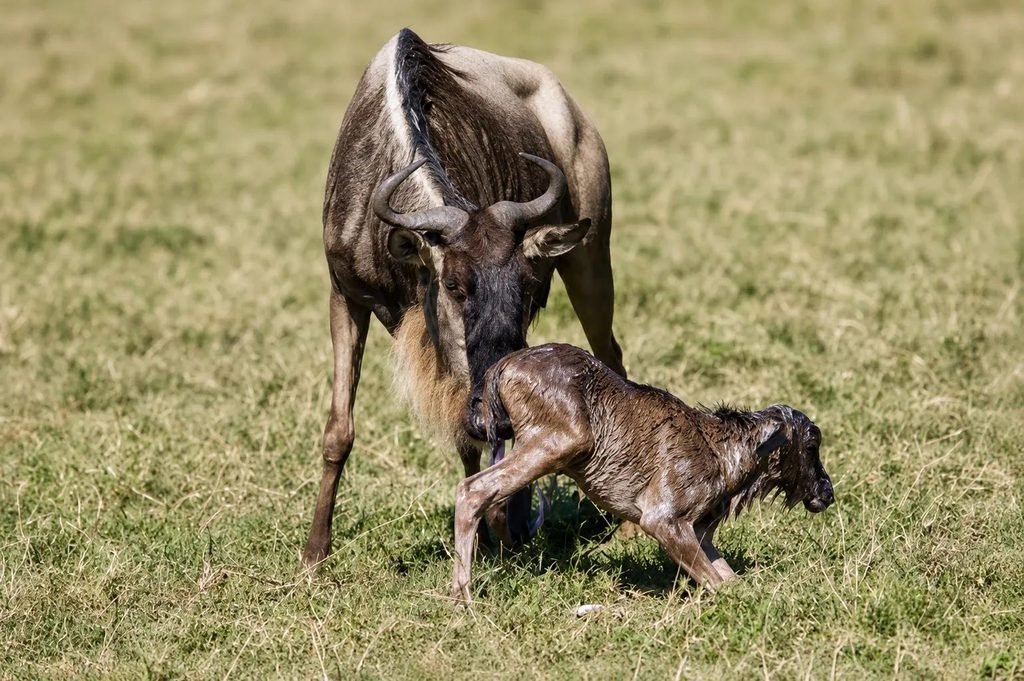
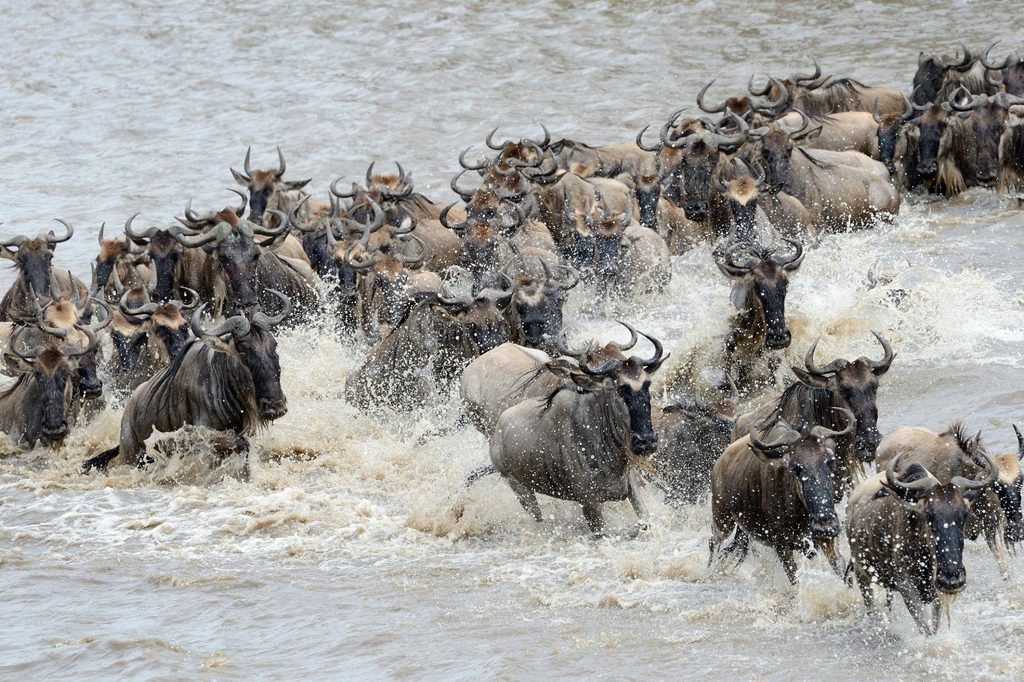
After breakfast, your journey continues towards the part of the Serengeti that offers the best practical opportunity to follow the migration during your chosen travel period. Between roughly July and October, this may involve travelling towards the northern Serengeti and the Mara River area, where large herds sometimes gather before attempting river crossings. During the earlier part of the year, particularly January through March, the southern Serengeti and Ndutu plains are often more suitable because wildebeest gather around the short-grass plains during the calving season. In other months, the western corridor or central plains may offer better opportunities.
The day will involve a combination of wildlife viewing and travel between different sections of the ecosystem. Your guide will explain how rainfall affects grazing conditions and why the herds may move from one area to another. When large concentrations of wildebeest are located, you will have time to watch their behaviour from a suitable distance. The movement of thousands of animals across the grasslands is impressive even without a river crossing, particularly when zebras and gazelles are travelling alongside the wildebeest. Your overnight accommodation will be selected within a practical distance of the intended migration-viewing area, reducing unnecessary driving on the following day.
Accommodation: Seasonal migration-area tented camp or lodge
Meals: Breakfast, lunch and dinner
Day 5: Full-Day Migration Experience – River Crossings, Herd Movement and Predators
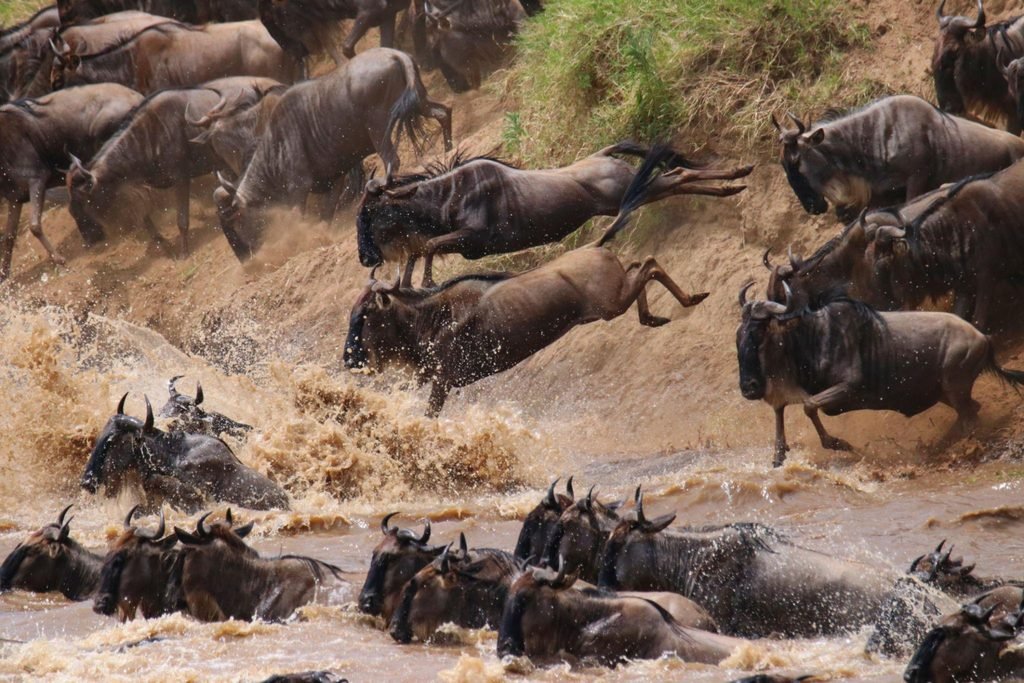
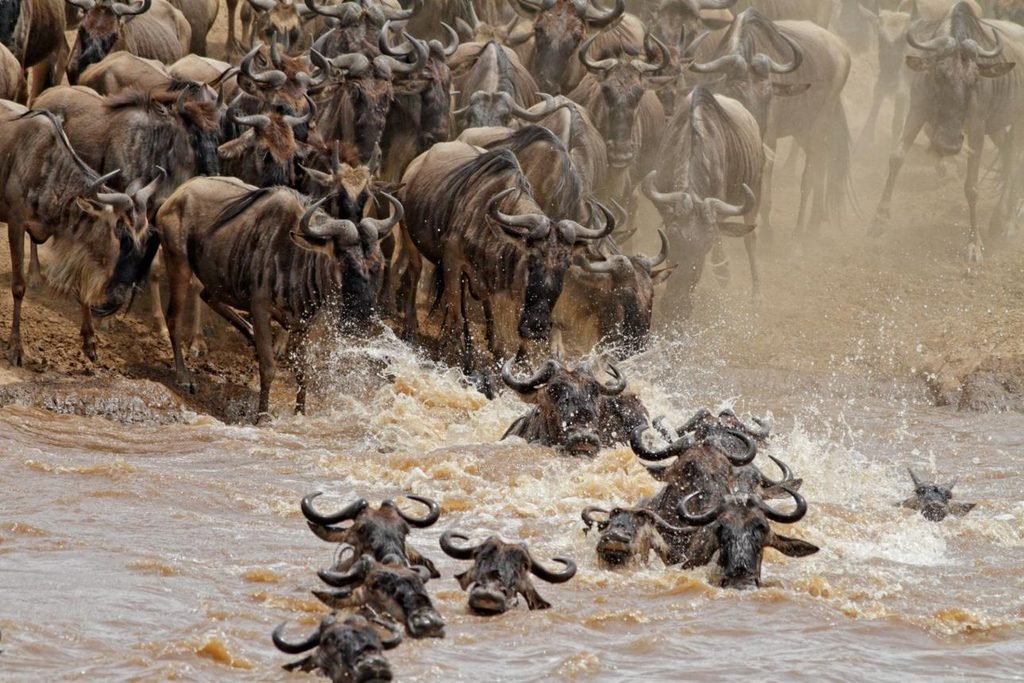
This is one of the main wildlife-viewing days of your seven-day safari, with the itinerary planned around the migration conditions in the area. If you are visiting the northern Serengeti during the river-crossing season, your guide may take you towards approved viewing locations along the Mara River. Wildebeest sometimes gather near the river for long periods before crossing, and there is no reliable way to predict exactly when they will enter the water. Some herds cross quickly, while others turn away and return later. For this reason, patience is important, and your guide will avoid making promises about witnessing a crossing.
During the southern migration season, the same day may instead be spent exploring the Ndutu plains, where travellers can observe newborn wildebeest, large grazing groups and predators attracted by the abundance of prey. Regardless of the season, your guide will maintain a safe viewing distance and follow the regulations established by Tanzania’s wildlife authorities. The official Serengeti Mara River Crossing Guidelines require vehicles to use designated viewing areas and remain stationary when animals are preparing to cross. After a full day in the field, you will return to camp for dinner and another night in the Serengeti.
Accommodation: Seasonal migration-area tented camp or lodge
Meals: Breakfast, lunch and dinner
Day 6: Serengeti to Ngorongoro Highlands – Final Game Drive and Scenic Journey
Following breakfast, you will enjoy a final game drive through the Serengeti before beginning your journey towards the Ngorongoro Conservation Area. The morning offers another opportunity to observe wildlife that may have been missed during the previous days. Your guide will choose the return route according to road conditions, travel time and wildlife activity, allowing you to enjoy the changing landscape as you leave the open Serengeti plains behind. The journey towards Ngorongoro passes through a remarkable mixture of grasslands, volcanic highlands and areas traditionally used by Maasai pastoral communities.
As you approach the Ngorongoro highlands, the scenery becomes greener and more mountainous. Weather permitting, there may be an opportunity to stop at a designated viewpoint overlooking the famous Ngorongoro Crater. The crater is one of Tanzania’s most important wildlife areas and forms part of the larger conservation landscape that supports both wildlife and local communities. You will continue to your lodge near the crater rim or in the Karatu area, where you can relax after the day’s journey. Dinner and overnight accommodation will be arranged in preparation for an early descent into the crater the following morning.
Accommodation: Ngorongoro highlands or Karatu lodge
Meals: Breakfast, lunch and dinner
Day 7: Ngorongoro Crater Game Drive – Return to Arusha
After an early breakfast, you will depart for Ngorongoro Crater, where the final wildlife experience of your safari takes place. The crater is a large volcanic caldera containing grasslands, wetlands, woodland and freshwater areas that support a remarkable concentration of animals. During your game drive, you may encounter lions, elephants, buffaloes, zebras, wildebeest, hippos, hyenas and several antelope species. The crater is also one of the places in northern Tanzania where visitors may have an opportunity to see the endangered black rhinoceros, although sightings are never guaranteed.
Your guide will explore the crater along authorised routes, stopping at suitable locations for wildlife viewing and photography. The combination of open grasslands and wetland habitats makes it possible to observe several different species within a relatively small area. After the game drive and a picnic lunch, you will ascend from the crater and begin the return journey to Arusha, where your safari ends. Depending on your onward travel arrangements, Eddy Tours & Safaris can organise a transfer to your hotel or the airport. Travellers planning to continue their holiday may also consider additional activities in Tanzania, including a beach stay in Zanzibar or a mountain-climbing adventure.
Accommodation: Not included after the safari unless arranged separately
Meals: Breakfast and lunch
7 Powerful Ways to Follow the Great Wildebeest Migration Safely
1. Choose Your Safari Dates According to the Migration Season
The first step towards a successful migration safari is choosing dates that match the wildlife experience you hope to see. The migration moves throughout the year, meaning the best location for observing large herds changes from season to season. Travellers interested in calving activity generally consider the southern Serengeti and Ndutu region during January, February and early March, while those hoping to witness river crossings often choose the northern Serengeti between July and October. These periods are only general guides because rainfall and grazing conditions can change the timing of herd movements.
Before confirming your holiday, it is useful to discuss your interests with Eddy Tours & Safaris. A traveller who wants to photograph newborn wildebeest may need a different itinerary from someone hoping to watch herds gather near the Mara River. Planning around the migration season helps reduce unnecessary travel and gives your guide more time to concentrate on areas where wildlife activity is likely to be strongest.
2. Travel With an Experienced Local Safari Guide
A knowledgeable safari guide plays an important role in migration tracking because the herds do not follow a fixed daily timetable. Experienced guides understand seasonal wildlife patterns, road conditions, animal behaviour and the locations where different species are commonly encountered. They also know how to interpret signs such as fresh tracks, grazing activity and the movement of predators. These observations can help them make better decisions during a game drive, particularly when wildlife has moved away from an area where it was seen the previous day.
Travelling with a professional guide also improves safety. Wildlife can behave unpredictably, especially around young animals, predators and river crossings. Your guide will explain when it is safe to approach a viewing area, when to remain stationary and why certain routes must be avoided. A good safari experience is not simply about getting as close as possible to animals. It is about understanding their behaviour while allowing them enough space to move naturally.
3. Use a Suitable 4×4 Safari Vehicle
The Serengeti covers an enormous area, and reaching some migration-viewing locations involves long drives over rough or uneven roads. A properly maintained 4×4 safari vehicle is therefore an important part of a comfortable and safe journey. Vehicles with a pop-up roof allow passengers to observe wildlife and take photographs while remaining inside the vehicle. Good visibility, comfortable seating and sufficient space for personal belongings can make a noticeable difference during extended game drives.
Eddy Tours & Safaris arranges suitable safari transport for journeys through northern Tanzania’s wildlife areas. Travellers should also bring practical items such as binoculars, a camera, sun protection, drinking water and comfortable clothing. During wildlife sightings, passengers should follow their guide’s instructions and avoid leaning dangerously outside the vehicle or making sudden movements that could disturb nearby animals.
4. Respect Wildlife and Maintain Safe Viewing Distances
Watching thousands of wildebeest move across the plains can be exciting, but visitors must remember that these are wild animals living in their natural habitat. Vehicles should never block the direction of a moving herd, separate mothers from their young or force animals to change their course. This is especially important during river crossings, when wildebeest may already be under considerable pressure from strong currents, steep riverbanks and predators.
The Tanzania National Parks Authority provides guidance on responsible wildlife viewing, including special rules for migration crossings. Following these regulations helps protect the animals and ensures that other visitors can enjoy the same wildlife experience. Travellers should also avoid feeding animals, throwing rubbish or leaving vehicles in places where exiting is not permitted. Respectful behaviour allows wildlife to continue its natural activities with minimal disturbance.
5. Allow Enough Time for Wildlife Viewing
One of the biggest mistakes travellers make when planning a migration safari is expecting every important sighting to happen within a short period. Wildlife movements depend on natural conditions, and even during the busiest migration months, herds may spend hours grazing or resting before moving again. A river crossing may take place shortly after visitors arrive, or there may be no crossing at all during an entire day. This uncertainty is part of observing wildlife in the wild.
A seven-day safari gives travellers more time to explore the Serengeti and respond to changing conditions than a short two- or three-day visit. Instead of constantly moving between parks, you can spend several days in the main migration areas, watch animal behaviour and enjoy other wildlife encounters along the way. For photographers, the extra time is particularly useful because it provides opportunities to work with different lighting conditions and observe animals without rushing.
6. Choose Accommodation Near the Main Migration Areas
Accommodation location can strongly influence the amount of time spent watching wildlife. During the northern migration season, staying near the northern Serengeti can reduce the distance travelled to the Mara River and surrounding grazing areas. During the southern calving season, accommodation near Ndutu or the southern plains may be more practical. Staying too far from the main wildlife activity can result in long daily transfers, leaving less time for game drives and photography.
Seasonal tented camps are often useful for migration safaris because some operate in locations selected to provide access to particular stages of the migration. However, accommodation should be chosen carefully, taking into account comfort, accessibility, available facilities and the overall safari budget. Travellers can discuss different lodge and camp categories with Eddy Tours & Safaris when preparing a personalised safari quotation.
7. Follow Park Regulations and Prepare for Changing Conditions
A safe migration safari requires good preparation and respect for the protected areas being visited. Weather conditions can change quickly, particularly during the rainy months, and some roads may become muddy or difficult to use. Your guide may need to adjust the day’s route if conditions are unsuitable or if certain areas are temporarily inaccessible. Travellers should therefore approach the safari with reasonable flexibility rather than expecting every activity to take place at an exact time.
It is also important to follow instructions at camps, lodges and designated wildlife-viewing areas. Many safari camps are located in natural wildlife habitats, where animals may occasionally pass nearby. Guests should avoid walking outside their accommodation at night without assistance when camp rules require an escort. By following these basic precautions, visitors can enjoy the migration while reducing unnecessary risks to themselves, other travellers and the wildlife.
Best Time to Visit Tanzania for the Great Migration
The best time to visit depends on which stage of the migration you want to experience. Although the herds move continuously, their general seasonal patterns help travellers identify suitable areas for different months. The following guide provides a practical overview of where migration activity is commonly concentrated, but exact movements can vary each year.
| Travel period | Common migration location | Main wildlife experience |
|---|---|---|
| January–March | Southern Serengeti and Ndutu | Calving season, grazing herds and predator activity |
| April–May | Southern and central Serengeti | Herds moving towards central and western areas |
| May–June | Western Corridor and central-western Serengeti | Large moving herds and possible Grumeti River crossings |
| July–October | Northern Serengeti and Mara River region | Large herds and possible Mara River crossings |
| November–December | Central, eastern and southern Serengeti | Herds returning towards southern grazing areas |
These movements are influenced by rainfall rather than fixed calendar dates. According to Tanzania National Parks, the migration is a continuous journey in search of water and fresh grazing. This is why the most suitable itinerary should be selected according to your travel dates rather than assuming the herds will always be found in one location.
7 Days Tanzania Migration Tracking Safari Inclusions
The following services are included in the standard proposed safari package:
- Airport pick-up and drop-off as specified in the confirmed itinerary.
- Private 4×4 safari Land Cruiser with a pop-up roof.
- Services of a professional English-speaking safari driver-guide.
- Fuel and transport throughout the safari itinerary.
- National park entrance fees for the included destinations.
- Ngorongoro Crater service and vehicle entry fees applicable to the itinerary.
- Six nights of accommodation in the agreed hotels, lodges and tented camps.
- Meals as indicated in the daily itinerary.
- Drinking water during safari game drives.
- Scheduled game drives in Serengeti National Park.
- Ngorongoro Crater game drive.
- Government taxes applicable to the confirmed safari services.
- Safari planning and operational assistance from Eddy Tours & Safaris.
7 Days Tanzania Migration Tracking Safari Exclusions
The following services are not included unless specifically stated in your confirmed quotation:
- International flights to and from Tanzania.
- Tanzania visa fees and passport-related expenses.
- Travel insurance and personal medical expenses.
- Tips and gratuities for the safari guide and lodge staff.
- Alcoholic drinks, soft drinks and other beverages not included in the meal plan.
- Personal expenses such as laundry, souvenirs and telephone calls.
- Optional hot-air balloon safari in the Serengeti.
- Optional cultural visits or additional activities not listed in the itinerary.
- Extra accommodation before or after the scheduled safari.
- Domestic flights unless specifically included in the quotation.
- Additional services requested during the safari that are outside the agreed package.
How Much Does a 7 Days Tanzania Migration Safari Cost?
The cost of a seven-day Tanzania migration safari depends on the travel season, number of participants, accommodation category and location of the migrating herds. A safari that includes several nights in the northern Serengeti during the busy river-crossing season may cost more than a journey arranged during quieter months. Seasonal tented camps and lodges also have different rates, while private safari transport costs are shared among the travellers in the same booking.
For this reason, Eddy Tours & Safaris prepares quotations according to the actual travel dates and requirements of each group. Couples may prefer a private safari with comfortable mid-range accommodation, while families or groups of friends may be able to reduce their individual costs by sharing the same vehicle. Travellers looking for additional comfort can request upgraded lodges and luxury tented camps. To receive an accurate quotation, share your expected arrival date, number of travellers and preferred accommodation standard through the Eddy Tours & Safaris contact page.
What Should You Pack for a 7 Days Tanzania Migration Safari?
Packing for a migration safari does not require complicated equipment, but a few practical items will make your journey more comfortable. Lightweight clothing in neutral colours is suitable for daytime game drives, while a warm jacket or fleece is useful during early mornings and evenings, particularly around the Ngorongoro highlands. Comfortable closed shoes, a sunhat, sunglasses and sunscreen are also recommended. Travellers visiting during the rainy season should consider carrying a lightweight waterproof jacket.
A camera with a suitable zoom lens is useful for photographing wildlife from a safe distance, while binoculars make it easier to observe animals across the wide Serengeti plains. You should also bring personal medication, travel documents, a small day bag and charging equipment for electronic devices. Travellers who are combining their safari with a mountain adventure can explore additional preparation information through Kilimanjaro Climb Specialist, particularly if they intend to climb Mount Kilimanjaro before or after their wildlife holiday.
Why Choose Eddy Tours & Safaris for Your Tanzania Migration Safari?
Choosing a locally based safari company gives travellers the opportunity to plan their holiday with people who understand the destinations, travel distances and seasonal conditions of northern Tanzania. Eddy Tours & Safaris is based in Arusha and arranges wildlife safaris and other travel experiences across Tanzania. The company can help visitors select a suitable migration route, organise accommodation and prepare a safari itinerary that reflects their available time and interests.
One of the main benefits of booking a private migration safari is the ability to concentrate on the wildlife experiences that matter most to you. Some travellers prefer long photography sessions, while others enjoy a balanced itinerary with wildlife viewing, comfortable lodges and time to appreciate the scenery. Through Eddy Tours & Safaris, travellers can discuss these preferences before confirming their journey and receive assistance with the practical arrangements needed for a well-organised safari.
Frequently Asked Questions About the 7 Days Tanzania Migration Tracking Safari
Is seven days enough to see the Great Wildebeest Migration?
Seven days provides a good amount of time to explore the Serengeti and visit areas associated with the migration. With several days dedicated to wildlife viewing, travellers have more opportunities to observe large herds and other animals than they would on a short safari. However, the exact location of the migration changes throughout the year, and no safari company can guarantee a particular sighting or river crossing. Choosing the right travel season and accommodation location will improve your chances of seeing the wildlife activity that interests you.
Can I see the Mara River crossing during this safari?
It is possible to witness a Mara River crossing when visiting the northern Serengeti during the main crossing season, generally between July and October. However, the crossings depend entirely on the movement and behaviour of the wildebeest. Some days may have several crossings, while others may have none. Your guide will visit suitable authorised viewing locations when conditions allow, but a crossing cannot be promised in advance.
Is the migration safari safe for families with children?
A professionally organised safari can be suitable for families with children, provided that everyone follows the guide’s instructions and respects wildlife safety rules. Children should remain supervised during game drives, at lodges and around camp facilities. Parents should also consider the length of daily drives and choose accommodation appropriate for their children’s ages. Some camps have minimum-age requirements, so these should be checked before booking.
What animals can I see besides wildebeest?
The Serengeti supports many different wildlife species, including lions, leopards, cheetahs, elephants, giraffes, buffaloes, hyenas, zebras, gazelles and numerous birds. The Ngorongoro Crater provides additional opportunities to observe hippos, large herbivores, predators and possibly black rhinoceroses. Wildlife sightings depend on the season, habitat and natural animal movements, but the variety of animals across these destinations makes the safari rewarding even when the main migrating herds are not nearby.
Can I combine the migration safari with Kilimanjaro climbing or Zanzibar?
Yes. Many travellers combine a northern Tanzania wildlife safari with a Mount Kilimanjaro climb or a relaxing beach holiday in Zanzibar. Those planning a mountain adventure can review climbing information through Kilimanjaro Climb Specialist, while Eddy Tours & Safaris can assist with planning the safari portion and coordinating suitable travel arrangements. It is generally advisable to allow enough recovery time between a demanding mountain climb and a long safari journey.
Can the itinerary be changed to follow the migration?
Yes. The proposed itinerary can be adjusted before booking according to your travel dates, accommodation preferences and the expected location of the herds. During the safari, your guide may also make reasonable changes to daily game-drive routes based on wildlife information, weather and road conditions. Major changes involving accommodation, park permits or additional costs must be discussed and agreed upon in advance.
Book Your 7 Days Tanzania Migration Tracking Safari
The Great Wildebeest Migration is one of the most remarkable wildlife events in Tanzania, but enjoying it properly requires good timing, patience and a carefully planned route. A seven-day safari allows you to explore the Serengeti at a comfortable pace, spend time searching for the migrating herds and finish your journey with a game drive inside the Ngorongoro Crater. Whether you are travelling to see the calving season, photograph large groups of wildebeest or experience the northern Serengeti during the river-crossing months, the itinerary can be adapted to suit your travel plans.
Plan your journey with Eddy Tours & Safaris and let our team help you choose suitable dates, accommodation and wildlife-viewing areas for your Tanzania holiday. Contact us with your expected travel month, number of travellers and preferred safari style, and we will prepare a personalised itinerary and quotation.