
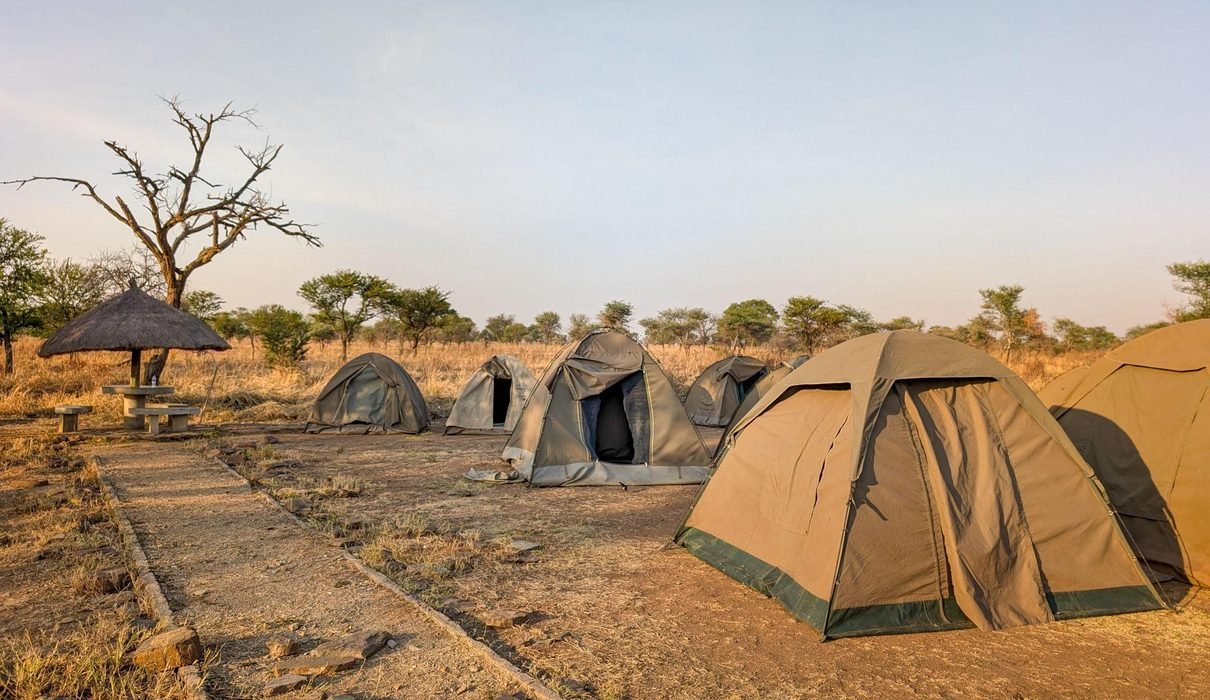
The 8-day budget camping safari in Tanzania is an excellent choice for travelers who want to explore the country’s famous wildlife destinations while keeping accommodation costs affordable. This safari takes you through the beautiful landscapes of northern Tanzania, where you can see elephants, lions, giraffes, zebras, wildebeest, buffaloes, and many other animals living in their natural habitats. Instead of staying in expensive luxury lodges, you spend your nights at public or budget campsites, allowing you to enjoy a genuine African camping experience.
Tanzania is home to some of Africa’s most famous national parks, including Serengeti National Park, Tarangire National Park, Lake Manyara National Park, and the Ngorongoro Conservation Area. Each destination offers something different, from the large elephant herds of Tarangire to the endless plains of the Serengeti and the wildlife-rich floor of Ngorongoro Crater. Visiting these destinations over eight days gives you enough time to enjoy game drives, take photographs, and experience different landscapes without rushing through every park.
A budget camping safari does not mean missing out on the wildlife experience. You still travel in a safari vehicle with a professional guide, visit the major national parks, and enjoy game drives in areas where wild animals roam freely. The main difference is the accommodation, which usually consists of simple camping tents and shared campsite facilities rather than expensive lodges. For many travelers, sleeping close to nature and waking up to the sounds of the African bush is one of the best parts of the journey.
At Eddy Tours & Safaris, we organize Tanzania wildlife safaris for travelers with different budgets and interests. Our eight-day camping itinerary for 2027 and 2028 combines wildlife viewing, comfortable travel arrangements, and affordable accommodation options. Whether you are visiting Tanzania for the first time, traveling with friends, or looking for a budget-friendly safari adventure, this itinerary provides a practical way to explore the northern safari circuit.
8-Day Tanzania Budget Camping Safari Overview
| Safari information | Details |
|---|---|
| Package name | 8-Day Tanzania Budget Camping Safari |
| Travel years | 2027 and 2028 |
| Duration | 8 days / 7 nights |
| Starting point | Arusha, Tanzania |
| Ending point | Arusha, Tanzania |
| Main destinations | Tarangire, Lake Manyara, Serengeti and Ngorongoro Crater |
| Accommodation | Budget camping and public campsites |
| Transport | 4×4 safari vehicle with a pop-up roof |
| Safari activities | Wildlife game drives, sightseeing and photography |
| Meals | According to the confirmed package |
| Safari guide | Professional English-speaking driver-guide |
| Suitable for | Couples, friends, families, solo travelers and small groups |
| Safari price | Available on request |
| Departure dates | Subject to confirmation |
This itinerary includes arrival arrangements on the first day and seven additional days exploring Tanzania’s northern safari destinations. The exact campsites and accommodation arrangements depend on availability, season, and your confirmed booking.
Why Choose an 8-Day Budget Camping Safari in Tanzania?
One of the main advantages of an eight-day camping safari is the opportunity to visit several famous wildlife destinations without paying for luxury accommodation. Tanzania offers different safari experiences across its northern circuit, and spending more than a few days allows you to appreciate the differences between the parks. Tarangire is known for elephants and baobab trees, Lake Manyara offers forests and lakeside landscapes, the Serengeti is famous for its open plains and predators, and Ngorongoro Crater provides wildlife viewing within a remarkable volcanic landscape.
Camping also allows travelers to experience the natural environment in a different way. At designated campsites, evenings are often spent enjoying dinner, discussing the day’s sightings, and listening to the sounds of the surrounding bush. Facilities are generally simple, and some campsites have shared toilets and showers. Although this style of travel is less comfortable than staying in a luxury lodge, it is a popular option for travelers who enjoy outdoor experiences and want to spend more of their budget on visiting wildlife destinations.
Another advantage is flexibility. Depending on the group size and travel dates, travelers may be able to choose between private camping safaris and shared group departures. A group-joining safari can help reduce certain costs because transport and guiding expenses are shared among several travelers. A private safari generally offers greater flexibility over departure times, game-drive schedules, and the pace of the journey.
Complete 8-Day Budget Camping Safari Itinerary in Tanzania
Day 1: Arrival at Kilimanjaro International Airport – Transfer to Arusha
Your Tanzania safari begins when you arrive at Kilimanjaro International Airport or Arusha Airport, depending on your travel arrangements. A representative from Eddy Tours & Safaris will meet you at the agreed arrival point and arrange your transfer to your accommodation in Arusha. The drive provides your first opportunity to see the landscapes of northern Tanzania, including local villages, agricultural areas, and views of Mount Meru when the weather is clear.
Arusha is the main starting point for many northern Tanzania wildlife safaris because it provides convenient road access to Tarangire, Lake Manyara, Ngorongoro, and the Serengeti. After checking into your accommodation, you can rest following your international journey and prepare for the days ahead. Depending on your arrival time, there may be an opportunity to explore a small part of the town, but this is optional and subject to your schedule.
During the evening, your safari representative or driver-guide will explain the planned itinerary, expected driving times, and practical arrangements for the journey. This is a good opportunity to ask questions about camping facilities, luggage, meals, and wildlife viewing. You can also check your camera equipment, charge your devices, and organize the items you will need during the game drives.
Your first night is spent at budget accommodation in Arusha, allowing you to begin the safari the following morning after breakfast.
Accommodation: Budget accommodation in Arusha
Meals: According to arrival arrangements
Day 2: Arusha – Tarangire National Park
After breakfast, your safari guide will collect you from your accommodation and begin the drive toward Tarangire National Park. The journey takes you southwest of Arusha through rural landscapes, villages, and agricultural areas before reaching the park entrance. Once the required registration procedures are completed, you enter Tarangire and begin your first wildlife game drive.
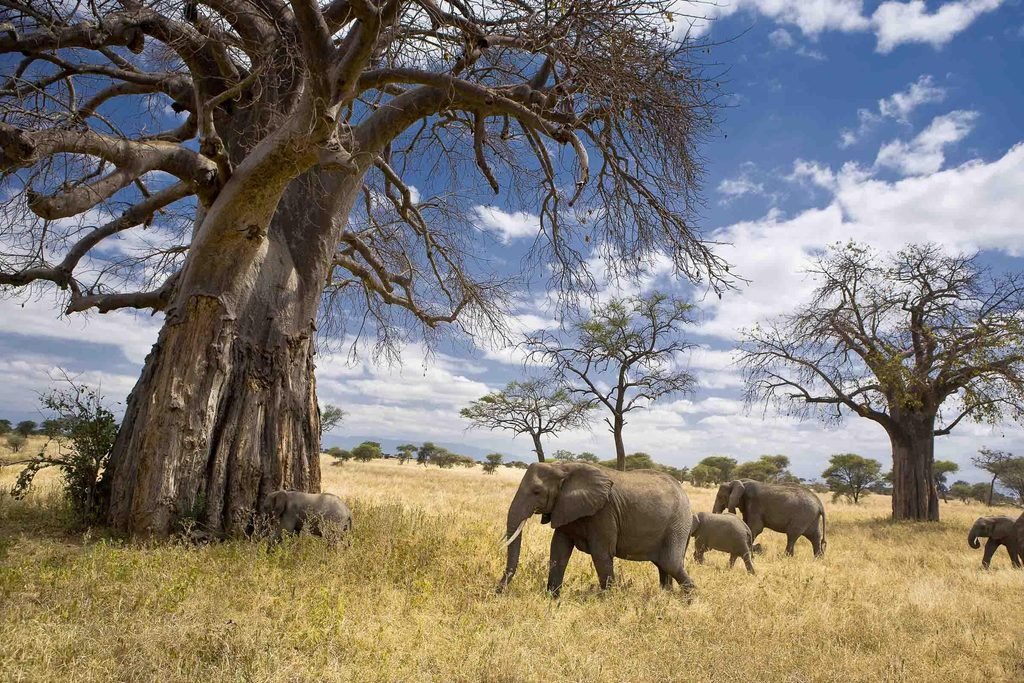
Tarangire National Park is especially well known for its large elephant population and impressive baobab trees. The park’s landscape includes open grasslands, wooded areas, seasonal swamps, and the Tarangire River, which attracts wildlife during the dry season. As you drive through the park, you may encounter elephants feeding near the road, giraffes moving between acacia trees, zebras grazing in the open, and different antelope species. Lions, leopards, and other predators also live in the park, although sightings depend on animal movements and conditions.
Your guide will help identify the animals and explain their behavior while selecting suitable areas for game viewing. During the day, you will stop at an appropriate picnic area for lunch before continuing the safari. Tarangire is also an excellent destination for birdwatching, with numerous bird species living around the river, woodland, and wetland habitats.
In the late afternoon, you leave the park and travel to your designated budget campsite, either near Tarangire or in the Mto wa Mbu area, depending on the confirmed itinerary. After dinner, you can relax and prepare for the following day’s visit to Lake Manyara.
Accommodation: Budget campsite near Tarangire or Mto wa Mbu
Meals: Breakfast, lunch and dinner
Day 3: Lake Manyara National Park – Transfer to Karatu
After breakfast at the campsite, you travel toward Lake Manyara National Park, located beneath the dramatic cliffs of the Great Rift Valley. Although Lake Manyara is smaller than the Serengeti, it contains several different habitats, including groundwater forests, open grasslands, woodland, and the lake itself. This variety makes it an interesting destination for wildlife photography and birdwatching.
Your game drive begins in the forested section of the park, where tall trees create a green environment that contrasts with the open savannah landscapes found elsewhere in northern Tanzania. Blue monkeys and baboons are often seen in the forest, while elephants, giraffes, buffaloes, and antelopes may be encountered in other areas. Lake Manyara is also known for its tree-climbing lions, although these animals can be difficult to locate and sightings are not guaranteed.
As you continue toward the lakeside areas, your guide will look for wildlife and birds that use the surrounding wetlands. Flamingos may be present depending on water conditions and seasonal movements, while other birds can often be observed around the lake and forest. The scenery is particularly attractive where the Rift Valley escarpment rises above the park, creating a striking backdrop for photographs.
After your game drive and picnic lunch, you leave Lake Manyara and continue toward Karatu, a town located in the highlands near the Ngorongoro Conservation Area. The evening is spent at a budget campsite, where you can enjoy dinner and prepare for the longer journey to the Serengeti the following morning.
Accommodation: Budget campsite in Karatu
Meals: Breakfast, lunch and dinner
Day 4: Karatu – Ngorongoro Highlands – Serengeti National Park
After an early breakfast, you begin the journey from Karatu toward Serengeti National Park. The road passes through the Ngorongoro highlands, where the landscape changes from cultivated areas and green hills to open grasslands. Along the way, you may enjoy views of the Ngorongoro Conservation Area and the surrounding countryside, depending on the weather and road conditions.
The drive to the Serengeti is part of the safari experience because it takes you through several different environments. As you continue west, the landscape gradually becomes more open, with wide plains stretching toward the horizon. This transition marks your approach to one of Africa’s most famous wildlife destinations. Your guide will complete the necessary entry procedures before continuing into Serengeti National Park.
Once inside the park, you begin a game drive while traveling toward your campsite. The Serengeti is home to lions, leopards, cheetahs, elephants, buffaloes, giraffes, zebras, wildebeest, and many other species. The central Serengeti, particularly the Seronera area, is known for its resident wildlife and offers good game-viewing opportunities throughout much of the year.
Your guide will look for wildlife along the route while allowing time for photography and observation. The day’s schedule depends on road conditions, wildlife sightings, and the distance to your designated campsite. By late afternoon, you arrive at a public campsite in the Serengeti, where the safari cook or camp team prepares dinner.
Spending the night in the Serengeti is one of the highlights of a budget camping safari. The surrounding wilderness creates a different atmosphere from staying in a town, and you may hear animals calling in the distance. Always follow your guide’s campsite instructions and remain within permitted areas.
Accommodation: Public campsite in Serengeti National Park
Meals: Breakfast, lunch and dinner
Day 5: Full-Day Wildlife Safari in Serengeti National Park
Today is dedicated to exploring Serengeti National Park, giving you a full day to search for wildlife and enjoy the scenery without the pressure of traveling to another destination. After an early breakfast, you leave the campsite for a morning game drive. Early morning can be a productive time for wildlife viewing because temperatures are cooler and some predators are more active before the heat of the day.
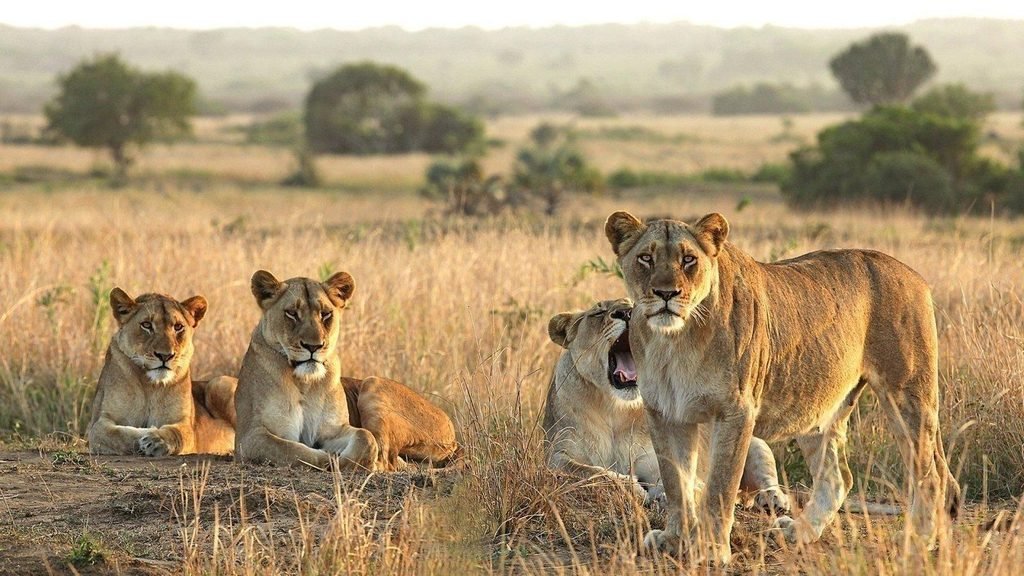
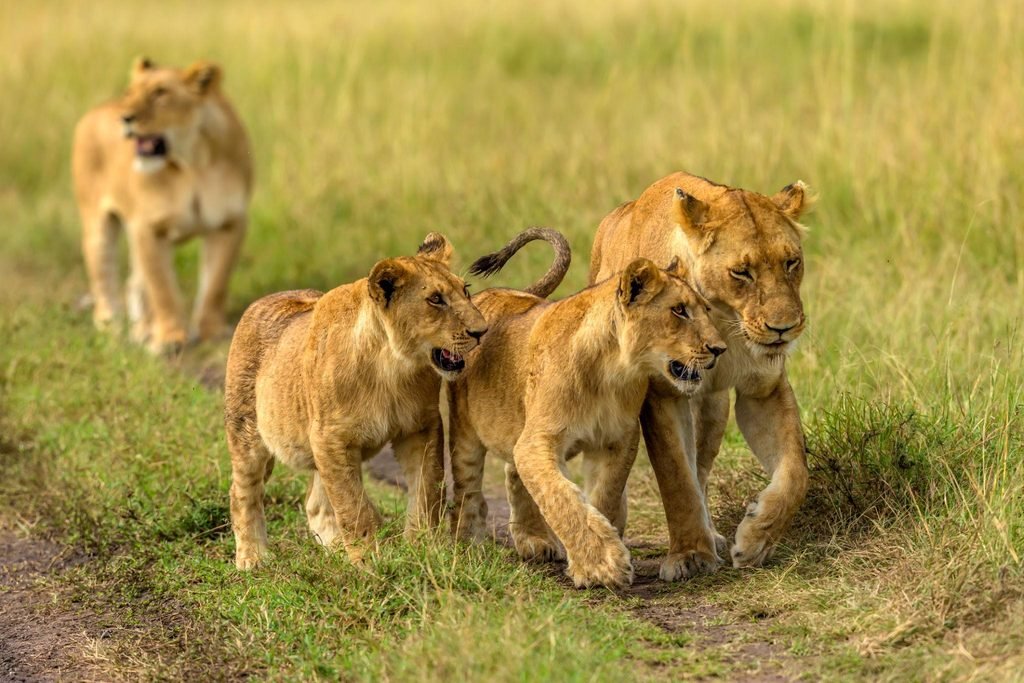
The Serengeti is famous for its large populations of plains animals and the predators that depend on them. During your game drive, you may see lions resting near rocky outcrops, cheetahs scanning the grasslands, giraffes feeding on trees, and herds of zebras and wildebeest moving across the plains. Leopards are also present, although they can be difficult to spot because they often rest in trees or remain hidden in vegetation.
Depending on the season and the location of the migrating herds, your guide may adjust the day’s game-drive route to explore areas where wildlife activity is more promising. The Great Wildebeest Migration moves through different parts of the Serengeti ecosystem during the year, so its location cannot be guaranteed for any particular travel date. Even when the main migrating herds are elsewhere, the central Serengeti supports resident wildlife and provides opportunities for rewarding game drives.
During the day, you stop for a picnic lunch at a designated location before continuing the safari. Your guide will explain animal behavior, answer questions, and help you understand the relationship between the different species and their environment. You may also encounter smaller animals, birds of prey, and interesting landscapes that are easy to overlook when focusing only on the larger mammals.
In the late afternoon, you return to your campsite for dinner and overnight accommodation. After a full day of exploring, the evening provides an opportunity to review your photographs and enjoy the atmosphere of the Serengeti.
Accommodation: Public campsite in Serengeti National Park
Meals: Breakfast, lunch and dinner
Day 6: Morning Serengeti Game Drive – Transfer to Ngorongoro Conservation Area
Your sixth day begins with another opportunity to explore the Serengeti. After breakfast, you enjoy a morning game drive while gradually traveling toward the park exit. This gives you additional time to look for animals you may not have seen during the previous days and enjoy the open plains before leaving the park.
Wildlife sightings vary throughout the day, and your guide will choose suitable roads according to the conditions and available time. You may encounter herds of wildebeest, zebras, giraffes, elephants, or buffaloes, while predators such as lions and cheetahs may occasionally be observed. The Serengeti’s landscape changes with the seasons, and even familiar areas can look different depending on rainfall and vegetation.
After leaving Serengeti National Park, you continue east through the Ngorongoro Conservation Area. The journey takes you across open landscapes and toward the higher ground surrounding Ngorongoro Crater. Depending on your route and schedule, you may see Maasai pastoral communities in permitted areas of the conservation area. Any cultural visit would need to be arranged separately and should not be assumed to be included in the standard package.
By late afternoon, you arrive at your designated campsite, commonly in the Ngorongoro highlands or near the crater rim. The higher elevation can make evenings noticeably colder than in the Serengeti, so warm clothing is important. After dinner, your guide explains the following morning’s descent into Ngorongoro Crater.
Accommodation: Designated budget campsite in the Ngorongoro area
Meals: Breakfast, lunch and dinner
Day 7: Ngorongoro Crater Game Drive – Return to Karatu
After an early breakfast, you travel toward the Ngorongoro Crater descent road and begin your game drive on the crater floor. Ngorongoro is one of Tanzania’s most remarkable wildlife destinations because its volcanic landscape contains grasslands, wetlands, woodland, and freshwater areas within a relatively compact environment. The crater floor supports many animal species, making it a popular destination for visitors hoping to see a wide variety of wildlife during one game drive.
As you explore the crater, you may encounter buffaloes, zebras, wildebeest, hippos, hyenas, and different antelope species. Lions are also found in the area, while elephants may be seen moving through woodland or open habitats. The endangered black rhinoceros is one of the crater’s most sought-after animals, but sightings are uncommon and cannot be guaranteed.
Your guide will follow the permitted game-drive roads and look for wildlife in different habitats. The crater’s scenery is impressive, with steep walls surrounding the floor and creating a natural setting for photography. You may stop for a picnic lunch at a designated area before continuing the drive, subject to the permitted visit duration and park arrangements.
After completing the crater excursion, you ascend to the rim and begin the journey back toward Karatu. The evening is spent at a budget campsite, where you can relax after several days of wildlife viewing. This is your final camping night before returning to Arusha.
Accommodation: Budget campsite in Karatu
Meals: Breakfast, lunch and dinner
Day 8: Karatu – Return to Arusha
After breakfast at your campsite, you begin the return journey from Karatu to Arusha. The drive passes through the northern Tanzania countryside, including villages, agricultural landscapes, and areas near the Great Rift Valley. After several days of early departures and wildlife game drives, this final stage provides a more relaxed end to your safari.
Depending on your schedule, there may be time for a short stop along the route for refreshments or shopping, provided this fits the agreed itinerary. Your guide will then continue toward Arusha, where the safari ends at your hotel, another agreed drop-off point, or the airport if your flight schedule allows sufficient transfer time.
This marks the end of your eight-day Tanzania budget camping safari. You will have explored four major wildlife destinations, experienced different landscapes, and spent several nights camping in or near Tanzania’s protected areas.
Travelers who want to continue their holiday can arrange additional activities, including a Zanzibar beach trip, a Mount Meru trek, or a Mount Kilimanjaro climbing expedition. These extensions can be discussed with Eddy Tours & Safaris when planning your booking.
Meals: Breakfast; other meals subject to confirmation
End of safari: Arusha
8-Day Tanzania Budget Camping Safari Itinerary Summary
| Day | Destination | Main activity | Overnight |
|---|---|---|---|
| 1 | Arusha | Arrival and safari briefing | Arusha |
| 2 | Tarangire | Wildlife game drive | Tarangire/Mto wa Mbu area |
| 3 | Lake Manyara | Wildlife and birdwatching safari | Karatu |
| 4 | Serengeti | Transfer and afternoon game drive | Serengeti |
| 5 | Serengeti | Full-day wildlife safari | Serengeti |
| 6 | Serengeti – Ngorongoro | Morning game drive and transfer | Ngorongoro area |
| 7 | Ngorongoro Crater | Crater game drive | Karatu |
| 8 | Arusha | Return journey and departure | End of safari |
How Much Does an 8-Day Budget Camping Safari Cost in Tanzania in 2027 and 2028?
The cost of an eight-day budget camping safari depends on several factors, including the number of travelers, the time of year, park fees, accommodation arrangements, and whether you choose a private or group-joining safari. Shared group departures are often more affordable because vehicle and guiding expenses are divided among several travelers, while private safaris offer greater flexibility but may cost more per person.
For general planning, budget camping safaris are often estimated at approximately USD 180–300 per person per day on suitable shared departures. This would suggest an illustrative range of around USD 1,440–2,400 per person for eight days, although actual quotations can fall outside this range. These figures are planning estimates, not confirmed Eddy Tours & Safaris prices for 2027 or 2028.
Park fees, camping fees, vehicle expenses, fuel, meals, and guide services all contribute to the final price. The exact amount also depends on whether airport transfers, the first night’s accommodation, and additional activities are included.
For more information about different safari budgets, read our Tanzania Safari Cost Guide, which explains the differences between budget, mid-range, and luxury safari arrangements.
To receive an accurate price for your travel dates, contact Eddy Tours & Safaris with your group size and preferred departure month.
What Is Included in an 8-Day Budget Camping Safari?
A standard budget camping safari commonly includes transport in a 4×4 safari vehicle with a pop-up roof, services of a professional driver-guide, applicable park and conservation area fees, camping accommodation, and meals during the safari. Camping equipment and the services of a safari cook may also be included, depending on the selected package.
The vehicle is an important part of the safari experience because you spend considerable time traveling between destinations and observing wildlife. A suitable safari vehicle allows passengers to view animals from the roof opening while remaining inside the vehicle during game drives. Your guide is responsible for driving, explaining wildlife behavior, and following park regulations.
The exact package inclusions must be confirmed before booking. Some operators include the first night’s accommodation in Arusha, while others begin their packages on the morning of the first park visit. Drinking water quantities, airport transfers, and equipment arrangements can also vary.
What Is Not Included in the Safari Package?
International flights, Tanzania visa fees, travel insurance, personal expenses, alcoholic drinks, tips, and optional activities are commonly excluded unless specifically mentioned in the quotation. Additional hotel nights before or after the safari may also be charged separately.
Travelers interested in cultural visits, hot-air balloon safaris, or other special activities should request these arrangements in advance. Such experiences are not automatically included in a budget camping safari, and availability depends on the destination, season, and operator.
Before confirming your booking, review the written quotation carefully so you understand the services included in the total price.
What Is Camping Like on a Tanzania Budget Safari?
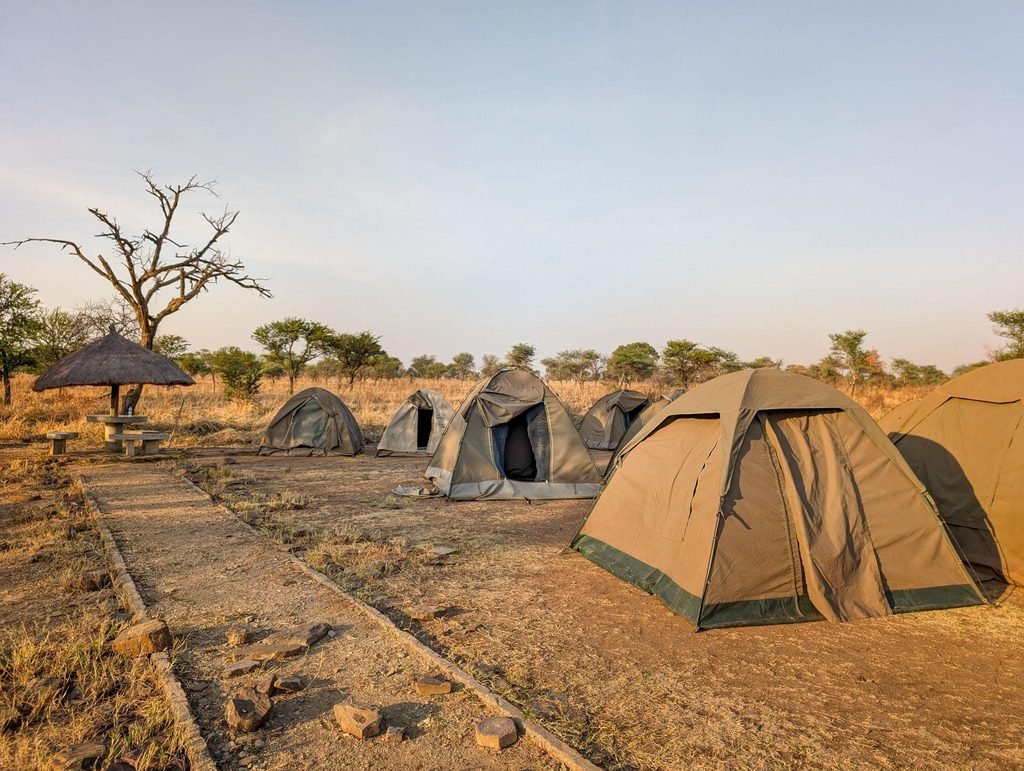
Camping is one of the main reasons travelers choose this type of safari. Instead of returning to a luxury lodge after each game drive, you stay at designated campsites in or near the wildlife destinations. Accommodation normally consists of tents, sleeping mattresses, and basic shared facilities. Some campsites have showers and toilets, while facilities at more remote locations may be simpler.
Camping in the Serengeti can be particularly interesting because the campsites are located within the wider wildlife environment. You may hear animal sounds during the night, although animals should never be approached or disturbed. Visitors must follow campsite rules, avoid leaving food outside, and remain within the permitted camping area.
Meals are usually prepared by a safari cook or provided through the selected campsite arrangements. Breakfast is commonly served before the day’s activities, lunch may be packed for a game drive, and dinner is prepared after returning to camp. The exact menu and catering arrangements depend on the package and any dietary requirements communicated before departure.
For travelers who enjoy outdoor experiences, camping provides a practical and affordable way to explore Tanzania’s national parks. However, anyone who requires private bathrooms, permanent beds, or greater comfort should consider a mid-range lodge safari instead.
Best Time for an 8-Day Budget Camping Safari in Tanzania
Tanzania’s northern safari circuit can be visited throughout the year, but the experience changes with the seasons. The dry season, generally from June to October, is popular because vegetation is often less dense and animals may gather around rivers and other water sources. Tarangire is particularly attractive during this period, when elephants and other wildlife are frequently found around the Tarangire River.
The green season also offers advantages. From approximately November through May, depending on rainfall patterns, many landscapes become greener and birdwatching can be especially rewarding. The Serengeti’s wildebeest migration continues throughout the year, with the herds moving between different parts of the wider ecosystem. Their location depends on rainfall and grazing conditions, so no specific wildlife event can be guaranteed for a particular departure.
For travelers planning a safari in 2027 or 2028, the best month depends on what you want to see, your budget, and your tolerance for rain or busy travel periods. June to October is a strong choice for general wildlife viewing, while January and February may appeal to visitors interested in the southern Serengeti’s calving season, subject to the itinerary being adjusted to reach the appropriate area.
You can also explore our existing eight-day Tanzania camping safari package to compare itinerary options before requesting a customized quotation.
Wildlife You May See During Your Tanzania Safari
One of the main attractions of this itinerary is the opportunity to observe a wide variety of animals across several different habitats. In Tarangire, elephants are among the most recognizable animals, often seen traveling in family groups or feeding near the river. The park also supports giraffes, zebras, wildebeest, buffaloes, antelopes, and predators.
The Serengeti is famous for lions, cheetahs, leopards, and large populations of grazing animals. Depending on the season, you may encounter migrating wildebeest and zebras moving across the plains. However, the migration is a natural event influenced by rainfall and grazing conditions, and its exact location cannot be predicted with certainty.
Ngorongoro Crater offers a different wildlife environment, with animals living among grasslands, wetlands, and woodland on the crater floor. Buffaloes, hippos, zebras, wildebeest, hyenas, and lions are among the species that may be encountered. Black rhinoceroses are present but can be difficult to locate.
Lake Manyara adds another experience through its forests, birdlife, and lakeside habitats. Elephants, monkeys, buffaloes, and numerous bird species are among the animals visitors may see. The park is also known for tree-climbing lions, although these sightings are uncommon and should never be promised.
What to Pack for an 8-Day Tanzania Camping Safari
Packing for a camping safari requires some preparation because you will spend time outdoors and travel between different environments. Daytime temperatures can be warm, particularly in Tarangire and the Serengeti, while evenings in the Ngorongoro highlands can be considerably colder. Comfortable clothing that can be layered is therefore useful.
Lightweight trousers, breathable shirts, comfortable walking shoes, a warm jacket, a hat, sunglasses, and sunscreen are recommended. Neutral-colored clothing is practical for game drives, while a waterproof jacket can be useful during the rainy season. A small daypack is helpful for carrying your camera, water, personal medication, and other essentials during the day.
You should also bring personal toiletries, insect repellent, a power bank, and any medication you require. Binoculars can improve wildlife viewing, especially when animals are some distance from the road. If you enjoy photography, bring suitable camera equipment and enough storage for photographs taken throughout the safari.
For camping, confirm whether sleeping bags, mattresses, pillows, and other personal items are included in your package. Bringing the correct equipment can make a considerable difference to your comfort, especially during cooler nights near Ngorongoro.
Private Safari or Group-Joining Safari: Which Is Better?
Both private and group-joining safaris can provide enjoyable wildlife experiences, but they are suitable for different types of travelers. A private safari gives you exclusive use of the vehicle and allows more flexibility over the daily schedule, subject to park rules and travel distances. This can be particularly useful for families, couples, photographers, and travelers who prefer a more personal experience.
A group-joining safari is often more affordable because transport and guiding costs are shared among several participants. It can be a good option for solo travelers or small groups who want to reduce expenses and do not mind traveling with other people. However, group departures may follow a fixed itinerary, and availability depends on the travel dates and number of confirmed participants.
When booking with Eddy Tours & Safaris, you can enquire about the available arrangements for your preferred dates and compare the advantages of private and shared departures before making a decision.
Frequently Asked Questions About the 8-Day Tanzania Budget Camping Safari
1. Is an eight-day safari enough to explore Tanzania?
Eight days is a good amount of time to explore several major wildlife destinations in northern Tanzania, including Tarangire, Lake Manyara, Serengeti, and Ngorongoro Crater.
2. Is a budget camping safari worth it?
Yes. It can provide excellent wildlife viewing while keeping accommodation costs lower than a luxury lodge safari.
3. What is the difference between budget camping and luxury safari accommodation?
Budget camping normally uses tents and shared facilities, while luxury safaris use more comfortable lodges or permanent tented camps with additional services.
4. How much does an eight-day Tanzania camping safari cost?
The price depends on group size, season, accommodation, and park fees. Request a confirmed quotation for your travel dates.
5. Can I see the Big Five during this safari?
You may encounter lions, elephants, buffaloes, leopards, and rhinoceroses, but seeing all five is not guaranteed.
6. Does the safari include Serengeti National Park?
Yes. This itinerary includes travel to the Serengeti and time for wildlife game drives.
7. Can I see the Great Wildebeest Migration?
It may be possible depending on the season and location of the herds. The itinerary may need to be adjusted to improve your chances.
8. Is Ngorongoro Crater included?
Yes. The itinerary includes a game drive on the crater floor.
9. Does the safari include Tarangire National Park?
Yes. Tarangire is visited on the second day.
10. Is Lake Manyara worth visiting?
Yes. Lake Manyara offers forest scenery, birdwatching, and wildlife habitats that differ from those of the Serengeti.
11. Are budget campsites safe?
Designated campsites operate under established rules. Visitors must follow their guide’s instructions, especially when camping in wildlife areas.
12. Do budget campsites have toilets and showers?
Many public campsites have shared facilities, although standards and availability vary.
13. Are meals included?
Meals are commonly included during the camping safari, but the exact arrangements should be confirmed in your quotation.
14. Is drinking water included?
Drinking water is often included, but you should confirm the quantity provided each day.
15. Can I book a private eight-day safari?
Yes. You can request a private itinerary for your preferred travel dates.
16. Are group-joining safaris available?
Group-joining arrangements may be available depending on the departure date and confirmed participants.
17. What type of vehicle is used?
Budget safaris commonly use a 4×4 safari vehicle with a pop-up roof for wildlife viewing.
18. Can children join a camping safari?
Children may be able to join, depending on their ages, the campsite arrangements, and the selected itinerary.
19. Is the safari suitable for solo travelers?
Yes. Solo travelers can enquire about private arrangements or suitable group departures.
20. What is the best month for a Tanzania camping safari?
June to October is popular for general wildlife viewing, but the northern parks offer safari opportunities throughout the year.
21. Will I see lions in the Serengeti?
Lions live in the Serengeti, and sightings are possible, but no wildlife encounter can be guaranteed.
22. Can I charge my phone or camera during the safari?
Charging facilities may be available in the safari vehicle or at selected campsites. Confirm the arrangements before departure.
23. Do I need travel insurance?
Travel insurance is strongly recommended, including appropriate medical and emergency assistance coverage.
24. Can I book this safari for 2027 or 2028?
You can request arrangements for either year, subject to availability and confirmation of the final price.
25. Can I combine the safari with Zanzibar or Kilimanjaro?
Yes. Eddy Tours & Safaris can discuss additional travel arrangements after your wildlife safari.
Book Your 8-Day Budget Camping Safari in Tanzania for 2027 or 2028
An eight-day budget camping safari is a practical way to explore Tanzania’s northern wildlife destinations while keeping accommodation costs affordable. The itinerary takes you from the elephant habitats of Tarangire to the forests of Lake Manyara, the open plains of the Serengeti, and the wildlife-rich Ngorongoro Crater. Each destination offers a different experience, giving travelers an opportunity to enjoy Tanzania’s natural landscapes and wildlife over several days.
Camping allows you to stay closer to the outdoor environment and experience the safari in a simple, traditional way. Although the accommodation is basic, the main attraction remains the wildlife, the national parks, and the time spent exploring with your guide. Choosing the right travel dates, confirming the services included, and allowing enough time for each destination will help you plan a more enjoyable trip.
At Eddy Tours & Safaris, we help travelers organize budget-friendly Tanzania wildlife safaris for 2027 and 2028. Whether you are planning a private safari, traveling with friends, or looking for a group-joining departure, our team can help you review suitable arrangements and request a detailed quotation.
Contact Eddy Tours & Safaris
Website: Eddy Tours & Safaris
Safari enquiries: Contact Our Team
WhatsApp: Chat with Us
Email: sales@eddytours-safaris.com
Send us your preferred travel dates, number of travelers, and accommodation preferences to receive a personalized quotation for your eight-day Tanzania camping safari.