
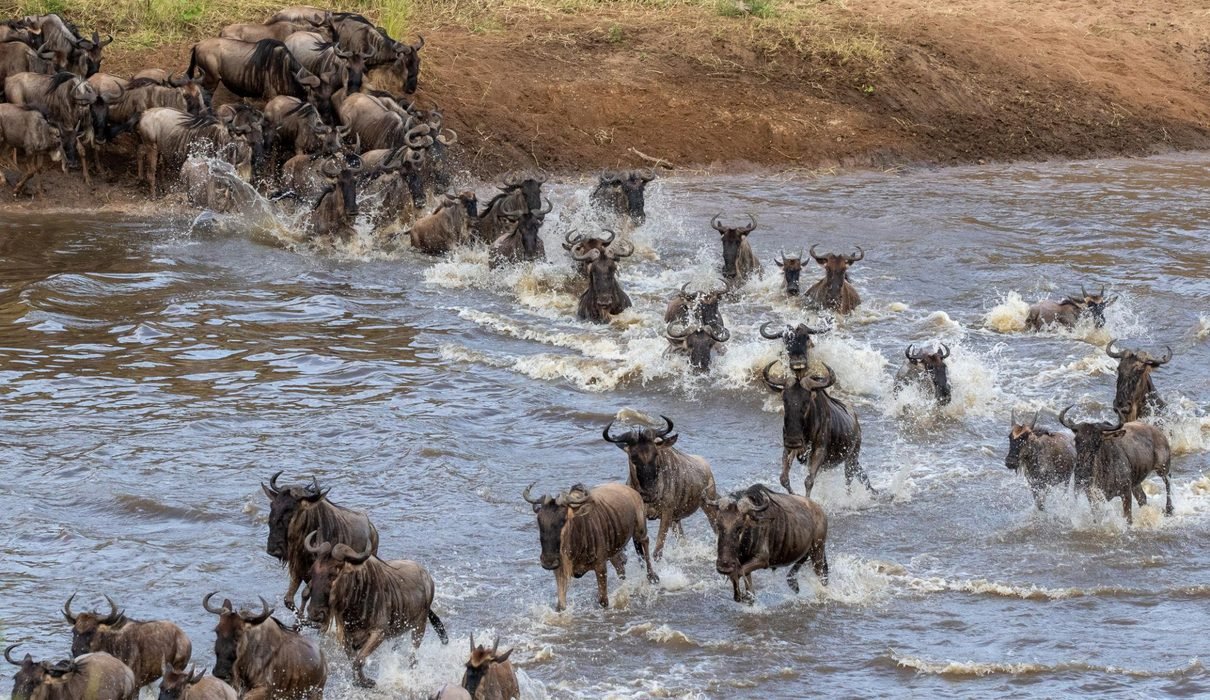
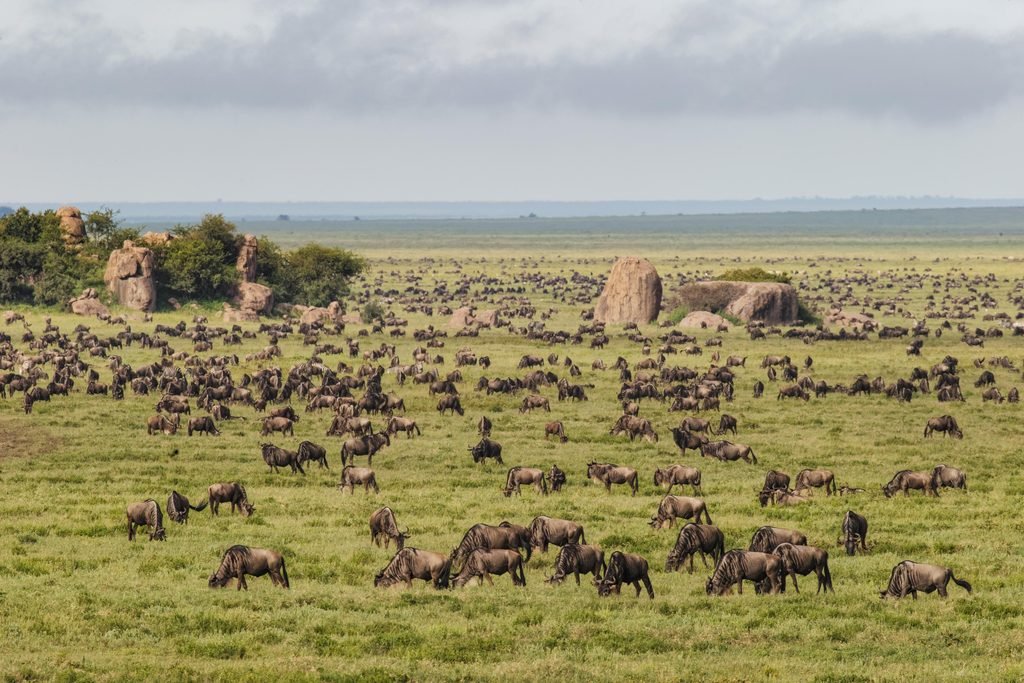
The Great Wildebeest Migration is one of Africa’s most remarkable wildlife movements. Every year, enormous herds of wildebeest, zebras and gazelles travel through the Serengeti ecosystem in search of fresh grass and water. Their movement attracts predators, including lions, cheetahs, leopards and hyenas, creating opportunities to observe wildlife in its natural surroundings. During the northern migration season, herds may gather along the Mara River, where some attempt dangerous crossings while others remain on the riverbanks or move to different crossing points.
Spend eight days exploring some of Tanzania’s finest wildlife destinations, with plenty of time in the Serengeti to follow the Great Wildebeest Migration. This private safari takes you through Tarangire National Park, the wildlife-rich plains of Central Serengeti, the northern migration areas near the Mara River and the Ngorongoro Crater. The journey combines excellent wildlife viewing, comfortable accommodation and the freedom to explore at a pace that suits you.
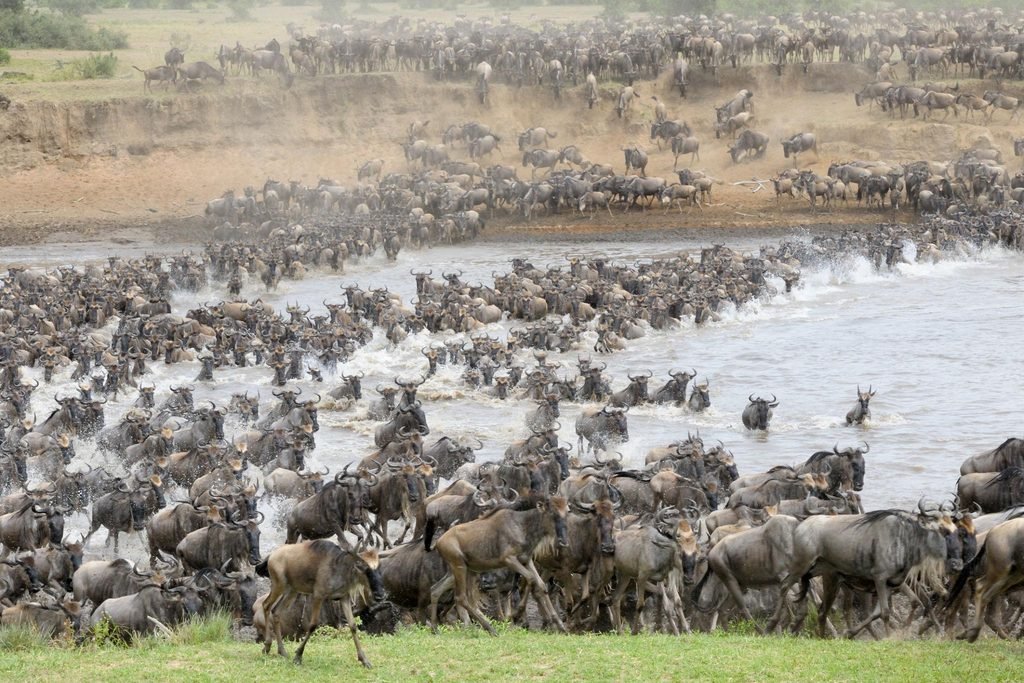
Our Tanzania safari tours are arranged around the interests of each traveller, with experienced local safari guides, private 4×4 safari vehicles and carefully selected accommodation. For this eight-day journey, we focus on the northern migration between July and October, when the Mara River area is particularly important. Travellers visiting during other months can request a revised route following the herds into the southern or western Serengeti.
8-Day Serengeti Wildebeest Migration Safari Highlights
- Explore Tarangire National Park, known for elephants, baobab trees and seasonal wildlife concentrations.
- Enjoy several days of game drives across Central and Northern Serengeti.
- Search for migrating wildebeest and zebras along the Mara River.
- Spend two nights in Northern Serengeti to allow more time for migration viewing.
- Look for lions, cheetahs, leopards, elephants, buffaloes and other African wildlife.
- Descend into Ngorongoro Crater for a memorable wildlife safari.
- Travel with a professional English-speaking safari guide in a private 4×4 Land Cruiser.
- Stay in comfortable lodges and tented safari camps close to the main wildlife areas.
Detailed 8-Day Serengeti Great Migration Safari Itinerary
Day 1: Arrival in Arusha – Welcome to Tanzania
Your eight-day Tanzania safari begins when you arrive at Kilimanjaro International Airport or Arusha Airport, where a representative from Eddy Tours & Safaris will welcome you and arrange your transfer to your hotel in Arusha. Depending on your arrival time, you may have an opportunity to explore the town, enjoy the hotel facilities or simply rest after your journey. Arusha sits at the foot of Mount Meru and serves as the main starting point for safaris to Tanzania’s northern national parks.
Your safari guide or company representative will meet you for a short briefing about the coming days, including the planned route, expected travel times, accommodation arrangements and general safari guidelines. This is also a good opportunity to discuss your wildlife interests, photography preferences or any special requirements. You will spend your first night in Arusha before setting out into the national parks the following morning.
Accommodation: Hotel or safari lodge in Arusha
Meals: Dinner, subject to arrival time and hotel arrangement
Activities: Airport transfer, safari briefing and relaxation
Day 2: Arusha to Tarangire National Park – Elephants and Baobab Landscapes
After breakfast, your guide will collect you from the hotel and begin the journey towards Tarangire National Park, one of the most rewarding wildlife destinations in northern Tanzania. The drive passes through rural landscapes, small towns and farming communities before reaching the park. Tarangire is especially known for its large baobab trees, elephant families and the Tarangire River, which provides an important source of water for wildlife during the dry season.
Once inside the park, you will begin your first proper game drive. Your guide will explore the river valleys, woodland areas and open plains in search of elephants, giraffes, zebras, wildebeest, buffaloes, impalas and predators. Lions are regularly encountered, while leopards may sometimes be found resting in trees or moving through the thicker vegetation. During the dry season, the concentration of wildlife around the river can make Tarangire particularly rewarding for visitors interested in photography and animal behaviour.
A picnic lunch will be served at a designated area inside the park, allowing you to enjoy the surroundings before continuing your afternoon game drive. Later, you will leave Tarangire and travel to your accommodation in the Karatu area, where dinner and an overnight stay will be arranged.
Accommodation: Safari lodge in Karatu
Meals: Breakfast, lunch and dinner
Activities: Scenic drive and Tarangire game drive
Day 3: Karatu to Central Serengeti – Entering the Endless Plains
Following an early breakfast, your journey continues towards Serengeti National Park through the Ngorongoro Conservation Area. The road climbs into the highlands, passing forests, agricultural landscapes and viewpoints overlooking the Ngorongoro Crater. Weather permitting, your guide may stop at an appropriate viewpoint before continuing across the conservation area towards the Serengeti plains.
As you approach the Serengeti, the landscape gradually opens into wide grasslands stretching towards the horizon. This is the setting that has made the park famous around the world. Your first game drive will take place as you travel towards Central Serengeti, particularly the Seronera region, which supports resident wildlife throughout the year. Lions, leopards, cheetahs, elephants, giraffes and large numbers of antelopes are among the animals that may be encountered.
Central Serengeti is also an important part of the wider migration ecosystem, although the largest herds move between different regions according to rainfall and grazing conditions. Your guide will use local wildlife information to identify promising areas while ensuring that the day’s route remains practical and comfortable. In the late afternoon, you will arrive at your tented camp or lodge, where dinner will be served before your first night in the Serengeti.
Accommodation: Tented safari camp in Central Serengeti
Meals: Breakfast, lunch and dinner
Activities: Ngorongoro highlands drive and Serengeti game drive
Day 4: Central Serengeti to Northern Serengeti – Following the Migration Route
After breakfast, you will leave Central Serengeti and begin the journey towards the northern part of the national park. Rather than treating the transfer as an ordinary drive, your guide will make use of wildlife-viewing opportunities along the way. The route passes through changing landscapes, including open grasslands, rocky kopjes, woodland and river valleys, with opportunities to observe both resident animals and migrating herds.
Northern Serengeti is particularly important between July and October, when wildebeest and zebras frequently move through the region and gather near the Mara River. As you approach the Kogatende area, your guide will begin searching for the herds and assessing the wildlife activity around accessible migration routes. Depending on the season and the location of the animals, you may encounter large groups of wildebeest grazing, moving across the plains or gathering near riverbanks.
The afternoon will be spent exploring the northern wildlife areas before arriving at your camp. Accommodation in this region is selected to reduce unnecessary driving and provide convenient access to migration-viewing areas. After dinner, you can relax at camp and enjoy the quiet surroundings of the Serengeti wilderness.
Accommodation: Migration tented camp in Northern Serengeti
Meals: Breakfast, lunch and dinner
Activities: Northern Serengeti game drive and migration search
Day 5: Full-Day Northern Serengeti Safari – Mara River Migration Experience
Today is dedicated to exploring Northern Serengeti and searching for the Great Wildebeest Migration around the Mara River. After an early breakfast, you will depart with your guide for a full-day game drive, carrying a packed picnic lunch so that you can spend as much time as possible in the wildlife areas. The morning hours are often productive for animal viewing, with cooler temperatures and active predators providing good opportunities for observation and photography.
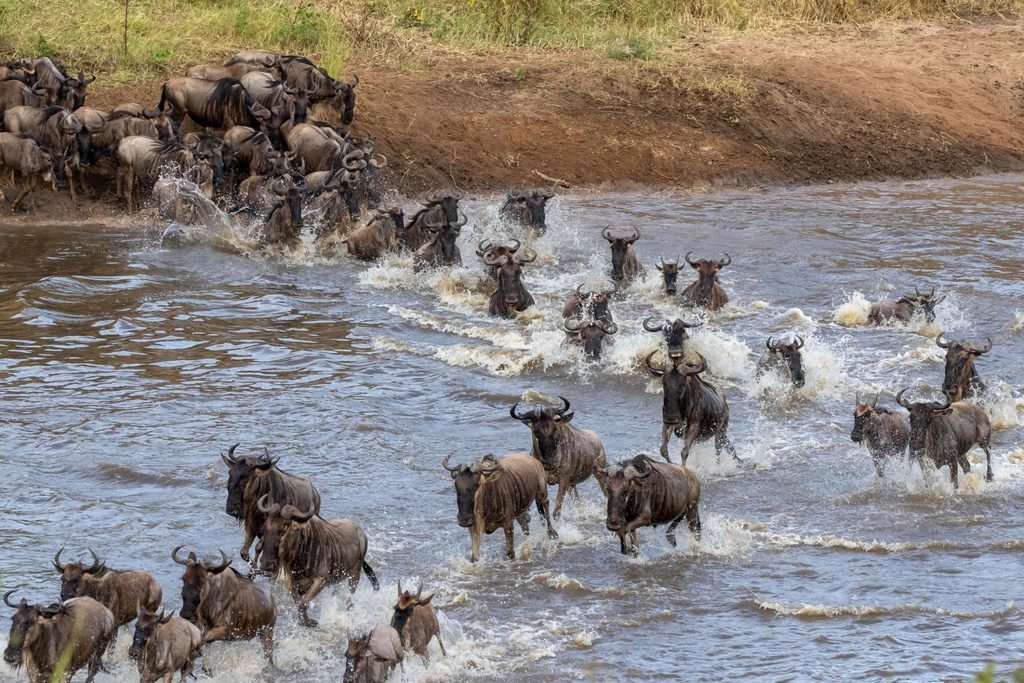
The Mara River is one of the best-known locations associated with the Great Migration. During the northern migration season, wildebeest may gather in large numbers near its banks before attempting to cross. These movements are unpredictable. Herds can remain in one location for hours, turn away from the water or suddenly begin crossing at a different point. Your guide will monitor conditions and choose suitable viewing areas while following park regulations and maintaining a safe distance from wildlife.
Even when a river crossing does not occur, Northern Serengeti offers excellent opportunities to observe large herds, predators and other wildlife. Lions may be seen resting in the grasslands, elephants may move through wooded areas, and hippos and crocodiles can be found in the river system. Your guide will balance time spent looking for migration activity with opportunities to explore the wider northern landscape. After a full day in the bush, you will return to camp for dinner and overnight accommodation.
Accommodation: Migration tented camp in Northern Serengeti
Meals: Breakfast, lunch and dinner
Activities: Full-day Mara River area game drive and migration viewing
Day 6: Northern Serengeti to Central Serengeti – Wildlife Across the Plains
After breakfast, you will begin travelling south towards Central Serengeti, enjoying game drives along the way. This journey provides another opportunity to explore the northern and central wildlife areas, including locations that may not have been visited during the previous days. Depending on the migration’s position, your guide may spend additional time around suitable northern viewing areas before continuing towards Seronera.
The drive offers opportunities to look for predators, elephants, giraffes and resident plains animals. Central Serengeti is particularly well known for its lion populations and leopard habitat around riverine vegetation and rocky formations. Cheetahs may also be encountered in open grassland areas where they hunt gazelles and other smaller animals. Although wildlife sightings cannot be guaranteed, the variety of habitats gives visitors plenty to observe beyond the migrating herds.
You will enjoy a picnic lunch during the day and continue with an afternoon game drive before arriving at your accommodation. The evening provides time to relax, review photographs and enjoy another night in the Serengeti before travelling towards Ngorongoro the following morning.
Accommodation: Tented safari camp in Central Serengeti
Meals: Breakfast, lunch and dinner
Activities: Full-day game drive while travelling through Serengeti
Day 7: Serengeti to Ngorongoro Highlands – Final Serengeti Game Drive
Your morning begins with breakfast at camp before departing for a final game drive through Central Serengeti. This is an opportunity to explore areas around Seronera and look for animals that may have been difficult to find earlier in the safari. Your guide will choose a suitable route towards the Naabi Hill area, allowing time for wildlife observation while keeping the day’s onward journey in mind.
After leaving Serengeti National Park, you will continue through the Ngorongoro Conservation Area towards the crater highlands. The landscape changes considerably as the road climbs from the open plains into higher elevations, where cooler temperatures, forests and green hills create a different atmosphere from the Serengeti. The journey provides a chance to appreciate the variety of environments found within northern Tanzania.
You will arrive at your accommodation near the Ngorongoro Crater or in Karatu, depending on the selected lodge and travel arrangements. The remainder of the evening will be spent relaxing and preparing for the following day’s crater safari. Dinner will be served at your accommodation, followed by an overnight stay.
Accommodation: Lodge near Ngorongoro Crater or in Karatu
Meals: Breakfast, lunch and dinner
Activities: Morning Serengeti game drive and Ngorongoro highlands transfer
Day 8: Ngorongoro Crater Game Drive – Return to Arusha
After an early breakfast, you will travel to the Ngorongoro Crater entrance and descend into the crater for your final major game drive. The Ngorongoro Crater is a large volcanic caldera containing grasslands, woodland, wetlands and freshwater habitats. Its relatively compact wildlife-viewing area makes it one of Tanzania’s most popular safari destinations, with opportunities to observe several large mammal species during a single visit.
During your game drive, you may encounter lions, elephants, buffaloes, zebras, wildebeest, hippos, hyenas and different antelope species. The crater also supports a small population of endangered black rhinos, although sightings are uncommon and depend on the animals’ location and visibility. Your guide will explore permitted routes through the crater floor, stopping for photographs and wildlife observations before enjoying a picnic lunch at a designated site.
After completing the crater visit, you will ascend to the rim and begin the journey back to Arusha. Your guide will arrange a drop-off at your hotel or another agreed location. Airport transfers can also be arranged according to your flight schedule, although a late-evening departure or an additional overnight stay may be more comfortable after the day’s activities. Your eight-day Serengeti Great Migration safari concludes with a return to Arusha.
Accommodation: Not included after the safari unless arranged
Meals: Breakfast and lunch
Activities: Ngorongoro Crater game drive and return transfer to Arusha

What Is Included in the 8-Day Serengeti Migration Safari?
The following services are included in the standard private safari arrangement, subject to confirmation in your final quotation.
- Private 4×4 safari Land Cruiser with a pop-up roof for wildlife viewing.
- Professional English-speaking safari driver-guide.
- Airport pickup and transfer on arrival.
- Seven nights of accommodation as described in the itinerary.
- Meals as specified in the daily programme.
- National park entrance fees for the scheduled visits.
- Ngorongoro Conservation Area entrance fees and crater service fee.
- Game drives and wildlife-viewing activities described in the itinerary.
- Drinking water in the safari vehicle during game drives.
- Government taxes applicable to the included safari services.
- Emergency assistance and support from Eddy Tours & Safaris during the safari.
- Return road transfer to Arusha at the end of the tour.
What Is Excluded from the Safari Package?
- International and domestic flights unless specifically included in the quotation.
- Tanzania tourist visa fees.
- Travel insurance and personal medical insurance.
- Tips and gratuities for the safari guide and lodge staff.
- Alcoholic drinks, soft drinks and other beverages not included by the accommodation.
- Personal expenses such as laundry, souvenirs and telephone calls.
- Optional activities, including hot-air balloon safaris.
- Additional accommodation before or after the scheduled safari.
- Optional cultural visits or activities not mentioned in the itinerary.
- Any services not specifically stated under the package inclusions.
Best Time to Book an 8-Day Serengeti Great Migration Safari
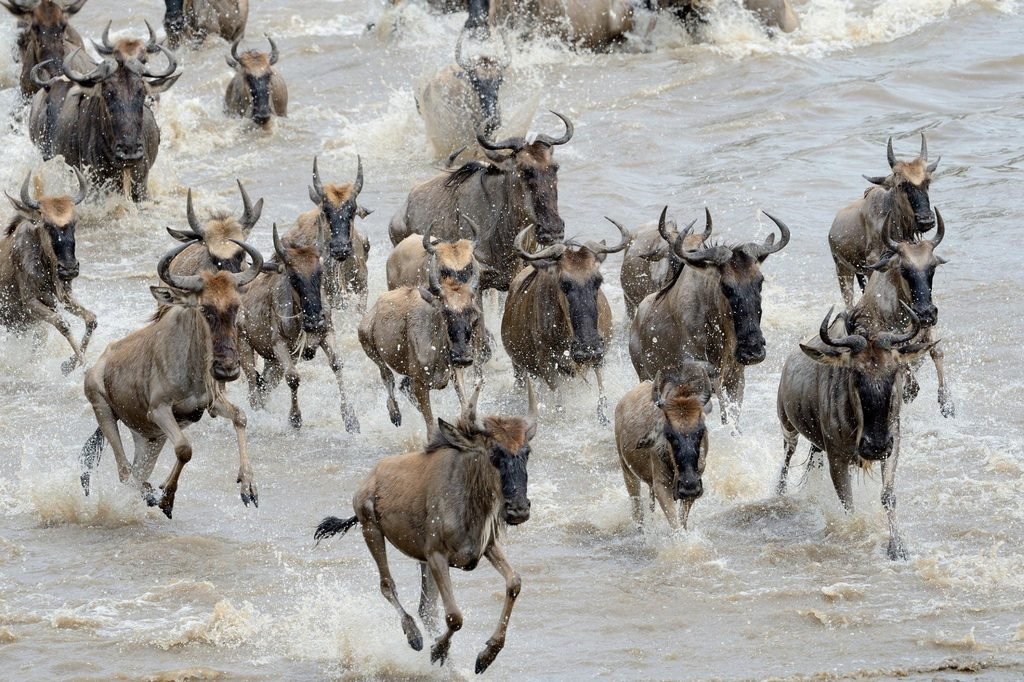
The Great Wildebeest Migration is a continuous natural movement rather than an event that happens on a particular date. The herds move through different parts of the Serengeti ecosystem as rainfall changes the availability of water and grazing. This means the best location for a migration safari depends on the month of travel. The eight-day itinerary described above is particularly suitable for July through October, when Northern Serengeti and the Mara River region are important migration areas.
Between January and March, the southern Serengeti and Ndutu plains are generally the preferred destinations for travellers interested in the wildebeest calving season. During May and June, the herds commonly move through central and western areas, including the Western Corridor and Grumeti region. From July into October, many herds travel towards the northern Serengeti, where river-crossing activity may occur. These seasonal patterns are useful for planning, but exact herd movements vary from year to year.
Travellers planning a safari in 2027, 2028 or 2029 should choose their dates according to the wildlife experience they would most like to see. If your main interest is the Mara River crossings, August and September are popular months, although crossings remain unpredictable. If you prefer the calving season and the opportunity to see newborn wildebeest on the southern plains, February is often a suitable choice. Eddy Tours & Safaris can adjust the itinerary and accommodation locations to match the season.
For further information about Tanzania’s protected areas and migration conservation, visit Tanzania National Parks Authority and the UNESCO World Heritage Centre.
Why Choose a Private Serengeti Migration Safari?
A private safari gives you greater control over your daily activities than a shared group departure. You travel with your own guide and vehicle, allowing more flexibility in deciding where to spend time during game drives, when to stop for photographs and how to balance migration viewing with other wildlife interests. This is especially useful in the Serengeti, where wildlife movements can change quickly and spending additional time in one area may be worthwhile.
An eight-day itinerary also allows you to explore more than one part of the Serengeti without rushing between destinations. The journey includes Central Serengeti, known for resident predators and varied wildlife, as well as Northern Serengeti, where migration viewing becomes the main focus during the dry season. Including Tarangire and Ngorongoro Crater provides additional wildlife experiences and different landscapes, making the journey suitable for first-time visitors as well as travellers returning to Tanzania.
With Eddy Tours & Safaris, your itinerary can be arranged according to your preferred accommodation standard, travel dates and interests. Whether you are travelling as a couple, with family or in a small private group, the aim is to provide enough time in the national parks while maintaining a comfortable and practical travel schedule.
Accommodation During Your Serengeti Migration Safari
Accommodation plays an important role in a migration safari because the location of your camp can affect how much time you spend driving to reach the wildlife areas. For the northern migration season, we recommend staying in a suitable tented camp in the Kogatende region for the two nights dedicated to Mara River exploration. This helps reduce long daily transfers and allows your guide to begin searching for wildlife earlier in the morning.
The safari can be arranged with mid-range lodges, comfortable tented camps or luxury accommodation, depending on your budget and preferences. Many tented camps provide private bathrooms, comfortable beds, dining facilities and views of the surrounding wilderness. Luxury options may offer additional services, larger rooms and more exclusive locations. Specific properties will be confirmed in your quotation according to availability, travel dates and the accommodation category selected.
Can You Combine the Serengeti Migration Safari with Mount Kilimanjaro?
Many visitors to Tanzania choose to combine a wildlife safari with a Mount Kilimanjaro climbing trip. This is a practical option for travellers who have enough time to explore both the country’s national parks and its famous mountain. After completing the eight-day migration safari, you can travel to Moshi or arrange a separate trekking programme, depending on your preferred route and available holiday dates.
Mount Kilimanjaro offers several climbing routes, including Machame, Lemosho, Marangu, Rongai and the Northern Circuit. Each route differs in duration, accommodation arrangements, scenery and acclimatization opportunities. Travellers interested in adding a mountain expedition can explore the information available through Kilimanjaro Climb Specialist before discussing a combined safari and trekking itinerary.
For those who prefer a relaxing holiday after the safari, Zanzibar is another popular extension. Several days on the island can provide time for beach activities, historical sightseeing and relaxation following the early mornings and long game drives of the Serengeti.
Frequently Asked Questions About the 8-Day Serengeti Migration Safari
Is eight days enough for the Serengeti Great Migration?
Eight days is a good duration for combining the Serengeti migration with other northern Tanzania wildlife destinations. This itinerary includes several days inside Serengeti National Park, with two nights in the northern region during the Mara River season. Although more time can increase opportunities for observing migration activity, eight days provides a practical balance between wildlife viewing, travel time and accommodation costs.
Will I definitely see wildebeest crossing the Mara River?
No safari operator can guarantee a Mara River crossing because wildebeest movements are controlled by natural conditions. Herds may gather near the river without crossing, move to another location or cross when visitors are elsewhere. Your guide will use available wildlife information to improve your opportunities, but the main goal is to observe the migration responsibly rather than promise a particular event.
What animals can I see during this safari?
The itinerary provides opportunities to see wildebeest, zebras, giraffes, elephants, buffaloes, lions, leopards, cheetahs, hyenas, hippos, crocodiles and numerous antelope and bird species. Ngorongoro Crater also offers a possibility of seeing black rhinos, although these sightings are never guaranteed. The animals encountered will depend on the season, weather and natural wildlife movements.
Is this safari suitable for families with children?
Yes, a private safari can be suitable for families because the itinerary allows greater flexibility with daily schedules and rest stops. Accommodation and activities can be selected according to the ages of the children, while the guide can adjust game-drive arrangements where practical. Families travelling with younger children should discuss their requirements before booking, as some tented camps have age restrictions.
How much does an 8-day Serengeti migration safari cost?
The total safari cost depends on the travel month, number of participants, accommodation standard and availability of camps in the migration areas. July through October is a popular period for Northern Serengeti safaris, and accommodation rates can be higher during peak travel months. Rather than offering a single price that may not reflect your travel plans, Eddy Tours & Safaris prepares quotations based on your preferred dates, group size and accommodation category.
How far in advance should I book?
For travel during the popular northern migration months, booking several months in advance is recommended, particularly if you prefer specific tented camps near the Mara River. Early planning provides more accommodation options and allows time to arrange flights, visas and other travel requirements. Last-minute safaris may still be possible, but accommodation choices can be limited during the busiest periods.
Book Your 8-Day Serengeti Great Migration Safari with Eddy Tours & Safaris
The Serengeti Great Migration is an opportunity to experience one of Africa’s most important wildlife ecosystems, from the open grasslands of Central Serengeti to the migration routes of the north. With eight days available, you can enjoy the journey without spending every day rushing between destinations, while also visiting Tarangire National Park and the Ngorongoro Crater.
At Eddy Tours & Safaris, we arrange private Tanzania safaris for travellers who want knowledgeable local guides, reliable transport and itineraries planned around the season. Tell us your preferred travel dates, number of travellers and accommodation requirements, and we will prepare a suitable eight-day Serengeti migration safari quotation for 2027, 2028 or 2029.
Contact Eddy Tours & Safaris to Request Your Serengeti Migration Safari Quote
Email: sales@eddytours-safaris.com
Location: Arusha, Tanzania