

The 9 Days Shira Route Kilimanjaro Western Approach is a carefully paced mountain climbing adventure for travellers who want to explore the quieter western side of Mount Kilimanjaro while allowing more time to adjust to high altitude. The route takes climbers across the beautiful Shira Plateau, through changing mountain landscapes, past Lava Tower and Barranco Wall, and eventually towards Uhuru Peak at 5,895 metres above sea level. With nine days on the mountain, the itinerary provides extra time for acclimatisation, shorter walking stages on selected days and a more manageable approach to the final summit attempt.
Organised by Eddy Tours & Safaris, this Kilimanjaro climbing package is suitable for hikers who have prepared physically and are comfortable spending several days at altitude. Unlike routes that begin in the lower rainforest, the Shira Route starts with a vehicle transfer to the western plateau at approximately 3,400 metres. This makes the opening day easier in terms of walking distance, but the sudden increase in altitude requires special attention. Our nine-day itinerary includes additional acclimatisation time to help climbers adjust, although no route or itinerary can guarantee summit success or prevent altitude sickness.

Travellers planning to climb Mount Kilimanjaro in Tanzania during 2027, 2028 or 2029 can choose this western approach for its open scenery, peaceful early sections and varied hiking conditions. The climb is supported by professional mountain guides, porters and a mountain cook, with camping equipment, meals and daily guidance arranged throughout the expedition. For climbers who prefer a lower starting altitude, the Lemosho Route may be a better alternative, particularly for those who have not previously spent time above 3,000 metres.
9 Days Shira Route Kilimanjaro – Package Overview
- Destination: Mount Kilimanjaro National Park, Tanzania
- Duration: 9 days and 8 nights on the mountain
- Climbing route: Shira Route – Western Approach
- Starting point: Londorossi Gate and Shira Plateau
- Finishing point: Mweka Gate
- Highest altitude: Uhuru Peak, 5,895 metres
- Accommodation: Mountain camping in tents
- Difficulty: Challenging, especially because of the high starting altitude
- Recommended experience: Previous high-altitude trekking experience or suitable acclimatisation before the climb
- Best climbing periods: January to early March and June to October
- Available departures: 2027, 2028 and 2029
- Tour type: Private Kilimanjaro trekking expedition
- Meals: Breakfast, lunch and dinner during the mountain climb
Why Choose the 9 Days Shira Route for Kilimanjaro Climbing?
The main attraction of the Shira Route is its western approach, which provides wide views across one of Kilimanjaro’s most interesting volcanic landscapes. The Shira Plateau was formed from an ancient volcanic structure and now offers broad grasslands, rocky formations and distant views towards Kibo, the highest volcanic cone on Kilimanjaro. During the first few days, climbers walk through relatively open country where the mountain scenery changes with every stage. The western trails are generally quieter before joining the busier southern circuit, making this route attractive to hikers who enjoy spending time in peaceful mountain surroundings.
Another advantage of this nine-day itinerary is the opportunity to spread the climb across more days rather than rushing towards the summit. Extra time at Shira 2, Moir Hut and Karanga allows for rest and carefully planned acclimatisation walks. However, the Shira Route’s high starting point remains an important consideration. Travellers who arrive directly from sea level may struggle with the sudden altitude gain, even when following a longer itinerary. Anyone looking for a gentler beginning should also consider the Kilimanjaro climbing packages offered by Eddy Tours & Safaris and compare the Shira approach with Lemosho, Machame and the Northern Circuit.
For additional route information, equipment advice and mountain preparation, climbers can also explore Kilimanjaro Climb Specialist, which provides useful information for people preparing to climb Africa’s highest mountain.
Detailed 9 Days Shira Route Kilimanjaro Climbing Itinerary
Day 1: Arusha or Moshi to Londorossi Gate – Shira 1 Camp
Starting altitude: Approximately 3,400 m at the western trailhead
Sleeping altitude: Approximately 3,610 m
Hiking duration: 2–4 hours, depending on the trailhead and road conditions
Accommodation: Shira 1 Camp
Meals: Lunch and dinner
Your Kilimanjaro climbing adventure begins with breakfast at your hotel in Arusha or Moshi, followed by a drive towards the western side of Mount Kilimanjaro. The journey passes through villages, farmland and forested areas before reaching Londorossi Gate, where the mountain guides complete the necessary registration and park entry procedures. After registration, a suitable vehicle takes the group further uphill towards the Shira Plateau, subject to road and weather conditions. Unlike the Lemosho Route, which begins with a gradual walk through the rainforest, the Shira Route allows climbers to reach the high western slopes by vehicle before beginning their trek.
The first day’s walk is deliberately short, giving everyone time to settle into the mountain routine without unnecessary physical strain. The surrounding landscape is dominated by open moorland, scattered vegetation and distant mountain views. Once you reach Shira 1 Camp, the porters will have prepared the tents and the mountain cook will provide a warm meal. Your guide will check how you are responding to the altitude and explain the importance of drinking enough water, eating properly and reporting any unusual symptoms. Because the first night is spent above 3,500 metres, this is an important stage of the expedition, and climbers should avoid unnecessary activity after arriving at camp.
Day 2: Shira 1 Camp to Shira 2 Camp
Starting altitude: 3,610 m
Sleeping altitude: Approximately 3,850 m
Hiking duration: 3–5 hours
Accommodation: Shira 2 Camp
Meals: Breakfast, lunch and dinner
After breakfast, the group begins walking across the wide Shira Plateau towards Shira 2 Camp. The trail passes through open moorland with low vegetation, volcanic rocks and impressive views of Kibo rising ahead. On clear mornings, it is possible to see the surrounding western slopes and the distant outline of Mount Meru. The relatively moderate walking distance allows climbers to move at a comfortable pace, with regular stops for water, photographs and short rests. Your guide will encourage everyone to maintain a steady rhythm rather than walking quickly, since conserving energy becomes increasingly important as the altitude increases.
Shira 2 Camp sits at approximately 3,850 metres and provides a useful place to assess how well the group is adjusting. After lunch, there may be time for a short guided walk around the surrounding area, depending on the weather and the health of the climbers. The afternoon is otherwise spent resting, checking equipment and enjoying the mountain views. Temperatures can fall considerably after sunset, so warm clothing is essential. Dinner is served at camp, followed by a briefing about the next day’s acclimatisation activities.
Day 3: Shira 2 Camp – Acclimatisation Walk and Return to Camp
Starting altitude: Approximately 3,850 m
Sleeping altitude: Approximately 3,850 m
Hiking duration: 2–4 hours, depending on conditions
Accommodation: Shira 2 Camp
Meals: Breakfast, lunch and dinner
Day three is reserved for acclimatisation rather than moving directly towards the next campsite. After breakfast, your mountain guide will assess the group’s condition before deciding whether a gentle walk to a nearby higher point is appropriate. The purpose is to spend some time above the sleeping altitude and then return to Shira 2 Camp, allowing the body more opportunity to adjust before continuing uphill. The route and duration of the walk depend on the weather, trail conditions and how each climber is feeling. Anyone experiencing concerning symptoms will be assessed rather than encouraged to continue climbing simply to complete the planned activity.
The rest of the day is spent at Shira 2 Camp, where climbers can relax, enjoy the surrounding scenery and prepare for the more demanding stages ahead. The extra day also provides an opportunity to become familiar with the daily camping routine, including packing equipment, managing drinking water and preparing suitable clothing for different temperatures. Although acclimatisation days are useful, they do not remove the risks associated with high altitude. Your guide will continue monitoring the group and may change the itinerary if necessary.
Day 4: Shira 2 Camp to Moir Hut Camp
Starting altitude: Approximately 3,850 m
Sleeping altitude: Approximately 4,200 m
Hiking duration: 3–5 hours
Accommodation: Moir Hut Camp
Meals: Breakfast, lunch and dinner
Leaving Shira 2 Camp, the trail gradually climbs towards the Moir Hut area, a quieter section of the western mountain slopes. The landscape becomes increasingly rocky as the vegetation begins to thin, marking the transition towards Kilimanjaro’s alpine desert environment. The route offers views of the western side of Kibo and the surrounding volcanic formations. Compared with the previous day’s walk, the increase in altitude is more noticeable, so the group will maintain a slow and steady pace with regular breaks. The guides will continue checking for signs of altitude sickness, particularly as the camp lies above 4,000 metres.
Moir Hut Camp is situated in a relatively sheltered valley surrounded by rocky hills and ridges. Depending on the group’s condition, the guide may arrange a short afternoon walk towards a nearby ridge before returning to camp. The main purpose of the day is to gain altitude gradually while maintaining enough energy for the following stages. After dinner, the group rests early, as sleeping comfortably at this elevation can be difficult for some climbers. This overnight stop should only be undertaken when the guides are satisfied that everyone is adjusting adequately.
Day 5: Moir Hut Camp to Barranco Camp via Lava Tower
Starting altitude: Approximately 4,200 m
Highest point: Lava Tower, approximately 4,600 m
Sleeping altitude: Approximately 3,960 m
Hiking duration: 6–8 hours
Accommodation: Barranco Camp
Meals: Breakfast, lunch and dinner
The fifth day takes climbers across the upper western slopes towards Lava Tower, one of the best-known landmarks on Mount Kilimanjaro. The trail passes through an exposed alpine desert where large volcanic rocks, loose gravel and open mountain scenery replace the lower vegetation. Walking at this altitude requires patience, and the guides will set a steady pace to prevent unnecessary exhaustion. Lava Tower stands at approximately 4,600 metres and is often used as a point for high-altitude acclimatisation. Weather permitting, the group will stop for lunch or a short rest before beginning the descent towards Barranco Camp.
The descent from Lava Tower is an important part of the day’s route because climbers finish at a lower sleeping altitude than the highest point reached during the walk. This follows the familiar mountain climbing approach of walking high and sleeping lower, which can support acclimatisation. As the trail descends, giant groundsels and other unusual high-altitude plants begin appearing around the Barranco Valley. By the time you reach Barranco Camp, the famous Barranco Wall rises above the campsite, providing an impressive view of the next day’s challenge. After a long day on the trail, the evening is spent eating, resting and preparing for the climb over the wall.
Day 6: Barranco Camp to Karanga Camp via Barranco Wall
Starting altitude: Approximately 3,960 m
Sleeping altitude: Approximately 3,995 m
Hiking duration: 4–5 hours
Accommodation: Karanga Camp
Meals: Breakfast, lunch and dinner
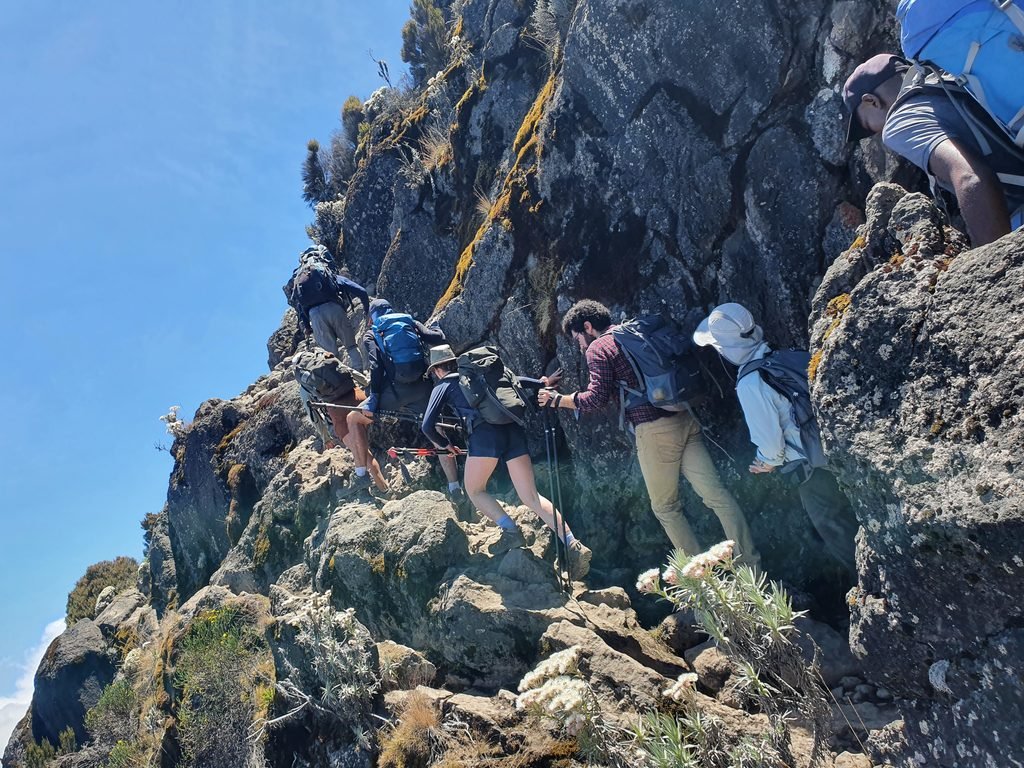
The morning begins with one of the most memorable sections of the entire Kilimanjaro climb: the ascent of Barranco Wall. Although the wall looks steep and intimidating from the campsite, it is a recognised trekking route that can normally be completed without technical rock climbing equipment. Some sections require hikers to use their hands for balance while stepping across rocks and narrow passages. Your mountain guides will assist the group through the more difficult areas and ensure everyone moves carefully. Climbers who are uncomfortable with heights should discuss their concerns with the guides before starting this section.
After reaching the upper part of Barranco Wall, the trail continues across a series of ridges and valleys with views towards the southern glaciers and the surrounding mountain slopes. The group eventually descends into Karanga Valley before making a final climb towards Karanga Camp. This is another relatively short walking day, allowing climbers to rest and recover before moving higher. At camp, the guides will review the group’s health, discuss the upcoming summit preparations and check that everyone has suitable clothing, headlamps and other necessary equipment. Karanga Camp is an important stop because it helps break up the ascent between Barranco and Barafu.
Day 7: Karanga Camp – Additional Acclimatisation and Rest Day
Starting altitude: Approximately 3,995 m
Sleeping altitude: Approximately 3,995 m
Hiking duration: Optional 1–3 hours
Accommodation: Karanga Camp
Meals: Breakfast, lunch and dinner
Day seven provides another opportunity for rest and acclimatisation before the final ascent towards Barafu Camp. Rather than rushing higher, the group remains at Karanga Camp, where the mountain guides can assess each climber’s condition and decide whether a short acclimatisation walk is appropriate. The surrounding area offers open views of Kilimanjaro’s upper slopes, and the quieter schedule gives everyone time to recover from the previous days of walking. This additional day is particularly useful for managing fatigue, although remaining at altitude is not appropriate for anyone showing signs of worsening altitude illness.
During the afternoon, the guides will explain the final stages of the expedition, including the walk to Barafu, the expected summit schedule and the importance of following instructions during the night ascent. Climbers should use the available time to organise warm clothing, gloves, water bottles, snacks and headlamps. Equipment that is not needed during the summit attempt can be packed separately. After dinner, the group rests early in preparation for the next day. The guide may adjust the remaining schedule if weather conditions or the group’s health require a different approach.
Day 8: Karanga Camp to Barafu Camp – Summit Attempt to Uhuru Peak – Descent to Mweka Camp
Starting altitude: Approximately 3,995 m
Barafu Camp: Approximately 4,670 m
Summit altitude: Uhuru Peak, 5,895 m
Sleeping altitude: Approximately 3,100 m at Mweka Camp
Total hiking duration: Approximately 15–20 hours across the day and night, depending on pace
Accommodation: Mweka Camp
Meals: Breakfast, lunch and dinner
The eighth day is the most demanding part of the expedition and begins with an early breakfast at Karanga Camp before the group starts climbing towards Barafu Camp. The trail crosses rocky alpine terrain where vegetation is almost absent, and the air becomes noticeably thinner. The walk to Barafu normally takes around three to four hours, depending on the group’s pace. On arrival, the mountain crew prepares lunch while climbers rest inside their tents. Your guide will check the group’s condition and confirm whether the summit attempt can proceed safely. The afternoon is reserved for eating, drinking and resting, as there is little opportunity for proper sleep before the night climb begins.
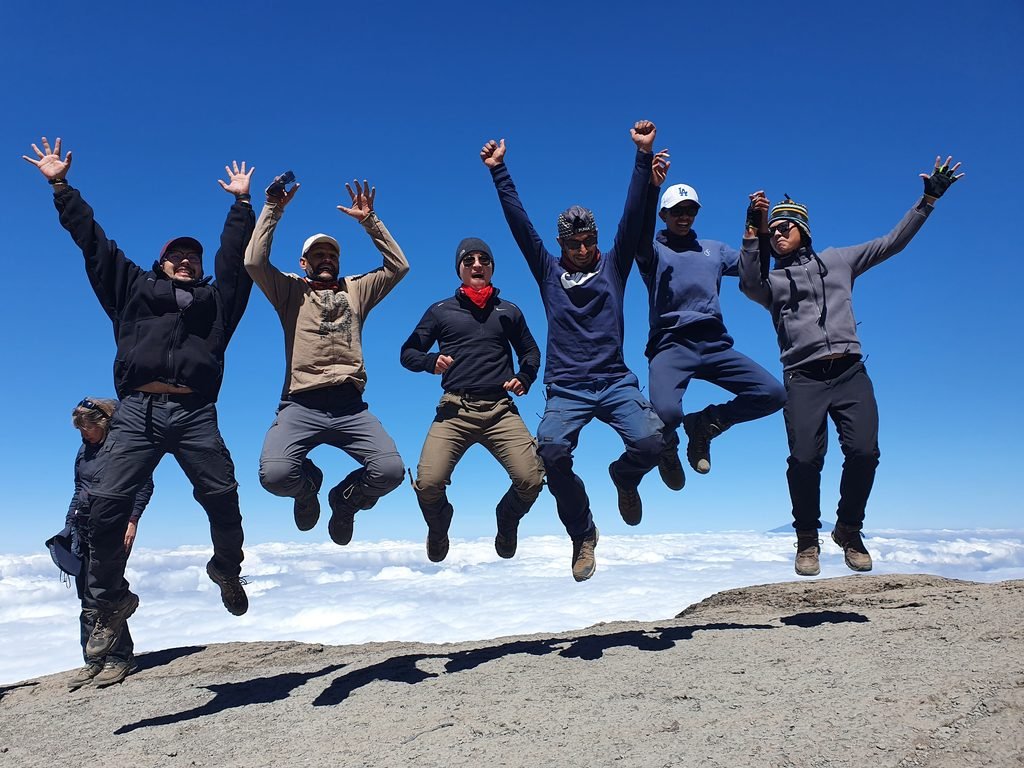
The summit attempt normally begins late in the evening, with the exact departure time decided by the mountain guides. Wearing warm layers and using headlamps, climbers begin the slow ascent towards Stella Point on the crater rim. The trail becomes steep and demanding, with loose volcanic material underfoot and very cold temperatures, particularly before sunrise. The guides will maintain a careful pace and provide support throughout the climb. After reaching Stella Point at approximately 5,756 metres, those who are fit to continue follow the crater rim towards Uhuru Peak, the highest point in Africa at 5,895 metres. Reaching the summit is a major achievement, but the decision to continue always depends on weather, physical condition and the guide’s safety assessment.
After spending a short time at the summit, the group begins descending towards Barafu Camp, where there is an opportunity to rest and eat before continuing downhill to Mweka Camp. The descent is long and physically demanding, particularly after the summit climb, but the lower altitude usually provides more comfortable conditions for recovery. By the time the group reaches Mweka Camp, the landscape has changed from exposed volcanic slopes to greener mountain vegetation. Dinner is served at camp, followed by a well-earned rest after the longest day of the expedition.
Day 9: Mweka Camp to Mweka Gate – Return to Arusha or Moshi
Starting altitude: Approximately 3,100 m
Finishing altitude: Approximately 1,640 m
Hiking duration: 3–4 hours
Accommodation: Not included after the climb unless arranged separately
Meals: Breakfast and lunch
The final day begins with breakfast at Mweka Camp before the group starts descending through Kilimanjaro’s beautiful rainforest towards Mweka Gate. The trail is generally easier than the upper mountain sections, although it can become muddy and slippery after rain. Walking poles are useful, particularly for climbers whose knees and legs are tired from the previous day’s long descent. The surrounding forest provides a welcome change from the exposed summit environment, with tall trees, thick vegetation and the sounds of birds along the trail. The guides will continue accompanying the group until everyone has safely completed the final section.
On arrival at Mweka Gate, the team completes the necessary park exit procedures, and eligible climbers receive their summit certificates. There is time to thank the mountain crew before boarding the transfer vehicle back to Arusha or Moshi. After several days of camping, a hot shower, comfortable bed and proper rest are usually the first things climbers look forward to. Travellers who wish to continue exploring Tanzania can arrange a Tanzania wildlife safari with Eddy Tours & Safaris or extend their holiday with a relaxing stay in Zanzibar.
9 Days Shira Route Kilimanjaro Package Inclusions
The following services are included in the standard mountain climbing arrangement:
- Kilimanjaro National Park entry fees for the scheduled climb.
- Mountain camping fees for eight nights.
- Kilimanjaro rescue fees charged by the park.
- Professional English-speaking mountain guide and assistant guides according to group size.
- Experienced mountain porters to carry shared camping equipment and the permitted weight of personal luggage.
- Professional mountain cook throughout the expedition.
- Private transfer from Arusha or Moshi to the starting point.
- Return transfer from Mweka Gate to Arusha or Moshi.
- Quality mountain sleeping tents.
- Dining tent, dining equipment, tables and chairs.
- Sleeping mattress for each climber.
- Breakfast, lunch and dinner during the mountain expedition as indicated in the itinerary.
- Drinking water prepared or treated during the climb.
- Daily health checks and altitude monitoring by the mountain guides.
- Emergency first-aid equipment and appropriate emergency arrangements.
- Pre-climb briefing and equipment inspection.
- Assistance with park registration and climbing arrangements.
- Government taxes applicable to the included services.
9 Days Shira Route Kilimanjaro Package Exclusions
The following costs are not included unless specifically stated in your confirmed quotation:
- International and domestic flights.
- Tanzania tourist visa fees.
- Travel insurance covering high-altitude trekking, medical treatment and emergency evacuation.
- Accommodation before and after the Kilimanjaro climb.
- Airport transfers unless included in the booking agreement.
- Personal trekking equipment such as hiking boots, sleeping bags, waterproof jackets and warm clothing.
- Personal expenses, souvenirs and additional purchases.
- Alcoholic drinks, soft drinks and bottled beverages.
- Tips for mountain guides, porters and the mountain cook.
- Additional accommodation or transport caused by personal itinerary changes.
- Optional activities and excursions before or after the climb.
- Costs resulting from early descent or services outside the agreed itinerary.
- Any service not specifically mentioned under package inclusions.
How Difficult Is the 9 Days Shira Route?
The Shira Route is a challenging Kilimanjaro climbing route, mainly because the trek begins at a relatively high altitude. Most other Kilimanjaro routes allow hikers to spend the first day or two walking through lower forest and moorland before reaching elevations above 3,500 metres. On the Shira Route, climbers are transported directly to the high western slopes, which can make the initial adjustment more difficult. Even fit and experienced hikers may experience headaches, nausea, tiredness or poor sleep after arriving at altitude.
The nine-day itinerary provides additional time for acclimatisation, but it should not be described as automatically safer than every shorter route. The most suitable route depends on previous altitude exposure, individual health, trekking experience and the advice of qualified mountain professionals. Travellers who are climbing Kilimanjaro for the first time should seriously consider a lower-starting route, especially if they are travelling directly from a low-altitude destination. You can discuss alternative Mount Kilimanjaro trekking arrangements with Eddy Tours & Safaris before deciding which route best matches your experience and available travel time.
Best Time to Climb Kilimanjaro via the Shira Route in 2027, 2028 and 2029
Mount Kilimanjaro can be climbed throughout the year, but weather conditions vary considerably between seasons. January to early March is often a favourable period for climbing, with generally clearer mornings and relatively manageable rainfall. June to October is another popular period, particularly for travellers who prefer cooler and generally drier trekking conditions. These months are suitable for many climbing routes, including Shira, although cold temperatures, strong winds and sudden weather changes remain possible at higher elevations.
April and May are usually associated with heavier rainfall, while November can bring shorter rainy periods. The western access road to the Shira Plateau may become difficult during wet conditions, which is another reason to plan carefully. Travellers arranging their 2027, 2028 or 2029 Tanzania holiday with Eddy Tours & Safaris should confirm their preferred dates early, particularly when combining a Kilimanjaro climb with a Serengeti safari or Zanzibar beach holiday.
What to Pack for the 9 Days Shira Route Kilimanjaro Climb
Packing properly is important because the Shira Route passes through several different mountain environments, from open moorland to cold alpine desert and freezing summit conditions. During the daytime, climbers may experience strong sunshine and comfortable walking temperatures, while evenings and early mornings can become very cold. A good layering system makes it easier to adjust clothing throughout the day. Waterproof equipment is also important because rain and snow can occur even during the generally drier climbing seasons.
Essential personal equipment includes:
- Comfortable, waterproof hiking boots that have already been worn during training.
- Thermal base layers for cold mornings and summit night.
- Warm fleece or insulated mid-layers.
- Heavy insulated jacket suitable for freezing temperatures.
- Waterproof and windproof jacket and trousers.
- Warm gloves, inner gloves, thermal hat and sun hat.
- Suitable sleeping bag rated for cold mountain conditions.
- Trekking poles for uphill and downhill walking.
- Headlamp with spare batteries.
- Sunglasses with strong UV protection.
- Reusable water bottles or hydration system.
- Personal medication, toiletries and basic hygiene items.
- Small daypack for water, snacks, extra clothing and personal belongings.
- High-energy snacks for long walking days.
Before travelling, it is advisable to review a detailed Kilimanjaro climbing preparation guide and confirm the equipment requirements with your tour operator. Some items may be available for hire locally, but availability, condition and rental costs should be checked in advance.
Can Beginners Climb Kilimanjaro Using the Shira Route?
It is possible for a beginner with good physical preparation to complete a Kilimanjaro climb, but the Shira Route is not usually the first option recommended for someone without previous high-altitude experience. The sudden transfer to an elevation of approximately 3,400 metres means climbers have less time to adjust naturally during the opening stages. Spending additional days on the mountain can help, but it does not fully compensate for the rapid initial ascent.
For travellers who have never climbed above 3,000 metres, the Kilimanjaro trekking options available through Eddy Tours & Safaris can be compared according to route length, altitude profile, accommodation style and physical difficulty. Lemosho is often a better western approach for beginners because it begins lower and includes a gradual walk through the rainforest before reaching the Shira Plateau. Climbers who have recently completed Mount Meru or another high-altitude trek may find the Shira Route more suitable, provided they have recovered properly and are medically fit to continue.
Combining the 9 Days Shira Route with a Tanzania Safari
After completing the Kilimanjaro climb, many travellers choose to spend several additional days exploring Tanzania’s national parks. A wildlife safari offers a very different experience from mountain trekking, with opportunities to see elephants, lions, giraffes, zebras, buffaloes and many other animals in their natural surroundings. Depending on the available time and budget, travellers can arrange a short safari to Tarangire National Park and Ngorongoro Crater or a longer journey that includes Serengeti National Park.
With Eddy Tours & Safaris, travellers can arrange their Kilimanjaro climb and wildlife safari as one coordinated holiday. This makes it easier to organise airport transfers, accommodation, transport and travel dates without booking each service separately. Those who prefer to relax after the mountain can also consider a Zanzibar beach extension, allowing a few days beside the Indian Ocean before returning home.
Frequently Asked Questions About the 9 Days Shira Route Kilimanjaro
Is the 9 Days Shira Route Better Than the 7 Days Shira Route?
The nine-day itinerary provides additional time for rest and acclimatisation compared with a seven-day schedule, which may be helpful for some climbers. However, the high starting altitude remains the same, and extra days cannot guarantee that a person will avoid altitude sickness. The better itinerary depends on your previous experience, fitness, medical condition and the route recommended by your mountain guide.
Does the Shira Route Have a High Summit Success Rate?
Longer Kilimanjaro itineraries are generally designed to provide better acclimatisation opportunities, but there is no single independently verified success percentage that applies to every operator or every nine-day Shira climb. Weather, altitude response, guide decisions and individual preparation all affect the outcome. Travellers should ask their chosen operator about its actual records rather than relying on advertised percentages without supporting evidence.
Do We Sleep in Hotels or Tents During the Shira Route?
The Shira Route is a camping route, meaning climbers sleep in mountain tents throughout the expedition. The mountain crew transports and prepares the shared camping equipment, while meals are served at the designated campsites. Hotel accommodation before and after the climb can be arranged separately according to your preferred budget and comfort level.
How Much Does the 9 Days Shira Route Kilimanjaro Climb Cost?
The cost depends on the number of climbers, travel dates, equipment requirements, accommodation arrangements and the services included in the package. Private climbs for smaller groups generally cost more per person than those arranged for larger groups because park fees, mountain crew requirements and transport costs must be covered. For accurate 2027, 2028 or 2029 prices, travellers should request a quotation based on their preferred dates and group size.
Is the Shira Route the Same as the Lemosho Route?
The routes share much of the upper mountain trail, but their starting points are different. Lemosho begins at a lower altitude and normally includes a rainforest section before reaching the Shira Plateau. The Shira Route uses vehicle access to reach the higher western slopes, bypassing much of the gradual initial ascent. This difference is particularly important when considering acclimatisation and route suitability.
Book Your 9 Days Shira Route Kilimanjaro Climb for 2027, 2028 or 2029
Climbing Mount Kilimanjaro is a serious mountain adventure that requires good preparation, suitable equipment, experienced guides and enough time to adjust to altitude. The 9 Days Shira Route Western Approach offers beautiful mountain scenery, quieter early trails and additional days for rest and acclimatisation. It is particularly worth considering for climbers who already have some experience at altitude and want to explore the western side of Kilimanjaro without following a rushed itinerary.
At Eddy Tours & Safaris, we help travellers plan Kilimanjaro climbing holidays according to their travel dates, physical preparation, preferred route and budget. Our team can assist with route selection, private climbing arrangements, mountain crew services, accommodation and additional Tanzania safari activities. Whether you are planning to travel in 2027, 2028 or 2029, we can help you prepare a practical itinerary that matches your expectations.
Ready to plan your Kilimanjaro climb? Visit Eddy Tours & Safaris or contact our team for a personalised Kilimanjaro climbing quotation. Share your preferred travel dates, number of climbers and previous hiking experience so we can recommend a suitable climbing arrangement.