
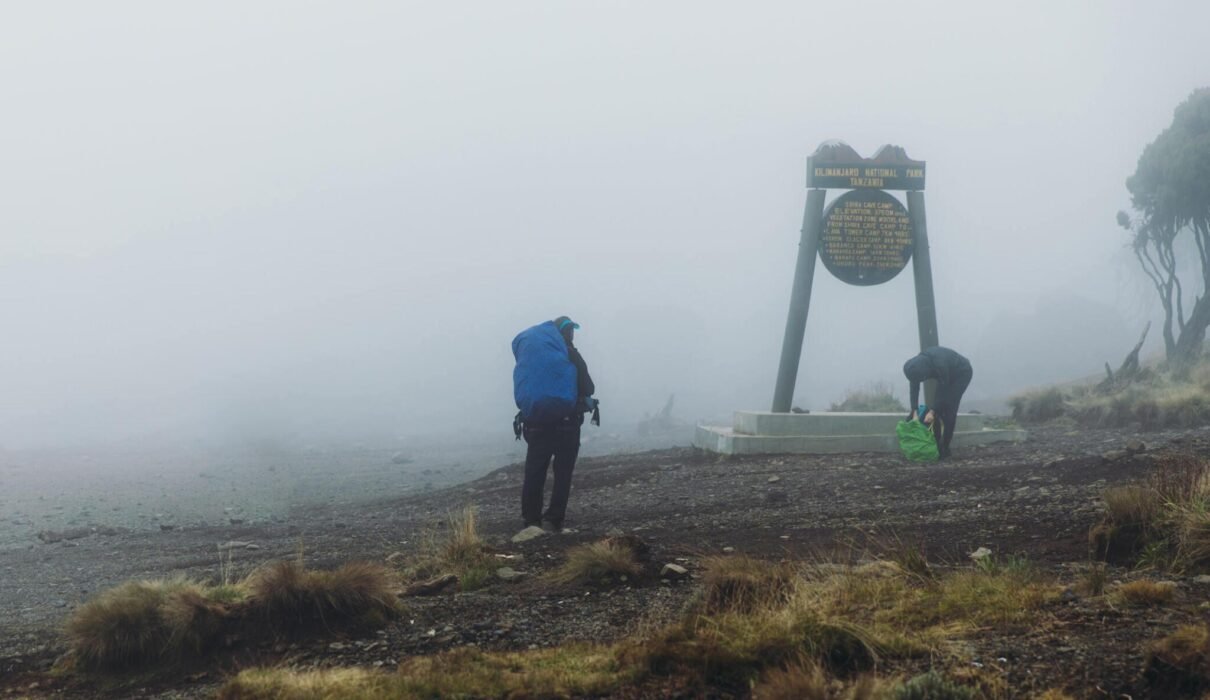
Celebrate Christmas with a mountain expedition on this 8-day Northern Circuit Kilimanjaro climb with Eddy Tours & Safaris. Starting on 19 December, the proposed itinerary crosses Kilimanjaro’s western and northern landscapes before a summit attempt on Christmas morning, 25 December.
The journey begins in forest, climbs onto the Shira Plateau, and continues around the mountain’s northern slopes. Overnight stops at Moir, Buffalo, and Third Cave lead towards School Hut, the final camp before the summit attempt.
From School Hut, ascend towards Gillman’s Point and continue to Uhuru Peak at 5,895 metres when conditions and your guide’s assessment permit. Descend through Mweka and finish the mountain programme on 26 December.
This is an eight-day camping expedition for travellers who enjoy extended trekking and want to experience more of Kilimanjaro’s landscape. Christmas provides a meaningful target date, while preparation, acclimatisation, and mountain conditions guide the expedition.
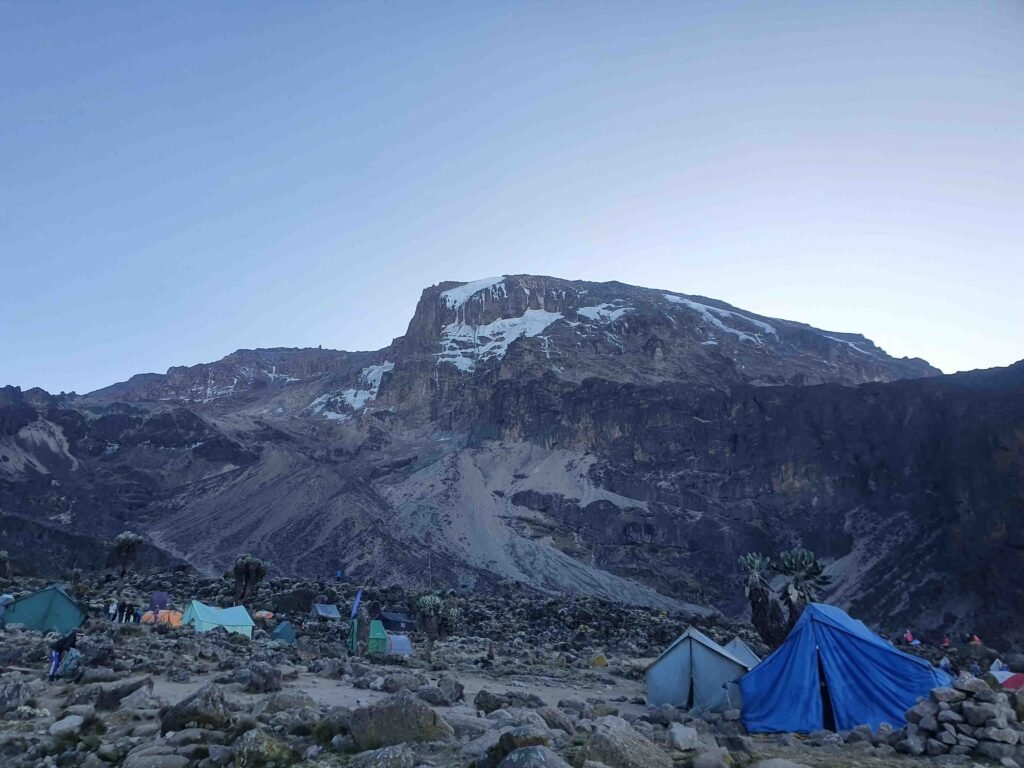
8-Day Northern Circuit Kilimanjaro Climb Package Overview
| Detail | Proposed arrangement |
|---|---|
| Trekking duration | 8 days / 7 mountain nights |
| Route | Northern Circuit |
| Approach | Western forest and Shira Plateau |
| Summit approach | School Hut towards Gillman’s Point |
| Descent | Mweka Route |
| Highest point | Uhuru Peak, 5,895 metres |
| Mountain accommodation | Camping |
| Trekking start | 19 December |
| Planned summit attempt | 25 December |
| Final descent | 26 December |
| Suggested base | Moshi |
| Recommended arrival | By 18 December for preparation |
| Departure format | Private climb or available group departure |
| Price | Personalised quotation |
The eight days refer to trekking. Hotel nights and airport transfers should be shown separately in the booking proposal.
Christmas Climbing Dates for 2027 and 2028
| Departure | Recommended arrival | Start trekking | Planned summit | Finish trekking |
|---|---|---|---|---|
| Christmas 2027 | By 18 December 2027 | 19 December 2027 | 25 December 2027 | 26 December 2027 |
| Christmas 2028 | By 18 December 2028 | 19 December 2028 | 25 December 2028 | 26 December 2028 |
These are proposed schedules rather than confirmed group departures. Route access, permits, and camping arrangements must be checked for the selected year.
The summit date can change if health, weather, or trail conditions require an adjustment.
Why Choose the Northern Circuit?
The Northern Circuit takes a longer path around Kilimanjaro before approaching the summit.
Its appeal includes changing views of the mountain, extended time outdoors, and overnight stops away from the main southern approach.
A broad experience of the mountain
You begin in forest and continue across the western plateau before turning around the northern slopes.
The route provides opportunities to observe how vegetation, exposure, and terrain change with elevation and aspect.
More time before the summit attempt
An eight-day programme provides more time on the mountain than shorter itineraries. However, the actual ascent profile matters, and extra days do not guarantee successful acclimatisation.
This version has a demanding third day from Shira 1 to Moir. If your schedule allows, compare a nine-day itinerary that divides the western approach differently.
Camping throughout the journey
Mountain camping creates a daily routine of walking, meals, equipment organisation, and rest.
Prepare for basic facilities, cold nights, and changing weather. Even camps named “Hut” in an itinerary may use tents; the booking should specify your actual accommodation.
Arrival and Briefing — 18 December
Arrive in Moshi with time to meet the team and prepare.
Review the daily programme, discuss dietary requirements, and share relevant trekking and health information. Check your equipment before packing the mountain bags.
Separate your daypack from the main bag carried by the support team. Keep waterproof clothing, water, snacks, and essential personal items accessible during each walk.
Confirm any equipment rentals in advance so there is time to check fit and condition.
Your hotel, airport pickup, and meals before trekking should be identified in the quotation.
Day 1 — 19 December: Londorossi Registration and Forest Trailhead to Mti Mkubwa
Approximate trail elevations: 2,100 metres to 2,650 metres
Typical walking time: 3–4 hours
Landscape: Montane forest
Overnight: Mti Mkubwa Camp
After breakfast, travel towards the western side of Kilimanjaro.
Complete registration at Londorossi and continue to the designated forest trailhead, subject to the authorised access arrangements for your departure.
Begin walking through forest towards Mti Mkubwa, also known as Big Tree Camp.
The first stage gives you time to settle into the team’s walking rhythm. Follow the guide’s pace and avoid rushing simply because the distance is relatively short.
Forest paths can be damp or muddy. Keep rain protection within reach and protect your sleeping bag and spare clothing from moisture.
At camp, settle into your tent, enjoy dinner, and prepare for the next day.
Day 2 — 20 December: Mti Mkubwa to Shira 1 Camp
Approximate elevations: 2,650 metres to 3,610 metres
Typical walking time: 5–7 hours
Landscape: Forest transition, heath, and moorland
Overnight: Shira 1 Camp
Leave the forest and climb towards the Shira Plateau.
The vegetation becomes lower and the surroundings more open. Views towards Kibo may appear when cloud conditions allow.
Today involves a substantial increase in sleeping elevation. Walk steadily, use planned breaks, and communicate with your guide about how you feel.
With less tree cover, wind and direct sunshine become more noticeable. Adjust layers while walking and add warmth during stops when needed.
Arrive at Shira 1, organise your equipment, and prepare for a colder evening than at the forest camp.
Day 3 — 21 December: Shira 1 to Moir Camp
Approximate elevations: 3,610 metres to 4,200 metres
Typical walking time: 6–8 hours or longer, depending on the agreed trail
Landscape: Plateau and increasingly sparse alpine terrain
Overnight: Moir Camp
Continue across the Shira landscape towards Moir.
This is one of the more substantial stages of the eight-day programme. The trail choice and any additional elevation gained during the day should be explained in your final itinerary.
Some Northern Circuit variations include a higher excursion towards Lava Tower. This package does not automatically include that extension; adding it changes the distance and effort.
The open terrain requires protection from sun, wind, and changing temperatures.
At Moir, rest and prepare for the northern traverse. A short additional walk should be undertaken only if the guide considers it suitable.
Day 4 — 22 December: Moir Camp to Buffalo Camp
Approximate elevations: 4,200 metres to 4,020 metres
Typical walking time: 5–7 hours
Landscape: Exposed northern slopes
Overnight: Buffalo Camp
Leave Moir and continue around the northern side of the mountain.
The route includes uphill and downhill sections, even though the overnight elevation is slightly lower.
Clear conditions can reveal wide views beyond the mountain. Cloud or wind may create a very different atmosphere, so keep your attention on the day’s conditions rather than expecting a particular photograph.
Maintain a measured pace and keep layers accessible.
At Buffalo Camp, settle in, eat, and rest. Exposed camps can cool quickly after sunset, making dry evening clothing particularly useful.
Day 5 — 23 December: Buffalo Camp to Third Cave
Approximate elevations: 4,020 metres to 3,870 metres
Typical walking time: 4–6 hours
Landscape: Northern moorland and alpine transition
Overnight: Third Cave Camp
Continue eastwards around Kilimanjaro towards Third Cave.
The stage keeps you at high elevation while allowing a lower overnight stop before the climb to School Hut.
Use the day to maintain good routines: steady walking, regular meals, appropriate drinking, and honest communication with your guide.
On arrival, organise summit equipment and check batteries, gloves, clothing fastenings, and water containers.
The eight-day Northern Circuit camp sequence commonly includes Moir, Buffalo, Third Cave, School Hut, and a Mweka descent.
Day 6 — 24 December: Third Cave to School Hut
Approximate elevations: 3,870 metres to 4,750 metres
Typical walking time: 4–6 hours
Landscape: Alpine desert
Overnight: School Hut camping area, with a short rest before departure
After breakfast, climb towards School Hut.
Vegetation becomes sparse as you enter higher, exposed terrain. Walk slowly and tell the guide promptly about symptoms or changes in your condition.
At camp, prepare your summit clothing and essential equipment before resting.
Your briefing should cover the route, pace, communication, food, water, and turnaround decisions.
Christmas Eve is spent preparing for the mountain’s most demanding stage. The summit attempt normally begins late that evening or around midnight.
Day 7 — 25 December: Christmas Summit Attempt and Descent to Mweka
Route: School Hut → Gillman’s Point → Uhuru Peak → southern descent → Mweka
Highest point: 5,895 metres
Overnight elevation: Approximately 3,100 metres
Typical total walking time: 12–16 hours, sometimes longer
Overnight: Mweka Camp
Begin the ascent in darkness with your headlamp and agreed clothing layers.
The climb towards Gillman’s Point is steep and slow. Cold, altitude, and fatigue make this a demanding stage.
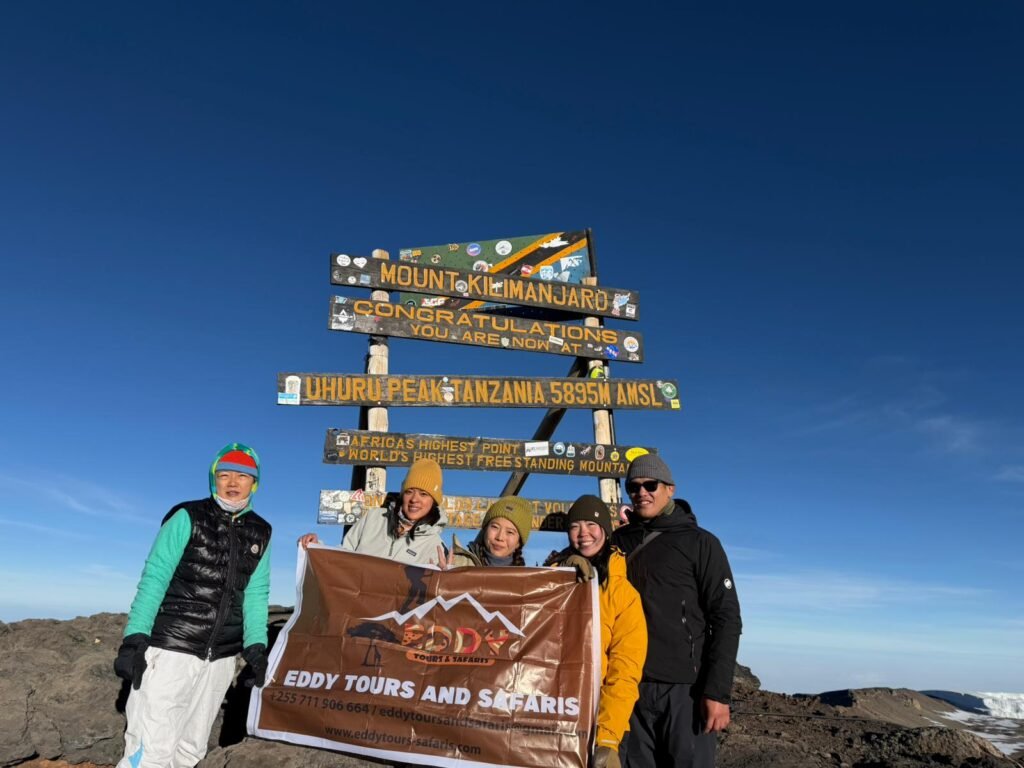
Continue around the crater rim towards Uhuru Peak only when conditions and your guide’s assessment permit.
If you reach the summit, take a brief time for photographs and to appreciate the moment before descending. A clear Christmas sunrise cannot be promised.
Descent Through the Southern Side
The descent continues towards the Barafu area and onwards to Mweka.
This is a long journey after the summit attempt. Follow the team’s rest and meal arrangements, and remain careful on loose or uneven ground.
At Mweka Camp, eat, change into dry clothing, and rest. Any special festive meal should be agreed before departure rather than assumed.
Day 8 — 26 December: Mweka Camp to Mweka Gate
Approximate elevations: 3,100 metres to 1,640 metres
Typical walking time: 3–5 hours
Landscape: Forest
Finish: Mweka Gate and transfer to Moshi
After breakfast, descend through the forest.
Keep waterproofs accessible and take care on damp paths. Tired legs still require attention during the final stage.
Complete exit procedures at Mweka Gate. Certificates are issued where applicable under park arrangements.
Transfer to your agreed Moshi hotel for a shower, meal, and rest. A post-climb overnight allows a more comfortable finish before onward travel.
Equipment and Mountain Preparation
Train with regular walking, uphill sessions, and controlled descents. Practise with your intended boots and daypack.
Your equipment should include waterproofs, adjustable insulation, warm gloves and headwear, suitable boots, a sleeping bag, headlamp, sun protection, and waterproof bag liners.
Confirm tents, mats, dining arrangements, toilet facilities, and rental items in the proposal.
December conditions can include rain, cloud, wind, and severe cold at high elevation. Pack for mountain conditions rather than the weather in Moshi.
Acclimatisation and Guide Decisions
Report headache, nausea, dizziness, unusual fatigue, or changes in your condition promptly.
Do not ascend with altitude-illness symptoms. Worsening or severe illness requires descent and appropriate assistance. Breathlessness at rest, confusion, or difficulty walking steadily requires urgent attention. The CDC’s altitude guidance explains these principles.
Discuss relevant health concerns with a qualified clinician before travelling.
A Christmas summit is a goal. The guide’s health and weather decisions take priority.
Inclusions, Price and Booking
Request a quotation specifying:
- Eight trekking days and seven mountain nights.
- Required park and camping charges.
- Guide, porter, and cook arrangements.
- Mountain meals and drinking-water provision.
- Camping equipment.
- Agreed gate transfers.
- Briefing and equipment checks.
- Health monitoring and emergency arrangements.
- Any hotel nights and airport transfers.
Flights, visas, insurance, tips, rentals, and personal spending should be clearly included or excluded.
TANAPA provides official Kilimanjaro visitor information, including guidance to confirm applicable charges. Future route access and fees must be checked for your departure.
Frequently Asked Questions
Are the eight days the whole holiday?
They are the trekking days. Allow additional time for arrival, preparation, and rest afterwards.
Is the Northern Circuit entirely separate from other routes?
No. It shares approach, summit, or descent sections with other trekking routes.
Can the Christmas summit date change?
Yes. Health, weather, and access conditions can affect the programme.
Is a nine-day option available?
Request a comparison. An additional day can divide stages differently and provide more time on the mountain.
Can I add a safari or Zanzibar?
Yes. Include recovery time after the climb before beginning another activity.
Book Your Christmas Kilimanjaro Climb
Contact Eddy Tours & Safaris with your preferred year, group size, trekking experience, and arrival details.
Request a complete proposal for the 8-day Northern Circuit Christmas summit climb, including the confirmed route, camps, services, and total price.
Website: eddytours-safaris.com
Email: eddytoursandsafaris@gmail.com
Sales enquiries: sales@eddytours-safaris.com
Phone and WhatsApp: +255 711 906 664