
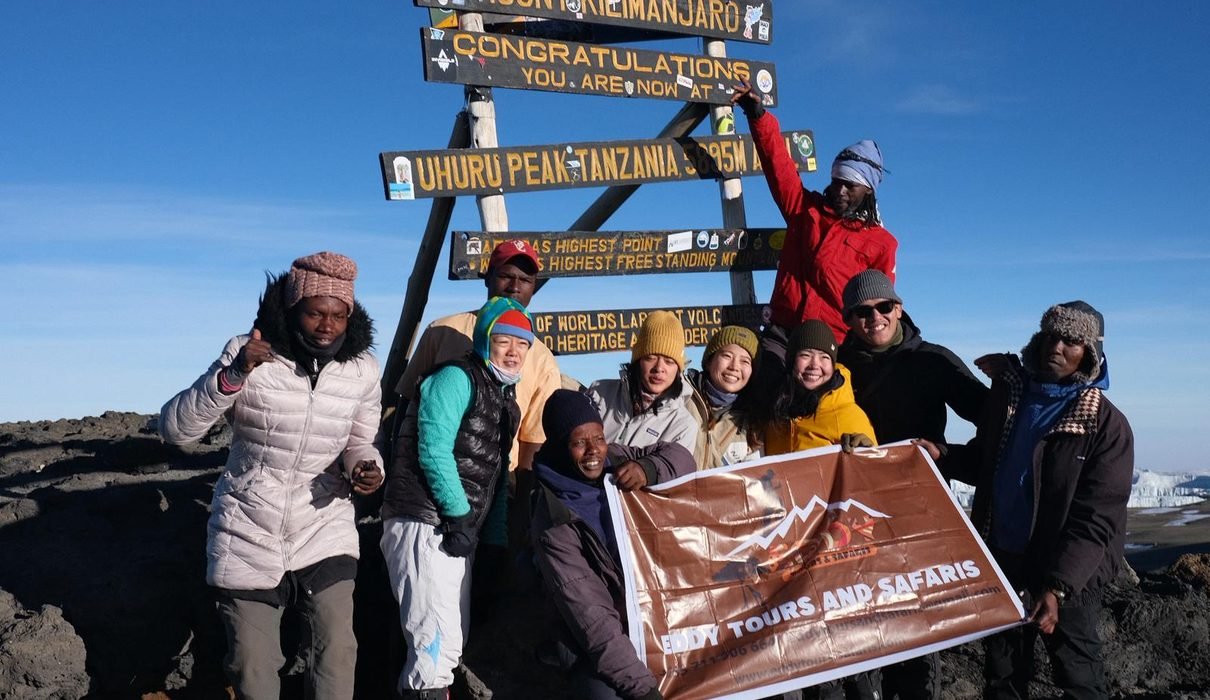
Spending Christmas on Mount Kilimanjaro is a special way to celebrate the holiday season. Instead of spending Christmas at home, imagine walking through the mountain’s high-altitude landscapes, enjoying a Christmas meal with your climbing team, and preparing to reach the highest point in Africa. The 7-Day Umbwe Route Christmas Summit combines a challenging mountain expedition with a festive experience for travelers who want to celebrate Christmas differently.
Mount Kilimanjaro stands at 5,895 metres (19,341 feet) above sea level in northern Tanzania. It is Africa’s highest mountain and one of the world’s most famous trekking destinations. Among its established climbing routes, Umbwe is known for its steep trails, direct ascent, beautiful rainforest, and demanding terrain. It attracts experienced hikers looking for a physically challenging journey rather than a gentle mountain walk.
For Christmas 2027, 2028, and 2029, the seven-day Umbwe itinerary can be arranged to target Uhuru Peak on Christmas Day, December 25. The expedition begins several days before Christmas and follows the Umbwe trail through rainforest and rocky mountain terrain before joining the southern circuit toward Barranco, Karanga, and Barafu Camps.
Although the seven-day itinerary provides more time than shorter Umbwe climbs, the route remains demanding because of its steep early ascent and substantial elevation gain. Travelers should understand that reaching Uhuru Peak is never guaranteed, and the summit attempt must depend on weather, individual health, and the mountain guide’s assessment.
At Eddy Tours & Safaris, we help travelers plan Kilimanjaro climbing holidays with suitable routes, experienced mountain teams, and practical travel arrangements. This guide explains the complete seven-day Umbwe Route Christmas itinerary, expected weather, climbing difficulty, accommodation, preparation, and booking arrangements.
7-Day Umbwe Route Christmas Climb Overview
| Tour information | Details |
|---|---|
| Package name | 7-Day Umbwe Route Christmas Summit |
| Destination | Mount Kilimanjaro, Tanzania |
| Travel years | 2027, 2028 and 2029 |
| Duration | 7 trekking days and 6 mountain nights |
| Planned departure | December 20 |
| Planned summit date | December 25 |
| Planned completion | December 26 |
| Starting point | Umbwe Gate |
| Finishing point | Mweka Gate |
| Highest elevation | Uhuru Peak, 5,895 metres |
| Route difficulty | Very challenging |
| Accommodation | Mountain camping |
| Summit approach | Barafu Camp via Stella Point |
| Descent | Mweka Route |
| Departure town | Moshi, Tanzania |
| Package price | Available on request |
Christmas departure dates
| Climbing year | Trekking begins | Planned Christmas summit | Trekking ends |
|---|---|---|---|
| 2027 | December 20, 2027 | December 25, 2027 | December 26, 2027 |
| 2028 | December 20, 2028 | December 25, 2028 | December 26, 2028 |
| 2029 | December 20, 2029 | December 25, 2029 | December 26, 2029 |
These are proposed itinerary dates, not confirmed group departures. Actual availability, park access, and summit timing must be confirmed before booking.
Why Choose the Umbwe Route for a Christmas Kilimanjaro Climb?
The Umbwe Route offers a different climbing experience from Kilimanjaro’s more popular approaches. Beginning on the southern slopes, the trail passes through dense rainforest before climbing along a steep ridge toward the upper mountain. Compared with routes such as Machame and Lemosho, Umbwe has a more direct initial ascent and requires considerable physical effort during its first two trekking days.
One of the main attractions of Umbwe is its mountain scenery. The lower sections are surrounded by tall forest trees and thick vegetation, while the higher trail provides views across steep valleys and the surrounding slopes. As climbers approach Barranco, the landscape changes dramatically, with giant groundsels, rocky formations, and views toward the upper slopes of Kibo.
Christmas adds another dimension to the expedition. Travelers can share the holiday with their guides, porters, and fellow climbers while camping on the mountain. Depending on available supplies and the agreed arrangements, the mountain cook may prepare a special Christmas meal after the summit attempt. The celebration is usually simple, but it offers an opportunity to recognize the team’s effort and enjoy the holiday in a memorable setting.
However, travelers should choose Umbwe for the right reasons. The route’s steep ascent makes acclimatization more difficult than on some longer, more gradual approaches. Anyone who is new to high-altitude trekking should consider alternatives such as the Machame Route climbing guide before deciding whether Umbwe is suitable.
Complete 7-Day Umbwe Route Christmas Kilimanjaro Itinerary
This itinerary is designed around a planned summit attempt on Christmas Day. It uses an additional acclimatization day at Barranco Camp and follows the Barafu summit approach rather than the Western Breach.
Walking distances, elevations, and times are approximate. The guide may need to change the schedule because of weather, route conditions, altitude illness, or other safety concerns.
Day 1 – December 20: Moshi to Umbwe Gate and Umbwe Cave Camp
Starting elevation: Approximately 1,600–1,800 metres
Overnight elevation: Approximately 2,850 metres
Hiking distance: Approximately 10–11 km
Walking time: 5–7 hours
Habitat: Montane rainforest
Accommodation: Umbwe Cave Camp
Your Christmas Kilimanjaro expedition begins in Moshi, where you meet your mountain guide and support crew before traveling to Umbwe Gate. The drive passes through local villages, farmland, and the green landscapes surrounding Kilimanjaro’s southern slopes. Upon arrival at the park entrance, the guides complete the required registration procedures while the porters organize camping equipment, food, and supplies for the seven-day expedition.
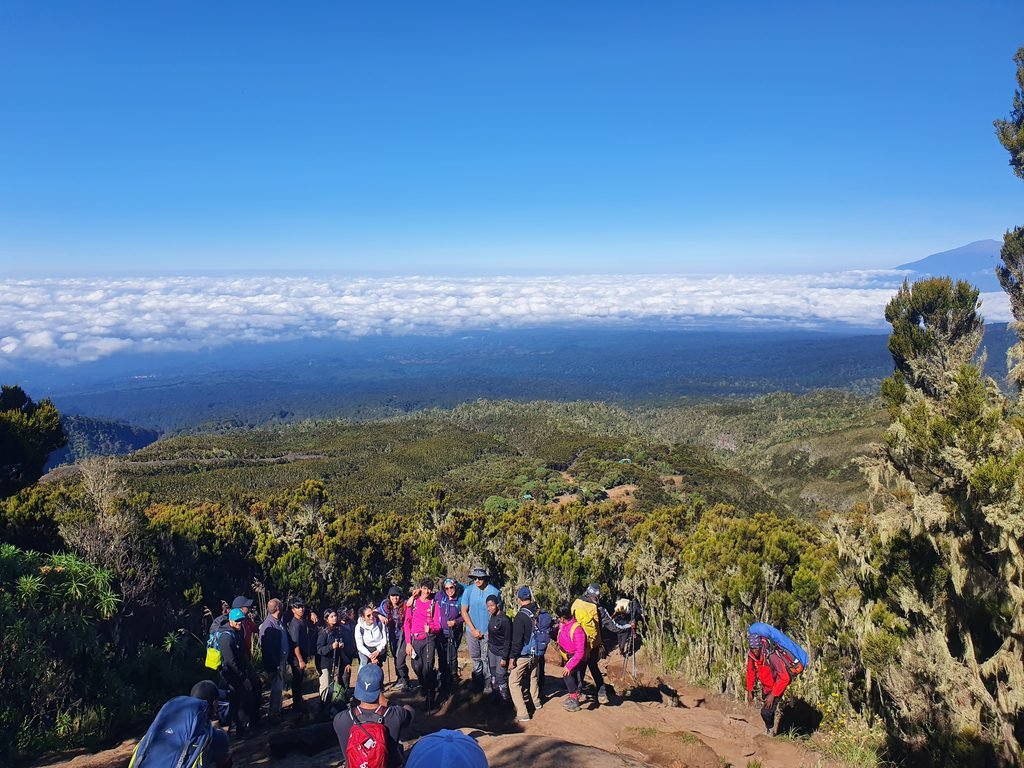
After completing the necessary preparations, you begin trekking through the rainforest. The Umbwe trail is known for its steep terrain, and the climb becomes demanding relatively early in the expedition. The forest contains tall trees, moss-covered branches, and thick vegetation, creating a sheltered environment that can be humid and wet depending on the weather.
As you continue uphill, the trail follows a ridge through increasingly steep sections. Tree roots, rocks, and muddy ground can make walking difficult, especially after rainfall. Your guide will encourage a controlled pace and regular breaks to help the group manage the physical effort. This first day provides an introduction to the demanding character of Umbwe and highlights the importance of having suitable hiking boots and previous trekking experience.
By late afternoon, you arrive at Umbwe Cave Camp, where the mountain crew prepares the tents and evening meal. After settling into camp, you can rest and discuss the following day’s ascent with your guide. Temperatures may become noticeably cooler during the evening, so warm clothing is useful even though you are still below the highest mountain zones.
Meals: Lunch and dinner
Overnight: Umbwe Cave Camp
Day 2 – December 21: Umbwe Cave Camp to Barranco Camp
Starting elevation: Approximately 2,850 metres
Overnight elevation: Approximately 3,950 metres
Hiking distance: Approximately 6 km
Walking time: 4–6 hours
Habitat: Heath, moorland, and alpine terrain
Accommodation: Barranco Camp
After breakfast, you continue ascending along the Umbwe ridge toward Barranco Camp. The trail gradually leaves the dense rainforest behind, and the surrounding landscape becomes more open. As you gain elevation, tall trees give way to shorter vegetation, rocky slopes, and increasingly exposed mountain terrain.
This is another demanding trekking day because the route gains considerable elevation over a relatively short distance. Although the walking time may be shorter than on the previous day, the steep ascent and reduced oxygen availability can make the climb feel more difficult. Your guide will encourage a slow pace while observing how each climber responds to the increasing altitude.
As you approach Barranco, the scenery changes dramatically. Giant groundsels and other unusual high-altitude plants appear along the trail, while steep valleys and volcanic formations dominate the surrounding landscape. When the weather is clear, you may enjoy impressive views of Kibo and the southern slopes of Mount Kilimanjaro.
Upon reaching Barranco Camp, the mountain crew prepares the camping area and meals. The afternoon is generally reserved for rest and recovery. Because you have gained substantial elevation over the first two days, your guide will pay particular attention to possible altitude-related symptoms, including headache, nausea, dizziness, and unusual fatigue.
Meals: Breakfast, lunch, and dinner
Overnight: Barranco Camp
Day 3 – December 22: Acclimatization Day at Barranco Camp
Starting elevation: Approximately 3,950 metres
Overnight elevation: Approximately 3,950 metres
Activity: Short guided acclimatization walk, if appropriate
Walking time: Approximately 1–3 hours, depending on conditions
Habitat: Alpine terrain
Accommodation: Barranco Camp
The third day is reserved for acclimatization at Barranco Camp. This additional day is an important part of the seven-day Christmas itinerary because the Umbwe Route gains altitude rapidly during its first two stages. Spending another night at approximately the same elevation gives the body additional time to adjust before continuing toward the higher camps.
After breakfast, your guide will assess the group’s condition and decide whether a short acclimatization walk is appropriate. If everyone is feeling well, the group may explore nearby terrain while maintaining a comfortable pace. The purpose is not to complete a difficult hike but to allow some additional exposure to altitude without making a significant increase in sleeping elevation.
The rest of the day can be spent relaxing at camp, enjoying the surrounding scenery, and preparing for the next stage of the expedition. Barranco is one of Kilimanjaro’s most scenic camping areas, with views of the Barranco Wall and the upper mountain when conditions are clear. The extra time also allows climbers to recover from the physically demanding first two days.
Although the additional day can support acclimatization, it does not guarantee protection against altitude sickness. Anyone experiencing worsening symptoms must inform the guide immediately. The mountain team’s health assessment will determine whether it is appropriate to continue the climb.
Meals: Breakfast, lunch, and dinner
Overnight: Barranco Camp
Day 4 – December 23: Barranco Camp to Karanga Camp via Barranco Wall
Starting elevation: Approximately 3,950 metres
Overnight elevation: Approximately 3,995 metres
Hiking distance: Approximately 5 km
Walking time: 4–5 hours
Habitat: Alpine desert
Accommodation: Karanga Camp
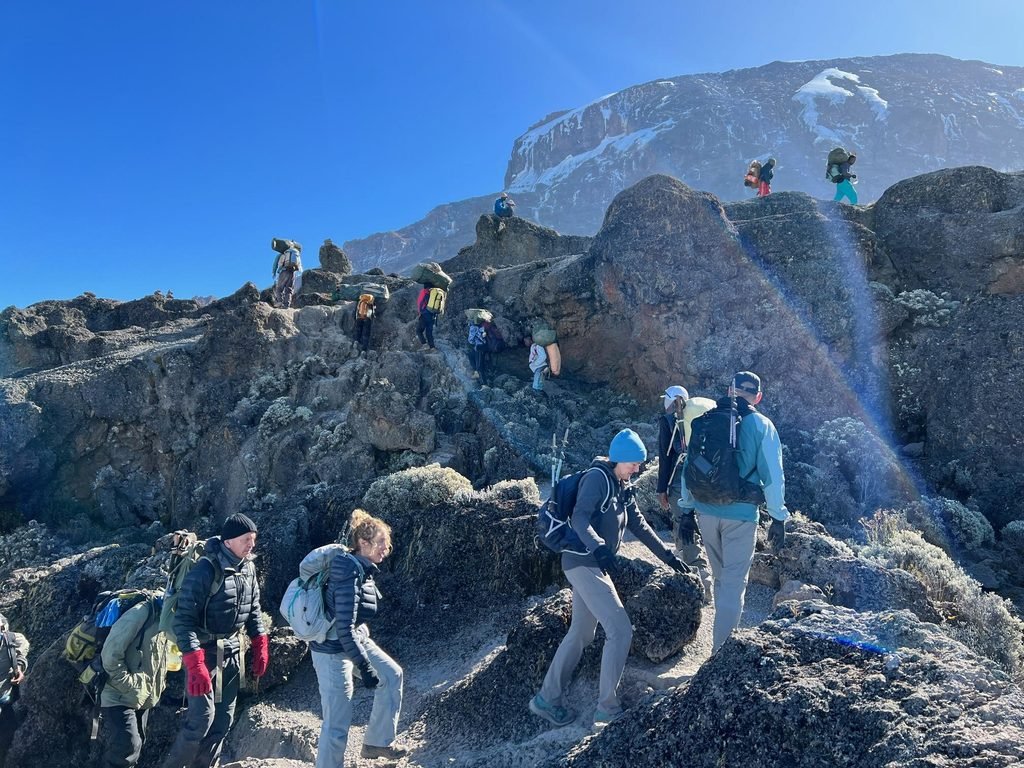
After breakfast, you leave Barranco Camp and begin climbing the famous Barranco Wall. This steep rocky section is one of the most recognizable features of Kilimanjaro’s southern circuit. The ascent involves careful scrambling, and climbers may need to use their hands for balance while moving over uneven rocks and narrow sections of the trail.
Although Barranco Wall does not normally require technical mountaineering equipment, it can feel intimidating for travelers who are uncomfortable with steep terrain. Your guides will assist the group through the more demanding sections and encourage everyone to move carefully. Once you reach the top, the trail continues across a series of ridges and valleys, offering views of the surrounding mountain landscape.
The route then descends toward Karanga Valley before climbing again to Karanga Camp. This section includes both uphill and downhill walking, making it physically demanding despite the relatively short distance. The surrounding vegetation becomes increasingly sparse as you approach the higher alpine environment.
Upon arrival at Karanga Camp, the mountain crew prepares lunch or refreshments according to the day’s arrangements. The afternoon is reserved for rest, equipment checks, and preparation for the next day’s ascent toward Barafu Camp. Spending the night at Karanga divides the approach to the summit base into more manageable stages.
Meals: Breakfast, lunch, and dinner
Overnight: Karanga Camp
Day 5 – December 24: Karanga Camp to Barafu Camp – Christmas Eve
Starting elevation: Approximately 3,995 metres
Overnight elevation: Approximately 4,640–4,670 metres
Hiking distance: Approximately 4 km
Walking time: 3–5 hours
Habitat: Alpine desert
Accommodation: Barafu Camp
Christmas Eve begins with breakfast at Karanga Camp before you continue toward Barafu Camp, the main summit base used on the southern approach to Kilimanjaro. The trail passes through increasingly exposed rocky terrain, where vegetation becomes sparse and the mountain environment feels colder and more demanding.
Although the trekking distance is relatively short, the increasing altitude can make walking difficult. Your guide will maintain a slow pace and encourage regular breaks, allowing the group to conserve energy for the summit attempt. When the weather is clear, the surrounding landscape provides views toward Kibo, Mawenzi, and the valleys below.
Upon arrival at Barafu Camp, the mountain crew prepares an early meal while your guide explains the summit-night arrangements. You will be advised on the clothing required, the expected departure time, and the importance of reporting any symptoms of altitude illness. Climbers should prepare their insulated jackets, gloves, headlamps, water, snacks, and other essential items before attempting to rest.
Christmas Eve at Barafu is different from a traditional holiday celebration. Instead of a late evening gathering, the priority is to eat, rest, and prepare for the demanding ascent ahead. The summit attempt often begins around midnight, so the group may leave camp as Christmas Day begins. Any celebration must remain secondary to the guide’s safety decisions and the condition of the climbers.
Meals: Breakfast, lunch, and dinner
Overnight: Barafu Camp, with the summit ascent beginning during the night
Day 6 – December 25: Christmas Summit – Barafu Camp to Uhuru Peak and Mweka Camp
Starting elevation: Approximately 4,640–4,670 metres
Summit elevation: 5,895 metres
Overnight elevation: Approximately 3,100 metres
Hiking distance: Approximately 16–18 km
Walking time: 12–16 hours or longer
Habitat: Summit environment descending through alpine zones
Accommodation: Mweka Camp
Christmas Day begins with the most demanding stage of your Kilimanjaro expedition. Depending on the guide’s assessment and weather conditions, the group normally leaves Barafu Camp around midnight and begins ascending the steep volcanic slopes toward Stella Point. The trail becomes increasingly rocky, with loose scree in places, while freezing temperatures and darkness add to the physical challenge.
As you gain elevation, walking becomes more difficult because of reduced oxygen availability. Your guide will maintain a slow pace and monitor the group’s health throughout the ascent. The climb requires patience, particularly during the final hours before reaching the crater rim. Anyone experiencing serious or worsening altitude-related symptoms may need to descend rather than continue toward the summit.
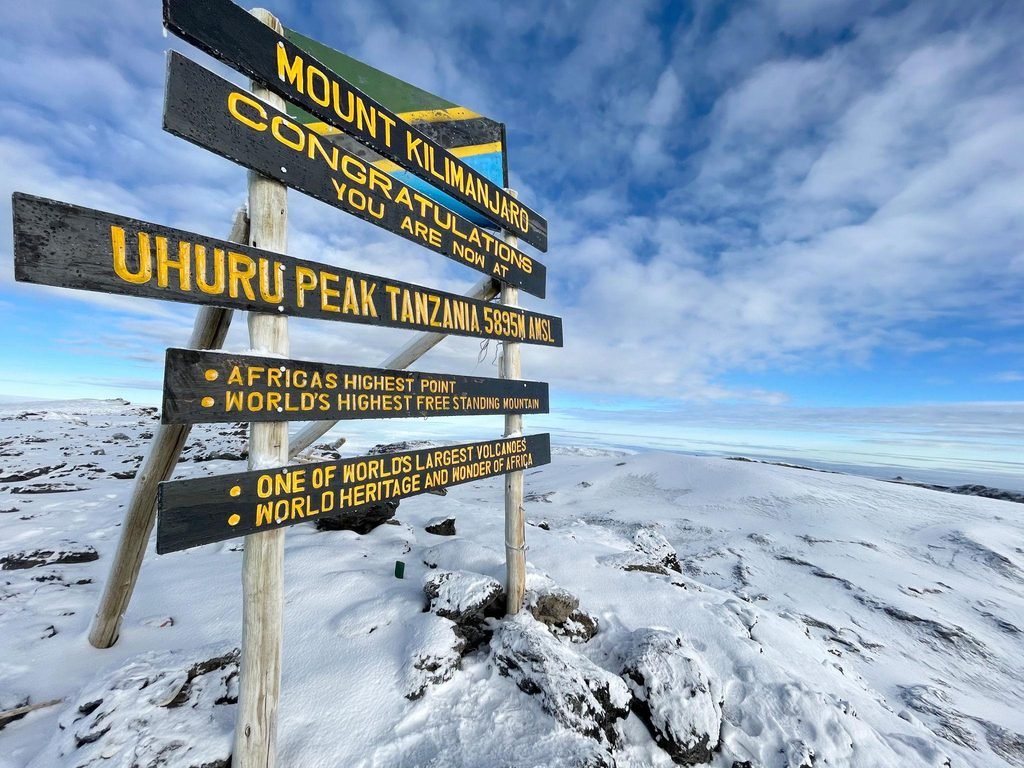
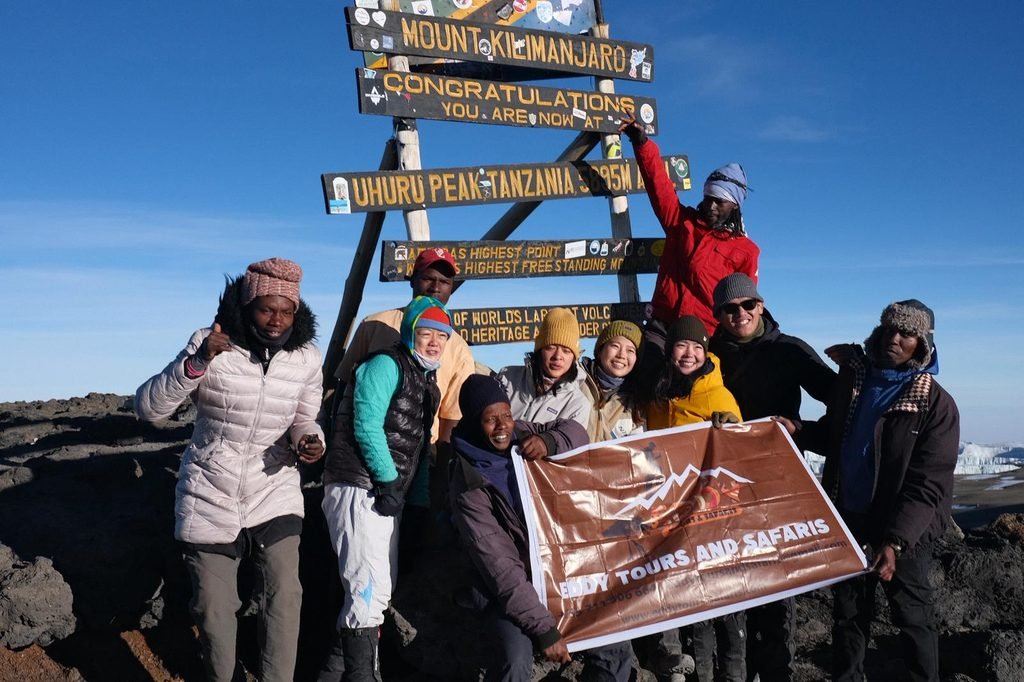
After several hours of climbing, you approach Stella Point at approximately 5,756 metres. If your health and the weather permit, you continue along the crater rim toward Uhuru Peak, the highest point on Mount Kilimanjaro and the African continent. Reaching Uhuru Peak on Christmas Day is the planned highlight of this expedition, offering an opportunity to take photographs and appreciate the achievement with your fellow climbers.
However, reaching the summit on December 25 cannot be guaranteed. Weather, fatigue, altitude illness, and the guide’s safety decisions may affect the schedule. Time spent at Uhuru Peak is normally limited because of the extreme conditions, and the group must begin descending promptly.
After the summit attempt, you descend toward Barafu Camp, where you may have an opportunity to rest and eat before continuing toward Mweka Camp. The descent is long and physically demanding, especially after the nighttime ascent. By evening, you arrive at Mweka Camp, where the mountain crew prepares dinner and you can enjoy a simple Christmas celebration, subject to the group’s condition and the arrangements made before departure.
Meals: Breakfast, lunch, and dinner
Overnight: Mweka Camp
Day 7 – December 26: Mweka Camp to Mweka Gate – Return to Moshi
Starting elevation: Approximately 3,100 metres
Finishing elevation: Approximately 1,640 metres
Hiking distance: Approximately 9–10 km
Walking time: 3–5 hours
Habitat: Montane rainforest
Accommodation: Not included unless specified in the quotation
After breakfast at Mweka Camp, you begin the final descent through Kilimanjaro’s rainforest. The trail leads downhill through dense vegetation, where tall trees and warmer temperatures replace the rocky alpine landscape experienced during the previous days. Depending on rainfall, some sections may be muddy or slippery, so careful walking remains important.
As you descend, the surrounding forest provides a peaceful contrast to the demanding summit environment. This final stage offers time to reflect on the Christmas expedition, the challenges of the Umbwe Route, and the support provided by your mountain team. Your guide will continue managing the group’s pace and ensuring that everyone reaches the park exit safely.
Upon arrival at Mweka Gate, your guide completes the required exit procedures. Climbers who meet the applicable summit requirements may receive the appropriate climbing certificate through the park’s established process. Your driver then transfers you back to Moshi, where you can rest, enjoy a shower, and prepare for your onward journey.
Your seven-day Umbwe Route Christmas expedition officially ends in Moshi. Depending on your travel plans, you may spend an additional night in town, return home, or continue with a Tanzania wildlife safari or Zanzibar beach holiday arranged through Eddy Tours & Safaris.
Meals: Breakfast and lunch, subject to confirmed arrangements
End of expedition: Moshi
Seven-Day Umbwe Christmas Itinerary Summary
| Day | Date | Trekking route | Overnight camp |
|---|---|---|---|
| 1 | December 20 | Umbwe Gate to Umbwe Cave Camp | Umbwe Cave |
| 2 | December 21 | Umbwe Cave to Barranco Camp | Barranco |
| 3 | December 22 | Acclimatization day | Barranco |
| 4 | December 23 | Barranco Wall to Karanga Camp | Karanga |
| 5 | December 24 | Karanga to Barafu Camp | Barafu |
| 6 | December 25 | Christmas summit attempt and descent | Mweka |
| 7 | December 26 | Mweka Camp to Mweka Gate | Moshi |
How Difficult Is the 7-Day Umbwe Route?
The Umbwe Route is among Kilimanjaro’s most demanding established trekking approaches. Its steep initial ascent requires strong physical endurance, good balance, and experience walking on challenging mountain terrain. Although the standard route joining the southern circuit does not normally require technical mountaineering skills, some sections are considerably steeper than those found on more gradual approaches.
The first two days are particularly challenging because climbers gain substantial elevation over a relatively short period. This rapid ascent can increase the risk of altitude illness, especially for travelers who have not recently spent time at high elevations. The additional acclimatization day at Barranco helps provide more time for adjustment, but it does not remove the risks associated with the route.
For first-time climbers, a longer and more gradual route may be more appropriate. Travelers interested in comparing different approaches can read about the Machame Route itinerary before deciding which expedition best suits their experience.
Is Christmas a Good Time to Climb Kilimanjaro?
Christmas falls during a period when Kilimanjaro can experience a mixture of relatively dry conditions and seasonal rainfall. December is generally associated with the short-rains season in northern Tanzania, although the timing and amount of rainfall vary between years. Climbers should therefore prepare for possible rain on the lower trails, cloud cover, and cold conditions at higher elevations.
The summit environment remains extremely cold regardless of the season. Strong winds, freezing temperatures, and poor visibility are possible during Christmas, particularly around Barafu Camp and the crater rim. Travelers should not assume that climbing during the holiday season guarantees clear skies or favorable summit conditions.
Christmas is also a popular international travel period, so flights and accommodation may be more expensive or limited than during quieter months. Booking early can help travelers organize their preferred dates, but the final climbing schedule should remain flexible because mountain conditions cannot be predicted accurately so far in advance.
For general park information, travelers can consult the official Kilimanjaro National Park visitor guide.
What Makes a Christmas Summit Different?
A Christmas summit expedition is designed around a particular holiday date rather than simply completing a climb whenever the group reaches the mountain. This means the trekking schedule must be planned carefully, allowing enough time for the ascent, acclimatization, and summit preparation before December 25.
The festive atmosphere is usually most noticeable among the climbing team. Guides, porters, cooks, and travelers may exchange Christmas greetings or share a special meal, depending on the arrangements. However, the mountain remains a demanding environment, and the crew must continue prioritizing safety, rest, and the normal expedition routine.
Travelers should also understand that the planned Christmas summit is a target rather than a guarantee. A responsible operator must be prepared to adjust the itinerary when weather conditions or a climber’s health make the planned ascent unsafe. Choosing a holiday date should never place pressure on guides or climbers to continue when descent is necessary.
Seven-Day Umbwe Route Summit Success Rate
There is no single independently verified summit success percentage that applies to every seven-day Umbwe expedition. Actual outcomes depend on the itinerary, acclimatization opportunities, individual health, weather, previous altitude experience, and decisions made by the mountain team.
The seven-day itinerary described here includes an additional night at Barranco Camp, providing more time for acclimatization than shorter Umbwe climbs. However, the steep ascent during the first two days remains an important challenge, and some travelers may still develop altitude-related symptoms despite the additional day.
For Christmas departures in 2027, 2028, and 2029, future summit success rates cannot yet be calculated. Travelers should ask operators for documented historical climbing records rather than relying on unsupported guarantees.
Altitude Sickness and Safety on the Umbwe Route
Altitude sickness is one of the most important risks to understand before attempting Kilimanjaro. Symptoms may include headache, nausea, dizziness, unusual tiredness, poor appetite, and difficulty sleeping. More serious warning signs include confusion, difficulty walking normally, or breathlessness at rest. These symptoms require urgent attention and may make immediate descent necessary.
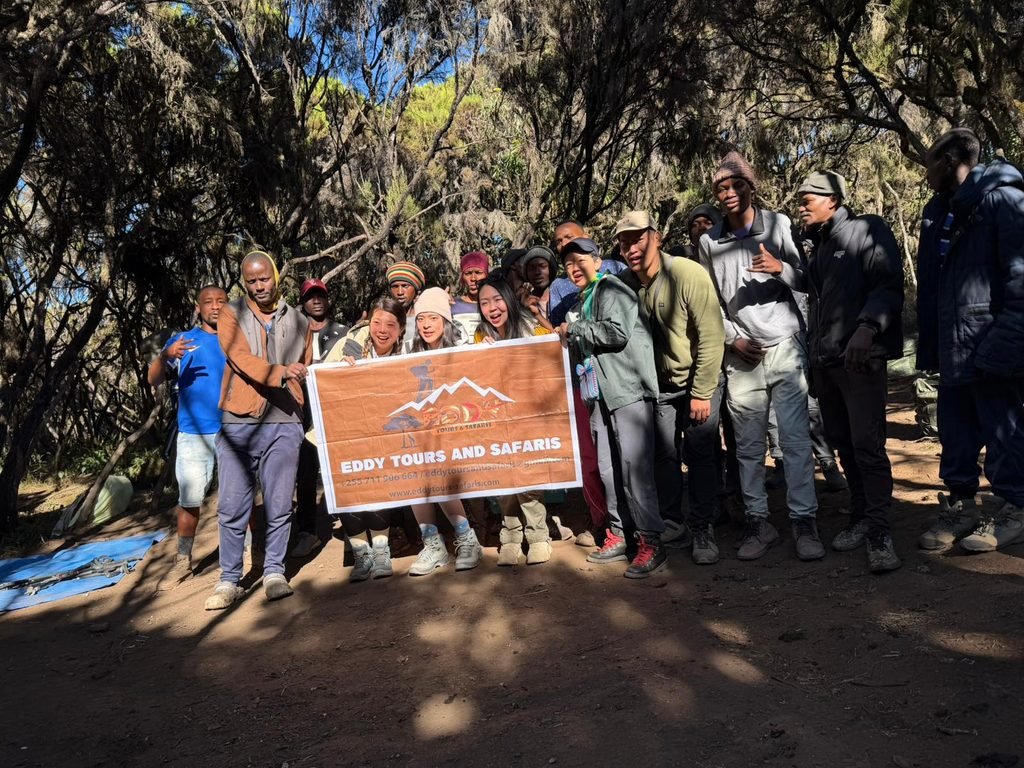
Umbwe deserves particular attention because the route gains altitude quickly during its first two stages. The additional acclimatization day at Barranco can provide useful time for adjustment, but it cannot guarantee that every climber will adapt successfully.
Before departure, consult a qualified healthcare professional about high-altitude trekking, especially if you have previous altitude-related symptoms or an existing medical condition. Travel insurance should cover trekking at Kilimanjaro’s elevation and appropriate emergency evacuation.
The CDC guide to altitude illness provides useful information about acclimatization, symptoms, and medical precautions.
How to Prepare for the Umbwe Christmas Climb
Physical preparation should begin several months before departure. The Umbwe Route requires strong hiking endurance because of its steep initial stages and demanding summit ascent. Regular hill walking, stair climbing, cardiovascular exercise, and leg-strength training can help prepare the body for several consecutive days of trekking.
Travelers should practice hiking on uneven ground while carrying a daypack. This helps develop balance and endurance while providing an opportunity to test hiking boots, clothing, and other equipment. Longer weekend hikes can be particularly useful because they introduce the experience of walking for several hours before returning to activity the following day.
However, physical fitness does not prevent altitude sickness. Even experienced athletes may struggle with reduced oxygen availability at high elevations. Preparation should therefore combine physical training with appropriate route selection, medical advice, and an understanding of altitude-related risks.
Essential Packing List for a Christmas Kilimanjaro Climb
Christmas on Kilimanjaro can be extremely cold, particularly during the summit attempt. Climbers should prepare clothing suitable for rainforest conditions, exposed alpine terrain, and freezing temperatures near Uhuru Peak.
A layered clothing system is important because temperatures can change considerably during the expedition. Moisture-wicking base layers, warm mid-layers, a substantial insulated jacket, and waterproof outer clothing help protect against different mountain conditions.
| Equipment | Recommended items |
|---|---|
| Hiking footwear | Waterproof hiking boots and comfortable hiking socks |
| Thermal clothing | Base layers, thermal trousers, warm fleece |
| Summit protection | Insulated jacket, warm gloves, insulated hat |
| Waterproof clothing | Rain jacket and waterproof trousers |
| Trekking equipment | Daypack, trekking poles, headlamp |
| Sleeping equipment | Cold-weather sleeping bag |
| Personal protection | Sunglasses, sunscreen, lip balm |
| Water and snacks | Suitable water containers and energy snacks |
| Health essentials | Personal medication and basic first-aid items |
| Travel documents | Passport, visa if required, insurance details |
Climbers should test their equipment before departure and request a detailed packing list suited to their selected itinerary.
What Is Included in the Umbwe Christmas Climbing Package?
The exact services included in the seven-day Umbwe Route package depend on the confirmed quotation. A professionally organized expedition commonly includes the required Kilimanjaro National Park fees, licensed mountain guides, porters, a mountain cook, meals during the climb, camping arrangements, and transport between Moshi and the park gates.
The mountain team normally transports the main camping equipment and supplies while climbers carry personal daypacks. Depending on the package, camping equipment may include sleeping tents, dining arrangements, and cooking facilities.
A special Christmas meal may be arranged, subject to advance agreement and the practical conditions on the mountain. Travelers should confirm this before booking rather than assuming that every Christmas departure includes additional festive services.
What Is Excluded from the Package?
Services commonly excluded unless specifically stated include international flights, Tanzania visa fees, travel insurance, personal hiking equipment, equipment rental, tips for the mountain crew, and hotel accommodation before or after the expedition.
Optional wildlife safaris, Zanzibar beach holidays, and additional nights in Moshi are generally quoted separately. Travelers should review the complete written quotation before making a payment to understand the services included and any additional costs.
For current park requirements and visitor regulations, consult Tanzania National Parks.
Can You Combine Your Christmas Kilimanjaro Climb with a Tanzania Safari?
Yes. A Christmas Kilimanjaro expedition can be combined with a wildlife safari in northern Tanzania. After completing the Umbwe Route, travelers may visit Tarangire National Park, Ngorongoro Crater, Serengeti National Park, or Lake Manyara National Park.
A short safari of three to five days can be a practical addition for travelers with limited time, while longer itineraries provide opportunities to explore several parks at a more relaxed pace. Some visitors also choose to continue to Zanzibar for a beach holiday after their mountain expedition.
Because summit day can be physically exhausting, it is sensible to allow time for recovery before beginning another demanding activity. Your onward travel plans should reflect your health, available time, and overall holiday schedule.
Travelers interested in combining mountain climbing with wildlife experiences can explore the options available through Eddy Tours & Safaris.
Frequently Asked Questions About the 7-Day Umbwe Christmas Summit
1. Can I climb Kilimanjaro on Christmas Day?
Yes. A climbing itinerary can be planned around a summit attempt on December 25, subject to weather, health, and park arrangements.
2. When does the seven-day Christmas Umbwe climb begin?
The proposed itinerary begins on December 20 and finishes on December 26.
3. Is the Christmas summit guaranteed?
No. Reaching Uhuru Peak depends on weather, individual health, altitude conditions, and guide decisions.
4. Is the Umbwe Route difficult?
Yes. Umbwe is one of Kilimanjaro’s steepest and most demanding established trekking approaches.
5. Is Umbwe suitable for beginners?
It is generally better suited to experienced hikers. Beginners should consider more gradual routes.
6. Does the seven-day Umbwe Route include acclimatization?
This itinerary includes an additional acclimatization day at Barranco Camp.
7. What is the highest point of Kilimanjaro?
Uhuru Peak, at 5,895 metres above sea level.
8. Where does the Umbwe Route begin?
The climb begins at Umbwe Gate on Kilimanjaro’s southern slopes.
9. Where does the Umbwe Route finish?
The expedition descends through Mweka Camp and finishes at Mweka Gate.
10. Does this itinerary include Barranco Wall?
Yes. Climbers cross Barranco Wall on the fourth trekking day.
11. Is technical climbing equipment required?
The standard Umbwe itinerary joining the southern circuit normally does not require technical mountaineering equipment, although the terrain is demanding.
12. Does this package use the Western Breach?
No. This itinerary uses the Barafu summit approach via Stella Point.
13. Where do climbers sleep?
Climbers stay in tents at designated mountain campsites.
14. How cold is Kilimanjaro at Christmas?
Temperatures near the summit can fall well below freezing, particularly during windy conditions.
15. Does it snow on Kilimanjaro in December?
Snow and ice may be present at high elevations, but actual conditions vary.
16. Is December a good month for Kilimanjaro?
Climbing is possible, but December may experience seasonal rainfall and changing weather.
17. What is the hardest day of the climb?
Summit day is usually the most demanding because of altitude, cold, darkness, and the long descent.
18. Can I celebrate Christmas at Uhuru Peak?
You may reach Uhuru Peak on Christmas Day if conditions allow, but time at the summit is normally brief.
19. Will there be a Christmas dinner?
A special meal may be arranged if agreed in advance and practical under mountain conditions.
20. Do I need previous hiking experience?
Previous experience on steep mountain trails is strongly recommended for Umbwe.
21. Can physical fitness prevent altitude sickness?
No. Fitness helps with trekking endurance but does not guarantee successful acclimatization.
22. Do I need a professional mountain guide?
Yes. Kilimanjaro climbing requires authorized guiding arrangements.
23. Can I book a Christmas climb for 2027?
You can request a quotation for the proposed December 2027 itinerary, subject to confirmation.
24. Can I book Christmas 2028 or 2029?
You can enquire about future Christmas expeditions, although prices and availability must be confirmed.
25. Can I combine the Christmas climb with a Serengeti safari?
Yes. A Tanzania wildlife safari can be arranged after the climb, allowing suitable recovery time.
Book Your 7-Day Umbwe Route Christmas Summit with Eddy Tours & Safaris
The seven-day Umbwe Route Christmas expedition offers a demanding mountain experience for travelers who want to celebrate the holiday season on Mount Kilimanjaro. From the rainforest near Umbwe Gate to Barranco Wall, Karanga Camp, Barafu Camp, and the final ascent toward Uhuru Peak, the itinerary passes through some of Kilimanjaro’s most impressive landscapes.
The proposed schedule targets Christmas Day for the summit attempt while including an additional acclimatization day at Barranco. However, Umbwe remains a steep and challenging route, and travelers should consider their previous mountain experience and health before booking. Safety, appropriate acclimatization, and professional guiding must always take priority over reaching the summit on a particular date.
At Eddy Tours & Safaris, we help travelers plan guided Kilimanjaro expeditions for Christmas 2027, 2028, and 2029. Our team can discuss the proposed dates, mountain arrangements, preparation requirements, and available package options before providing a detailed quotation.
Contact us to plan your Christmas Kilimanjaro expedition.
Website: Eddy Tours & Safaris
Bookings: Request a Kilimanjaro Climbing Quotation
WhatsApp: +255 711 906 664
Email: sales@eddytours-safaris.com