
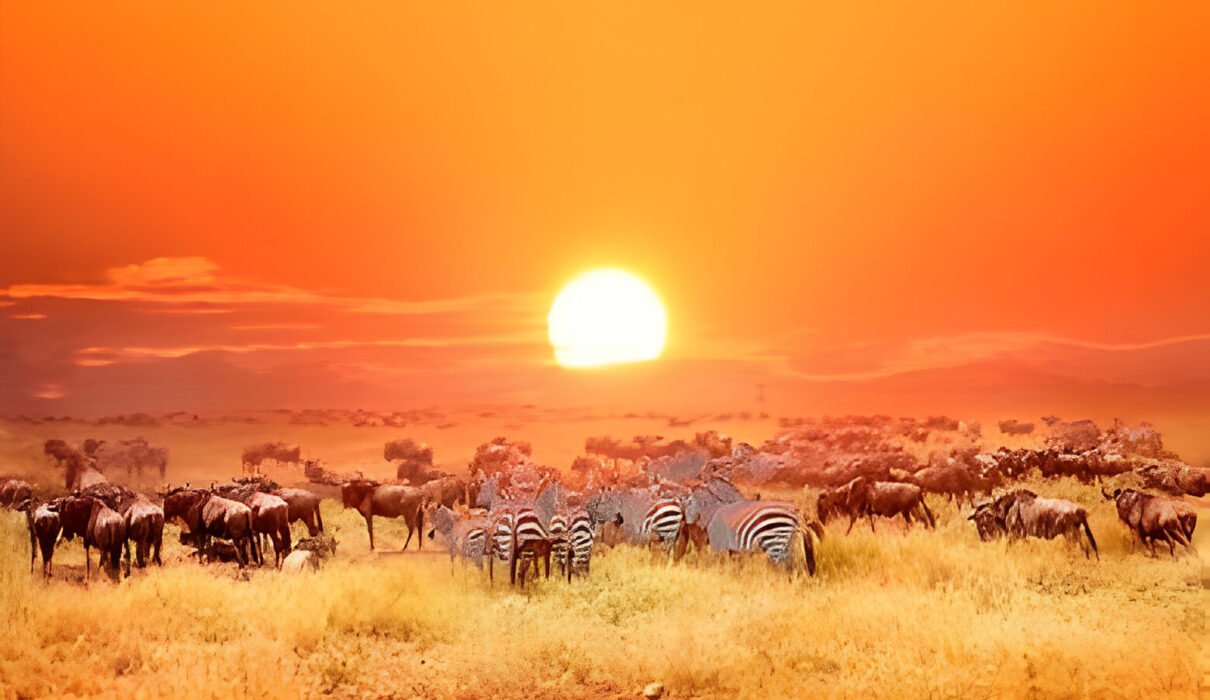
Wildlife in Kenya includes far more than the famous Big Five. Depending on your itinerary, you could watch elephants moving across Amboseli, lions resting in the Maasai Mara, rhinos grazing near Lake Nakuru, or reticulated giraffes browsing in northern Kenya. Each destination offers a different combination of animals, habitats, and scenery.
The animals you see will depend on where you travel, the season, and wildlife movement during your visit. A good itinerary puts you in suitable habitats and allows enough time for patient observation.
This guide introduces 15 animals and animal groups worth looking for on a 2027/2028 Kenya safari, explains which destinations suit different interests, and helps you plan realistic wildlife expectations.
For a personalised itinerary, contact Eddy Tours & Safaris with your dates, available days, and the animals you most want to see.
Wildlife in Kenya: Which Animals Should You Expect?
On a savannah safari, you may encounter grazing animals such as zebras, antelopes, and buffaloes, alongside giraffes, elephants, and predators. Lakes, rivers, woodland, and dry northern landscapes introduce other species.
Kenya Wildlife Service highlights the country’s varied habitats, ranging from savannah and forests to wetlands and mountain ecosystems. This variety explains why visiting different regions can broaden your wildlife experience. Kenya Wildlife Service
However, adding destinations also adds travel time. Choose a route around your main interests rather than trying to include every park.
| Wildlife interest | Destination to consider | Planning point |
|---|---|---|
| Large elephant herds | Amboseli | Allow time to observe family groups |
| Lions and cheetahs | Maasai Mara | Include several game drives |
| Black and white rhinos | Lake Nakuru | Check recent viewing conditions |
| Northern dryland species | Samburu | Look beyond the Big Five |
| Waterbirds | Rift Valley lakes | Bird numbers and locations vary |
| Coastal safari extension | Tsavo and Amboseli options | Compare distances from your beach hotel |
Use this as a starting point for discussion, rather than a promise of particular sightings.
The Big Five Wildlife in Kenya
The Big Five are lions, leopards, elephants, buffaloes, and rhinos. The term originated in hunting history; today it is commonly used when discussing safari wildlife.
They are not the five largest animals, and seeing all five is not guaranteed. Kenya’s other wildlife deserves just as much attention.
1. Lions
Watching a pride of lions is often a highlight of a Kenya safari. You might find them sleeping in shade, interacting with cubs, or moving across open grassland.
The Maasai Mara is a strong destination to consider for lion viewing. Kenya’s official tourism information also identifies it as an important place to look for cheetahs and other predators. webmail.magicalkenya.com
Allow time at a sighting. A resting pride may become active, but that could happen after a long wait—or after you have moved on.
Seeing lions hunting is a possibility, not something a guide can schedule. Quietly watching their everyday behaviour can be just as rewarding.
2. Elephants
Elephants are among the most impressive examples of wildlife in Kenya. Their family interactions, careful use of their trunks, and movements through the landscape make them fascinating to observe.
Amboseli National Park is particularly associated with large elephant herds. Kenya Wildlife Service identifies elephant viewing as one of the park’s principal attractions. Kenya Wildlife Service
Look beyond a single photograph. Watch how adults respond to calves, how a group feeds, and how individuals communicate.
Mount Kilimanjaro can provide a striking backdrop when visibility allows, but clouds may obscure it. Plan your Amboseli visit around the wildlife experience rather than depending on a particular mountain photograph.
Explore the official Amboseli National Park information when researching your route.
3. Leopards
Leopards can be challenging to find because they blend into vegetation and often remain out of sight.
Your guide may scan branches, wooded areas, and shaded cover. A sighting might involve a leopard resting in a tree, walking briefly through bushes, or appearing near a track.
Patience helps, but extra time does not create a guarantee. Avoid choosing an itinerary solely because a package promises a leopard encounter.
Bring binoculars and listen to your guide’s instructions. A distant view can still reveal details that are difficult to see with the naked eye.
4. African Buffaloes
Buffaloes are worth watching whether you encounter a large herd or a small group.
Notice the different horn shapes, the birds around them, and how individuals gather together. Herds can provide excellent opportunities to observe movement and social behaviour.
Buffaloes are powerful wild animals. Remain in the vehicle where required and let the guide judge an appropriate viewing distance.
They may receive less attention than big cats, but a relaxed buffalo sighting can become one of the most detailed wildlife encounters of your trip.
5. Black and White Rhinos
If rhinos are a priority, consider including Lake Nakuru National Park.
Kenya Wildlife Service describes Lake Nakuru’s role as a sanctuary protecting both black and white rhinos. This makes it a relevant destination when planning a safari with rhino viewing in mind. Kenya Wildlife Service
Ask your guide to explain the differences between the two. Their mouth shapes, feeding behaviour, and physical features can help with identification.
A rhino may be visible in open ground or partly hidden by vegetation. Give it space and avoid encouraging a closer approach for photographs.
Read the official Lake Nakuru National Park guide for destination information.
Other Wildlife in Kenya You Should Look For
6. Cheetahs
Cheetahs are recognised by their slender build, spotted coat, and dark facial markings.
The Maasai Mara is a destination to consider for cheetah viewing. Official tourism information notes their presence alongside lions, hyenas, and smaller predators. webmail.magicalkenya.com
You may see a cheetah resting, scanning the surroundings, or moving through grassland. A high-speed chase is only a small part of its life and should never be treated as an expected attraction.
Keep your camera ready without spending the entire sighting looking through it. Watching the animal directly helps you appreciate its movements and alertness.
7. Giraffes
Giraffes add a distinctive shape to Kenya’s landscapes. Watching one browse, walk, or lower its head to drink can be surprisingly absorbing.
The giraffes you encounter vary by region. Kenya Wildlife Service’s conservation information documents Masai giraffes in southern ecosystems and reticulated giraffes in northern areas, including Samburu and Laikipia. kws.go.ke
Ask your guide about coat patterns and local identification.
If you want to compare different giraffes during one holiday, discuss whether your available time supports travel between southern and northern destinations.
8. Plains Zebras and Grevy’s Zebras
Zebra herds are a familiar sight on many safari itineraries, but Kenya also offers opportunities to look for Grevy’s zebras in northern landscapes.
Grevy’s zebras have narrower stripes and large rounded ears. They are among the animals associated with Samburu’s distinctive dryland wildlife.
The Samburu County Government lists Grevy’s zebra among the region’s well-known “Samburu Five.” The County Government of Samburu
Seeing both zebra types adds interest to a longer itinerary. Take time to compare their appearance rather than treating every zebra sighting as the same.
9. Wildebeest
Wildebeest are closely associated with the Great Migration, but a migration safari requires attention to location and timing.
Kenya’s official tourism information identifies July through October as a broad period to consider for migration viewing in the Maasai Mara. Actual movements vary with rainfall and grazing conditions. webmail.magicalkenya.com
Do not assume that every visit during these months includes a river crossing. Herds may gather near water without crossing, or move elsewhere.
For background on the wider ecosystem, read Eddy Tours’ guide to understanding the Great Migration.
10. Hippopotamuses
Hippos are an important part of river and wetland wildlife viewing.
You may observe them resting in water, surfacing to breathe, or interacting with other members of a group. Their behaviour becomes more interesting when you watch for several minutes.
Use designated viewing areas and follow your guide’s instructions. Never approach a hippo on foot or stand between an animal and the water.
River habitats also offer opportunities to watch birds and other wildlife, so avoid focusing only on the largest animals.
11. Nile Crocodiles
Crocodiles can be difficult to notice when they lie still beside water.
Look for the outline of a body on a bank or a head breaking the surface. Your guide can help distinguish a crocodile from rocks, branches, or shadows.
Migration photographs often focus on crocodiles during river crossings, but these animals are worth observing outside dramatic moments too.
Their presence is another reason to remain at a safe distance from riverbanks and use approved viewing points.
12. Spotted Hyenas
Hyenas deserve more attention than they often receive.
They are capable predators as well as scavengers, and their interactions can provide an interesting contrast to those of big cats.
In the Maasai Mara, official tourism information includes hyenas among the predators visitors may encounter. webmail.magicalkenya.com
If your guide stops for a hyena sighting, take time to watch. You may notice alert scanning, social contact, or purposeful movement that is easy to miss during a quick photograph.
13. Antelopes and Gazelles
Kenya’s grazing animals provide much of the movement and variety you see during a game drive.
Depending on your destination, your guide may identify impalas, gazelles, topis, waterbucks, or other antelopes.
Learning a few differences makes each drive more engaging. Look at horn shape, body markings, size, and preferred habitat.
These animals also help you understand the landscape. A grazing herd, an alert group, or a sudden change in behaviour can give your guide useful clues about what is happening nearby.
Northern Wildlife in Kenya: Animals Beyond the Big Five
14. Gerenuks and Beisa Oryx
Samburu is especially relevant if you want to see animals associated with northern Kenya’s dry environments.
Its “Special Five” comprise:
- Grevy’s zebra.
- Reticulated giraffe.
- Somali ostrich.
- Gerenuk.
- Beisa oryx.
The Samburu County Government identifies these species as characteristic attractions of the reserve. They are not all exclusive to Samburu. The County Government of Samburu
Gerenuks are particularly interesting to watch when they rise on their hind legs to browse. Beisa oryx stand out through their long horns and facial markings.
Consult the official Samburu destination information when considering a northern extension.
15. Flamingos and Other Birds
Birdwatching adds colour, sound, and activity throughout a Kenya safari.
Around lakes, you may look for flamingos, pelicans, herons, and other waterbirds. Kenya Wildlife Service identifies Lake Elementaita as an important location for several waterbird species, including flamingos and great white pelicans. Kenya Wildlife Service
Flamingo locations and numbers change. A lake famous for pink flocks may look different when you visit, so ask about recent conditions rather than relying on older photographs. Kenya Wildlife Service
Browse the official Lake Elementaita Wildlife Sanctuary information if birds are a priority.
How to Plan a Kenya Wildlife Safari for 2027/2028
Choose your main wildlife interests
Start with two or three priorities. You might want elephant viewing, big cats, and rhinos—or northern species and birdwatching.
Explain these interests when requesting your itinerary. This helps the operator select destinations that match your goals.
Allow enough time in each destination
Repeated game drives give you opportunities to explore different areas and observe changing conditions.
Moving to a new lodge every day can reduce time available for wildlife. Ask how many nights and game drives you will have in each location.
Check accommodation location
A lodge’s location affects your daily travel. Confirm whether it is inside a park, in a neighbouring conservancy, or outside the protected area.
Also ask which entry and activity charges are included. Different areas may have different arrangements.
Match a beach extension to a practical route
If starting from Kenya’s coast, compare travel distances before choosing destinations. Review Eddy Tours’ Mombasa safari information and request an updated itinerary for 2027/2028.
For a longer East Africa holiday, you can also explore Tanzania safari options and discuss a suitable cross-border programme.
Tips for Watching Wildlife in Kenya Responsibly
Keep noise low, give animals space, and follow the guide’s instructions.
Remain in the vehicle where required. Do not feed wildlife or encourage a driver to approach too closely. At camps, follow staff guidance about moving around after dark.
Pack binoculars, a camera, spare batteries, a warm layer, and protection from sun and dust. Binoculars often improve the experience more than trying to get closer.
The Kenya Wildlife Service website provides official park information to support your planning.
Frequently Asked Questions About Wildlife in Kenya
Will I see the Big Five?
You may, depending on your itinerary and conditions. No particular sighting—or complete Big Five list—can be guaranteed.
Where should I go for elephants?
Amboseli is a strong choice to discuss because of its well-known elephant herds. Other destinations may also offer elephant viewing.
Which destination suits northern species?
Samburu is a useful choice for looking for its Special Five and exploring a different habitat from southern savannah destinations.
Is Kenya worth visiting outside migration season?
Yes. Resident wildlife provides reasons to visit beyond the migration. Choose your dates around the whole itinerary and your interests.
Are flamingos guaranteed at Lake Nakuru?
No. Numbers vary, and birds move between lakes as conditions change. Ask for recent information before making flamingos the main purpose of your visit.
Plan Your Kenya Wildlife Safari with Eddy Tours & Safaris
The most rewarding way to experience wildlife in Kenya is to choose suitable destinations, allow time for observation, and remain open to the animals you encounter.
Share your preferred dates, group size, budget, and wildlife priorities with Eddy Tours & Safaris. Request a clear 2027/2028 proposal showing overnight locations, game drives, transfers, and included charges.
Enquire about your Kenya safari.
Email: sales@eddytours-safaris.com
Alternative email: eddytoursandsafaris@gmail.com
WhatsApp: +255 711 906 664