
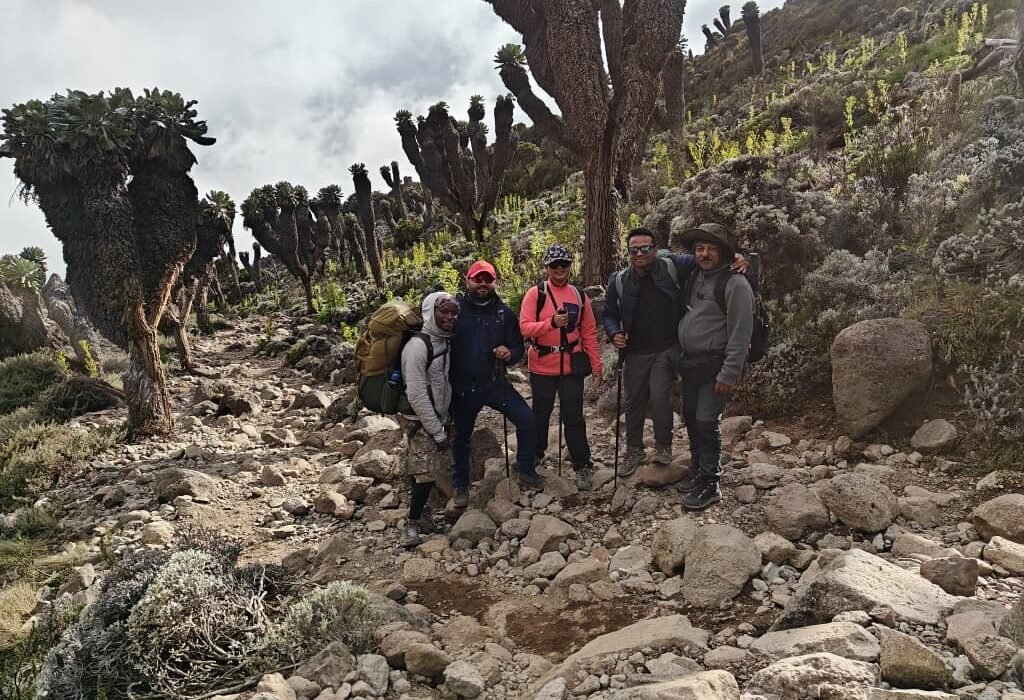
Hidden Kilimanjaro Trails Off the Beaten Path offer a rare chance to experience the mountain in a slower, quieter and more meaningful way, far from busy summit traffic and crowded camps, while still following safe and professionally guided routes that protect both people and nature.
Many travelers dream of standing on Africa’s highest mountain, yet very few discover how rich and beautiful the lesser-used corridors around Kilimanjaro truly are. These trails move gently through forest, moorland and alpine zones where silence is often broken only by wind, birds and distant waterfalls. For visitors who value space, nature and cultural connection, these paths deliver something far deeper than simply reaching the top.

Hidden Kilimanjaro Trails Off the Beaten Path and the natural design of the mountain
Hidden Kilimanjaro Trails Off the Beaten Path follow ancient landforms created by volcanic activity and long-term erosion processes that shaped the mountain into its present form. Geological studies by the United States Geological Survey and global volcanic research coordinated by the Smithsonian Global Volcanism Program explain how multiple lava flows and collapsed cones formed ridges, valleys and forested corridors that today serve as quiet trekking routes.
Additional mapping by the British Geological Survey shows that these less-used trails often pass over more stable volcanic soils, which helps reduce erosion when visitor numbers are carefully controlled. This natural layout explains why responsible operators avoid creating new tracks and instead guide travelers along already established but lightly used paths
Hidden Kilimanjaro Trails Off the Beaten Path and fragile forest ecosystems
Hidden Kilimanjaro Trails Off the Beaten Path pass through some of the most sensitive forest and heathland ecosystems on the mountain. Conservation frameworks promoted by the International Union for Conservation of Nature and ecosystem protection standards from the United Nations Environment Programme emphasize that limiting visitor concentration is one of the most effective ways to protect vegetation and soil structure in protected areas.
Long-term biodiversity monitoring coordinated by the Global Biodiversity Information Facility shows that isolated forest corridors support unique bird species, insects and alpine plants that do not survive well in heavily trafficked areas. Educational programmes led by the World Wide Fund for Nature and landscape conservation initiatives by The Nature Conservancy both highlight how low-impact access protects long-term ecological stability
Hidden Kilimanjaro Trails Off the Beaten Path and wildlife movement corridors
Hidden Kilimanjaro Trails Off the Beaten Path also play an important role in connecting forest and moorland habitats that support wildlife movement along the lower and middle slopes of the mountain. Research published by the Wildlife Conservation Society and regional conservation studies by the African Wildlife Foundation show that undisturbed vegetation corridors allow animals to adjust their ranges during seasonal changes in water and food availability.
Spatial planning tools developed by the UN Environment Programme World Conservation Monitoring Centre support park authorities in protecting these movement routes so that tourism does not fragment key habitats.
Hidden Kilimanjaro Trails Off the Beaten Path and climate observation zones
Hidden Kilimanjaro Trails Off the Beaten Path often pass through areas used by scientists to observe vegetation shifts, cloud movement and temperature patterns. Climate assessments coordinated by the Intergovernmental Panel on Climate Change confirm that high-altitude landscapes respond rapidly to environmental change, making these quieter ridges valuable natural monitoring platforms.
Atmospheric research supported by the World Meteorological Organization and cryosphere studies published by the National Snow and Ice Data Center help explain how mountain weather patterns influence regional rainfall and water availability for surrounding communities.
Hidden Kilimanjaro Trails Off the Beaten Path and cultural landscapes
Hidden Kilimanjaro Trails Off the Beaten Path also follow landscapes that hold cultural meaning for communities living around the mountain. Cultural heritage programmes supported by UNESCO recognise that many highland paths were historically used for seasonal farming access, spiritual practices and community movement between villages.
Social development research coordinated by the UN Department of Economic and Social Affairs demonstrates that preserving cultural landscapes alongside natural areas improves long-term conservation outcomes and strengthens local stewardship.
Hidden Kilimanjaro Trails Off the Beaten Path and safe, professional trekking
Although these routes are quieter, safety remains the first priority. Mountain safety guidance published by the American Red Cross and expedition risk management studies available through ScienceDirect confirm that professional planning, trained guides and well-managed logistics significantly reduce incidents in remote terrain.
Health guidance for high-altitude environments from the World Health Organization and medical research published by the National Center for Biotechnology Information reinforce the importance of controlled pacing, hydration and early symptom reporting on less populated routes where self-discipline is essential.
Hidden Kilimanjaro Trails Off the Beaten Path and community livelihoods
Hidden Kilimanjaro Trails Off the Beaten Path directly support community-based tourism models that distribute benefits more evenly across villages surrounding the park. Economic impact studies by the World Bank show that locally managed tourism increases household stability and strengthens small business development.
Fair working standards promoted by the International Labour Organization also encourage ethical employment practices for guides, porters and support teams operating along these quieter routes.
Many travelers choose to experience these peaceful corridors through Eddy Tours & Safaris, where local teams guide visitors with a strong focus on safety, conservation awareness and cultural respect.
Hidden Kilimanjaro Trails Off the Beaten Path and responsible visitor access
Hidden Kilimanjaro Trails Off the Beaten Path are managed under international protected-area governance principles developed by the Convention on Biological Diversity, which promote carefully controlled visitor numbers and strong monitoring systems to avoid environmental degradation.
Environmental policy coordination by UN Environment, forest research programmes supported by the Center for International Forestry Research and biodiversity conservation initiatives led by Conservation International all demonstrate how sustainable access strengthens long-term protection of mountain ecosystems.

Hidden Kilimanjaro Trails Off the Beaten Path and your personal adventure
Hidden Kilimanjaro Trails Off the Beaten Path offer something deeply special for travelers who want space, reflection and genuine connection with nature. These routes invite you to walk slowly, listen to the forest, learn from local guides and experience the mountain as a living landscape rather than a crowded destination.
If you are looking for a calm and meaningful trekking experience, our team at Eddy Tours & Safaris carefully designs low-impact itineraries that match your fitness level and personal goals while respecting park rules and community values.
You can also combine your trek with village visits, conservation walks and cultural activities through our trusted local Kilimanjaro travel programmes, creating a complete journey that supports education, employment and environmental protection.
For travelers who truly want to step away from busy trails and discover the quiet heart of the mountain, we invite you to plan your journey today with our responsible Kilimanjaro booking services and experience a side of Kilimanjaro that very few people ever see.