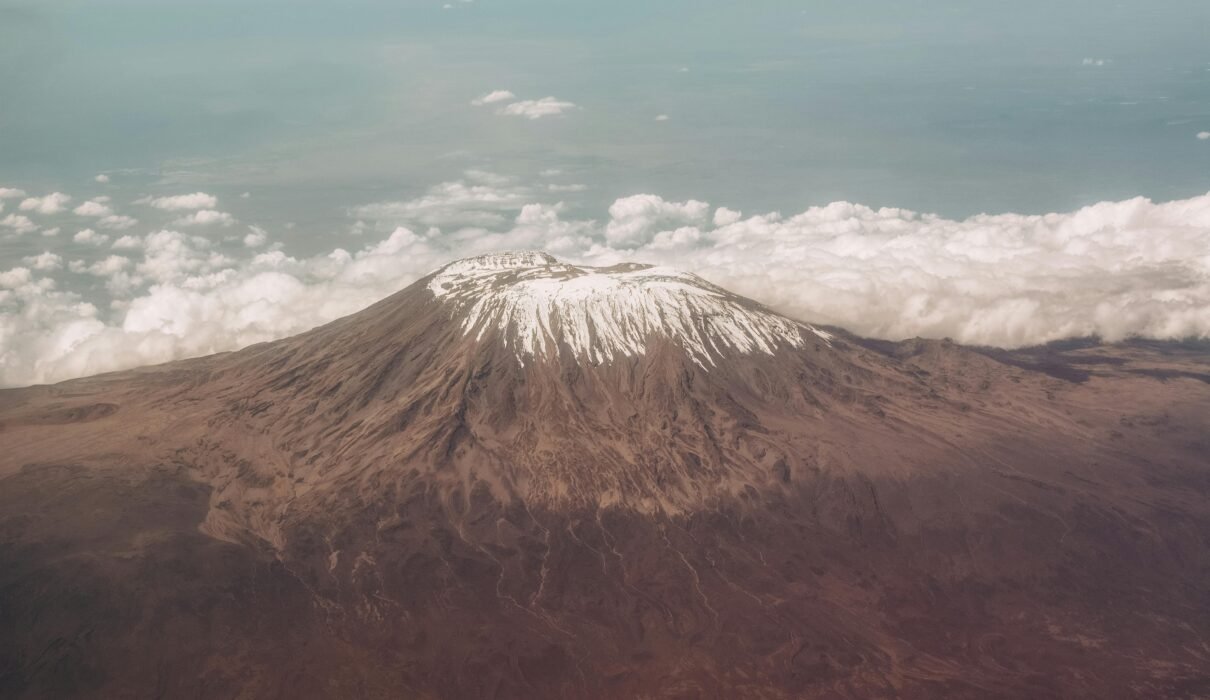
How Tall Is Mount Kilimanjaro? This simple question is one of the most searched topics by travelers, students, and adventure lovers, because knowing the true height of Africa’s highest mountain helps people understand the scale of the challenge, the changing climate around the summit, and the deep scientific importance of this iconic natural landmark in northern Tanzania.
Mount Kilimanjaro rises to an official height of 5,895 meters above sea level, making it the highest free-standing mountain in the world and the tallest mountain on the African continent, a record that has been confirmed through modern geodetic measurements and international scientific mapping standards.
How Tall Is Mount Kilimanjaro? and how scientists measure the mountain
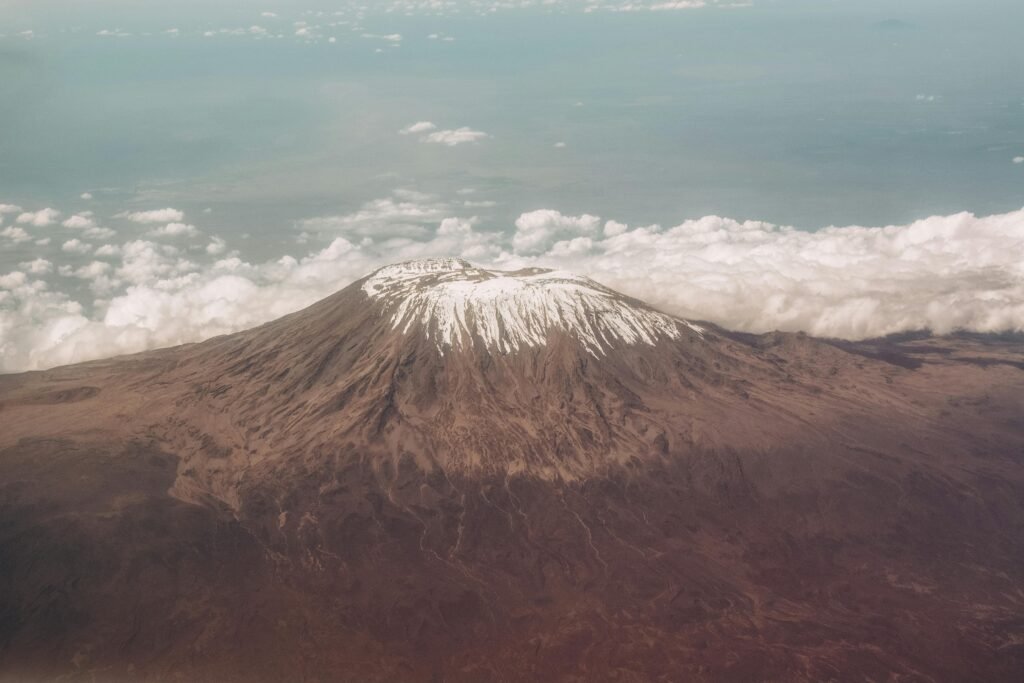
How Tall Is Mount Kilimanjaro? is not answered by guesswork or old maps, but by modern satellite technology, ground surveying, and global reference systems used by research institutions around the world. Elevation data for major landforms such as Kilimanjaro are produced using techniques supported by organizations such as the United States Geological Survey and global Earth observation programs coordinated through NASA, which use satellite radar, laser altimetry, and digital elevation models to determine precise heights.
Global geospatial and mapping standards are also supported by the Open Geospatial Consortium, while international elevation datasets are validated through scientific publishing platforms such as ScienceDirect. These combined systems confirm that the highest point of the mountain, Uhuru Peak on the Kibo cone, reaches 5,895 meters above mean sea level.
How Tall Is Mount Kilimanjaro? and why this height is so special in the world
How Tall Is Mount Kilimanjaro? becomes even more impressive when people learn that the mountain rises almost directly from the surrounding plains, without belonging to a long mountain chain like the Himalayas or the Andes. This makes Kilimanjaro the tallest free-standing mountain on Earth, a geological feature that is studied by scientists working on volcanic and tectonic processes within the East African Rift system.
Volcanic and tectonic research that helps explain how Kilimanjaro reached such height is supported by scientific programs linked to the International Union for Conservation of Nature and environmental research coordinated by the United Nations Environment Programme, which also focus on protecting fragile high-altitude ecosystems that depend on this unique geological structure.
How Tall Is Mount Kilimanjaro? and the three volcanic cones that form the mountain
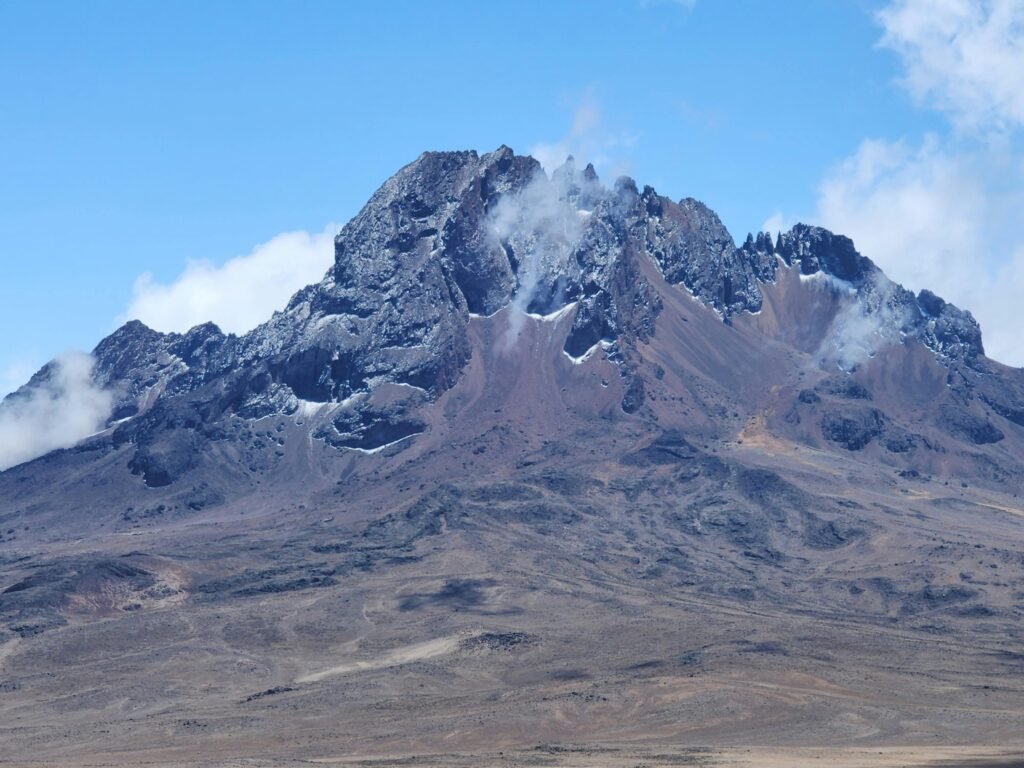
How Tall Is Mount Kilimanjaro? cannot be fully understood without knowing that the mountain is made up of three main volcanic cones: Kibo, Mawenzi and Shira. Kibo is the highest and youngest cone and contains Uhuru Peak, the point where the official height is measured. Mawenzi forms sharp, rugged peaks to the east, while Shira represents an older and heavily eroded volcanic structure to the west.
Geological studies and volcanic history research supported by the Smithsonian Global Volcanism Program and regional Earth science projects coordinated by the British Geological Survey explain how repeated eruptions and long-term erosion shaped these three cones into the mountain seen today.
How Tall Is Mount Kilimanjaro? and what its height means for climate and glaciers
How Tall Is Mount Kilimanjaro? is directly connected to why snow and ice can still exist so close to the equator. The great elevation creates cold conditions at the summit, allowing glaciers and ice fields to form even in a tropical climate. Climate science published by the Intergovernmental Panel on Climate Change shows that high-altitude environments respond very quickly to changes in temperature, making Kilimanjaro an important natural laboratory for climate monitoring.
Long-term cryosphere and ice monitoring programs coordinated by the National Snow and Ice Data Center and climate observation supported by the World Meteorological Organization help scientists understand how shrinking ice fields on tropical mountains are linked to wider global climate patterns.
How Tall Is Mount Kilimanjaro? and the unique ecosystems created by altitude
How Tall Is Mount Kilimanjaro? also explains why the mountain contains several completely different ecological zones, starting with farmland and lowland forest, moving through montane forest, heath and moorland, alpine desert, and finally the icy summit environment. Each zone exists because temperature, rainfall and oxygen levels change rapidly with altitude.
Global biodiversity mapping coordinated by the Global Biodiversity Information Facility shows that high-altitude ecosystems often contain rare and specialized plant and insect species. Conservation research supported by Conservation International, ecosystem protection programs from The Nature Conservancy, and wildlife monitoring initiatives of the Wildlife Conservation Society all emphasize the importance of protecting mountain landscapes like Kilimanjaro.
How Tall Is Mount Kilimanjaro? and the role of forests and water systems
How Tall Is Mount Kilimanjaro? matters greatly for water security in northern Tanzania, because high mountains act as natural water towers. Rain and mist captured by forest and alpine zones feed rivers and groundwater that support millions of people living around the mountain.
Forest and watershed research led by the Center for International Forestry Research, water and ecosystem programs supported by the Food and Agriculture Organization, and protected-area monitoring by the UN Environment Programme World Conservation Monitoring Centre all confirm that protecting Kilimanjaro’s forests is directly linked to stable water supply and climate resilience.
How Tall Is Mount Kilimanjaro? and the human and cultural meaning of the mountain
How Tall Is Mount Kilimanjaro? is not only a scientific fact. For communities living on the slopes, the mountain represents identity, history, and cultural knowledge passed through generations. Cultural heritage protection promoted by UNESCO recognizes the value of indigenous knowledge linked to natural landscapes, while community development research coordinated by the UN Department of Economic and Social Affairs shows how cultural respect strengthens sustainable land management.
Community-based conservation and land-use planning are also supported by the World Bank and fair employment standards promoted by the International Labour Organization, helping local people benefit directly from conservation and responsible tourism.
How Tall Is Mount Kilimanjaro? and what climbers should understand about altitude
How Tall Is Mount Kilimanjaro? is extremely important for anyone planning to climb the mountain, because altitude directly affects oxygen availability and human performance. Medical guidance published by the World Health Organization explains how reduced oxygen pressure at high elevations can cause altitude-related illness if climbers ascend too quickly.
Outdoor safety and emergency response principles promoted by the American Red Cross support safer trekking practices and emergency preparedness for high-altitude environments such as Kilimanjaro.
Travelers who want clear and professional guidance for their climb often begin planning through Eddy Tours & Safaris, where responsible mountain operations focus on proper acclimatization and safety standards.
How Tall Is Mount Kilimanjaro? and responsible tourism on the mountain
How Tall Is Mount Kilimanjaro? also reminds visitors that such a fragile environment needs careful management. International biodiversity policy frameworks promoted by the Convention on Biological Diversity guide how protected areas such as Kilimanjaro National Park manage visitor pressure, trail systems and ecosystem protection.
Many travelers choose ethically designed trekking experiences through responsible Kilimanjaro climbing services, where waste management, porter welfare and environmental protection are treated as essential parts of the adventure.
How Tall Is Mount Kilimanjaro? and combining climbing with wildlife experiences
How Tall Is Mount Kilimanjaro? often becomes part of a wider travel plan that includes wildlife safaris and cultural experiences in Tanzania. Carefully designed journeys through Tanzania safari and mountain travel programs allow visitors to experience both the roof of Africa and the famous wildlife landscapes in a single responsible itinerary.
For travelers who prefer personalized routes and flexible travel styles, custom travel itineraries in Tanzania make it possible to combine Kilimanjaro trekking with conservation-focused safari experiences.
How Tall Is Mount Kilimanjaro? and why the answer truly matters
How Tall Is Mount Kilimanjaro? is more than a number. It represents a powerful natural system that controls climate, supports water resources, protects unique biodiversity and carries deep cultural meaning for the people who live in its shadow.
Knowing the true height of the mountain helps travelers appreciate the real scale of the challenge, respect the fragile summit environment, and understand why responsible tourism plays an important role in keeping Africa’s highest mountain healthy for future generations.