
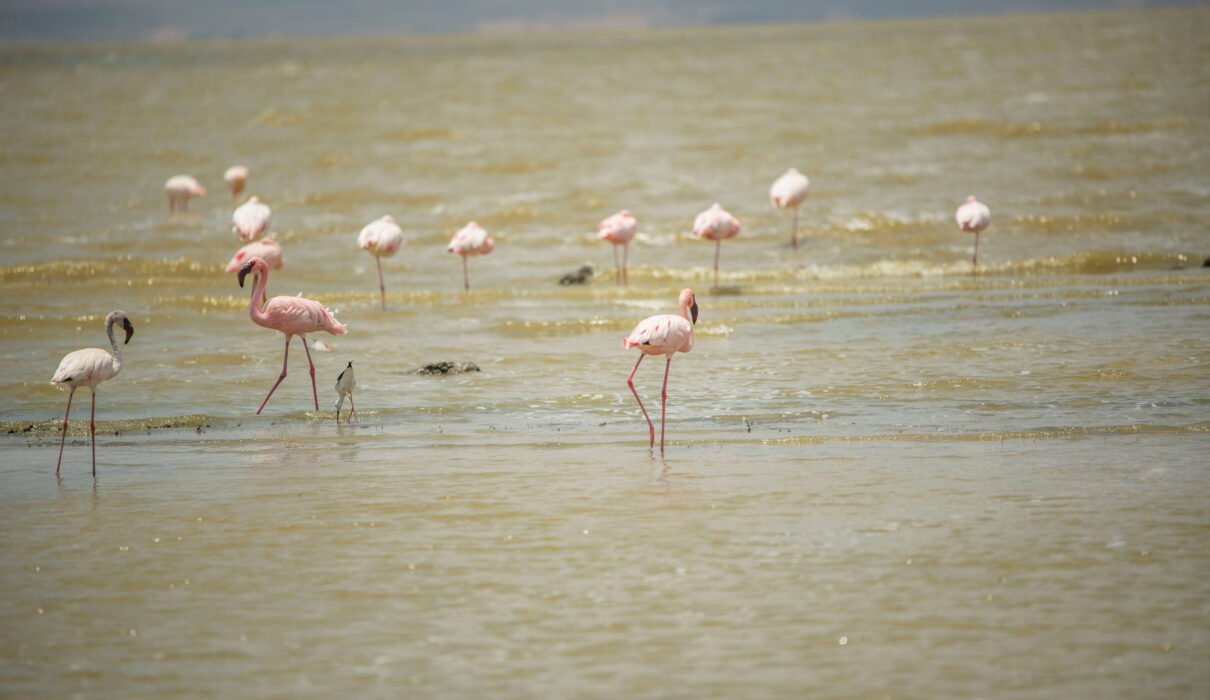
Lake Natron: Flamingos and Other Wildlife Wonders is one of Tanzania’s most extraordinary natural stories, unfolding in a remote volcanic landscape where millions of flamingos gather, rare desert-adapted animals survive, and fragile ecosystems quietly depend on careful protection and responsible travel.
Far from the busy safari highways, Lake Natron offers something deeply different. The land feels raw, open and dramatic, shaped by ancient lava flows, harsh sun and alkaline water that only a few special species can tolerate. Yet it is exactly this extreme environment that makes the lake one of the most important wildlife sites in East Africa.
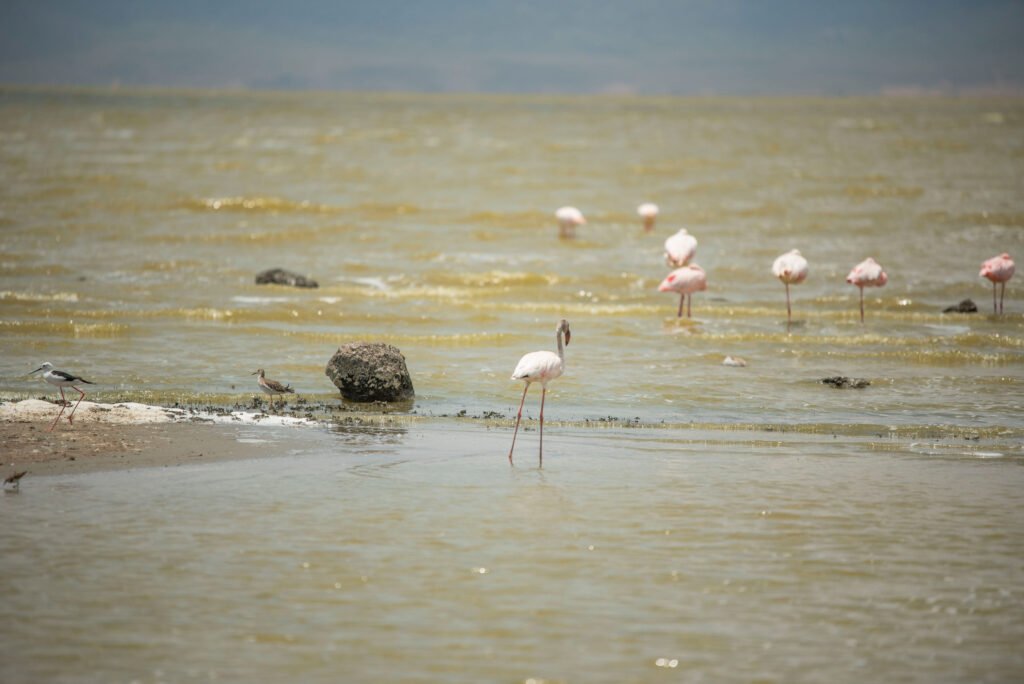
Lake Natron: Flamingos and Other Wildlife Wonders and why this lake is globally important
Lake Natron is internationally recognised as one of the most critical breeding sites for lesser flamingos in the world. Conservation assessments and wetland protection frameworks promoted by the International Union for Conservation of Nature and environmental coordination by the United Nations Environment Programme clearly show that only a few alkaline lakes across Africa can support large and stable flamingo breeding colonies. Among them, Lake Natron remains the most secure and productive natural nesting area.
Scientific work and habitat protection programmes supported by BirdLife International confirm that the shallow salt flats and isolated breeding islands provide natural protection from predators and human disturbance, making this lake essential for the long-term survival of flamingo populations across the entire Rift Valley region.
Lake Natron: Flamingos and Other Wildlife Wonders and the science behind flamingo survival
Flamingos depend on a delicate balance of water chemistry, algae growth and seasonal flooding. Biodiversity monitoring and species distribution data coordinated by the Global Biodiversity Information Facility allow researchers to track flamingo movement between alkaline lakes in Tanzania, Kenya and Ethiopia, while conservation risk assessments published by the Intergovernmental Science-Policy Platform on Biodiversity and Ecosystem Services highlight how climate stress and water extraction threaten specialised wetland species.
Climate research published by the Intergovernmental Panel on Climate Change further explains how rising temperatures and unpredictable rainfall directly affect shallow lakes such as Natron, influencing algae productivity and nesting success for flamingos that rely on stable water conditions.
Lake Natron: Flamingos and Other Wildlife Wonders beyond birds
Although flamingos are the main attraction, Lake Natron supports a surprisingly diverse set of wildlife adapted to harsh environments. Small mammals, reptiles and desert birds use the surrounding grasslands and acacia woodlands as feeding and breeding grounds. Landscape-scale wildlife research conducted by the Wildlife Conservation Society and regional ecosystem protection programmes supported by the African Wildlife Foundation demonstrate how dryland ecosystems remain vital stepping stones for wildlife moving between the Ngorongoro ecosystem and the wider Rift Valley.
Habitat restoration and ecosystem resilience initiatives promoted by Conservation International and long-term landscape protection programmes led by The Nature Conservancy further show that even seemingly empty or harsh environments play essential roles in maintaining regional biodiversity.
Lake Natron: Flamingos and Other Wildlife Wonders and fragile dryland ecosystems
The land surrounding Lake Natron is classified as one of the most sensitive dryland ecosystems in northern Tanzania. Forest and rangeland research carried out by the Center for International Forestry Research explains how vegetation loss, unmanaged grazing and land conversion quickly destabilise soils and water systems in arid landscapes. Monitoring of protected and key biodiversity areas coordinated by the UN Environment Programme World Conservation Monitoring Centre supports national planning that helps prevent permanent ecosystem damage.
Water and food security research promoted by the Food and Agriculture Organization further highlights how sustainable land and livestock management around Lake Natron is directly connected to the survival of both wildlife and local communities.
Lake Natron: Flamingos and Other Wildlife Wonders and community conservation
The communities living around Lake Natron, especially pastoralist groups, depend on healthy rangelands and water sources. Development studies published by the World Bank show that community-based tourism and conservation programmes help diversify income, reduce vulnerability to drought and strengthen environmental stewardship. Labour and fair employment standards promoted by the International Labour Organization also support responsible tourism operations that create stable jobs for local guides, drivers and cultural interpreters.
Cultural heritage and traditional knowledge protection supported by UNESCO and social development research coordinated by the UN Department of Economic and Social Affairs confirm that conservation success at Lake Natron depends on respecting local culture and long-established land-use practices.
Lake Natron: Flamingos and Other Wildlife Wonders and wetland protection
Lake Natron forms part of a wider network of internationally important wetlands in East Africa. Global freshwater and wetland protection efforts coordinated by UN Environment and biodiversity governance frameworks supported by the Convention on Biological Diversity guide how sensitive sites such as Natron should be managed, monitored and protected from industrial development and unsustainable water use.
Scientific publishing and ecosystem research shared through ScienceDirect continue to improve understanding of alkaline lake ecology and the long-term risks facing specialist species such as flamingos.
Lake Natron: Flamingos and Other Wildlife Wonders and visitor safety in remote landscapes
Lake Natron is beautiful, but it is also remote and physically demanding. Health and travel guidance published by the World Health Organization supports safer travel practices in hot and isolated environments, while emergency preparedness and outdoor safety frameworks promoted by the American Red Cross help operators strengthen response systems for remote wilderness areas.
Responsible access and visitor management are essential to ensure that tourism does not disturb flamingo breeding areas or fragile salt flats.
Lake Natron: Flamingos and Other Wildlife Wonders and responsible travel experiences
Travellers who want to explore Lake Natron responsibly often begin by arranging specialised itineraries through Eddy Tours and Safaris, where visits are carefully planned to avoid sensitive breeding zones while supporting local guides and conservation education initiatives.
Many visitors also prefer to combine Lake Natron with wider northern Tanzania journeys using custom safari itineraries in Tanzania, allowing them to connect quiet conservation landscapes with national parks and cultural experiences.
For travellers seeking deeper understanding of wildlife and community projects, professional local safari planning services help design low-impact travel routes that respect both nature and people.
Guests interested in responsible nature-based travel can also explore conservation-focused programmes through responsible travel experiences in Tanzania, where learning and environmental awareness are part of every journey.
Lake Natron: Flamingos and Other Wildlife Wonders and the future of this unique ecosystem
The future of Lake Natron depends on science, strong environmental policy and continued community partnership. Wildlife research institutions, conservation organisations and development agencies now recognise that protecting specialised ecosystems such as alkaline lakes is essential for global biodiversity stability. Flamingos may be the most visible ambassadors of this landscape, but countless smaller species, fragile algae communities and desert-adapted plants depend on the same protection measures.
In simple words, Lake Natron: Flamingos and Other Wildlife Wonders is not only about spectacular photographs of pink birds against white salt flats. It is a living conservation story where science, local culture and responsible travel meet to protect one of Tanzania’s most delicate and irreplaceable natural treasures.