
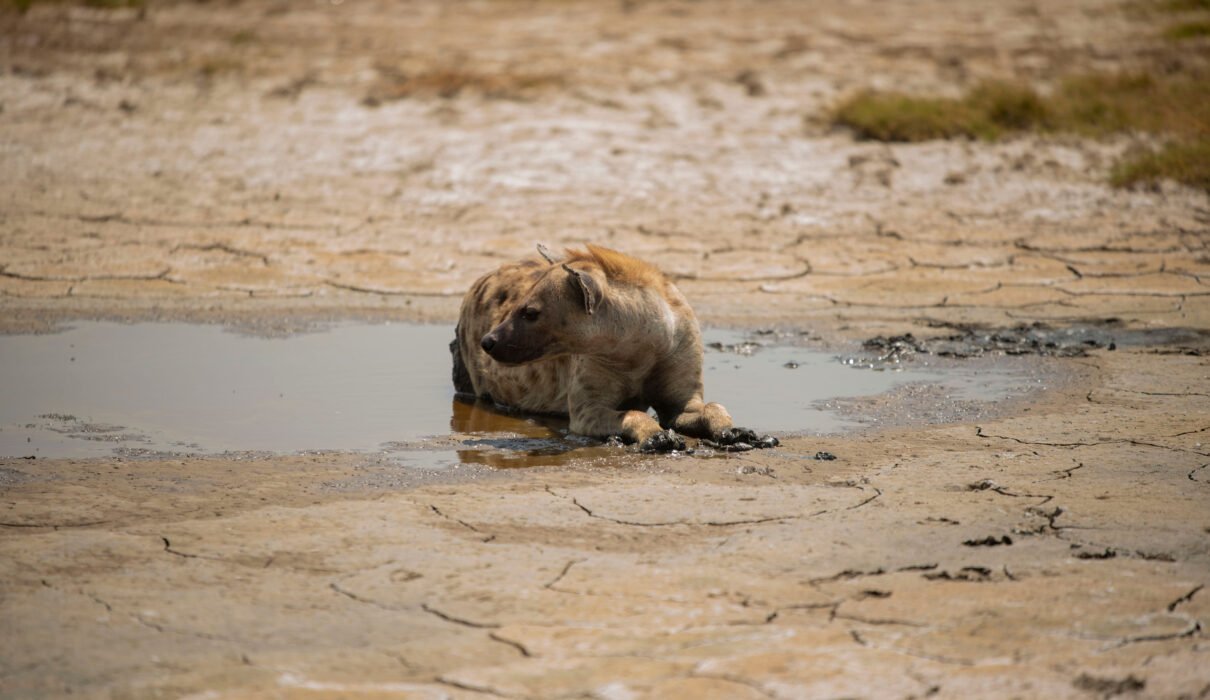
Safari Stories: Encounters with Wild Hyenas often surprise travellers more than any other wildlife moment on safari, because the reality of meeting a wild hyena face to face is very different from the scary stories people grow up hearing. In the open savannah, under the soft orange light of sunrise or the silence of dusk, these intelligent and highly social animals reveal a world of complex communication, family structure and survival skills that few visitors truly expect.
For many guests travelling through Tanzania, their strongest memory is not always a lion hunt or an elephant crossing the road, but a quiet moment when a small group of hyenas watches from a distance, reading every movement, listening carefully, and slowly approaching with confidence and curiosity. These real-life safari stories teach us that wild hyenas are not villains of the bush, but important and highly respected members of Africa’s natural systems.
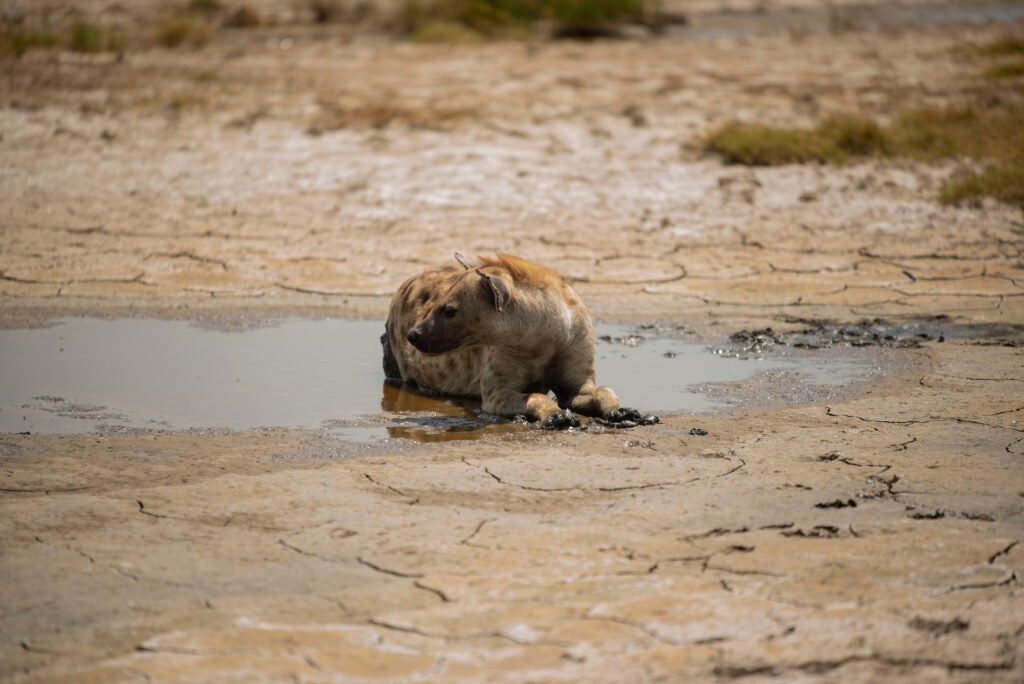
Safari Stories: Encounters with Wild Hyenas and the truth behind their reputation
Safari Stories: Encounters with Wild Hyenas help change one of the most common myths in African wildlife tourism – that hyenas are only dirty scavengers. Scientific research supported by the Wildlife Conservation Society, the International Union for Conservation of Nature and global carnivore conservation programmes promoted by Panthera clearly show that spotted hyenas are highly skilled hunters that successfully catch most of their own food and play a key role in keeping ecosystems healthy.
Large-scale biodiversity information shared through the Global Biodiversity Information Facility also confirms how widely hyenas are distributed across African ecosystems, from open grasslands to woodland edges, proving their strong adaptability and ecological importance.
Safari Stories: Encounters with Wild Hyenas and their powerful social world
Safari Stories: Encounters with Wild Hyenas often reveal a social structure that is far more advanced than many travellers expect. Hyena clans can include dozens of individuals, led by dominant females, and their communication system includes vocal calls, body language and scent marking. Behavioural studies referenced by conservation organisations such as Conservation International and ecosystem research promoted by The Nature Conservancy show that social organisation helps hyenas defend territory, raise young and reduce conflict with other predators.
These strong family bonds are often witnessed when cubs remain close to communal dens, guarded by multiple adults, while other clan members hunt or patrol territory. Seeing this level of cooperation during a safari completely changes how visitors understand predator behaviour.
Safari Stories: Encounters with Wild Hyenas and the landscapes that support them
Safari Stories: Encounters with Wild Hyenas are deeply connected to healthy and well-managed landscapes. Hyenas depend on wide open ecosystems, strong prey populations and safe movement corridors between seasonal feeding grounds. Environmental planning guidance from the United Nations Environment Programme, land-use research from the Center for International Forestry Research and protected area monitoring coordinated by the UN Environment Programme World Conservation Monitoring Centre support national park authorities in protecting the very habitats where hyenas thrive.
These same conservation systems also help protect many other species that share the same hunting grounds, watering points and migration routes.
Safari Stories: Encounters with Wild Hyenas and climate pressure on predators
Safari Stories: Encounters with Wild Hyenas are now increasingly shaped by climate change. Scientific assessments published by the Intergovernmental Panel on Climate Change show that changing rainfall patterns and longer dry seasons affect prey availability and water access, which directly influence predator movement and survival. Biodiversity risk assessments coordinated by the Intergovernmental Science-Policy Platform on Biodiversity and Ecosystem Services also highlight how large carnivores become more vulnerable when ecosystems are fragmented or degraded.
Protecting wide connected landscapes is therefore essential for the long-term future of hyena populations and the wider predator community.
Safari Stories: Encounters with Wild Hyenas and coexistence with people
Safari Stories: Encounters with Wild Hyenas do not only happen inside national parks. In many parts of Tanzania, hyenas live close to villages and livestock areas. Community-based conservation research published by the World Bank shows that education, improved livestock protection and fair tourism revenue sharing reduce conflict between people and predators. Labour and employment standards promoted by the International Labour Organization also help strengthen professional ranger teams and community wildlife officers who respond to conflict situations.
Development and social resilience studies coordinated by the UN Department of Economic and Social Affairs further show that conservation programmes are more successful when communities see direct economic and educational benefits.
Safari Stories: Encounters with Wild Hyenas and their role in ecosystem health
Safari Stories: Encounters with Wild Hyenas often demonstrate how important these animals are for cleaning ecosystems. By consuming carcasses and reducing disease spread, hyenas support healthier environments for both wildlife and people. Wildlife health and ecosystem stability research shared through ScienceDirect confirms that scavengers and predators together form a natural sanitation system that limits the spread of harmful bacteria and parasites.
Bird and small mammal conservation programmes supported by BirdLife International also show how balanced predator populations indirectly protect many other species by stabilising food webs.
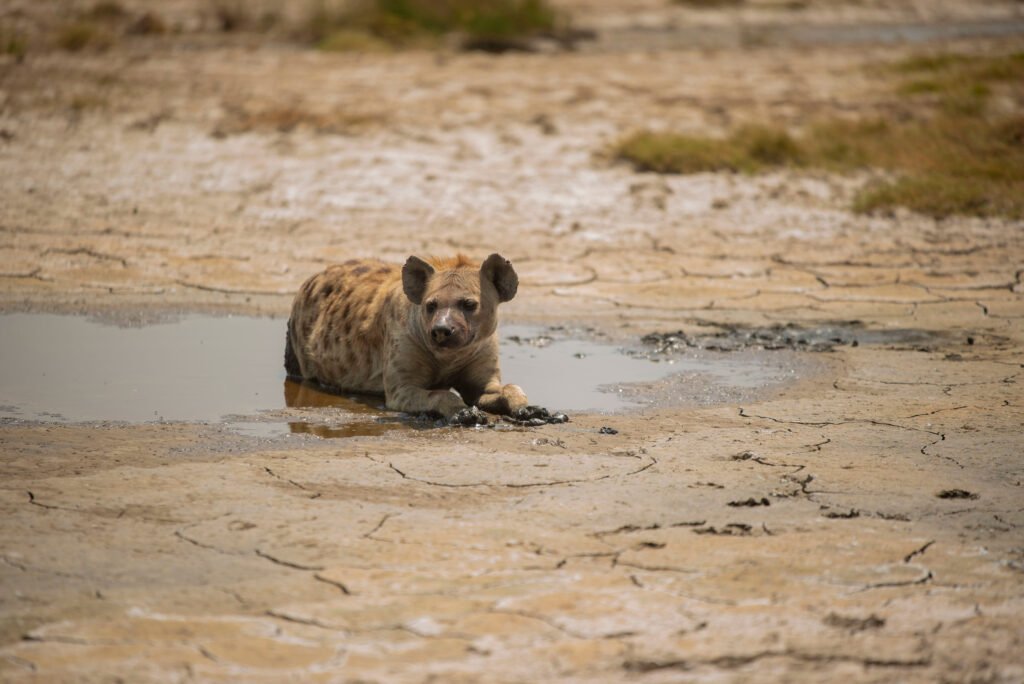
Safari Stories: Encounters with Wild Hyenas and wildlife corridors beyond parks
Safari Stories: Encounters with Wild Hyenas clearly show that predators do not recognise park boundaries. Landscape connectivity research coordinated by the Wildlife Conservation Society and regional corridor protection initiatives supported by the African Wildlife Foundation focus on keeping movement routes open for wide-ranging species such as hyenas, lions and wild dogs.
These wildlife corridors are critical for maintaining genetic diversity and reducing dangerous human–wildlife conflict along park edges.
Safari Stories: Encounters with Wild Hyenas and visitor safety in predator country
Safari Stories: Encounters with Wild Hyenas are always safe and respectful when guided by trained professionals. Health and travel guidance published by the World Health Organization supports responsible tourism practices in remote areas, while wilderness safety and emergency preparedness frameworks promoted by the American Red Cross help safari operators improve field response and guest safety systems.
Strong visitor behaviour guidelines protect both guests and animals by reducing stress on wildlife and preventing dangerous close encounters.
Safari Stories: Encounters with Wild Hyenas and responsible safari experiences in Tanzania
Safari Stories: Encounters with Wild Hyenas are best experienced through responsible operators who understand predator behaviour and conservation ethics. Many travellers choose to explore Tanzania through Eddy Tours and Safaris, where wildlife viewing is carefully planned to minimise disturbance and support conservation partnerships in protected areas.
Guests who prefer flexible and personalised wildlife journeys often use custom safari itineraries in Tanzania, which allow travellers to focus on predator-rich regions and quiet landscapes where hyena activity is commonly observed.
Safari Stories: Encounters with Wild Hyenas and ethical wildlife tourism
Safari Stories: Encounters with Wild Hyenas highlight why ethical tourism matters for predator survival. Research from the Overseas Development Institute shows that well-managed nature tourism provides long-term financial support for conservation authorities and community projects, while reducing dependence on unsustainable land uses.
Travellers who plan their journeys through professional local safari planning services directly support conservation education, ranger employment and wildlife monitoring activities.
Safari Stories: Encounters with Wild Hyenas and learning to see them differently
Safari Stories: Encounters with Wild Hyenas slowly change fear into respect. Watching a clan work together, care for their young and protect their territory shows a side of nature that is intelligent, organised and deeply emotional. Conservation leadership promoted by Conservation International, habitat protection initiatives from The Nature Conservancy and sustainable land-use guidance supported by the Food and Agriculture Organization all reinforce one simple truth – predators are not enemies of people, but guardians of healthy ecosystems.
For travellers who want authentic wildlife stories instead of staged moments, planning responsible journeys through responsible safari travel programmes in Tanzania offers the chance to witness wild hyenas in their natural world while supporting conservation and local communities.
In the end, Safari Stories: Encounters with Wild Hyenas remind us that some of the most misunderstood animals are also among the most intelligent and important. Seeing a wild hyena quietly cross the plains under fading light is not a frightening moment. It is a rare privilege, and a powerful reminder that Africa’s predators still deserve space, protection and deep respect.