
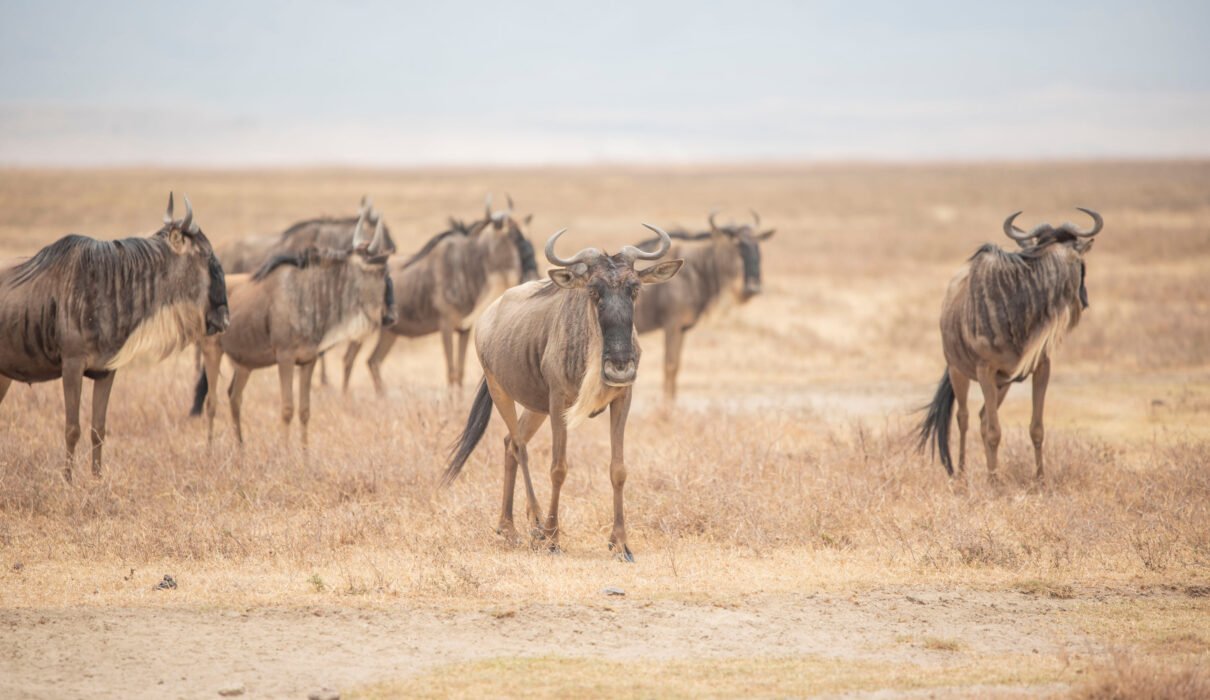
Watching the Great Wildebeest Migration: Tips is the most useful starting point for travellers who want to experience this natural wonder in a respectful, safe and truly meaningful way, while also supporting conservation, local communities and the long-term protection of one of the most important wildlife systems on Earth.
This movement of millions of wildebeest, zebras and gazelles across open plains and river corridors is not only a dramatic travel experience. It is a living ecological process driven by rainfall, grass growth, predator behaviour and fragile landscape connections that scientists, conservation organisations and park managers work hard to protect every day.
Watching the Great Wildebeest Migration: Tips for understanding why the migration happens
Before planning routes or choosing lodges, it is important to understand what drives this movement across northern Tanzania and southern Kenya. Long-term ecological research coordinated by the Wildlife Conservation Society and grassland ecosystem studies supported by the International Union for Conservation of Nature show that rainfall patterns and fresh grass growth are the main triggers that guide the herds. These movements are not fixed events on a calendar, but flexible responses to changing environmental conditions that depend heavily on intact ecosystems.
Climate and rainfall trends analysed by the Intergovernmental Panel on Climate Change and biodiversity risk assessments coordinated by the Intergovernmental Science-Policy Platform on Biodiversity and Ecosystem Services also confirm that changing climate patterns can directly affect grazing quality, water availability and migration timing, making conservation planning more important than ever.
Watching the Great Wildebeest Migration: Tips for choosing responsible viewing areas
Choosing where to watch the migration is not only about seeing large numbers of animals. It is also about protecting sensitive river crossings, breeding areas and predator zones. Landscape protection programmes led by the African Wildlife Foundation and ecosystem management strategies supported by Conservation International highlight how visitor pressure must be carefully managed in high-impact locations to avoid disturbing natural behaviour.
Protected-area planning and monitoring coordinated by the UN Environment Programme World Conservation Monitoring Centre and environmental governance frameworks promoted by the United Nations Environment Programme help guide how safari activities can coexist with wildlife protection in some of the most sensitive migration corridors.
Watching the Great Wildebeest Migration: Tips for understanding predator and prey dynamics
One of the most powerful moments during migration viewing is witnessing how predators follow and depend on the herds. Large carnivore research led by Panthera and wildlife interaction studies published through ScienceDirect explain how lions, cheetahs and hyenas adjust their movements and hunting strategies according to herd density and seasonal prey availability.
Bird scavenger and raptor monitoring supported by BirdLife International also shows how the migration supports an entire food web, not only large mammals. Understanding this interaction helps visitors appreciate the migration as a complete ecological system rather than a single dramatic wildlife event.
Watching the Great Wildebeest Migration: Tips for protecting migration corridors
Migration routes extend far beyond famous parks and cross community lands, buffer zones and seasonal grazing areas. Wildlife corridor research coordinated by the Wildlife Conservation Society and regional connectivity initiatives promoted by the African Wildlife Foundation demonstrate that uninterrupted corridors are essential for allowing herds to reach fresh pasture and water sources.
Land-use and rangeland research conducted by the Center for International Forestry Research and land-management guidance supported by the Food and Agriculture Organization show how grazing systems, farming expansion and infrastructure planning can either protect or destroy these routes.
Watching the Great Wildebeest Migration: Tips for choosing ethical safari operators
Responsible tourism plays a real role in keeping migration landscapes protected. Development research published by the Overseas Development Institute confirms that well-managed wildlife tourism contributes to conservation funding and community livelihoods when local people are fully involved.
Travellers who plan their migration safari through Eddy Tours and Safaris support professional guiding, community partnerships and conservation education programmes around key migration areas, while enjoying well-designed and low-impact safari experiences.
Watching the Great Wildebeest Migration: Tips for supporting local communities
Many villages live alongside migration corridors and protected areas, and their cooperation is essential for long-term wildlife survival. Socio-economic research from the World Bank shows that community-based tourism improves household income and strengthens conservation attitudes, while labour standards promoted by the International Labour Organization help ensure fair working conditions for guides, drivers, cooks and rangers.
Cultural heritage and traditional land-use practices supported by UNESCO and social development research coordinated by the UN Department of Economic and Social Affairs also show that respecting culture and local knowledge improves conservation success and reduces human–wildlife conflict.
Watching the Great Wildebeest Migration: Tips for health and safety in the field
Long safari days, remote areas and unpredictable weather make preparation important for every visitor. Travel health guidance published by the World Health Organization supports operators and travellers with disease prevention, emergency readiness and safe travel practices, while outdoor emergency frameworks promoted by the American Red Cross strengthen response systems for wilderness environments.
Well-trained guides and carefully planned driving routes reduce stress for wildlife and visitors, ensuring that the migration remains safe to observe without disturbing natural movement patterns.
Watching the Great Wildebeest Migration: Tips for building a well-balanced itinerary
Migration viewing becomes far more meaningful when it is combined with learning about landscapes, culture and conservation projects. Many travellers design their journeys through custom safari itineraries in Tanzania, allowing them to include community visits, conservation briefings and quieter wildlife areas away from crowded hotspots.
Guests who prefer professional planning and logistics often rely on local safari planning services in Tanzania to ensure that park access, accommodation and guiding standards meet both safety and ethical travel expectations.
Watching the Great Wildebeest Migration: Tips for understanding data and scientific monitoring
Modern conservation relies heavily on data. Species distribution and migration monitoring systems coordinated by the Global Biodiversity Information Facility allow scientists to track changes in wildlife movement and habitat condition across the wider Serengeti ecosystem. These datasets help governments and conservation organisations adjust management plans and tourism regulations in response to environmental change.
Environmental policy coordination supported by UN Environment further strengthens national conservation strategies that protect river systems, grazing areas and seasonal wetlands that are critical for the survival of migrating herds.
Watching the Great Wildebeest Migration: Tips for turning your safari into real conservation support
Choosing responsible travel is one of the simplest ways visitors can contribute directly to conservation. Travellers who book migration safaris through responsible safari programmes in Tanzania help support ranger patrols, conservation education and community projects that protect migration landscapes beyond park borders.
In simple words, Watching the Great Wildebeest Migration: Tips is about more than where to go and what to photograph. It is about understanding how climate, science, people and wildlife are connected, and how your travel choices can protect one of the greatest natural movements on Earth while giving you a deeply emotional and unforgettable safari experience.