
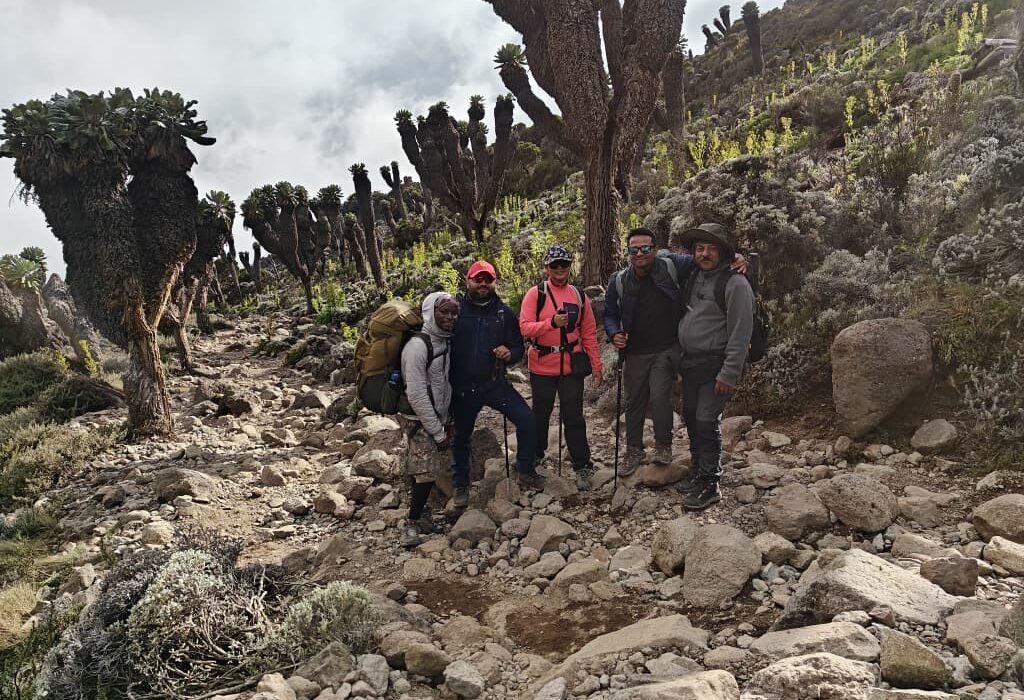
Dendrosenecio kilimanjari is one of the most extraordinary high-altitude plant species found only on the upper slopes of Mount Kilimanjaro, and its survival tells a powerful story about isolation, climate, and the fragile balance between tourism and conservation. Often called a giant groundsel, this plant has adapted to freezing nights, intense sunlight, and thin mountain air, creating a living symbol of how unique Kilimanjaro’s ecosystem truly is.
This article explores how this rare plant evolved, why it grows nowhere else on Earth, and why responsible travel plays a direct role in protecting its future. If you plan to experience Kilimanjaro with a local team such as Eddy Tours & Safaris, understanding the ecological value of this species adds a deeper meaning to your climb and helps you travel with respect for the mountain.
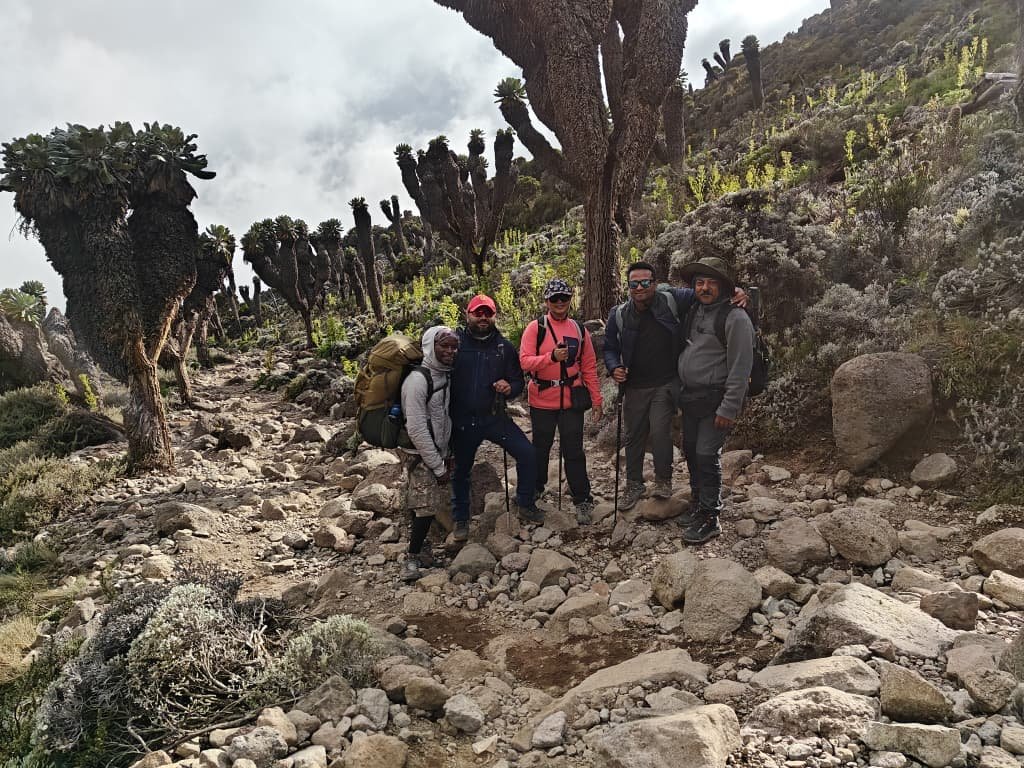
Dendrosenecio kilimanjari and the meaning of endemic plants on Kilimanjaro
Dendrosenecio kilimanjari represents what scientists describe as endemism, meaning a species that exists naturally in only one geographic area. Botanical studies documented by the Royal Botanic Gardens, Kew show that Kilimanjaro’s upper zones create a highly isolated environment, allowing unique plant lineages to develop independently over long evolutionary periods.
Global biodiversity databases maintained by the Global Biodiversity Information Facility and the Encyclopedia of Life confirm that this species is restricted to very narrow altitude bands, mainly in the moorland and alpine zones. This limited distribution is what makes its conservation so important and so vulnerable to environmental change.
Dendrosenecio kilimanjari and its remarkable mountain adaptations
Dendrosenecio kilimanjari has developed some of the most unusual survival strategies among African alpine plants. Scientific research archived by the Smithsonian National Museum of Natural History and the Missouri Botanical Garden explains how its thick trunk stores water while its dense leaf rosettes protect growing tissues from night frost.
Physiological studies published through ScienceDirect and the U.S. National Library of Medicine show that these plants regulate internal temperatures in ways similar to desert succulents, even though they live in cold alpine climates. This combination of cold tolerance and moisture storage makes the species exceptionally well adapted to Kilimanjaro’s extreme environment.
Dendrosenecio kilimanjari and Kilimanjaro’s ecological zones
To understand Dendrosenecio kilimanjari, it is necessary to understand the unique ecological layers of Mount Kilimanjaro. Environmental research coordinated by the United Nations Environment Programme and ecosystem mapping studies supported by the Food and Agriculture Organization of the United Nations show that Kilimanjaro contains several compressed climate zones stacked vertically within a short horizontal distance.
The giant groundsel is found primarily above the forest line, where conditions shift rapidly from moist cloud forest to open heathland and alpine desert. Conservation assessments prepared by the International Union for Conservation of Nature highlight that plants occupying such narrow ecological zones are highly sensitive to climate instability and human pressure.
Dendrosenecio kilimanjari and global scientific importance
Dendrosenecio kilimanjari is not only important to Tanzania, but also to global evolutionary science. Comparative plant studies available through JSTOR and taxonomic records in the International Plant Names Index help scientists trace how mountain isolation drives rapid speciation in East African highlands.
Botanical research programs coordinated by the Royal Botanic Garden Edinburgh and plant conservation monitoring by Botanic Gardens Conservation International confirm that alpine plant systems such as Kilimanjaro provide valuable models for understanding climate resilience and ecosystem collapse worldwide.
Dendrosenecio kilimanjari and the growing threat of climate change
Dendrosenecio kilimanjari is increasingly affected by shifting temperature and rainfall patterns. Climate impact assessments prepared by the Intergovernmental Panel on Climate Change indicate that mountain ecosystems face accelerated warming, forcing high-altitude species upward until no suitable habitat remains.
Global conservation organisations such as the World Wide Fund for Nature and Conservation International warn that endemic plants are often the first biological indicators of environmental stress. On Kilimanjaro, reduced cloud cover and changing moisture patterns already influence plant growth and flowering cycles.
Dendrosenecio kilimanjari and human activity on the mountain
The future of Dendrosenecio kilimanjari is closely linked to how visitors use the mountain. Environmental monitoring initiatives supported by the United States Geological Survey and sustainable land-use research published through the World Bank Environment Programme show that trail erosion, waste accumulation and informal camping can alter fragile alpine soils.
Responsible trekking practices help prevent direct trampling and long-term soil compaction. When visitors choose regulated and conservation-focused climbing programs such as those organised through professional Kilimanjaro climbing services, environmental protection measures are built directly into daily operations.
Dendrosenecio kilimanjari and community-based conservation
Dendrosenecio kilimanjari also plays an important role in local conservation awareness. Community engagement models promoted by Oxfam International and social development frameworks from the International Labour Organization highlight that sustainable tourism can improve livelihoods while strengthening environmental protection.
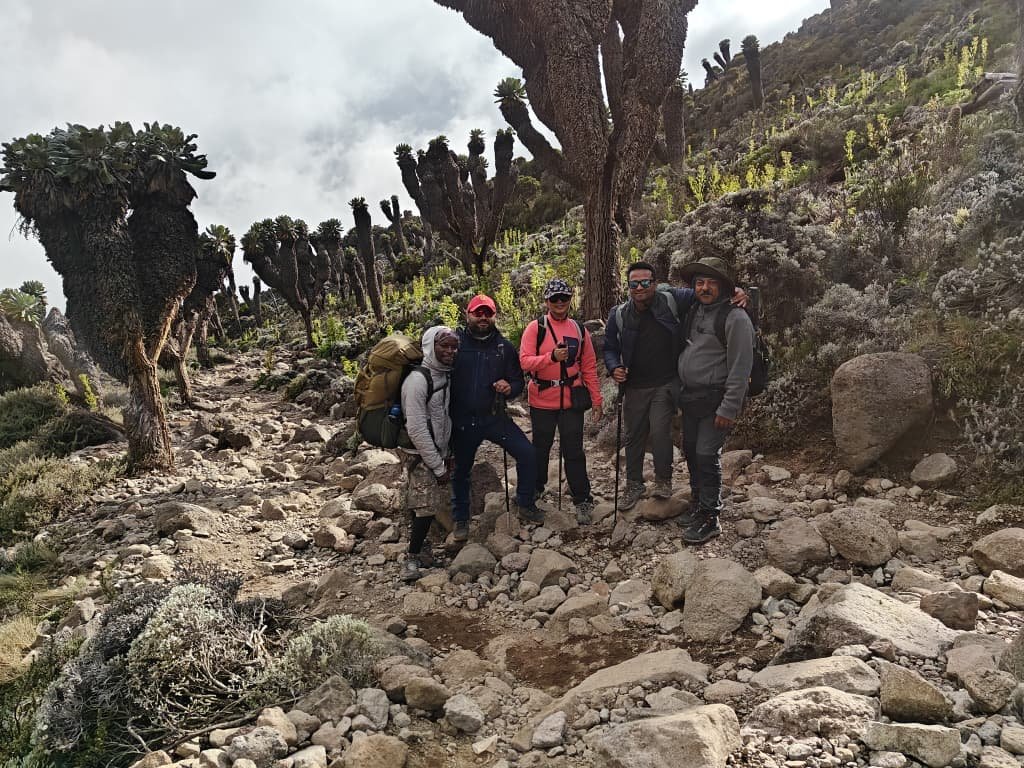
Local guiding teams trained in environmental interpretation help climbers understand sensitive habitats and encourage responsible behaviour along the route. Travellers who combine wildlife experiences with cultural and nature-based journeys through responsible Tanzania travel programs directly support these conservation-linked livelihoods.
Dendrosenecio kilimanjari and its role in future scientific monitoring
Because Dendrosenecio kilimanjari responds quickly to environmental shifts, it is increasingly used as a natural indicator species. Long-term biodiversity monitoring initiatives coordinated by the Intergovernmental Science-Policy Platform on Biodiversity and Ecosystem Services and global ecosystem assessments led by the UNESCO Natural Sciences Programme emphasize the importance of mountain plants in climate early-warning systems.
Research collaboration between African universities and international institutions, including data repositories hosted by Nature Research, continues to expand knowledge of alpine plant genetics and stress tolerance.
Dendrosenecio kilimanjari and ethical travel on Kilimanjaro
Protecting Dendrosenecio kilimanjari ultimately depends on how visitors behave and which companies they support. Ethical tourism guidelines promoted by UN World Tourism Organization and sustainable development frameworks by the United Nations Sustainable Development Goals Programme link biodiversity protection directly to responsible travel decisions.
Choosing experienced local operators that prioritise environmental education, porter welfare and trail management helps reduce pressure on sensitive alpine habitats. Travellers planning their climb are encouraged to speak directly with specialists through local conservation-minded travel experts who understand how to balance adventure with protection.
Dendrosenecio kilimanjari as a symbol of Kilimanjaro’s natural heritage
More than just a rare plant, Dendrosenecio kilimanjari stands as a living symbol of Kilimanjaro’s natural identity. Its survival reflects the health of the entire alpine ecosystem, from soil stability to pollinator presence and water availability.
For visitors who choose to climb responsibly, the presence of these towering, other-worldly plants along the trail becomes one of the most memorable moments of the journey. By supporting conservation-focused tourism and choosing experienced local partners such as trusted Kilimanjaro specialists, travellers help protect this fragile species so that future generations can continue to witness one of Africa’s most extraordinary botanical wonders.