
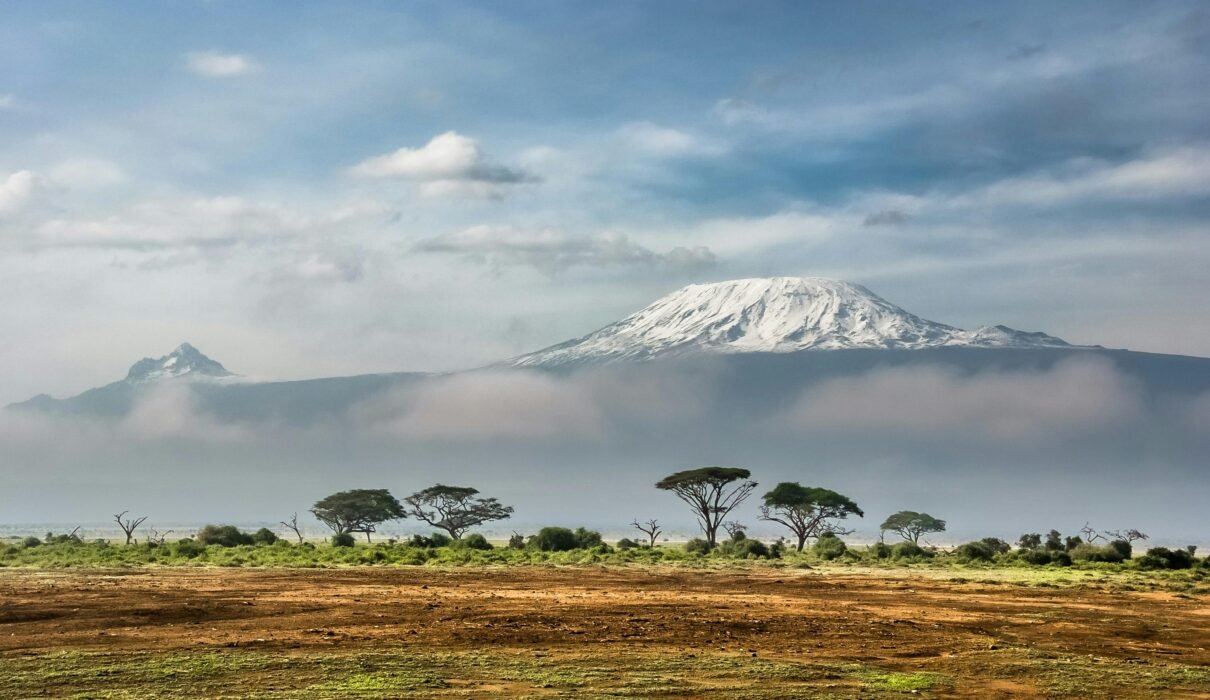
Volcanic Eruptions in Kilimanjaro’s History are the hidden story behind the beautiful white summit, wide lava valleys and dramatic cliffs that attract visitors from all over the world. Most climbers walk on this mountain without realizing that every trail, ridge and crater exists because of powerful volcanic forces that shaped the landscape over a very long geological period, long before tourism or human settlement reached the high slopes.
This article explains how the mountain was formed, what scientists really know about its volcanic past, and why this ancient volcanic activity still matters for safety, conservation and responsible travel today. If you plan to experience this unique mountain with a trusted local team such as Eddy Tours & Safaris, understanding its geological history adds meaning to every step you take on the trail.
Volcanic Eruptions in Kilimanjaro’s History and the birth of Africa’s highest mountain
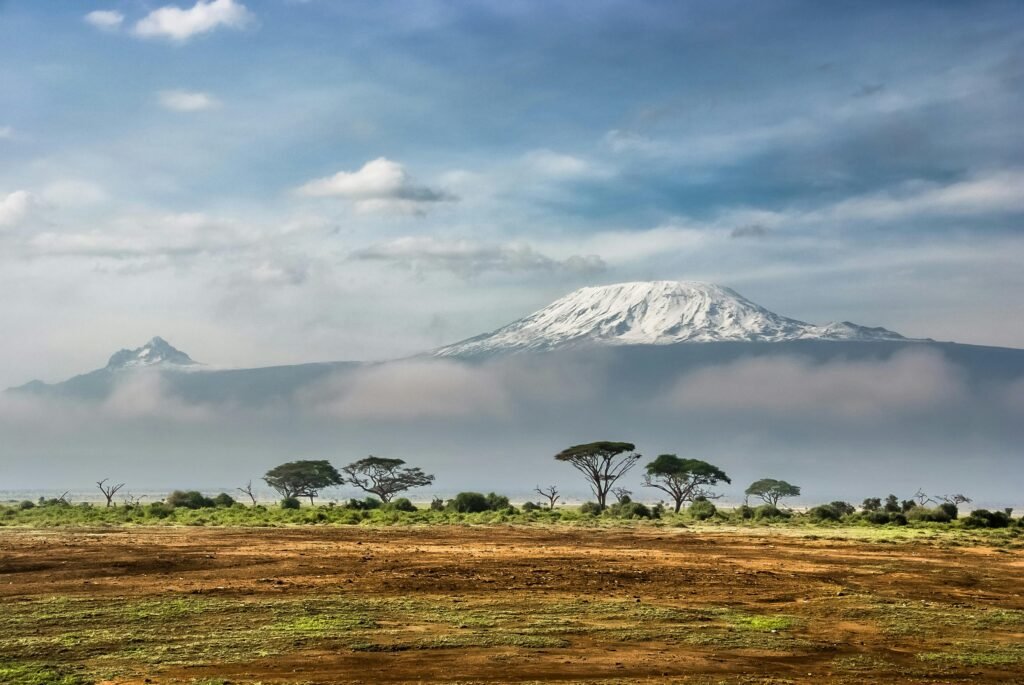
To understand Volcanic Eruptions in Kilimanjaro’s History, it is important to begin with how the mountain itself was created. Scientific studies from the United States Geological Survey and the British Geological Survey confirm that Kilimanjaro is a large stratovolcano system that formed as part of the East African Rift. This rifting process allowed magma to rise through the Earth’s crust, building multiple volcanic cones over extended geological time.
Global volcanic research coordinated by the Smithsonian Global Volcanism Program and geodynamic studies from the GFZ German Research Centre for Geosciences show that the mountain did not form from a single eruption but through repeated volcanic episodes that slowly built massive layers of lava and ash. These eruptions created the broad base and complex summit structure that define Kilimanjaro today.
Volcanic Eruptions in Kilimanjaro’s History and the three volcanic cones
One of the most fascinating aspects of Volcanic Eruptions in Kilimanjaro’s History is that the mountain consists of three main volcanic centers. Geological mapping by the NASA Earth Observatory and petrological studies published through ScienceDirect explain that Shira, Mawenzi and Kibo formed during different eruptive stages, each with its own magma composition and eruption style.
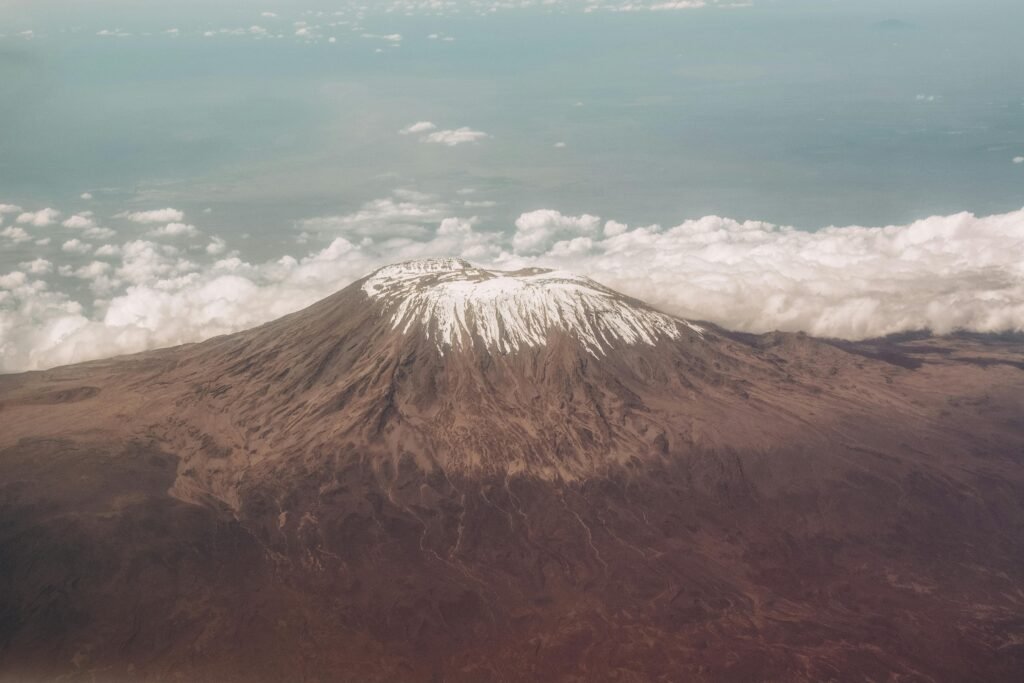
Scientific reviews available through Nature and Frontiers in Earth Science confirm that Shira represents an older collapsed volcanic structure, Mawenzi shows strong erosion of sharp lava ridges, and Kibo remains the youngest and most dominant volcanic cone. This layered history explains why the landscape changes dramatically as climbers move from lower slopes to the summit crater.
Volcanic Eruptions in Kilimanjaro’s History and what scientists say about activity today
A common concern among travelers is whether the mountain is still active. Volcanic Eruptions in Kilimanjaro’s History clearly show that the volcano is considered dormant rather than extinct. Research assessments from the Intergovernmental Panel on Climate Change and thermal monitoring studies reported by the United Nations Environment Programme indicate that there is no current evidence of imminent eruptive activity.
Geothermal and fumarole observations documented by international researchers and summarized through the U.S. National Library of Medicine show that minor gas emissions near the summit reflect residual volcanic heat rather than active magma movement. This distinction is important because it confirms that Kilimanjaro remains stable for trekking and scientific work.
Volcanic Eruptions in Kilimanjaro’s History and the shaping of modern ecosystems
The legacy of Volcanic Eruptions in Kilimanjaro’s History is not limited to rocks and craters. Volcanic soils created by ancient lava flows are exceptionally fertile and play a critical role in supporting the mountain’s vegetation zones. Ecological research supported by the World Wide Fund for Nature and the African Wildlife Foundation shows that volcanic substrates influence forest composition, water retention and long-term ecosystem stability.
Global conservation assessments published by Conservation International and land management studies coordinated by the Food and Agriculture Organization explain that volcanic landscapes often support unique plant communities adapted to mineral-rich soils. This is one of the reasons Kilimanjaro hosts exceptional biodiversity despite its extreme elevation.
Volcanic Eruptions in Kilimanjaro’s History and water systems on the mountain
Another important outcome of Volcanic Eruptions in Kilimanjaro’s History is the formation of underground water pathways. Volcanic layers allow rainfall and melting ice to move through porous lava and fractured rock, creating springs and streams at lower elevations. Hydrological studies from the USGS Water Science School and environmental monitoring projects supported by the National Geographic Society describe how volcanic geology regulates water availability for surrounding communities.
These natural water systems support agriculture and wildlife far beyond the mountain itself. Conservation planning by the International Union for Conservation of Nature identifies Kilimanjaro as a critical water tower for northern Tanzania, directly linked to its volcanic structure.
Volcanic Eruptions in Kilimanjaro’s History and long-term climate sensitivity
The influence of Volcanic Eruptions in Kilimanjaro’s History also extends to how the mountain responds to climate change. Research networks associated with the University of Oxford research programmes and high-altitude climate observations summarized by the National Oceanic and Atmospheric Administration demonstrate that volcanic topography strongly affects temperature gradients and cloud formation.
Environmental modelling published by the UN Environment climate initiatives shows that volcanic mountains amplify climate stress on glaciers and alpine ecosystems. Understanding this geological background helps scientists design more accurate conservation strategies for fragile mountain habitats.
Volcanic Eruptions in Kilimanjaro’s History and trail safety today
For climbers, Volcanic Eruptions in Kilimanjaro’s History directly affect trail conditions and route planning. Lava flows, ash layers and collapsed craters influence slope stability and erosion patterns. Geological hazard assessments prepared by the USGS Volcano Hazards Program and regional studies published through Earth and Planetary Sciences journals show how volcanic terrains must be carefully monitored for rockfall and surface degradation.
This is one reason professional trekking operators maintain strict route management and daily safety checks. When you hike with experienced local professionals such as Kilimanjaro climbing specialists, trail knowledge and geological awareness are built directly into operational planning.
Volcanic Eruptions in Kilimanjaro’s History and scientific importance
From a global research perspective, Volcanic Eruptions in Kilimanjaro’s History provide a rare natural laboratory. Studies coordinated by the GNS Science research institute and continental tectonics research supported by the European Research Council use Kilimanjaro to understand how rift systems evolve and how magma interacts with continental crust.
Peer-reviewed research available through Journal of Volcanology and Geothermal Research confirms that Kilimanjaro offers valuable insight into long-lived volcanic systems that operate far from oceanic plate boundaries.
Volcanic Eruptions in Kilimanjaro’s History and responsible tourism
Responsible tourism becomes stronger when visitors understand Volcanic Eruptions in Kilimanjaro’s History and their link to fragile ecosystems. Conservation outreach programs supported by WWF conservation education and community sustainability initiatives promoted by Oxfam International emphasize that geological heritage should be protected alongside wildlife and forests.
Choosing experienced and locally based operators such as responsible Tanzania travel teams helps ensure that tourism revenue supports conservation programs and environmental education rather than placing additional pressure on sensitive volcanic landscapes.
Volcanic Eruptions in Kilimanjaro’s History and your personal experience on the mountain
Every climber who walks across lava ridges and volcanic ash fields becomes part of the long story created by Volcanic Eruptions in Kilimanjaro’s History. The mountain’s silence today is not emptiness; it is the result of powerful natural forces that shaped one of Africa’s most iconic landmarks.
If you would like to explore this extraordinary geological landscape with experienced local professionals who respect both science and conservation, you can speak directly with mountain planners at our local Kilimanjaro team. A well-prepared journey allows you to experience the beauty of an ancient volcano while supporting responsible tourism and community livelihoods.
Why understanding Kilimanjaro’s volcanic past truly matters
In simple terms, Volcanic Eruptions in Kilimanjaro’s History explain why the mountain looks the way it does, why its ecosystems are unique, why water flows across dry lowlands, and why careful conservation is essential for future generations. This knowledge deepens respect for the landscape and helps visitors travel with awareness rather than only ambition.
Standing on the slopes of Kilimanjaro is not only a physical achievement. It is a connection to a powerful geological story written beneath your feet. For travelers seeking a meaningful and professionally supported climb, working with trusted Kilimanjaro experts creates an experience that is safe, educational and genuinely unforgettable.