
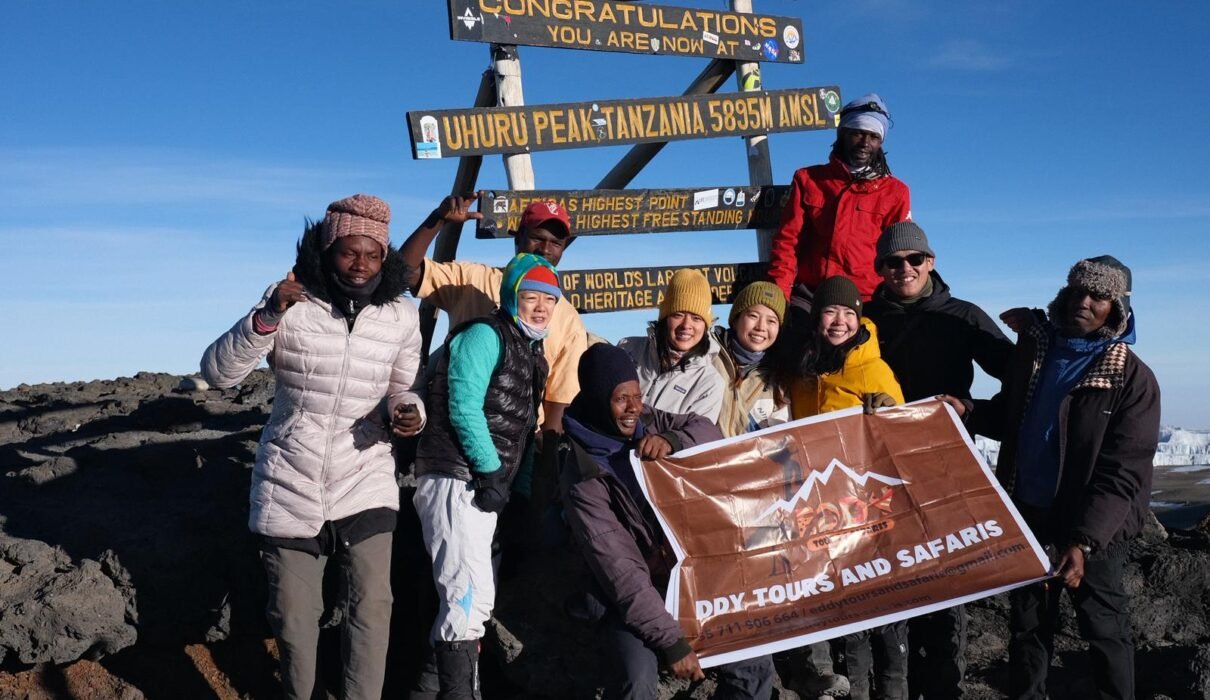
Mount Kenya vs Kilimanjaro: Key Differences is one of the most important questions for climbers who want a serious African mountain experience and not just a beautiful photo at the summit. Both mountains are world famous, both sit inside protected ecosystems, and both attract thousands of trekkers every season, yet the reality on the ground is very different in terms of altitude impact, technical difficulty, environmental pressure, and how safely most visitors reach the top.
This guide is written for travellers who want clear facts, not sales talk. It explains how the two mountains compare using scientific research, conservation data, and international outdoor safety standards. If you are planning your climb with a reliable local team such as Eddy Tours & Safaris, understanding these differences early helps you select the mountain that truly fits your health, goals, time and comfort level.
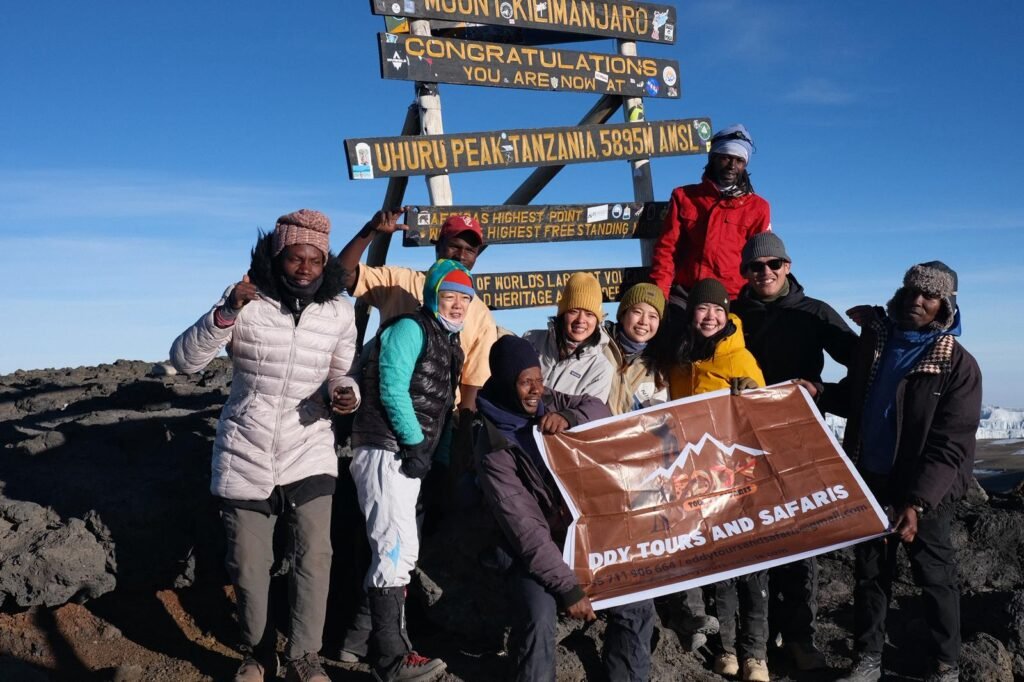
Mount Kenya vs Kilimanjaro: Key Differences in altitude and human adaptation
When climbers search for Mount Kenya vs Kilimanjaro: Key Differences, altitude is usually the first concern. Kilimanjaro rises directly from low plains to extreme altitude in a short horizontal distance, while Mount Kenya offers a more gradual vertical profile depending on the route. Medical research published by the U.S. National Library of Medicine and reviewed through PubMed shows that rapid altitude gain is strongly linked to acute mountain sickness and performance decline.
Clinical guidance from the Centers for Disease Control and Prevention and expert explanations from the International Society for Mountain Medicine confirm that slower and better structured ascents significantly improve safety and success. Kilimanjaro’s standard trekking routes expose climbers to higher altitude stress in a shorter time window than most non-technical routes on Mount Kenya.
Mount Kenya vs Kilimanjaro: Key Differences in technical difficulty
Another major element in Mount Kenya vs Kilimanjaro: Key Differences is technical climbing skill. Kilimanjaro can be climbed entirely as a non-technical hike, while Mount Kenya’s highest peaks usually require rope work, scrambling and glacier or rock climbing experience. Safety standards promoted by the International Climbing and Mountaineering Federation clearly distinguish between trekking-based ascents and technical mountaineering environments.
Leadership and expedition research shared by the National Outdoor Leadership School shows that technical terrain introduces risk related to rope management, weather exposure and route finding. For most international visitors without previous alpine climbing experience, Kilimanjaro offers a safer and more accessible high-altitude objective than Mount Kenya’s main summits.
Mount Kenya vs Kilimanjaro: Key Differences in environmental structure
Understanding Mount Kenya vs Kilimanjaro: Key Differences also requires looking at how each mountain is protected and managed. Environmental monitoring supported by the International Union for Conservation of Nature and ecosystem assessments published by the United Nations Environment Programme confirm that both mountains contain fragile afro-alpine ecosystems with very slow recovery rates after disturbance.
However, conservation frameworks developed by Conservation International and World Wide Fund for Nature show that Kilimanjaro benefits from more structured tourism corridors, larger ranger networks and controlled camp placement compared to many access areas on Mount Kenya. This management difference directly influences trail quality, waste control and emergency access.
Mount Kenya vs Kilimanjaro: Key Differences in weather exposure
Weather plays a strong role in Mount Kenya vs Kilimanjaro: Key Differences. Climate research from NASA Climate and regional climate modelling coordinated by the Intergovernmental Panel on Climate Change shows that isolated equatorial mountains experience sharp daily temperature swings and unpredictable cloud development.
Because Mount Kenya’s highest peaks involve exposed technical sections, climbers are more vulnerable to sudden weather changes than those on Kilimanjaro’s trekking routes. Environmental monitoring data referenced by the United States Geological Survey demonstrates that high-altitude weather variability increases objective hazard when terrain limits rapid descent options.
Mount Kenya vs Kilimanjaro: Key Differences in safety infrastructure
A critical part of Mount Kenya vs Kilimanjaro: Key Differences is rescue and medical support. Emergency response frameworks promoted by the International Federation of Red Cross and Red Crescent Societies and the International Red Cross highlight that structured access routes, reliable communication and trained responders greatly improve survival and evacuation outcomes.
Kilimanjaro operates under a highly regulated entry system with mandatory guide support, fixed camps and ranger coordination. Mount Kenya offers more flexible access, which benefits experienced climbers but also creates uneven safety coverage for inexperienced visitors.
Mount Kenya vs Kilimanjaro: Key Differences in biodiversity and conservation value
Looking deeper into Mount Kenya vs Kilimanjaro: Key Differences, both mountains hold exceptional ecological importance. Conservation research published by the African Wildlife Foundation and landscape protection studies supported by the National Geographic Society confirm that both mountain systems act as biodiversity refuges and regional water towers.
Scientific land-use planning promoted by the Food and Agriculture Organization shows that Kilimanjaro’s larger tourism revenue stream supports broader conservation and community programmes compared to the more specialised mountaineering-based tourism around Mount Kenya.
Mount Kenya vs Kilimanjaro: Key Differences for first-time high-altitude climbers
For beginners, Mount Kenya vs Kilimanjaro: Key Differences becomes especially important. Public health research supported by the Harvard T.H. Chan School of Public Health and physiological studies published in Frontiers in Physiology show that first-time climbers benefit most from predictable logistics, simple terrain and consistent medical observation.
This is why many travellers choose Kilimanjaro as their first serious high-altitude objective and rely on structured itineraries such as those offered through Kilimanjaro climbing programs. The combination of trekking terrain and professional monitoring reduces unnecessary technical risk while still delivering a true mountain challenge.
Mount Kenya vs Kilimanjaro: Key Differences in leadership and guiding systems
Leadership quality strongly influences Mount Kenya vs Kilimanjaro: Key Differences. Expedition decision-making research published through ScienceDirect and behavioural studies shared by Nature Research demonstrate that guide judgement under fatigue and stress determines when to push forward and when to turn back.
Kilimanjaro’s guiding system is more standardised and regulated, while Mount Kenya allows a wider range of independent climbing styles. For non-technical visitors, structured guidance increases consistency in safety practice.
Mount Kenya vs Kilimanjaro: Key Differences in social and porter welfare
Ethical practice also shapes Mount Kenya vs Kilimanjaro: Key Differences. Labour standards developed by the International Labour Organization and social protection initiatives promoted by Oxfam International demonstrate that fair working conditions improve operational safety and team stability.
Kilimanjaro has stronger public porter welfare frameworks and monitoring structures compared to many African mountain destinations, which directly supports staff health and overall expedition performance.
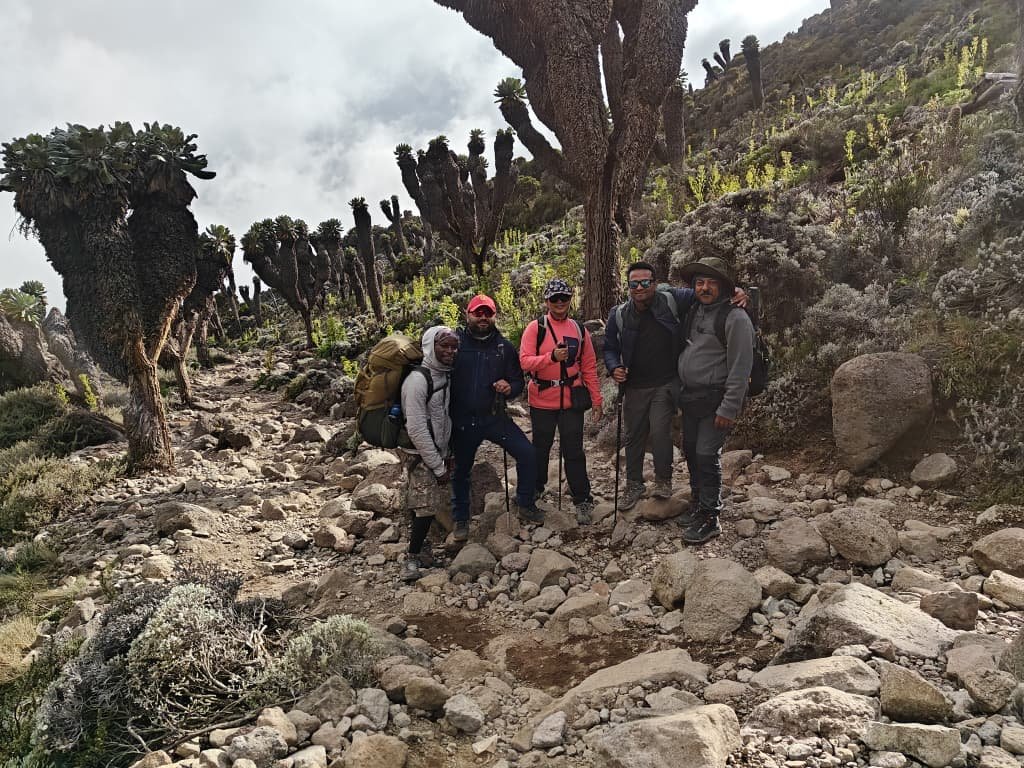
Mount Kenya vs Kilimanjaro: Key Differences in long-term environmental pressure
Long-term sustainability is another hidden part of Mount Kenya vs Kilimanjaro: Key Differences. Geological and erosion studies coordinated by the United States Geological Survey and conservation policy research published through the World Bank Environment Programme show that visitor concentration zones reduce widespread habitat degradation when properly managed.
Kilimanjaro’s controlled camping system and designated trail network reduce diffuse damage, while Mount Kenya’s dispersed access routes require stronger individual responsibility from climbers and operators.
Mount Kenya vs Kilimanjaro: Key Differences for realistic travel planning
In practical terms, Mount Kenya vs Kilimanjaro: Key Differences directly affect travel planning, time availability and equipment requirements. Mount Kenya generally demands technical gear and additional training, while Kilimanjaro focuses more on endurance, altitude adaptation and logistical organisation.
Travellers who prefer structured planning and clear safety systems often choose professional local support such as experienced Tanzanian trekking operators, especially when combining mountain travel with wildlife or cultural experiences.
Which mountain fits your personal goals?
So, what does Mount Kenya vs Kilimanjaro: Key Differences truly reveal? Mount Kenya offers a technical alpine experience suited to climbers who already possess rope and glacier skills and who enjoy complex route challenges. Kilimanjaro offers an extreme altitude trekking experience that remains accessible to non-technical climbers while still demanding serious physical and mental commitment.
If your priority is safety, structured logistics, environmental protection and professional support, Kilimanjaro provides a clearer and more predictable pathway to a successful summit. For travellers seeking honest guidance and locally grounded planning, working with local Kilimanjaro experts makes the difference between uncertainty and confidence.
Your mountain experience should be inspiring, responsible and safe. Choosing the right peak is not about reputation alone. It is about understanding real terrain, real risks and real conservation responsibilities before you take your first step uphill.