
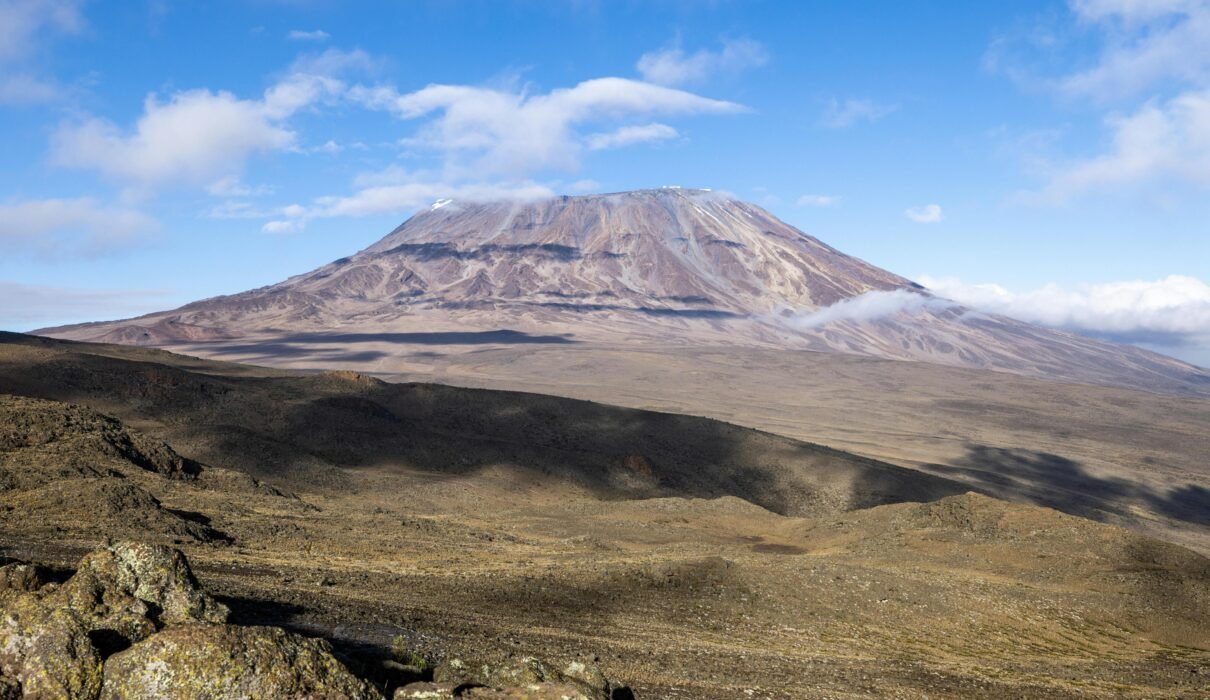
When Does It Snow on Mount Kilimanjaro? is one of the most surprising questions travellers ask after discovering that Africa’s highest mountain rises into an icy world above the clouds, even though it stands just a few degrees south of the equator. Many people imagine permanent white snow at the summit, yet the real story is more complex, more fragile and far more connected to global climate systems than most climbers realise before they arrive in Tanzania.
Understanding snow on Kilimanjaro is not only about beautiful photographs. It affects your safety, your clothing choices, your summit timing and even your chances of seeing the famous ice fields at all. Climbers who prepare their journey with experienced local specialists such as Eddy Tours & Safaris usually receive realistic advice about current mountain conditions, rather than outdated myths passed around online.
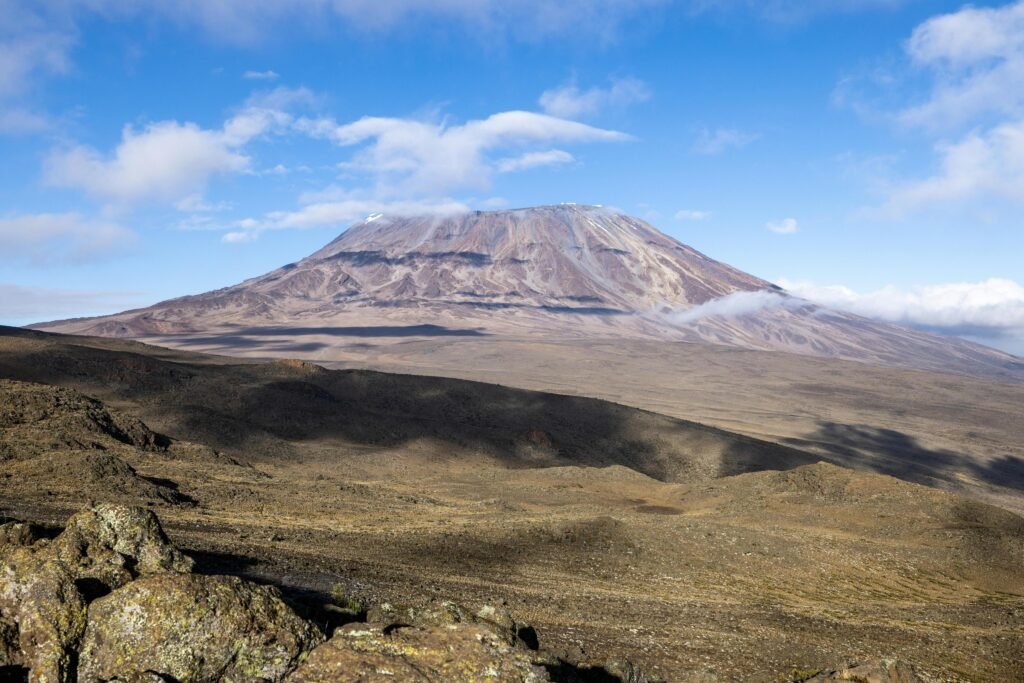
When Does It Snow on Mount Kilimanjaro? and why the mountain can be icy at the equator
The question When Does It Snow on Mount Kilimanjaro? begins with basic geography and atmospheric science. Kilimanjaro rises far above the surrounding plains, creating its own climate zones from tropical forest to arctic-like summit conditions. Research published through the United States Geological Survey explains how elevation controls temperature, air pressure and precipitation, allowing snow to form even in equatorial regions when altitude is extreme.
Climate monitoring by NASA Climate and long-term global assessments coordinated by the Intergovernmental Panel on Climate Change show that high isolated mountains are especially sensitive to small shifts in temperature and moisture. On Kilimanjaro, these changes decide whether clouds produce rain, sleet or snow at the summit.
When Does It Snow on Mount Kilimanjaro? and how snowfall actually forms
To answer When Does It Snow on Mount Kilimanjaro? properly, it is important to understand how snow forms in tropical mountain systems. Atmospheric science research shared by NOAA and global climate modelling projects hosted by the World Meteorological Organization explain that snowfall depends on moisture moving upward through cold air layers where ice crystals develop.
Unlike temperate mountain ranges with long winter seasons, Kilimanjaro receives snow mainly when moist air masses rise rapidly and cool at high elevation. Environmental observations compiled by the United Nations Environment Programme confirm that these conditions occur irregularly and are influenced by broader regional weather systems across East Africa.
When Does It Snow on Mount Kilimanjaro? and the reality of seasonal patterns
Many climbers expect a fixed snow season, but the truth behind When Does It Snow on Mount Kilimanjaro? is that snowfall does not follow simple calendar rules. Mountain climate studies published through Nature and climate variability research available on ScienceDirect show that high-altitude precipitation in tropical regions is strongly linked to shifting regional circulation systems.
This means snow can fall during several periods of the year when cold upper-air conditions combine with sufficient moisture. Some climbing seasons experience several fresh snowfalls, while others see only thin frost layers. Professional teams working daily on the mountain, including experienced local planners from Kilimanjaro climbing specialists, track these short-term changes closely to help climbers prepare realistically.
When Does It Snow on Mount Kilimanjaro? and what science says about the disappearing glaciers
The discussion of When Does It Snow on Mount Kilimanjaro? cannot ignore the rapid decline of the mountain’s famous glaciers. Long-term glaciological research led by scientists working with the National Science Foundation and field studies documented by the NASA Earth Observatory show that Kilimanjaro’s ice fields have been shrinking for decades.
Additional regional climate analysis supported by the International Union for Conservation of Nature highlights how reduced snowfall and increased sublimation, rather than melting alone, are driving ice loss at the summit. These findings are also reflected in environmental assessments coordinated by Conservation International and the World Wide Fund for Nature, which link mountain ice decline to broader ecosystem changes across East Africa.
When Does It Snow on Mount Kilimanjaro? and how snow affects climber safety
For visitors, When Does It Snow on Mount Kilimanjaro? is not only a curiosity, but a safety concern. Medical and outdoor performance research published through the U.S. National Library of Medicine explains that snow and icy surfaces significantly increase physical strain, slow movement and raise the risk of slips and cold stress at high altitude.
Safety guidance supported by the Centers for Disease Control and Prevention and emergency preparedness standards promoted by the International Federation of Red Cross and Red Crescent Societies stress the importance of adequate clothing, hydration and controlled pacing in cold, hypoxic environments. Responsible operators adapt summit schedules when snow conditions increase fatigue or exposure risk.
When Does It Snow on Mount Kilimanjaro? and how weather forecasting supports safer climbs
Modern forecasting plays an important role in answering When Does It Snow on Mount Kilimanjaro? in real operational terms. Meteorological modelling developed by Météo-France and global climate data services provided by the Copernicus Climate Data Store allow scientists and field operators to anticipate high-altitude weather changes with greater accuracy.
Mountain research initiatives supported by the Mountain Research Initiative show that real-time monitoring improves decision-making for trekking and scientific expeditions. Local guide teams who regularly consult updated forecasts are better prepared to delay or adjust summit attempts during unstable snow conditions.
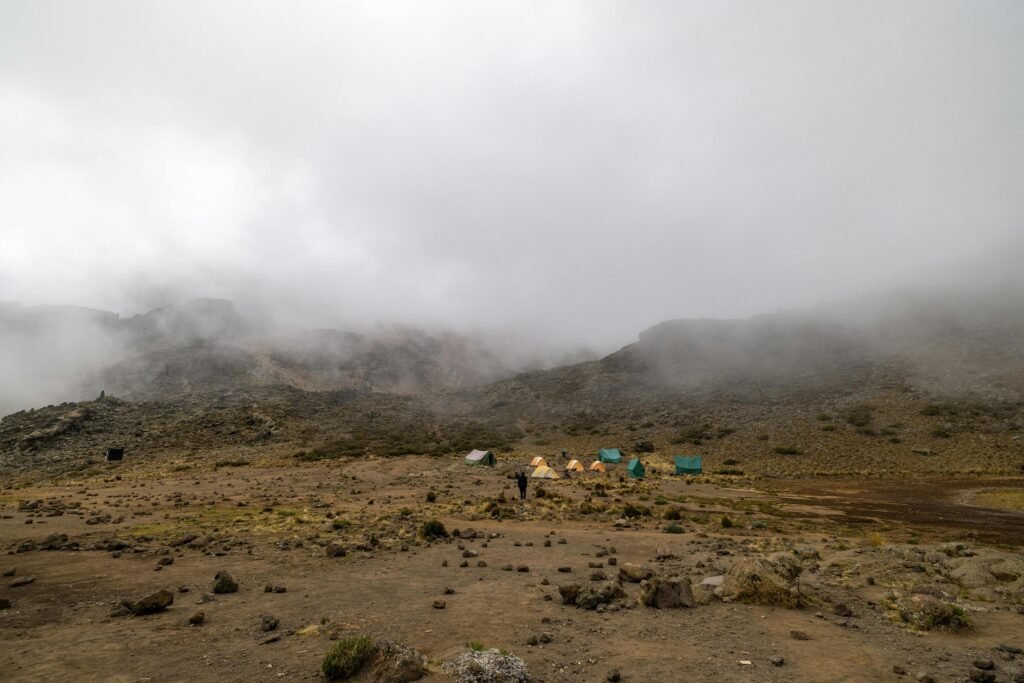
When Does It Snow on Mount Kilimanjaro? and the link between snow and fragile ecosystems
Beyond tourism, When Does It Snow on Mount Kilimanjaro? also matters for biodiversity and water systems. Ecological studies coordinated by the Food and Agriculture Organization and mountain biodiversity programmes run by UNESCO highlight how snow and ice influence downstream water availability and vegetation patterns.
Regional conservation initiatives led by the African Wildlife Foundation and supported by research partners from National Geographic Society show that changes in high-altitude moisture directly affect wildlife corridors and forest health on Kilimanjaro’s lower slopes.
When Does It Snow on Mount Kilimanjaro? and what climbers should realistically expect to see
Many travellers arrive expecting thick white snowfields, yet the honest answer to When Does It Snow on Mount Kilimanjaro? is that visible snow now appears in smaller, more fragmented patches. Academic field observations published by the University of Cambridge research programmes and climate impact studies from the University of Oxford research networks confirm that permanent ice coverage is shrinking and becoming increasingly uneven.
This does not remove the magic of standing near Africa’s last remaining equatorial glaciers, but it does make realistic planning more important. Local experts such as experienced Tanzanian trekking teams help travellers understand where snow is most likely to be visible during their chosen route and timeframe.
When Does It Snow on Mount Kilimanjaro? and how to prepare your clothing and equipment
Practical preparation is a direct outcome of understanding When Does It Snow on Mount Kilimanjaro?. Cold-weather exposure studies published through Frontiers in Physiology show that layering systems, wind protection and moisture management strongly influence endurance and comfort at high altitude.
Professional guidance based on expedition leadership research promoted by the National Outdoor Leadership School and safety frameworks developed by the International Climbing and Mountaineering Federation emphasise that footwear traction, insulated gloves and head protection become critical when fresh snow is present near the summit.
When Does It Snow on Mount Kilimanjaro? and why local knowledge makes the biggest difference
In reality, When Does It Snow on Mount Kilimanjaro? is best answered by people who work on the mountain continuously, not by static online charts. Short-term snowfall events often develop quickly and disappear just as fast. This is why climbers who speak directly with professionals such as local Kilimanjaro experts benefit from up-to-date field information that reflects real trail and summit conditions.
Responsible planning blends scientific understanding with practical experience. Local guide teams coordinate closely with park authorities and weather services, allowing them to make informed decisions that protect both climbers and the fragile alpine environment.
The honest answer about snow on Africa’s highest mountain
So, When Does It Snow on Mount Kilimanjaro? The honest answer is that snow can fall at various times of the year when atmospheric conditions align, but permanent ice is becoming rarer and more vulnerable. Snowfall is unpredictable, short-lived and closely connected to global climate change.
If your dream includes seeing Kilimanjaro’s famous ice fields while also climbing responsibly, choosing experienced local professionals who respect both safety and conservation makes a real difference. Your journey becomes more meaningful when it supports environmental protection and realistic mountain practices rather than outdated expectations.