
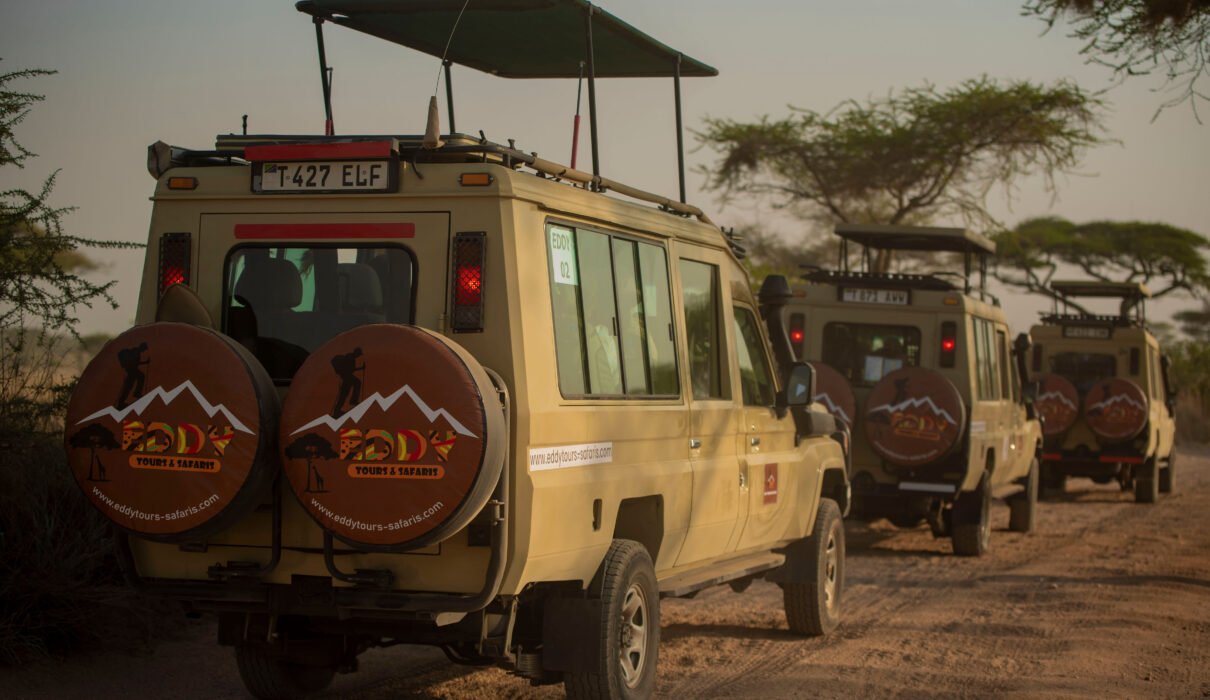
A responsible safari begins with everyday decisions: how close your vehicle approaches an elephant, whether you ask before photographing someone, where you buy your souvenirs, and what happens to your rubbish after a picnic.
These choices matter because a Tanzania holiday takes you through both protected landscapes and places where people live and work. The Serengeti is wildlife habitat. A village is someone’s home. Your guide, cook, porter, and lodge staff are people whose working conditions form part of the trip.
Learning how to travel responsibly in Tanzania helps you enjoy these places with greater understanding. It can also improve your safari: patient wildlife viewing, thoughtful cultural visits, and a well-paced itinerary often produce a richer experience.
This guide from Eddy Tours & Safaris explains nine practical rules you can apply before booking, during your safari, and after returning home.
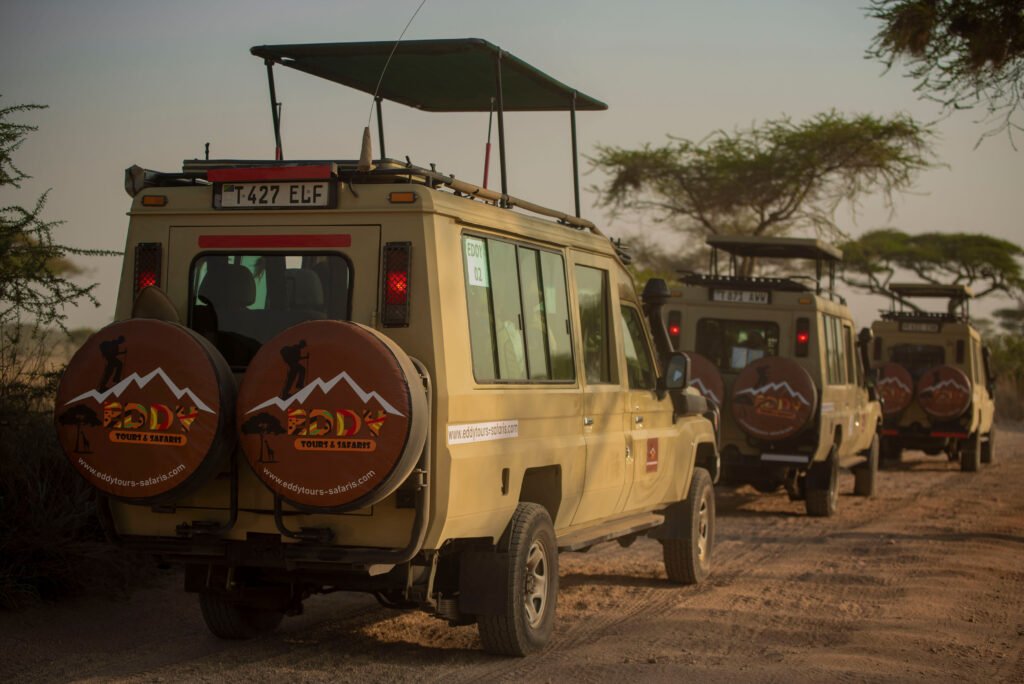
1. Give Wildlife Space and Let Animals Choose Their Movements
A good wildlife sighting does not require the closest possible position.
An elephant crossing the road, a lion resting beside a track, or a cheetah watching the grassland needs room to behave naturally. Crowding an animal can interrupt feeding, resting, hunting, or movement.
Avoid asking your driver to approach more closely simply because another vehicle has done so. Your guide should choose a position that respects the animal and the location’s rules.
What responsible wildlife viewing looks like
Keep your voice low, avoid sudden movements, and leave animals a clear route past the vehicle. Never call, whistle, clap, or imitate animal sounds to make wildlife look towards your camera.
Do not feed wildlife. Food offered by visitors can encourage animals to approach people and vehicles, creating problems long after the photograph has been taken.
TANAPA’s Nyerere National Park visitor guidance instructs visitors to keep safe distances, follow guide and ranger instructions, and avoid feeding animals.
Put it into practice: If an animal changes its movement because of your vehicle, let your guide adjust the position. Use binoculars or a longer lens instead of requesting a closer approach.
2. Follow Park Rules, Even When a Better Photograph Seems Possible
Park rules protect habitats as well as visitors.
Driving away from a designated track may appear harmless when the ground looks dry and open. However, repeated vehicle movements can damage vegetation and create additional tracks.
A responsible traveller supports the guide’s decisions about permitted routes, stopping places, and viewing positions.
Stay inside the vehicle unless instructed otherwise
An open landscape can look peaceful while animals remain hidden nearby. Leave the vehicle only where permitted and when your guide says it is appropriate.
At picnic sites, keep food secure and avoid encouraging monkeys or baboons to approach. TANAPA’s Lake Manyara visitor guide specifically advises visitors to remain on designated roads or boardwalks, avoid littering, never feed wildlife, and secure food from primates.
Different protected areas and activities have different arrangements. Permission for a guided walk in one location does not mean you can walk freely elsewhere.
Put it into practice: Before your first game drive, ask your guide to explain the main rules. If they decline a request, accept the explanation without pressuring them to make an exception.
3. Reduce Waste and Take Responsibility for What You Bring
Safari vehicles often carry packed lunches, snacks, drinking water, tissues, and personal supplies. Without a simple routine, small pieces of rubbish can escape through a window or blow away at a picnic stop.
Bring a reusable rubbish pouch and keep it within reach. Check your seating area before leaving the vehicle and your picnic spot before continuing the drive.
Make reusable items practical
A refillable drinking bottle can reduce packaging when suitable drinking-water refills are available. Confirm the refill arrangements with your operator rather than assuming every tap provides drinking water.
A reusable shopping bag is useful for purchases in towns and markets. Avoid taking unnecessary packaging into the parks.
Keep food scraps with your other rubbish. Fruit peel, bread, and leftover meals do not belong beside a wildlife-viewing track simply because they can decompose.
Dispose of personal waste carefully
Tissues, wet wipes, and sanitary products should never be left in the bush. Ask your guide about toilet stops early enough to make suitable arrangements.
For camping trips, establish where rubbish is collected and how it is removed. Leaving waste beside a full bin does not solve the disposal problem.
Put it into practice: Pack one reusable bottle, one shopping bag, and one small waste pouch. Before leaving each stop, check for wrappers, bottle caps, and tissues.
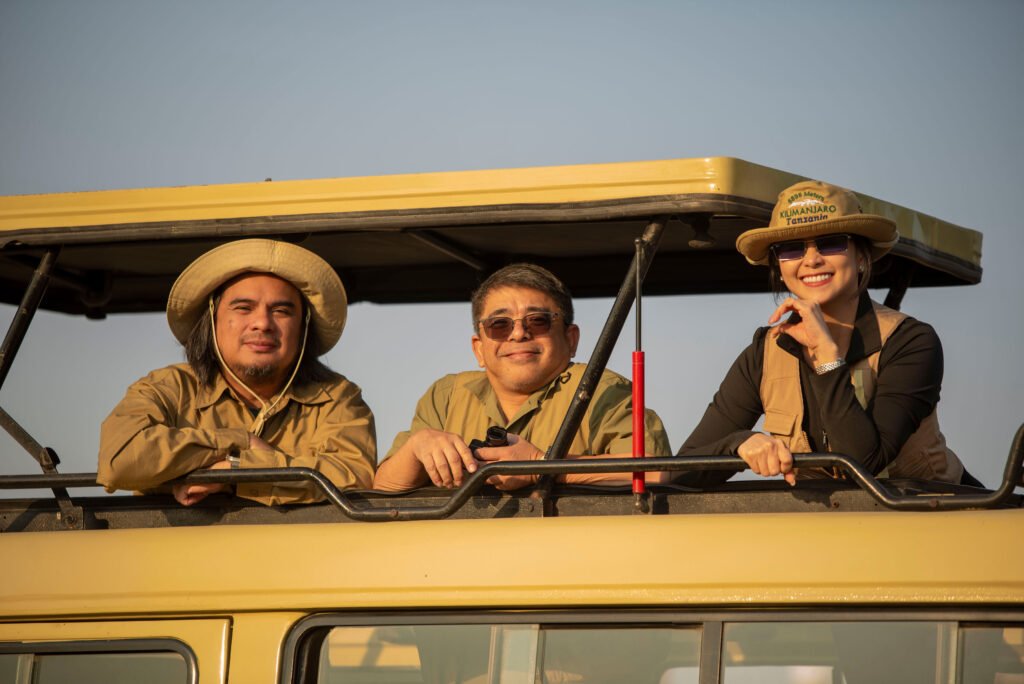
4. Treat Cultural Visits as Visits to People, Not Performances
A cultural visit can introduce you to farming, food, craft, music, language, and daily life. Its quality depends partly on how respectfully you participate.
People should be able to decide whether to welcome visitors, explain their work, or appear in photographs.
Before booking, understand what the visit includes and who hosts it. A clear arrangement helps you know what you are paying for and what is expected of you.
Ask before taking photographs
Ask permission before photographing an individual, their home, or their work. If you do not share a language, let your guide help.
A person agreeing to speak with you has not necessarily agreed to be photographed. Someone accepting a photograph has not automatically agreed to have it used in advertising.
Be particularly thoughtful when children are involved. Avoid turning a brief encounter into a staged scene or asking people to repeat an activity solely for your camera.
Dress and behave for the setting
Clothing suitable for a beach or lodge pool may be unsuitable for a village visit, town walk, or religious site. Follow the host’s guidance, particularly in communities and places of worship in Zanzibar.
Learn a greeting, listen to explanations, and ask questions with interest. Give people room to describe their own lives.
Put it into practice: Put your camera down when you arrive. Begin with an introduction, understand the visit, and ask about photography before taking pictures.
5. Spend Locally and Bargain Fairly
Tourism can support guides, accommodation staff, farmers, drivers, craftspeople, and small businesses. Your spending choices influence which businesses benefit.
Buying a locally made basket, eating at a suitable local restaurant, or paying for a well-organised guided visit can connect your holiday with the surrounding economy.
“Local,” however, deserves a little curiosity. Ask who made an item and where it came from instead of relying only on a label or sales pitch.
Negotiate without turning it into a contest
Bargaining may be appropriate in some markets, while other shops use fixed prices.
Ask the price first. If negotiation is welcomed, make a reasonable offer and remain polite. You can decline without insulting the seller or criticising their work.
Consider the time and skill behind a product. A small saving for a visitor may represent a meaningful part of the maker’s payment.
Avoid buying items made from wildlife parts, coral, or other materials you cannot identify confidently. Choose souvenirs with a clear, acceptable origin, such as textiles, baskets, paintings, or responsibly sourced crafts.
Put it into practice: Set aside part of your holiday budget for locally provided experiences and products. Buy something you value, ask about its maker, and agree on the price before paying.
6. Respect the People Who Make Your Trip Work
Responsible travel includes the treatment of the people carrying luggage, preparing meals, maintaining rooms, driving vehicles, and guiding activities.
Learn names where possible. Make requests courteously, communicate concerns clearly, and allow staff to explain what they can reasonably arrange.
A full day of driving followed by repeated late-night requests can affect the team’s rest. Discuss your preferred schedule in advance and leave room for necessary breaks.
Understand tipping arrangements
Ask about suggested tipping practices before travelling so you can budget appropriately. Find out whether tips are individual, pooled, or distributed through an agreed system.
Tips should express appreciation; they should not be treated as a substitute for proper pay.
If something goes wrong, raise the issue with the person responsible for resolving it. Avoid publicly blaming a staff member before you understand what happened.
Include porter welfare on mountain trips
If your holiday includes Kilimanjaro, ask about porter pay, loads, meals, shelter, equipment, and support when someone becomes ill.
The Kilimanjaro Responsible Trekking Organization describes its voluntary Partner for Responsible Travel Programme, implemented through KPAP, as supporting responsible tourism and porter welfare. Verify any operator’s claimed participation directly through the programme.
Put it into practice: Read the staffing and tipping information before departure. During the trip, treat support-team members with the same consideration you give your main guide.
7. Use Water and Energy Thoughtfully at Camps and Lodges
A comfortable safari stay involves water supply, power generation, laundry, food storage, and waste handling. Remote locations can make these services more demanding to provide.
Guests can reduce unnecessary consumption without giving up normal comfort.
Take reasonable showers, close taps properly, and report leaks. Reuse towels when practical and request fresh linen when needed.
Think before requesting daily laundry
A shirt worn briefly may not need washing immediately. Packing clothing that can be worn more than once helps reduce laundry and makes luggage easier to manage.
Respect any restrictions on laundry services or water availability. If you need an urgent service, ask what is possible.
Switch off lights and cooling equipment when leaving your room, following the property’s instructions. Charge devices efficiently rather than leaving every charger connected throughout your stay.
Look beyond environmental labels
Words such as “eco,” “green,” and “sustainable” are more useful when supported by specific practices.
Ask how a property supplies drinking water, manages rubbish, handles wastewater, and supports staff or neighbouring businesses. Clear explanations tell you more than a decorative slogan.
Put it into practice: Choose two simple habits for your stay: avoid unnecessary towel changes and switch off unused lights or equipment.
8. Choose Wildlife Experiences That Allow Natural Behaviour
An activity being available for purchase does not automatically make it a responsible choice.
Before booking an animal encounter, consider what visitors are being encouraged to do. Activities built around touching, restraining, feeding, or posing with wild animals deserve close scrutiny.
A strong wildlife experience can involve watching, listening, learning, and photographing from an appropriate position.
Keep birdwatching considerate
Give nesting birds space. Avoid surrounding a nest or repeatedly approaching to obtain a better angle.
Do not pressure your guide to use calls or playback to provoke a response. Quiet observation can reveal feeding, movement, and interactions that are easy to miss when the focus is only on obtaining a photograph.
Apply the same care at the coast
During snorkelling or diving, avoid standing on coral, touching marine animals, or removing shells and other natural objects.
With dolphin-viewing activities, ask how the operator avoids chasing, crowding, or repeatedly disturbing animals. Choose an experience whose procedures give wildlife room to move away.
Put it into practice: Before paying, ask one direct question: “How do you prevent this activity from disturbing the animals?” Look for a practical answer describing what the team does.
9. Build a Realistic Itinerary and Support Thoughtful Guiding
A rushed itinerary can encourage long driving days, hurried meals, and pressure to produce sightings on demand.
Tanzania’s safari destinations cover substantial distances. Trying to include too many places may leave you with less time to observe wildlife and more time travelling between parks.
Choose an itinerary that gives each main destination enough attention.
Leave room for patient observation
A quiet sighting can become rewarding when you stay long enough to understand it. You might watch elephants greet one another, follow a bird collecting nesting material, or notice how antelope respond to a predator nearby.
These moments are easier to appreciate when the day is not organised around rushing to the next famous animal.
Discuss your interests with your guide: photography, birds, landscapes, animal behaviour, or a combination. This helps them plan the available time.
Avoid demanding guaranteed sightings
Wild animals move independently. A guide can use experience and current information, but cannot promise that an animal will appear at a particular place and time.
For migration safaris, plan around likely seasonal locations while accepting that conditions and herd movements vary.
Put it into practice: When reviewing your itinerary, check the balance between transfers and game drives. Prioritise time in the places that matter most to you.
Responsible Safari Checklist
| Stage | A useful action |
|---|---|
| Before booking | Review the itinerary, services, and operating arrangements |
| Before packing | Bring reusable items and remove unnecessary packaging |
| Before a game drive | Listen to the guide’s briefing |
| At wildlife sightings | Stay quiet and give animals room to move |
| During community visits | Ask permission before taking photographs |
| When shopping | Check the product’s origin and agree on the price |
| At accommodation | Avoid unnecessary water, power, and laundry use |
| Before tipping | Understand how tips reach the intended people |
| After travelling | Share accurate reviews and considerate photographs |
Frequently Asked Questions
Is a private safari more responsible than a group safari?
Either can be organised responsibly. A group departure shares a vehicle among travellers, while a private safari offers greater control over the schedule. Guiding practices, vehicle use, waste management, and the itinerary all matter.
Should I give sweets or money directly to children?
Avoid making gifts to children part of roadside encounters or photo opportunities. If you want to contribute, use an accountable, locally guided initiative that identifies what is needed and explains how support is distributed.
Can I photograph local people?
Ask permission first and respect the answer. Your guide can help explain your request. Take extra care with children and seek appropriate permission before publishing or using images commercially.
Does responsible travel mean choosing basic accommodation?
No. Responsible practices can apply to different comfort levels. Look at how a property operates, treats its staff, uses resources, and handles waste.
What should I do if I see inappropriate behaviour?
Raise the concern calmly with your guide or operator when it is safe to do so. For a park-related issue, ask how to report it to the appropriate authority. Describe what you observed accurately rather than making assumptions about motives.
Plan a Thoughtful Tanzania Safari with Eddy Tours & Safaris
The best place to start is with a clear itinerary and a conversation about how you want to travel.
Tell Eddy Tours & Safaris your dates, interests, group size, and preferred pace. Ask about wildlife-viewing practices, accommodation, cultural visits, drinking-water arrangements, and any trekking extension.
Whether you choose the Serengeti, Ngorongoro, Tarangire, Kilimanjaro, or Zanzibar, the same principles apply: give wildlife space, treat people considerately, and take responsibility for your everyday choices.
Website: eddytours-safaris.com
Email: eddytoursandsafaris@gmail.com
Sales enquiries: sales@eddytours-safaris.com
Phone and WhatsApp: +255 711 906 664