
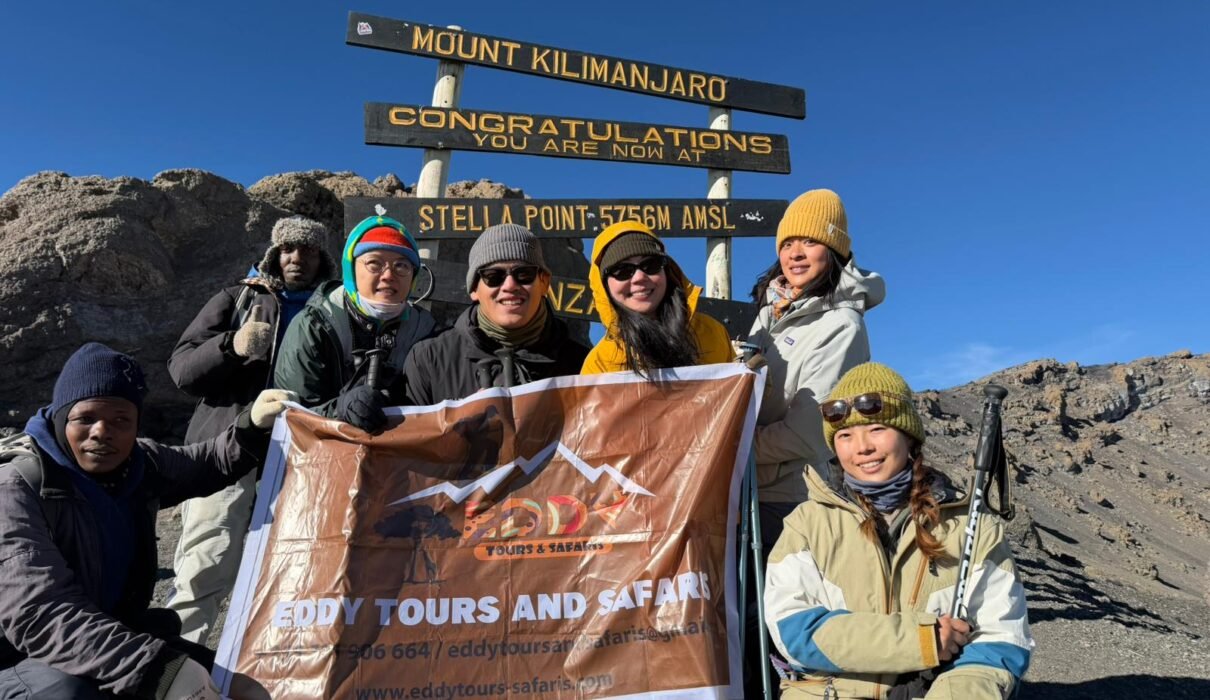
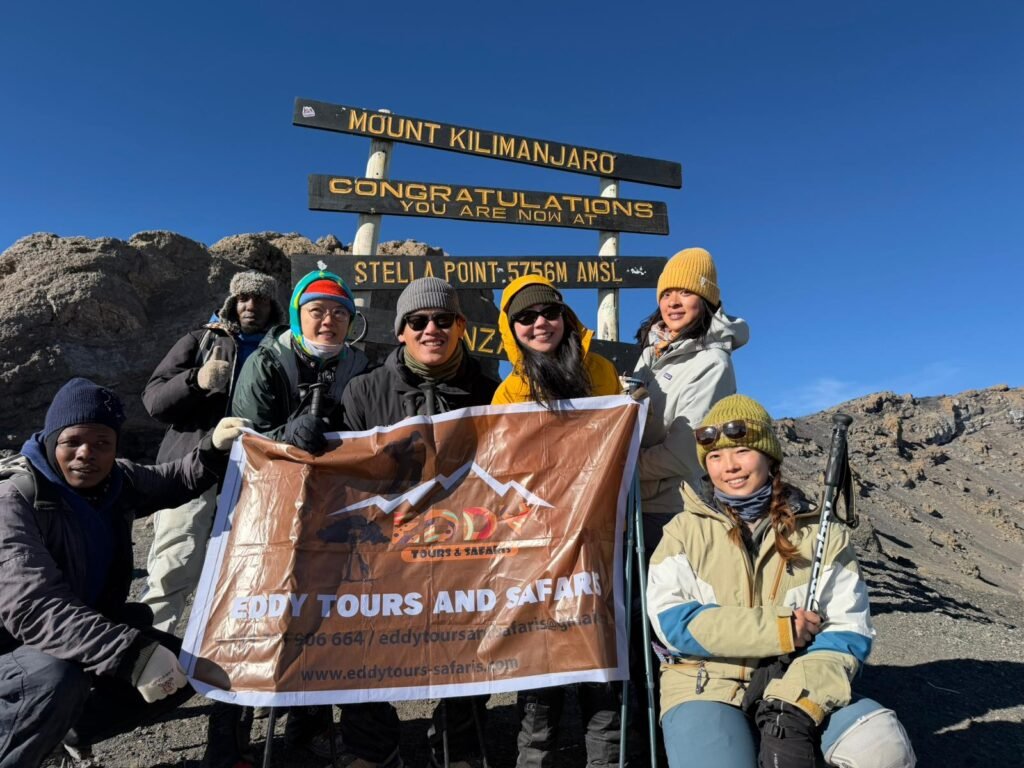
Women Climbing Kilimanjaro : A summit photograph captures one moment of a Kilimanjaro climb. It does not show the preparation, the questions asked before booking, the slow afternoons on the trail or the decisions made when the mountain becomes demanding.
For women considering Kilimanjaro, those parts of the journey deserve just as much attention. Practical questions about fitness, equipment, privacy and group support can matter more than another photograph of someone standing beside the summit sign.
There is no single experience shared by all women climbers. Some arrive with years of trekking behind them. Others are preparing for their first multi-day mountain journey. Some travel with friends, while others join a group independently. Their goals, concerns and reasons for climbing can be very different.
This guide explores seven lessons to consider when planning a climb with Eddy Tours & Safaris. It is a practical article rather than a collection of individual testimonials: the lessons below do not represent invented climber interviews or personal success stories.
Understanding the Mountain Before You Book
Kilimanjaro’s highest point, Uhuru Peak, stands at 5,895 metres above sea level. That elevation makes acclimatisation an important part of planning, alongside physical preparation and suitable equipment. You can find official destination information on TANAPA’s Kilimanjaro National Park page.
A climb should not be sold simply as a test of determination. Motivation helps with preparation and difficult moments, but it cannot replace a sensible itinerary, qualified guiding or appropriate responses to illness.
Before choosing a package, ask what happens on each day, where you sleep and how the team handles changing conditions. Understanding the journey helps you make a more informed decision than selecting a route because its name appears frequently online.
1. You Do Not Need to Fit Someone Else’s Image of a Climber
Outdoor photographs can create a narrow impression of who belongs on a mountain. It is easy to assume that everyone climbing Kilimanjaro is already an experienced athlete with expensive equipment and complete confidence.
That image should not determine whether you explore the idea.
A more useful starting point is your current ability, available preparation time and willingness to train consistently. Instead of asking whether you look like a mountaineer, ask whether you can work towards the demands of several consecutive days of trekking.
Your preparation might include regular walks, progressively longer hikes, uphill training and strength work suited to your circumstances. Practising with your intended boots and daypack also helps identify problems before departure.
Set goals around actions you can control. Completing a longer local walk comfortably is a more useful milestone than comparing yourself with someone else’s summit photograph.
If you have health concerns, discuss the planned altitude and exertion with a qualified clinician before committing.
The lesson: Belonging on the trail begins with informed preparation, rather than matching an appearance or background.
2. A Sustainable Pace Matters More Than Keeping Up
A group climb can create pressure to walk at the same speed as everyone else. You may worry about slowing the group down or feel uncomfortable asking for a pause.
Those concerns are worth discussing before the trek.
Ask how the guiding team manages different walking speeds. Find out whether slower walkers receive appropriate support and how the group stays coordinated during the day.
On the trail, concentrate on a pace that allows you to move steadily. Avoid turning the first few days into a competition. Reaching camp quickly is not the only measure of a good day.
Fitness and acclimatisation are also different issues. Being physically fit does not protect someone from altitude illness. The CDC’s high-altitude travel guidance explains why gradual ascent and individual response to altitude matter.
A slower walking pace does not make an overly rapid ascent schedule safe. Evaluate the itinerary itself, including sleeping elevations and opportunities to acclimatise.
The lesson: Choose a pace and itinerary that support the journey, rather than trying to prove yourself through speed.
3. Asking About Privacy and Personal Needs Is Part of Good Planning
Questions about toilets, washing and menstrual supplies are ordinary expedition questions. They should receive clear, respectful answers.
Before booking, ask about the facilities available on your chosen route. Confirm whether the package includes a private toilet arrangement, what washing water is provided and how tent sharing works.
If you prefer your own tent, ask whether that can be arranged and whether it changes the price. Do not assume that a private climb automatically includes separate sleeping arrangements for every traveller.
Menstrual preparation should suit the products you already know how to use. Pack enough supplies for the trip, with spare items and sealable bags for carrying used products until appropriate disposal is available.
Hand hygiene and discreet access to your supplies also deserve attention. Keep essential items in your daypack rather than placing everything in luggage that may be carried separately.
If you are considering medication to change the timing of your period, discuss it with a clinician beforehand. Avoid experimenting with unfamiliar medication immediately before departure.
The lesson: Practical comfort comes from clear arrangements, and you are entitled to ask for them.
4. Equipment Should Fit Your Body and Your Climb
A packing list can tell you what to bring, but it cannot tell you whether the items fit.
Boots that work well for someone else may cause pressure or rubbing on your feet. A warm jacket may still be uncomfortable if it restricts movement or cannot accommodate the layers underneath.
Try equipment in realistic combinations. Wear your intended walking socks when testing boots. Check that waterproof layers fit over the clothes you expect to use. Practise adjusting your daypack while wearing a jacket.
For rental equipment, ask which items are available and how sizing is checked. Confirm the suitability and condition of the sleeping bag rather than relying only on the description “warm sleeping bag.”
Useful checks include:
- Walking uphill and downhill in your boots.
- Testing your daypack with a realistic load.
- Using trekking poles before departure.
- Operating your headlamp while wearing gloves.
- Checking that your outer layers allow comfortable movement.
A women-specific label may help you find a suitable fit, but the label itself is not the goal. Comfort, function and appropriate sizing matter more.
The lesson: Well-fitting equipment can make the daily experience easier than simply buying the most expensive items.
5. Speaking Up Is a Strength
A supportive expedition should make it easy to report problems. You should not feel that discomfort must be hidden to preserve your place in the group.
Speak to the guide about developing blisters, difficulty eating, unusual fatigue or equipment problems before they become harder to manage.
Health symptoms deserve particular attention at altitude. Headache, nausea or dizziness should be reported promptly. Confusion, difficulty walking or breathlessness at rest require urgent attention. The CDC advises against further ascent with altitude illness symptoms and identifies descent as necessary when symptoms worsen.
Do not dismiss a problem because another climber appears to be coping well. People can respond differently to the same itinerary.
Before booking, ask how health concerns are assessed, what emergency arrangements exist and how a descent is organised. If someone needs to turn back, there should be a clear process for accompanying them safely.
Good communication works both ways. Guides need accurate information from climbers, and climbers need clear explanations from guides.
The lesson: Reporting a problem early supports better decisions; it does not make your effort less valuable.
6. Support Can Build Confidence Without Removing Independence
Climbing independently does not mean doing everything without assistance. A guided expedition relies on teamwork.
For women travelling alone, choosing the right group and operator can make the difference between feeling included and feeling overlooked.
Ask about group size, tent arrangements, guide coverage and how participants with different needs are supported. If a women-only departure interests you, confirm its availability rather than assuming every operator offers one.
You can also ask whether a woman guide is available if that matters to your comfort. The answer should be specific to the departure, not a general promise.
Once on the mountain, simple support can help: a patient explanation, space to walk at your pace or a respectful conversation about a concern. Equally, some climbers prefer quiet periods and limited conversation. A good group allows room for both.
Remember the wider mountain crew. Guides, porters and cooks contribute to the expedition, and their work deserves respect. Ask your operator about crew welfare and tipping guidance before travelling.
The lesson: Accepting support can strengthen your independence by helping you make informed choices.
7. A Safe Return Matters More Than a Summit Photograph
Summit ambitions are understandable. You have invested time, money and effort, and the final goal may carry personal meaning.
However, that investment should not create pressure to continue when conditions or health make it inappropriate.
Discuss turnaround decisions before the climb. Ask who makes the final call and how the team explains it. Knowing the approach in advance can make a difficult decision easier to understand.
Turning back does not erase the preparation, days on the trail or skills you developed. It means responding to the circumstances of that particular expedition.
Likewise, reaching the summit is not the end of the physical journey. You still need attention and energy for the descent. Keep following instructions, use your equipment carefully and report problems after the summit as well as before it.
A useful personal goal is broader than reaching a sign: prepare well, take part responsibly, learn from the experience and return safely.
The lesson: Sound judgement belongs in the story of a successful expedition.
Choosing a Route That Matches Your Needs
Route selection should involve more than popularity or the lowest advertised price.
Ask for a complete day-by-day itinerary and compare how each option handles ascent, sleeping elevations and time on the mountain. A longer schedule can provide more opportunity for acclimatisation, but no route guarantees a summit or eliminates altitude illness.
Accommodation is another consideration. TANAPA’s Kilimanjaro visitor guide notes that the Marangu Route uses mountain huts. Confirm the exact arrangements for any route you are considering.
Questions to ask include:
| Planning question | Why it matters |
|---|---|
| How many trekking days are included? | A total package length may also include hotel nights. |
| Where do we sleep each night? | Sleeping elevations help explain the ascent profile. |
| What happens if I walk more slowly? | Support should accommodate individual pace. |
| Which equipment is included? | Rental needs and extra costs should be clear. |
| What privacy arrangements are available? | Toilets and tent sharing affect comfort. |
| How are illness and descent handled? | Emergency procedures should be explained beforehand. |
Compare the actual itinerary and service arrangements rather than relying on a headline “success rate” without knowing how it was calculated.
Preparing Before Departure
Give yourself time to prepare physically and organise the practical details.
Build walking experience progressively. Include uneven ground and hills where possible, and practise with the equipment you intend to carry. Training should fit your current circumstances rather than follow a punishing schedule copied from another climber.
Arrange any necessary medical consultation with enough time to act on the advice. Discuss your destination, planned altitude, existing conditions and medication questions.
Check that your travel insurance explicitly covers trekking to Kilimanjaro’s summit elevation and the relevant emergency arrangements. Do not assume standard holiday cover includes the climb.
Finally, read your quotation carefully. Confirm transfers, hotel nights, meals, permits, equipment, crew services and exclusions. Clear expectations before departure leave more attention available for the mountain itself.
Frequently Asked Questions
Can women climb Kilimanjaro without previous mountaineering experience?
Previous mountaineering experience is not always required for the commonly used trekking itineraries. However, preparation, suitable fitness, guiding and altitude planning remain important. Confirm the demands of the specific route you choose.
Is Kilimanjaro harder for women?
Gender alone does not determine how someone manages a climb. Preparation, health, itinerary and individual response to altitude are more useful considerations.
Can I join a climb without a travelling companion?
Ask Eddy Tours & Safaris about available group departures and arrangements for independent travellers. Confirm group size, room or tent sharing and any additional charges.
What if my period falls during the trek?
Plan around familiar supplies, hygiene and disposal arrangements. Discuss medication questions with a clinician and practical privacy needs with the operator before departure.
Is reaching the summit guaranteed?
No. Weather, health and individual response to altitude can affect the outcome. Responsible planning should include the possibility of turning back.
Plan Your Kilimanjaro Climb With Eddy Tours & Safaris
A Kilimanjaro expedition should give you room to prepare, ask questions and make informed decisions. For women climbers, that includes practical comfort, respectful support and equipment that fits—not simply encouragement to push harder.
To discuss a climb, contact Eddy Tours & Safaris. Share your preferred dates, trekking experience, available preparation time and any accommodation or privacy preferences.
Website: eddytours-safaris.com
Email: eddytoursandsafaris@gmail.com
Sales enquiries: sales@eddytours-safaris.com
Phone and WhatsApp: +255 711 906 664