
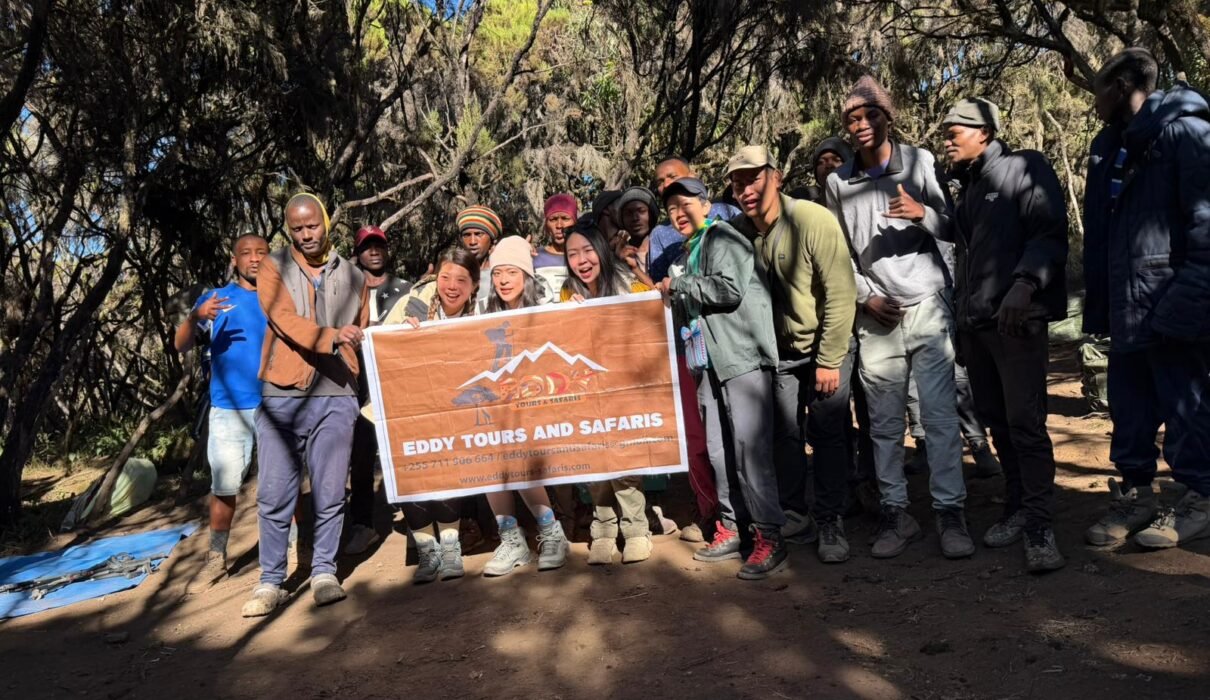
Tales from Stella Point and Gilman’s Point are not only stories of reaching high altitude, but quiet human moments shaped by thin air, cold wind, exhaustion and deep respect for one of Africa’s most protected mountain ecosystems. These two crater-rim landmarks sit on the edge of Mount Kilimanjaro’s summit plateau and mark the emotional turning point for thousands of climbers who arrive in darkness, guided only by headlamps and steady voices from experienced local guides.
For travelers who prepare their journey with a trusted local company such as Eddy Tours & Safaris, these places become far more than photo stops. They become personal milestones where fear softens into confidence and silence becomes unforgettable. Understanding what truly happens at these points, and why they matter environmentally and physiologically, helps you experience Kilimanjaro with realism and respect rather than unrealistic expectations.
Tales from Stella Point and Gilman’s Point and the geography of the crater rim
When people speak about Tales from Stella Point and Gilman’s Point, they are referring to two historic access points along the rim of Kibo crater, the central volcanic cone of Mount Kilimanjaro. These locations form part of a high-altitude alpine desert environment shaped by volcanic processes and long-term glacial retreat. Geological research published by the United States Geological Survey and climate-driven mountain studies coordinated by the National Aeronautics and Space Administration explain how isolated equatorial mountains develop extreme micro-climates that change dramatically over very short distances.
Ecological zoning across Kilimanjaro is carefully monitored by international conservation frameworks led by the International Union for Conservation of Nature and global mountain research initiatives supported by the United Nations Environment Programme. These organizations highlight how the fragile alpine zone surrounding the crater rim remains highly vulnerable to erosion and visitor pressure.
Tales from Stella Point and Gilman’s Point through the science of altitude
Many personal Tales from Stella Point and Gilman’s Point begin with confusion, slowed movement and intense concentration because the human body is operating with significantly reduced oxygen availability. Medical studies published by the U.S. National Library of Medicine and summarized within PubMed clearly show how reduced oxygen pressure at extreme altitude alters heart rate, breathing patterns and cognitive processing.
Clinical guidance from the Centers for Disease Control and Prevention and technical explanations from the International Society for Mountain Medicine confirm that most climbers who struggle at the crater rim are experiencing normal physiological stress rather than personal weakness. These scientific insights explain why professional guides monitor pace, hydration and communication very carefully during the final ascent toward both points.
Tales from Stella Point and Gilman’s Point and the role of climate and wind
Another layer behind many Tales from Stella Point and Gilman’s Point is the harsh atmospheric exposure that dominates the crater rim. Climate research produced by NASA Climate and assessments from the Intergovernmental Panel on Climate Change show that isolated tropical mountains experience rapid shifts in wind strength, solar radiation and surface temperature.
Environmental data analysed through the Food and Agriculture Organization also demonstrates how extreme dryness and wind exposure increase dehydration and energy loss in high-altitude travelers. At both Stella Point and Gilman’s Point, the cold often feels sharper because wind funnels along the crater rim with little natural shelter.
Tales from Stella Point and Gilman’s Point and human resilience
Many Tales from Stella Point and Gilman’s Point are not about reaching the highest point but about facing inner doubt during the hardest hour of the climb. Psychological research published through ScienceDirect and performance studies shared by Nature describe how fatigue and sleep deprivation strongly affect decision-making, emotional stability and perception of effort.
Leadership training models promoted by the National Outdoor Leadership School and safety frameworks developed by the International Climbing and Mountaineering Federation emphasize calm communication, short movement goals and emotional reassurance during critical expedition moments such as the crater-rim arrival.
Tales from Stella Point and Gilman’s Point and medical awareness
Every responsible version of Tales from Stella Point and Gilman’s Point includes medical awareness and early symptom recognition. Clinical guidance from Johns Hopkins Medicine and altitude health resources from the Cleveland Clinic show that headache, nausea, confusion and unusual fatigue should never be ignored during summit attempts.
Emergency response principles promoted by the International Federation of Red Cross and Red Crescent Societies and operational readiness guidance from the International Red Cross stress that trained personnel, communication equipment and evacuation protocols are essential for any safe high-altitude activity.
Tales from Stella Point and Gilman’s Point and environmental protection
The landscape surrounding both crater-rim landmarks is extremely sensitive. Conservation organizations such as the World Wide Fund for Nature, the African Wildlife Foundation and Conservation International highlight that high-altitude ecosystems recover very slowly from physical disturbance.
Scientific monitoring initiatives supported by the National Geographic Society and geological assessments from the United States Geological Survey confirm that waste, off-trail movement and overcrowding accelerate erosion and threaten rare alpine vegetation found near the crater rim.
Tales from Stella Point and Gilman’s Point and cultural responsibility
Behind many Tales from Stella Point and Gilman’s Point stands the work of local mountain crews who carry equipment, prepare meals and manage logistics in harsh conditions. Social protection frameworks promoted by the International Labour Organization and community development programmes supported by Oxfam International show how fair working conditions improve safety, morale and professional performance.
Ethical tourism strengthens community trust and ensures that climbing activity supports local livelihoods rather than exploiting them.
Tales from Stella Point and Gilman’s Point for first-time climbers
For beginners, Tales from Stella Point and Gilman’s Point often sound intimidating. However, public-health research supported by the Harvard T.H. Chan School of Public Health and physiological studies published by Frontiers in Physiology confirm that prior high-altitude experience is not essential when acclimatization schedules and professional supervision are respected.
What matters most is honesty about how you feel, steady pacing and hydration, and trusting guides who understand how differently individual bodies respond to altitude.
Tales from Stella Point and Gilman’s Point and professional route planning
Another common element within Tales from Stella Point and Gilman’s Point is the importance of realistic itinerary design. Risk-management research coordinated through the World Bank Disaster Risk Management programme and academic field studies from the University of Oxford research networks show that structured access routes and controlled movement significantly reduce accident risk in extreme environments.
Climbers who follow professionally designed itineraries, such as those offered through Kilimanjaro climbing programs, benefit from pacing strategies that protect both health and environmental integrity during summit attempts.
Tales from Stella Point and Gilman’s Point and long-term health
Many visitors ask whether their experiences near the crater rim have lasting health effects. Medical reviews available through PubMed Central and physiological literature summarized by Frontiers Journals show that healthy individuals typically recover fully when ascent profiles are conservative and rest is adequate.
Controlled exertion and proper descent planning remain essential for restoring normal physiological balance after summit attempts.
Living your own tales on Kilimanjaro
In reality, Tales from Stella Point and Gilman’s Point are deeply personal stories created quietly during the hardest hour of the climb. They are built from teamwork, patient guidance, silent encouragement and honest respect for the mountain. These moments are never rushed and never forced.
Travelers who prepare their journey with experienced local professionals gain access to realistic advice, ethical operations and safety-driven schedules. You can explore responsible climbing options through Tanzania travel and safari programs, receive direct guidance via local expert consultation, and combine your mountain journey with wider travel planning using professional local support.
Your own stories at Stella Point and Gilman’s Point will not be written by altitude alone. They will be shaped by preparation, patience, ethical choices and the people who walk beside you in the dark, step by step, toward the rising light over Kilimanjaro.