
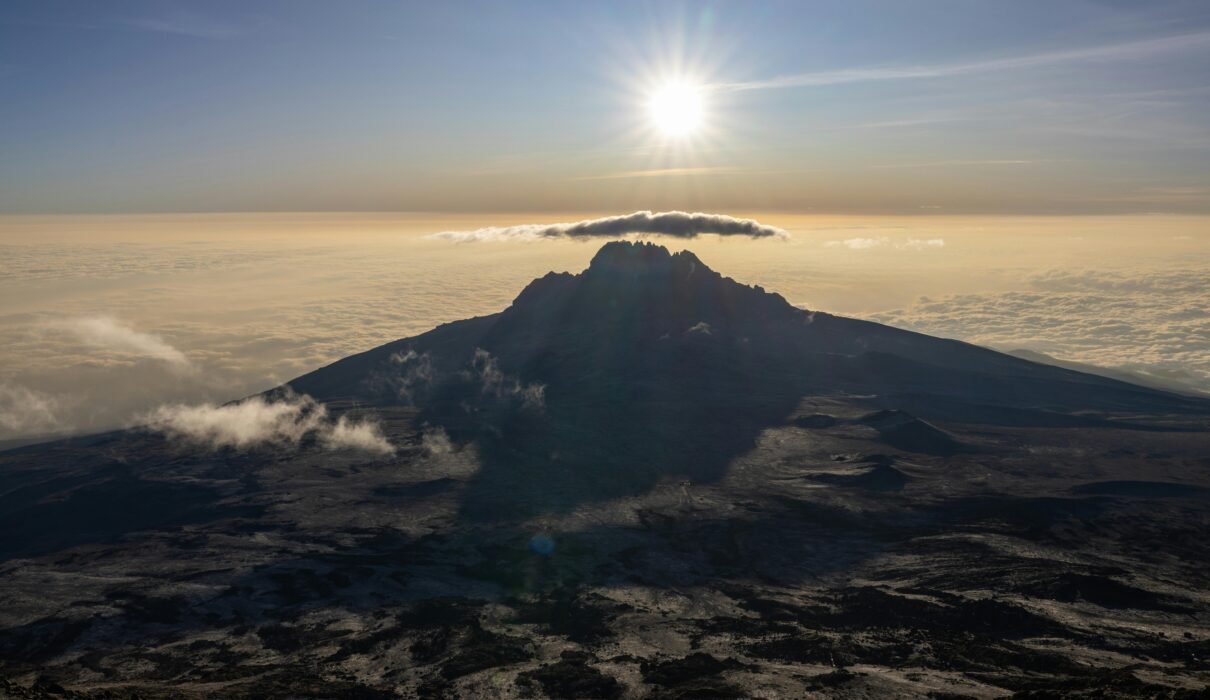
Sunrise vs Sunset Views on Kilimanjaro: Where to Watch is one of the most common questions climbers ask when planning a meaningful and well-timed journey to Africa’s highest mountain, because the quality of light, weather behaviour and viewing position can completely change how the mountain feels and how safe and comfortable the moment becomes. Many visitors only focus on reaching the summit, yet the places where you pause to watch the sun rise or disappear behind the plains often become the most emotional memories of the entire climb.
This guide explains, in a simple and practical way, how to choose the right sunrise and sunset locations on Mount Kilimanjaro using real environmental science, climate behaviour and conservation knowledge. It is written for travellers who want more than rushed photos and crowded viewpoints and who prefer to plan their climb carefully with experienced local professionals such as Eddy Tours & Safaris, where route design and daily timing are shaped by real mountain conditions rather than fixed marketing schedules.
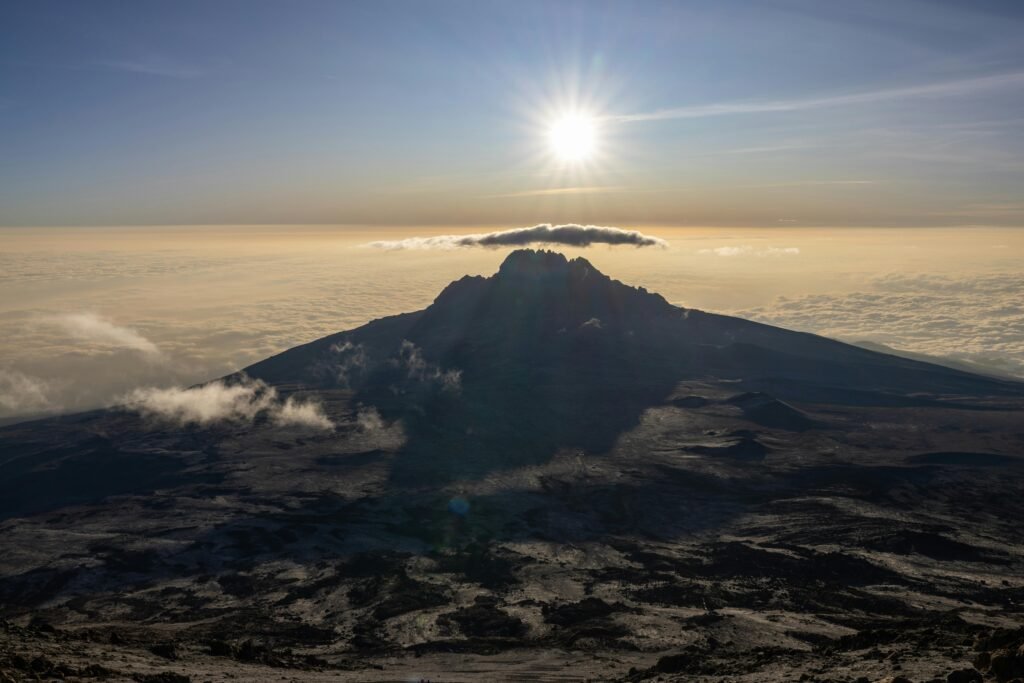
Sunrise vs Sunset Views on Kilimanjaro: Where to Watch and why light matters on the mountain
Understanding Sunrise vs Sunset Views on Kilimanjaro: Where to Watch begins with knowing how light behaves at high altitude. Scientific observations from NASA Climate and atmospheric research published through the Intergovernmental Panel on Climate Change show that thinner air and reduced humidity at altitude create sharper colour contrasts and stronger shadow definition during early morning and late evening light.
Environmental monitoring programmes coordinated by the United Nations Environment Programme explain that mountain environments experience faster temperature shifts and stronger wind exposure around dawn and dusk. These conditions influence comfort, camera performance and the length of time climbers can safely remain stationary during viewing moments.
Sunrise vs Sunset Views on Kilimanjaro: Where to Watch during sunrise on the upper slopes
For many climbers, the most emotional answer to Sunrise vs Sunset Views on Kilimanjaro: Where to Watch is sunrise during the summit approach or from high camps near the final ascent. High-altitude landscape studies published by the United States Geological Survey show that exposed volcanic terrain reflects light differently than forest or grassland environments, producing intense golden and blue transitions as the sun rises.
From a physiological point of view, medical guidance from the Centers for Disease Control and Prevention and research reviewed by the International Society for Mountain Medicine confirms that sunrise viewing during summit night should be short and carefully managed to avoid unnecessary cold exposure and fatigue before the final push. Professional guides time these moments carefully so climbers can enjoy the view without compromising safety.
Sunrise vs Sunset Views on Kilimanjaro: Where to Watch from mid-altitude camps
Another excellent answer to Sunrise vs Sunset Views on Kilimanjaro: Where to Watch comes from mid-altitude camps positioned above the forest zone and below the alpine desert. Ecological transition zones are well documented by the International Union for Conservation of Nature, which shows how vegetation layers change rapidly along elevation gradients on Kilimanjaro.
These zones allow wide views across the plains while still offering some shelter from strong winds. Research supported by Food and Agriculture Organization also shows that cloud formation often begins lower in the valleys during early morning hours, meaning mid-altitude camps can sometimes rise above the cloud layer at sunrise, creating soft and dramatic light over the surrounding landscapes.
Sunrise vs Sunset Views on Kilimanjaro: Where to Watch and why sunset feels different
While sunrise carries symbolic meaning for many climbers, Sunrise vs Sunset Views on Kilimanjaro: Where to Watch also strongly favours sunset at selected camps and ridges. Behavioural and perception research published through Nature Research and ScienceDirect shows that warm evening light improves colour depth perception and reduces visual fatigue compared with cold early-morning light.
From an operational perspective, sunset viewing allows climbers to enjoy the scenery after the day’s walking effort is completed. Safety guidance promoted by the International Climbing and Mountaineering Federation recommends limiting unnecessary movement after dusk in alpine environments, making designated sunset viewpoints near camp locations the most practical and safe option.
Sunrise vs Sunset Views on Kilimanjaro: Where to Watch and cloud behaviour
A realistic understanding of Sunrise vs Sunset Views on Kilimanjaro: Where to Watch must also consider cloud dynamics. Atmospheric observation networks coordinated through National Oceanic and Atmospheric Administration explain that convective cloud development often increases during the afternoon in tropical mountain environments.
This means that sunsets can occasionally be partially obscured at lower elevations, while sunrise frequently benefits from clearer skies after overnight cooling. Environmental datasets analysed by the UNEP Climate Action programme confirm that early morning hours on isolated mountains like Kilimanjaro are statistically more stable for visibility.
Sunrise vs Sunset Views on Kilimanjaro: Where to Watch and wildlife sensitivity
Although large wildlife is rarely encountered high on the mountain, the broader conservation landscape still matters when evaluating Sunrise vs Sunset Views on Kilimanjaro: Where to Watch. Conservation organisations such as the World Wide Fund for Nature, the African Wildlife Foundation and the Wildlife Conservation Society highlight that human movement timing can influence wildlife behaviour along lower transition corridors around the mountain.
Responsible operators plan early departures and evening viewing stops in ways that minimise disturbance to surrounding ecosystems, especially near forest boundaries and water sources.
Sunrise vs Sunset Views on Kilimanjaro: Where to Watch and environmental protection rules
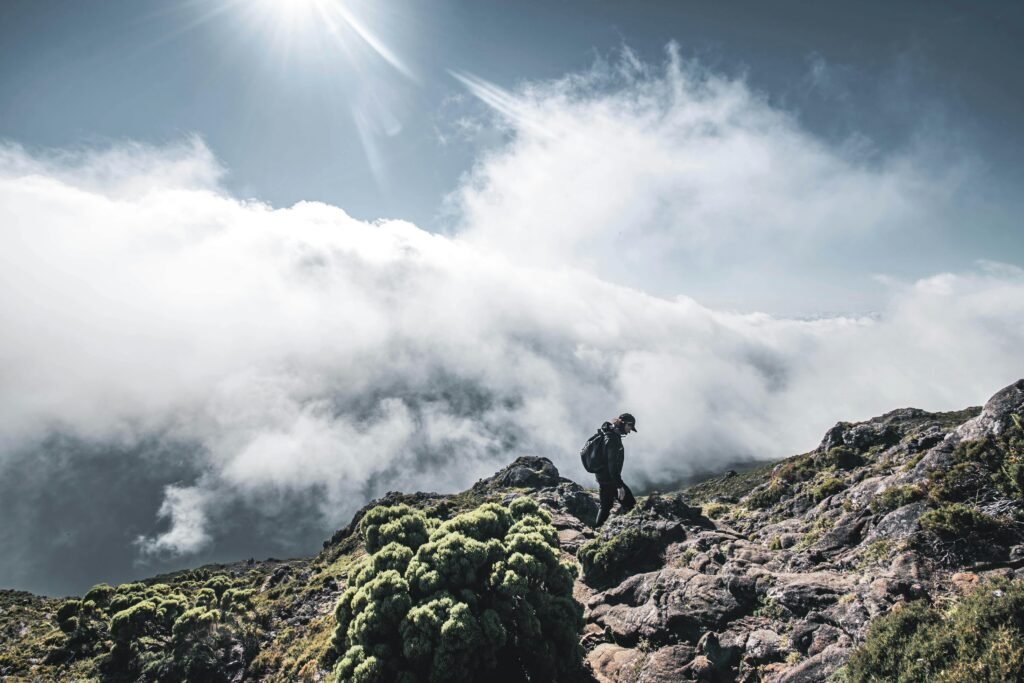
Protected area management plays a silent role in shaping Sunrise vs Sunset Views on Kilimanjaro: Where to Watch. Environmental governance frameworks promoted by Intergovernmental Science-Policy Platform on Biodiversity and Ecosystem Services and land protection initiatives supported by Conservation International show that designated resting points and restricted access zones help limit erosion and habitat damage.
Scientific field mapping projects coordinated by the National Geographic Society and geological monitoring by the United States Geological Survey demonstrate how uncontrolled foot traffic at popular viewpoints accelerates soil loss on fragile volcanic surfaces.
Sunrise vs Sunset Views on Kilimanjaro: Where to Watch for first-time climbers
For first-time high-altitude visitors, Sunrise vs Sunset Views on Kilimanjaro: Where to Watch should be chosen carefully to avoid unnecessary strain. Public health guidance from Johns Hopkins Medicine and clinical explanations from the Cleveland Clinic show that cold exposure and fatigue strongly affect altitude symptom perception.
This is why professional itineraries offered through Kilimanjaro climbing programs integrate short, controlled sunrise stops and comfortable sunset viewing near established camps rather than long detours or exposed ridges late in the day.
Sunrise vs Sunset Views on Kilimanjaro: Where to Watch and photography realities
Photography expectations strongly influence Sunrise vs Sunset Views on Kilimanjaro: Where to Watch. Visual science studies referenced by The Royal Society show that low-angle light enhances texture and depth perception, making volcanic ridges and glacier features appear more pronounced during both sunrise and sunset.
However, colder morning temperatures reduce battery performance and manual dexterity, while evening sessions usually offer warmer working conditions and more relaxed time pressure after hiking has finished.
Sunrise vs Sunset Views on Kilimanjaro: Where to Watch and route selection
Route design directly determines the best answers to Sunrise vs Sunset Views on Kilimanjaro: Where to Watch. Landscape connectivity research supported by the World Bank Environment programme and field planning frameworks developed by the National Outdoor Leadership School show that route sequencing affects daily energy levels, rest quality and viewing opportunities.
Climbers who plan with experienced local professionals gain access to camps and ridgelines that naturally align with optimal light windows. You can explore carefully timed itineraries through local travel planning support that balances scenery, safety and comfort.
Sunrise vs Sunset Views on Kilimanjaro: Where to Watch with professional guidance
In real mountain operations, Sunrise vs Sunset Views on Kilimanjaro: Where to Watch is not decided only by preference. Weather shifts, wind exposure and group condition guide the final decision each day. Emergency readiness standards promoted by the International Federation of Red Cross and Red Crescent Societies emphasise flexible decision-making in remote environments.
Climbers who communicate directly with local professionals through personal route consultation receive realistic advice based on current trail and weather conditions rather than generic schedules.
So which is better – sunrise or sunset on Kilimanjaro?
The real answer to Sunrise vs Sunset Views on Kilimanjaro: Where to Watch is that both moments offer completely different emotional and visual experiences. Sunrise brings silence, anticipation and powerful contrast as the mountain wakes, while sunset offers warmth, reflection and wider landscape visibility across Tanzania’s plains.
If your goal is a deeply balanced and well-timed journey, combining carefully chosen sunrise and sunset viewing points within the same climb creates the richest experience. With professional planning, ethical operations and realistic daily pacing, you can enjoy both without sacrificing comfort or safety. For travellers who value scenery, conservation and smooth organisation, planning your climb with experienced local experts makes the difference between rushed snapshots and truly unforgettable mountain moments.