
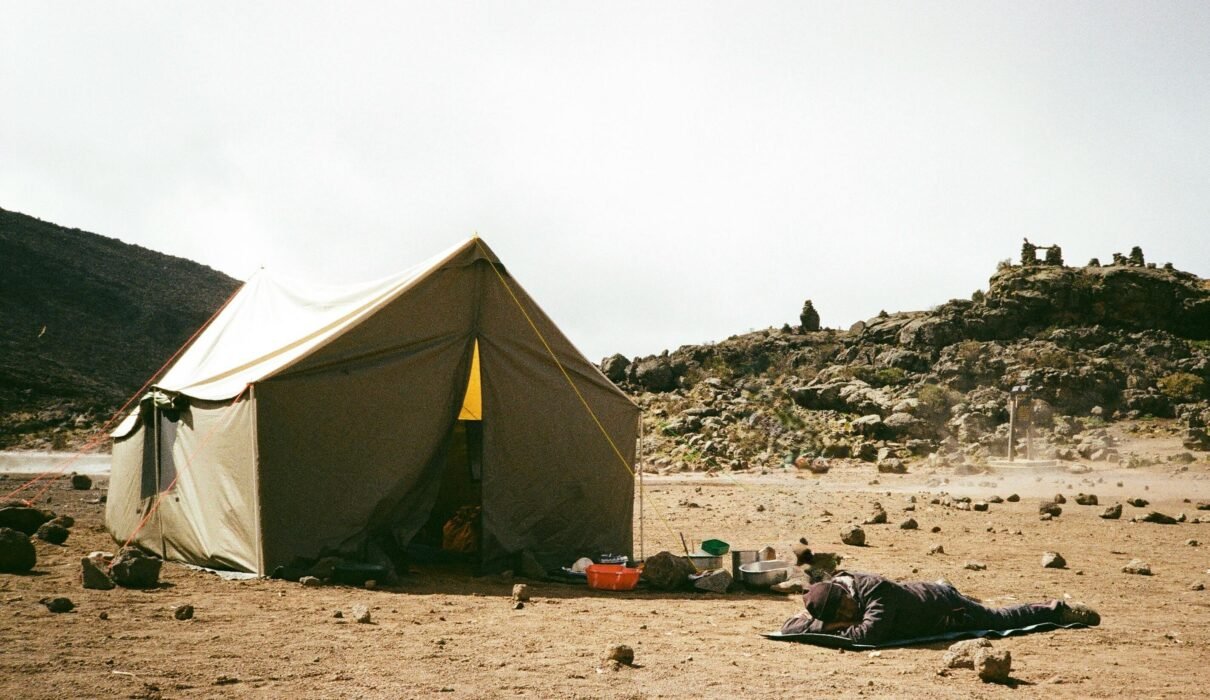
Kilimanjaro Camps for Solo Travelers are one of the most important things to understand before you decide to climb Africa’s highest mountain on your own. For many independent travelers, the dream is not only reaching the summit, but also feeling safe, supported and mentally comfortable while sharing camps with other climbers and professional mountain crews. Choosing the right camps on Kilimanjaro is not about luxury. It is about location, altitude management, protection from weather, good organization and how well the camp system supports solo hikers physically and emotionally during long and demanding days on the mountain.
Climbing alone does not mean climbing without support. On Kilimanjaro, all trekkers stay in regulated camps or huts that operate inside a carefully controlled conservation area. Understanding how these camps function, how safety systems work and how responsible operators organize their camp life makes a huge difference to your overall experience. Solo travelers who plan their journey with experienced local teams such as Eddy Tours & Safaris often feel more confident because the entire camping structure is professionally managed and designed to protect both people and the mountain environment.
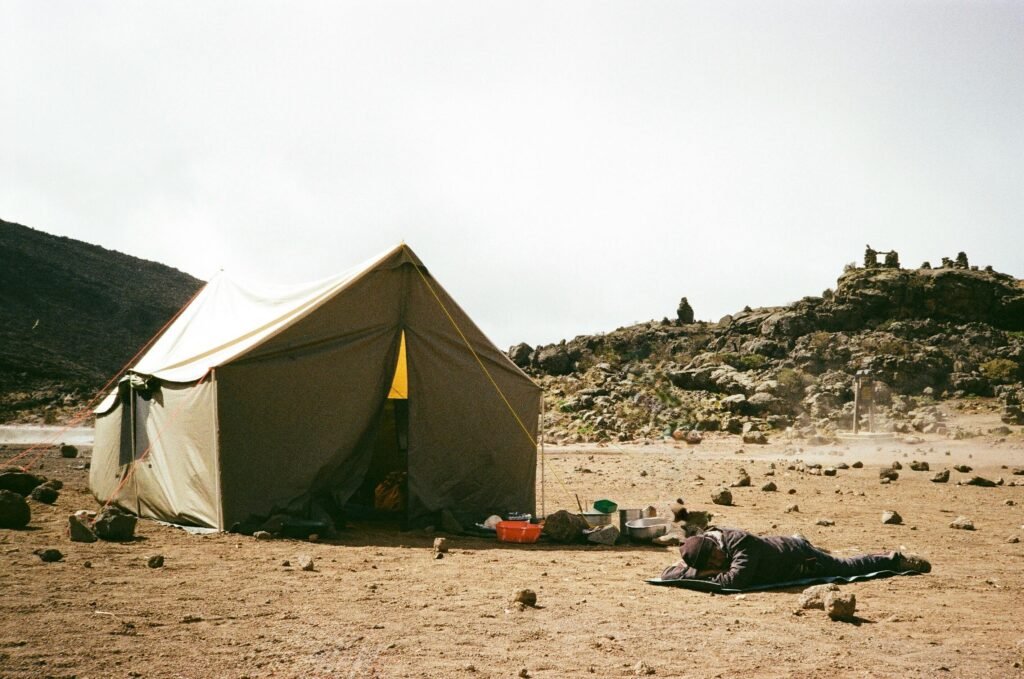
Kilimanjaro Camps for Solo Travelers and how the camp system works
Kilimanjaro Camps for Solo Travelers operate within one of East Africa’s most strictly protected mountain ecosystems. Camp locations are approved and monitored under international conservation frameworks supported by the International Union for Conservation of Nature and global environmental governance initiatives coordinated by the United Nations Environment Programme. These organizations recognize that high-altitude landscapes are extremely sensitive to soil erosion, waste contamination and vegetation damage, which is why camping areas are limited, clearly marked and regularly assessed.
Scientific landscape and geological monitoring carried out by the United States Geological Survey shows that unmanaged foot traffic and informal camping rapidly degrade fragile alpine zones. For solo climbers, this means official camps are safer, cleaner and more predictable places to rest, eat and prepare for the next stage of the climb. Every authorized camp is designed to concentrate human activity in controlled spaces so that rescue services, guides and park rangers can easily locate and support climbers when necessary.
Kilimanjaro Camps for Solo Travelers and personal safety in shared camps
Kilimanjaro Camps for Solo Travelers offer a unique safety advantage because you are never truly isolated. Camps bring together different climbing groups, guides, porters and park staff in one controlled environment. International outdoor risk management research and emergency coordination standards promoted by the International Federation of Red Cross and Red Crescent Societies highlight that shared staging points significantly improve emergency response speed in remote terrain.
Health and travel safety guidance from the World Health Organization also confirms that organized group environments reduce medical risks by allowing faster communication, observation of symptoms and coordinated evacuation if required. For solo travelers, staying in official camps means that if you experience fatigue, altitude symptoms or equipment problems, help is always nearby through trained guides and professional mountain staff.
Kilimanjaro Camps for Solo Travelers and altitude adaptation
Kilimanjaro Camps for Solo Travelers play a critical role in how your body adapts to altitude. Medical studies published through the U.S. National Library of Medicine and reviewed in PubMed confirm that controlled sleeping altitude and structured rest periods significantly improve acclimatization outcomes. Camps are positioned specifically to balance daily elevation gain with recovery needs.
Clinical recommendations from the Centers for Disease Control and Prevention and guidance provided by the International Society for Mountain Medicine show that most altitude-related problems appear during rest periods rather than while walking. Well-organized camps allow guides to observe appetite, hydration, sleep quality and breathing patterns, which is particularly important for solo travelers who may not immediately recognize early symptoms by themselves.
Kilimanjaro Camps for Solo Travelers and weather exposure
Kilimanjaro Camps for Solo Travelers are located across several climate zones, from forest edges to exposed alpine desert and glacial slopes. Climate monitoring by NASA Climate and long-term assessments by the Intergovernmental Panel on Climate Change show that temperature, wind and solar radiation increase in intensity as elevation rises on isolated mountains such as Kilimanjaro.
Environmental studies supported by the Food and Agriculture Organization explain how dehydration and cold stress affect physical performance and mental focus. Camps are positioned in areas that provide the safest possible shelter from prevailing winds and terrain hazards, helping solo climbers conserve energy and stay warm before early-morning departures.
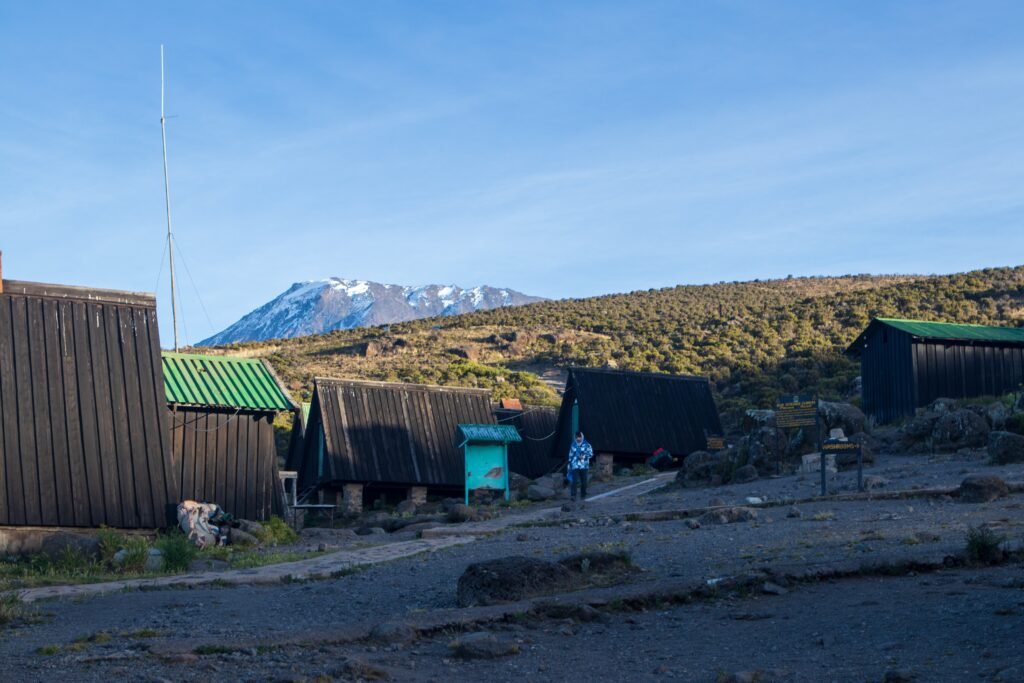
Kilimanjaro Camps for Solo Travelers and mental comfort
Kilimanjaro Camps for Solo Travelers are also about emotional and psychological well-being. Scientific research on stress and performance in extreme environments published via ScienceDirect and behavioral studies shared through Nature show that isolation, fatigue and cold strongly affect motivation and decision-making.
Sharing camps with other climbers creates a natural support atmosphere where solo travelers exchange stories, encouragement and practical advice. Professional outdoor leadership models developed by the National Outdoor Leadership School and safety frameworks promoted by the International Climbing and Mountaineering Federation emphasize that group interaction improves psychological resilience and reduces risk-taking behavior during difficult summit attempts.
Kilimanjaro Camps for Solo Travelers and environmental responsibility
Kilimanjaro Camps for Solo Travelers operate inside globally important biodiversity landscapes. Conservation organizations such as the World Wide Fund for Nature, the African Wildlife Foundation and Conservation International highlight how mountain ecosystems are extremely sensitive to waste disposal and soil compaction.
Scientific conservation planning supported by the National Geographic Society shows that regulated camping zones dramatically reduce damage to vegetation and water sources. Solo travelers who follow camp rules directly contribute to protecting the mountain for future generations.
Kilimanjaro Camps for Solo Travelers and porter and crew welfare
Kilimanjaro Camps for Solo Travelers depend heavily on healthy, well-treated mountain crews. Labour standards promoted by the International Labour Organization and community protection initiatives supported by Oxfam International show that fair working conditions improve safety and service quality.
When porters and guides are properly equipped, well-fed and fairly treated, they remain attentive to weather changes, trail conditions and climber well-being. This human support system is especially important for solo travelers who rely strongly on professional judgment and honest communication during the climb.
Kilimanjaro Camps for Solo Travelers and route choice
Kilimanjaro Camps for Solo Travelers vary depending on the route you choose, and route design strongly influences both comfort and safety. Academic risk management research supported by the World Bank Disaster Risk Management programme and environmental field studies from the University of Oxford research networks show that structured access routes reduce congestion and accident risk.
Solo climbers who follow professionally designed itineraries such as those available through Kilimanjaro climbing programs benefit from better spacing between camps, more realistic daily distances and carefully selected sleeping altitudes that support long-term success.
Kilimanjaro Camps for Solo Travelers and first-time climbers
Kilimanjaro Camps for Solo Travelers are suitable even for first-time high-altitude hikers. Public health research supported by the Harvard T.H. Chan School of Public Health and physiological studies published in Frontiers in Physiology confirm that structured acclimatization and professional supervision are more important than previous mountain experience.
Solo travelers who stay disciplined with hydration, pacing and rest routines usually adapt well when supported by experienced local teams such as Tanzania trekking specialists, who understand how individual responses to altitude can vary widely.
Kilimanjaro Camps for Solo Travelers and research and monitoring support
Kilimanjaro Camps for Solo Travelers indirectly support scientific research and environmental monitoring. Biodiversity and climate studies published through Nature Research and field data distributed via ScienceDirect rely on responsible access and minimal disturbance within protected areas.
Controlled camp infrastructure helps researchers and park authorities track visitor pressure, habitat changes and waste patterns more accurately, strengthening long-term conservation planning.
Kilimanjaro Camps for Solo Travelers and practical planning support
Kilimanjaro Camps for Solo Travelers become far more enjoyable when your climb is carefully planned by professionals who understand daily mountain conditions. Reliable camp scheduling, balanced food preparation and realistic summit timing prevent exhaustion and unnecessary stress.
You can review professionally prepared itineraries through direct consultation with local Kilimanjaro experts who provide honest advice on camp selection, pacing and equipment for solo climbers.
Why Kilimanjaro camps matter so much for solo climbers
Kilimanjaro Camps for Solo Travelers are not just sleeping places. They are safety hubs, medical checkpoints, emotional support spaces and environmental protection zones combined into one system. When camps are well organized, solo climbers feel secure, focused and mentally prepared for each stage of the mountain.
By choosing responsible operators and respecting camp rules, you protect yourself, the people who support you and the fragile ecosystems that make Kilimanjaro one of the world’s most remarkable mountains. With careful planning and professional guidance, solo travel on Kilimanjaro becomes not a lonely challenge, but a deeply connected and meaningful journey.