
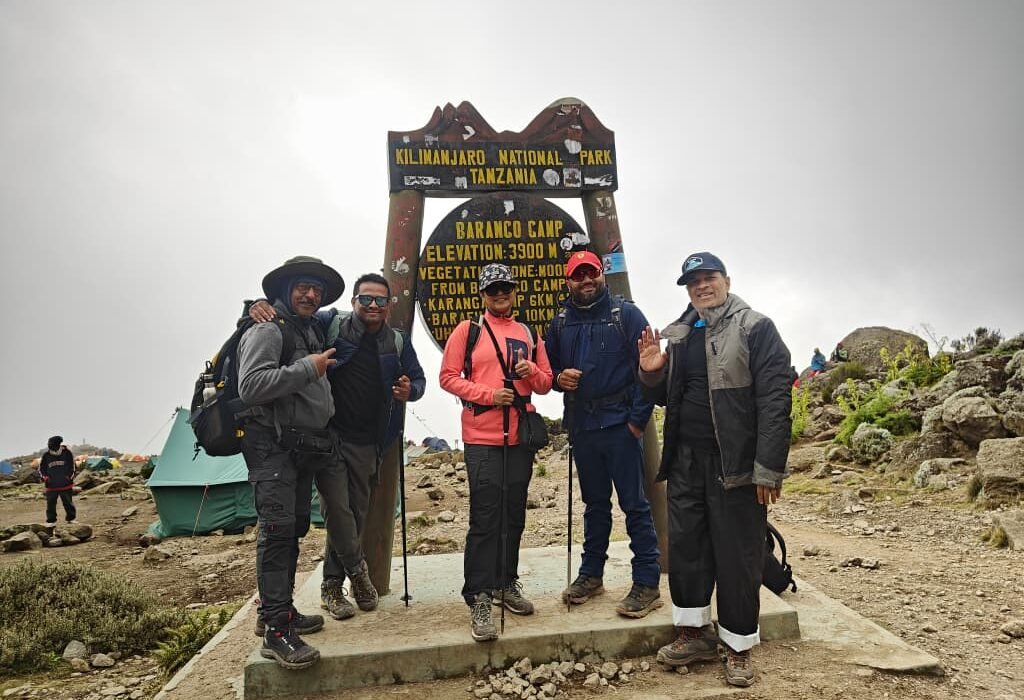
The First BASE Jump from Mount Kilimanjaro is often searched by adventure lovers who hear dramatic stories about extreme sports on Africa’s highest mountain, yet very few people understand what really happened, why such an act is extremely rare, and why it remains forbidden inside Tanzania’s protected mountain ecosystem. Beyond the excitement, this story raises serious questions about safety, environmental protection, and the responsibility of visitors in one of the most fragile high-altitude landscapes in the world.
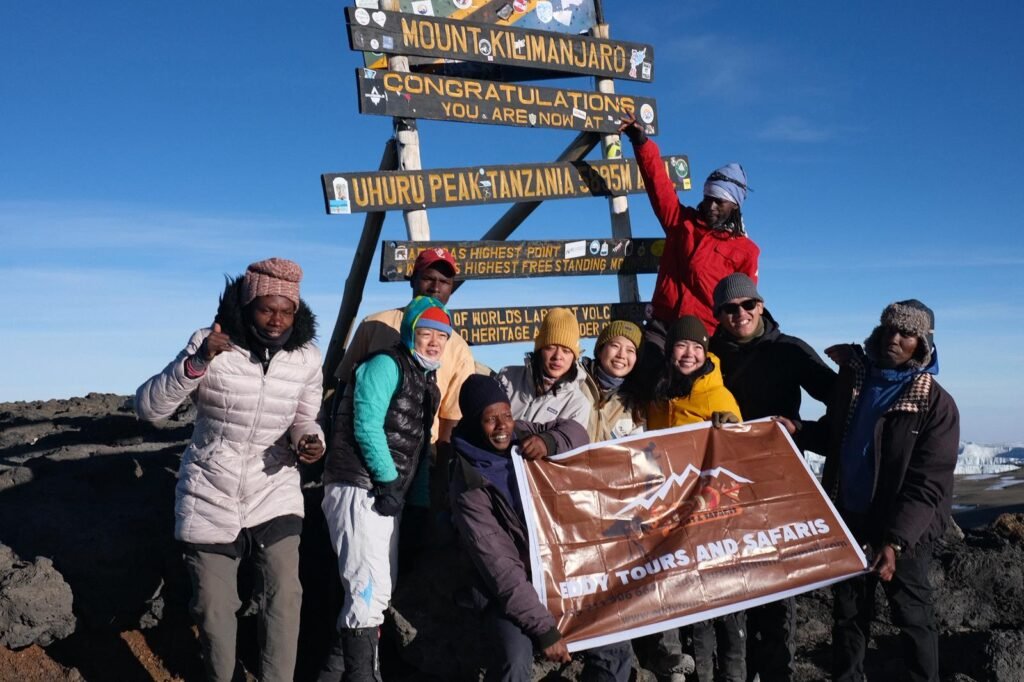
Today, Mount Kilimanjaro is not only a trekking destination but also a globally protected natural heritage area where strict conservation and visitor-management rules apply. Before any visitor becomes fascinated by extreme adventure stories, it is important to understand how scientific research, conservation law and safety authorities view activities such as base jumping on sensitive mountain environments. Responsible travelers who visit the mountain through trusted local operators such as Eddy Tours & Safaris are encouraged to experience Kilimanjaro in ways that respect both human safety and ecological integrity.
The First BASE Jump from Mount Kilimanjaro and what really makes this story controversial
The topic The First BASE Jump from Mount Kilimanjaro remains controversial because Kilimanjaro is not designed, managed or approved for aerial sports. It is a protected mountain ecosystem regulated under strict environmental and visitor control systems. International conservation frameworks promoted by the International Union for Conservation of Nature and protected-area governance models supported by United Nations Environment Programme clearly state that high-risk and non-essential activities increase environmental pressure and operational risk inside fragile mountain parks.
Unlike artificial cliffs or legally designated extreme-sport zones, Kilimanjaro operates under biodiversity protection priorities that limit human disturbance, reduce rescue risks and preserve sensitive alpine environments. Scientific assessments by the United States Geological Survey show that high-altitude terrain is highly unstable, with rapid weather change and loose volcanic substrate, making any uncontrolled descent activity a serious hazard both to participants and to rescue personnel.
The First BASE Jump from Mount Kilimanjaro and protected mountain ecosystems
Understanding The First BASE Jump from Mount Kilimanjaro also requires understanding how rare and delicate the mountain’s upper ecological zones are. Kilimanjaro’s alpine desert and glacial environments are studied by international climate and ecosystem researchers, including programs supported by NASA Climate and long-term environmental monitoring initiatives referenced by the Intergovernmental Panel on Climate Change.
Research coordinated through Conservation International and global biodiversity assessments from the Intergovernmental Science-Policy Platform on Biodiversity and Ecosystem Services demonstrate that even small disturbances in high-altitude ecosystems can cause long-term damage. Aircraft noise, rapid human movement in restricted zones, and emergency operations leave measurable environmental footprints that conflict with conservation goals.
The First BASE Jump from Mount Kilimanjaro and international safety science
From a safety perspective, The First BASE Jump from Mount Kilimanjaro directly contradicts global outdoor risk-management principles. High-altitude physiology studies published through the U.S. National Library of Medicine and reviewed by PubMed show that reduced oxygen levels significantly impair judgment, reaction time and muscular coordination, which are critical abilities for any technical aerial activity.
Medical guidance published by the Centers for Disease Control and Prevention and clinical reviews from the International Society for Mountain Medicine confirm that altitude-related fatigue and cerebral stress greatly increase accident probability during complex physical tasks at extreme elevation.
The First BASE Jump from Mount Kilimanjaro and emergency response realities
One of the most overlooked aspects of The First BASE Jump from Mount Kilimanjaro is the burden placed on emergency response systems. Kilimanjaro rescue infrastructure is designed primarily for trekking-related incidents, not high-speed aerial accidents in remote alpine terrain. Disaster response principles published by the International Federation of Red Cross and Red Crescent Societies stress that rescue complexity increases dramatically when victims are located in steep, unstable or inaccessible terrain.
International humanitarian and emergency logistics research by the International Red Cross demonstrates that every additional layer of technical rescue exposes responders to significant secondary risk. This is one of the main reasons park authorities worldwide restrict non-essential extreme sports in protected mountain areas.
The First BASE Jump from Mount Kilimanjaro and conservation law
Legally, The First BASE Jump from Mount Kilimanjaro conflicts with international protected-area standards. World heritage and protected-land frameworks promoted by UNESCO clearly emphasize that activities inside protected sites must prioritize ecological protection, public safety and long-term sustainability.
Wildlife protection institutions such as the World Wide Fund for Nature, the African Wildlife Foundation and the Wildlife Conservation Society consistently advocate for strict visitor controls in high-value conservation landscapes such as Kilimanjaro National Park.
The First BASE Jump from Mount Kilimanjaro and its impact on scientific monitoring
Scientific research programs operating on Kilimanjaro rely on controlled human access to maintain data accuracy. Long-term ecological and climate studies published through Nature Research and field science archives hosted by ScienceDirect show that human disturbance alters wildlife movement patterns, micro-climate readings and vegetation recovery cycles.
Geological and glacial observation programs supported by the United States Geological Survey further confirm that helicopter operations, emergency mobilization and off-route movement interfere with sensitive monitoring equipment and fragile terrain.
The First BASE Jump from Mount Kilimanjaro and ethical travel responsibility
The story of The First BASE Jump from Mount Kilimanjaro also raises ethical questions for modern adventure tourism. Ethical labor and tourism governance frameworks promoted by the International Labour Organization and social development organizations such as Oxfam International emphasize that tourism activities must protect workers, local communities and public resources.
Extreme and unauthorized activities increase insurance exposure, legal risk and operational stress for local staff and park authorities who must manage emergencies that were never part of sustainable tourism planning.
The First BASE Jump from Mount Kilimanjaro compared with responsible adventure travel
While The First BASE Jump from Mount Kilimanjaro attracts online attention, responsible adventure tourism follows well-tested environmental and safety standards. Outdoor leadership and expedition risk management frameworks promoted by the National Outdoor Leadership School and international mountaineering guidance published by the International Climbing and Mountaineering Federation clearly support low-impact, skill-appropriate and legally authorized mountain activities.
High-quality trekking, photography and scientific interpretation allow visitors to experience the mountain safely without placing ecosystems or rescue systems under unnecessary strain.
The First BASE Jump from Mount Kilimanjaro and what visitors should really seek
For most travelers, the true value of Kilimanjaro lies not in extreme spectacle but in meaningful connection with nature, culture and conservation. Visitors who choose well-planned journeys through professional programs such as responsible Tanzania safari experiences and ethically operated Kilimanjaro climbing programs contribute directly to long-term protection of this iconic mountain.
Local experts understand seasonal access rules, conservation priorities and safety procedures far better than distant online resellers. Travelers seeking honest guidance can speak directly with specialists through local consultation services that focus on safety, sustainability and genuine cultural exchange.
The First BASE Jump from Mount Kilimanjaro and the reality behind the myth
In reality, The First BASE Jump from Mount Kilimanjaro is not a celebration of adventure but a powerful reminder of why strict conservation rules exist. Kilimanjaro is a shared global heritage, shaped by fragile ecological processes, long-term scientific monitoring and community-based protection systems.
By choosing responsible trekking, wildlife observation and cultural exploration instead of unauthorized extreme activities, visitors protect both themselves and the mountain. A safe and meaningful Kilimanjaro experience begins with respect for nature, respect for science and respect for the people who work every day to protect Africa’s highest peak.