
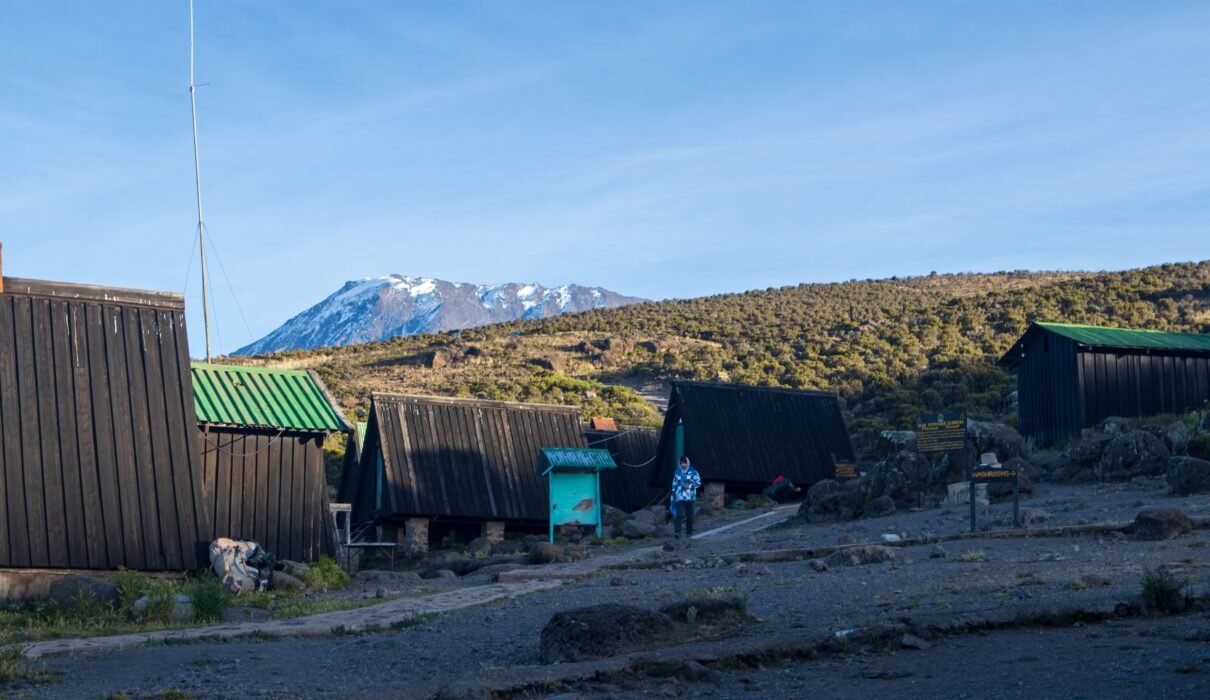
Kilimanjaro Camps with the Best Views attract travelers who dream of standing above the clouds, watching glaciers glow at sunrise and seeing Africa stretch endlessly beneath their feet. On Mount Kilimanjaro, the beauty of the journey is shaped not only by the route you choose, but also by where you sleep, where you rest, and where your body and mind slowly adapt to altitude while surrounded by some of the most dramatic landscapes on the continent.
Choosing the right camps is not only about photography. It is also about safety, exposure to wind, access to water, and how well each campsite fits into a healthy acclimatization profile. Climbers who plan carefully with experienced local teams such as Eddy Tours & Safaris quickly learn that the camps with the most spectacular views are often the same places where proper planning makes a real difference to comfort and success.
This guide explains the most scenic and meaningful camps on Kilimanjaro while connecting them to real environmental science, conservation standards and mountain safety principles. The goal is simple: help you understand which camps offer unforgettable scenery and why those locations matter for your overall climbing experience.
Kilimanjaro Camps with the Best Views and the mountain environment
Before selecting individual camps, it is important to understand why scenery changes so dramatically on Kilimanjaro. The mountain crosses several ecological and climate zones, from rainforest to alpine desert and finally glacial terrain. Long-term monitoring by the United States Geological Survey and ecosystem assessments coordinated by the International Union for Conservation of Nature show how altitude, wind exposure and volcanic landforms shape vegetation and visibility.
Environmental protection frameworks promoted by the United Nations Environment Programme and global heritage guidance from UNESCO explain why camps must be placed carefully to avoid erosion, protect fragile soils and reduce pressure on water sources. These conservation decisions directly influence which locations remain visually open and naturally beautiful.
Kilimanjaro Camps with the Best Views at Shira Camp
Among the most admired Kilimanjaro Camps with the Best Views, Shira Camp stands out for its wide volcanic plateau and open horizon. From this elevated landscape, climbers enjoy sweeping views of Mount Meru, distant plains and dramatic cloud movement. Geological mapping supported by the United States Geological Survey explains how ancient lava flows created the broad and stable surfaces that now allow for such open visibility.
Environmental research published through National Geographic Society highlights the importance of plateau ecosystems in supporting unique alpine plant communities. Because of its exposed location, Shira Camp also teaches climbers the reality of wind and temperature change, encouraging proper layering and energy conservation under professional supervision.
Kilimanjaro Camps with the Best Views at Barranco Camp
Many experienced guides describe Barranco as one of the most emotionally powerful locations among the Kilimanjaro Camps with the Best Views. The camp sits directly below massive rock walls and glaciers, with evening light reflecting off the famous Barranco Wall. Landscape ecology studies coordinated by Conservation International show how steep altitudinal gradients support rapid changes in vegetation within short walking distances.
Wildlife movement and habitat connectivity in the lower alpine zone are monitored by organizations such as the World Wide Fund for Nature and the African Wildlife Foundation. Although large animals are rarely seen at this altitude, Barranco’s position reveals how the mountain connects forest, moorland and alpine desert ecosystems into one continuous ecological system.
Kilimanjaro Camps with the Best Views at Karanga Camp
Karanga Camp is often described as a quiet balcony on the southern slopes, making it a gentle but powerful entry on any list of Kilimanjaro Camps with the Best Views. The camp offers direct views back toward Barranco Valley and forward toward the higher ridges leading to Barafu. Hydrological research promoted by the Food and Agriculture Organization explains how seasonal water channels shape vegetation patterns around Karanga.
From a planning perspective, Karanga also plays an important acclimatization role. Medical and altitude adaptation studies published through the U.S. National Library of Medicine and PubMed confirm that gradual elevation gains improve oxygen adaptation and reduce fatigue, making scenic stops like Karanga both visually rewarding and physically protective.
Kilimanjaro Camps with the Best Views at Barafu Camp
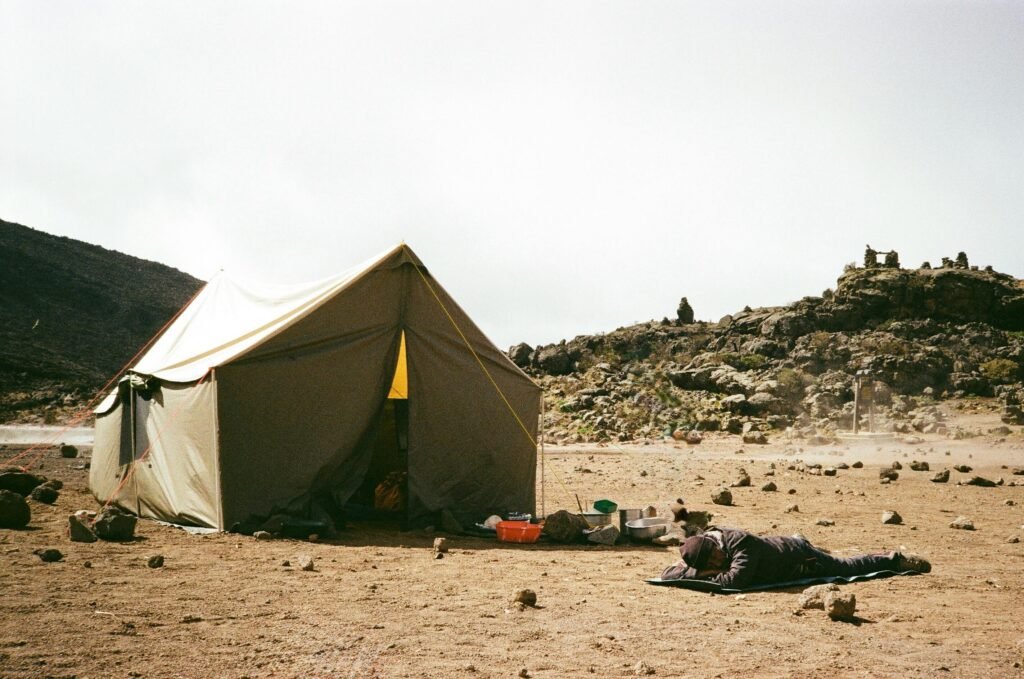
Barafu Camp is not comfortable, but it remains one of the most dramatic entries among the Kilimanjaro Camps with the Best Views. Positioned high on an exposed ridge, the camp overlooks vast cloud layers and distant valleys far below. Climate observations from NASA Climate and atmospheric assessments produced by the Intergovernmental Panel on Climate Change explain why high-altitude wind exposure increases dramatically at this elevation.
Because of its strategic position before the summit push, Barafu combines extreme scenery with serious operational responsibility. Health guidance from the Centers for Disease Control and Prevention and mountain medicine research from the International Society for Mountain Medicine emphasize careful hydration, controlled movement and early symptom monitoring at camps like Barafu.
Kilimanjaro Camps with the Best Views at Mweka Camp
Although many climbers focus only on ascent camps, Mweka deserves recognition among the Kilimanjaro Camps with the Best Views for its lush forest recovery environment during descent. After days in alpine desert, the return to dense vegetation and mist-covered trees offers a completely different visual experience. Biodiversity mapping coordinated by BirdLife International and species conservation work by Panthera highlight how forest corridors surrounding Kilimanjaro support important wildlife populations.
The ecological importance of this zone explains why conservation bodies strictly regulate campsite use to prevent degradation of sensitive forest habitats.
Kilimanjaro Camps with the Best Views and conservation responsibility
Protecting the landscapes surrounding the Kilimanjaro Camps with the Best Views requires long-term cooperation between park authorities, communities and international conservation partners. Wildlife protection programs led by the Wildlife Conservation Society and ecosystem policy support from Intergovernmental Science-Policy Platform on Biodiversity and Ecosystem Services show how tourism revenue can strengthen environmental management when visitor behavior is controlled.
Educational programs promoted by the National Geographic Society also demonstrate that visitors who understand ecological processes are more likely to respect trail rules, waste policies and campsite boundaries.
Kilimanjaro Camps with the Best Views and safety in remote environments
While scenery is powerful, safety remains essential when choosing among the Kilimanjaro Camps with the Best Views. International safety and emergency response standards promoted by the International Federation of Red Cross and Red Crescent Societies emphasize reliable communication, evacuation planning and trained staff in remote terrain.
Health protection frameworks from the World Health Organization support structured monitoring of fatigue, dehydration and respiratory symptoms during multi-day high-altitude travel. Well-organized camps are therefore selected not only for scenery but also for accessibility during emergencies.
Kilimanjaro Camps with the Best Views and community impact
The success of the Kilimanjaro Camps with the Best Views also depends on the people who work daily on the mountain. Fair labour and safety standards promoted by the International Labour Organization and community development initiatives supported by Oxfam International show that healthy working conditions improve operational safety and communication.
When support teams are treated ethically, they become stronger partners in visitor safety and environmental protection.
Kilimanjaro Camps with the Best Views and climate awareness
Climate change increasingly affects the visibility, snow cover and water availability surrounding the Kilimanjaro Camps with the Best Views. Scientific monitoring by NASA Climate and global climate assessments produced by the Intergovernmental Panel on Climate Change confirm that high-mountain environments respond quickly to temperature variation.
Responsible operators adjust camp usage schedules and visitor movement to reduce pressure on fragile areas during vulnerable periods.
Kilimanjaro Camps with the Best Views and professional route planning
Choosing the right camps along your route determines how well you experience the Kilimanjaro Camps with the Best Views. Professional itinerary design balances scenery, altitude progression and rest quality. Climbers who follow structured programs through Kilimanjaro climbing routes and itineraries benefit from carefully selected overnight stops that protect health and maximize visual impact.
Many travelers also combine scenic camps with wildlife experiences through Tanzania safari programs, creating a balanced journey that links mountain and savannah ecosystems.
Kilimanjaro Camps with the Best Views and personal planning support
Understanding the real value of the Kilimanjaro Camps with the Best Views becomes easier when you speak directly with professionals who work on the mountain every week. Local experts understand weather changes, trail conditions and camp availability far better than remote booking platforms.
For personalized route design and honest advice, climbers can consult directly through local Kilimanjaro planning support and receive guidance that reflects real field conditions rather than generic schedules.
Why choosing the right camps changes your entire climb
The magic of the Kilimanjaro Camps with the Best Views is not only in wide horizons and glowing sunsets. It is in how each camp supports your body, protects fragile ecosystems and creates space for reflection during one of Africa’s most iconic journeys. Shira offers openness and scale, Barranco offers drama and vertical beauty, Karanga provides calm balance, Barafu delivers raw intensity, and Mweka restores you gently through forest light.
When your climb is planned with experienced professionals such as Eddy Tours & Safaris, every camp becomes more than a sleeping point. It becomes part of a carefully designed experience that protects nature, respects people and allows you to truly see Kilimanjaro in all its powerful beauty.