
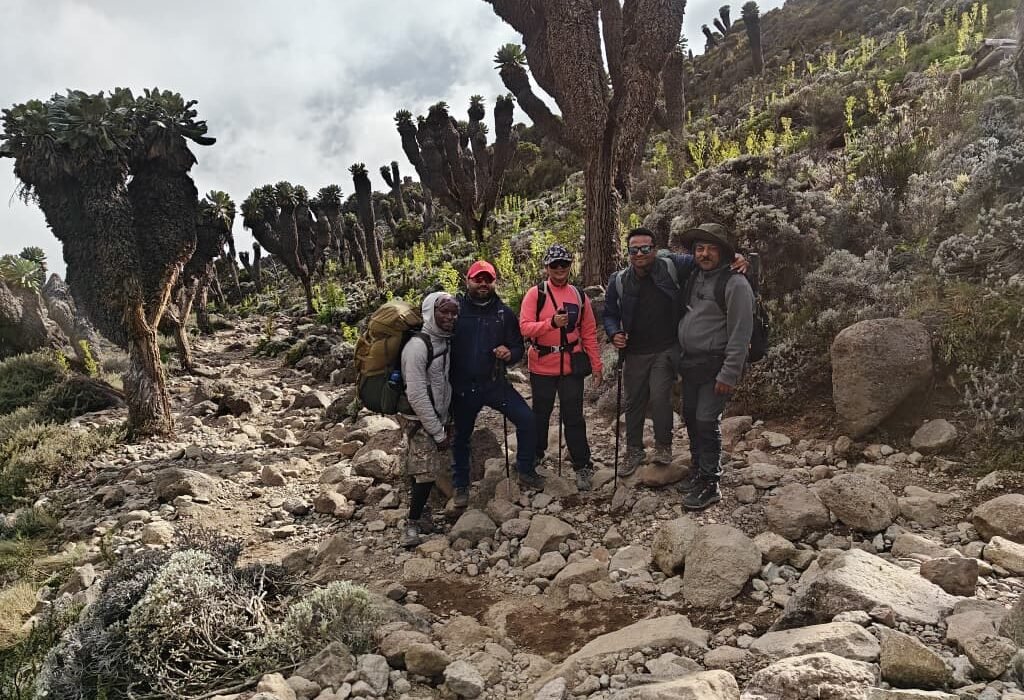
Gilman’s Point: History and Significance is one of the most searched topics by climbers who want to understand what this famous landmark on Mount Kilimanjaro really represents beyond the simple idea of “reaching a signpost.” For many people, standing at Gilman’s Point is not only a physical achievement, but also a moment deeply connected to the history of exploration, scientific discovery, environmental change, and the long relationship between people and Africa’s highest mountain.
This article explains the historical background of Gilman’s Point, its geographical importance, and its modern conservation meaning using reliable scientific and environmental sources. If you are preparing your journey with a trusted local operator such as Eddy Tours & Safaris, understanding this place will make your climb more meaningful and help you appreciate the mountain in a deeper and more responsible way.
Gilman’s Point: History and Significance in early exploration of Kilimanjaro
When discussing Gilman’s Point: History and Significance, it is important to look back at the early scientific and geographical exploration of Mount Kilimanjaro. The mountain attracted researchers, geographers and natural scientists long before modern trekking tourism existed. Early mapping and geological surveys helped establish Kilimanjaro as one of Africa’s most remarkable volcanic landforms, a subject still studied today by institutions such as the United States Geological Survey and environmental research bodies working on mountain geomorphology.
Historical documentation and geographical research published through academic platforms such as Nature Research and ScienceDirect show how early scientific expeditions focused on understanding volcanic structure, glacial presence and climatic patterns at high elevation. Gilman’s Point became one of the most referenced locations along the crater rim because it provided a relatively accessible point for observing the summit environment and crater structure.
Gilman’s Point: History and Significance in mountain geography
From a scientific perspective, Gilman’s Point: History and Significance is closely linked to the geological identity of Kilimanjaro itself. Kilimanjaro is a stratovolcano formed through complex volcanic processes that are still studied today. Geological explanations and long-term monitoring data published by the United States Geological Survey and academic research programs available through U.S. National Library of Medicine help explain how volcanic formations and crater systems influence altitude profiles and landscape stability.
Gilman’s Point sits on the rim of Kibo crater, making it a natural reference location for scientific observation and mapping. Research institutions that focus on landform evolution and volcanic terrain, including studies published through Frontiers in Earth Science, continue to use rim locations such as this to understand erosion processes, rock stability and long-term environmental change.
Gilman’s Point: History and Significance and climate research on Kilimanjaro
Another essential part of Gilman’s Point: History and Significance lies in its role within global climate and glacier research. Kilimanjaro’s shrinking ice fields have become one of the most discussed indicators of climate change in tropical mountain systems. Climate observations published by NASA Climate and assessments produced by the Intergovernmental Panel on Climate Change highlight how temperature and precipitation changes affect high-altitude glaciers.
Scientific studies coordinated through the United Nations Environment Programme and long-term ecosystem monitoring supported by the International Union for Conservation of Nature show that summit and crater rim areas, including Gilman’s Point, are important observation zones for understanding how climate stress is reshaping East African mountain environments.
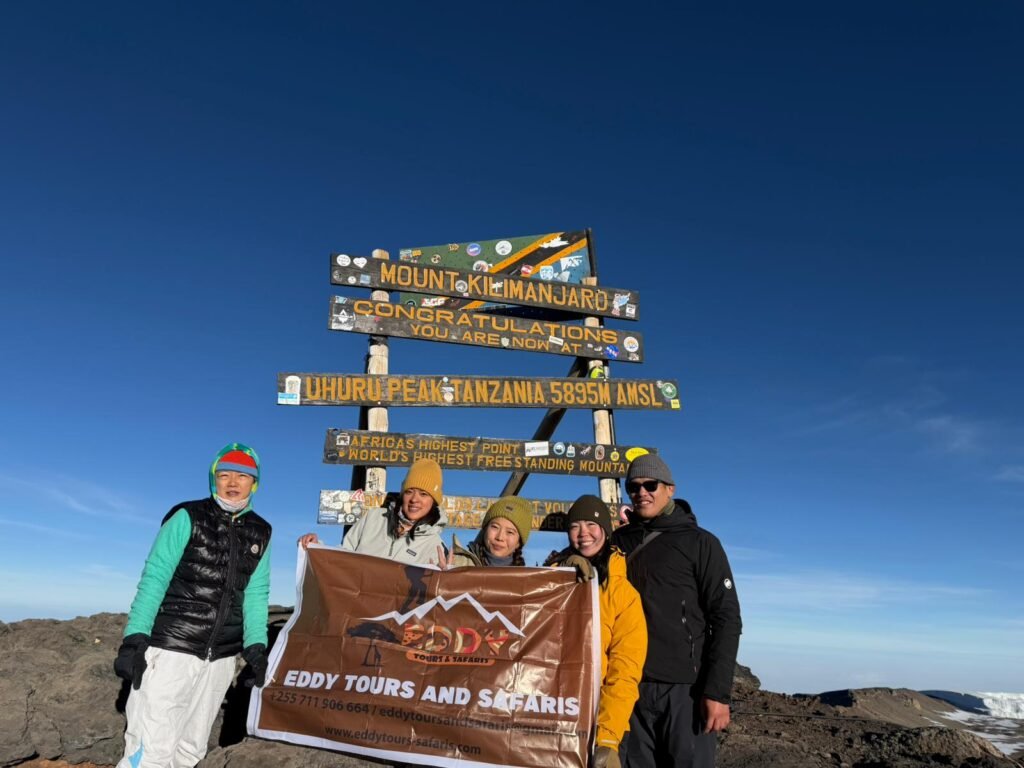
Gilman’s Point: History and Significance for human endurance and altitude science
Modern climbers often focus on the physical challenge of reaching Gilman’s Point, but Gilman’s Point: History and Significance also extends into medical and physiological research. High-altitude performance and oxygen limitation have been studied extensively by medical institutions such as the Centers for Disease Control and Prevention and the International Society for Mountain Medicine.
Clinical reviews and field research published through PubMed and the Johns Hopkins Medicine platform confirm that the altitude zone around the crater rim presents one of the most physiologically demanding environments for climbers. Gilman’s Point therefore represents a natural threshold where the body’s response to oxygen shortage becomes clearly visible.
Gilman’s Point: History and Significance and environmental protection efforts
Environmental protection is a key part of Gilman’s Point: History and Significance. The crater rim and surrounding alpine desert are extremely fragile ecosystems. Conservation organizations such as the World Wide Fund for Nature, the African Wildlife Foundation and Conservation International highlight how even small disturbances can have long-lasting impacts in high-altitude environments.
Research supported by the National Geographic Society and land-use monitoring data from the United States Geological Survey show that strict movement control, waste management and campsite regulation are essential for preserving crater rim landscapes such as those surrounding Gilman’s Point.
Gilman’s Point: History and Significance in cultural and educational value
Beyond science and geography, Gilman’s Point: History and Significance also includes its educational and cultural meaning. Mountains play an important role in human history and knowledge transmission. Cultural heritage and environmental education frameworks promoted by UNESCO support the idea that protected landscapes serve as outdoor classrooms where people learn about ecology, climate and sustainability.
Educational research programmes supported by Harvard University research initiatives and global learning networks promoted by the United Nations Academic Impact highlight how meaningful field experiences strengthen environmental awareness and long-term conservation attitudes.
Gilman’s Point: History and Significance and responsible tourism practice
Responsible tourism now plays a major role in shaping Gilman’s Point: History and Significance. Sustainable travel frameworks supported by the International Labour Organization and community development principles promoted by Oxfam International show how ethical operations improve working conditions for mountain crews and strengthen local conservation partnerships.
Professional trekking programs designed with environmental limits in mind help reduce erosion, protect water sources and maintain safety standards for both visitors and staff. Many climbers choose structured itineraries offered through Kilimanjaro climbing programs that combine safety, fair employment and environmental responsibility.
Gilman’s Point: History and Significance and modern research collaboration
Scientific collaboration continues to expand the understanding of Gilman’s Point: History and Significance. Biodiversity monitoring, climate modelling and geological observation depend on controlled access and reliable field logistics. Research published through Frontiers in Environmental Science and conservation assessments produced by the Wildlife Conservation Society demonstrate how tourism infrastructure can support long-term environmental research when managed correctly.
Field access protocols and safety coordination often follow international risk management guidance developed by the World Bank Disaster Risk Management programme, helping research and conservation teams operate safely in high-altitude environments.
Gilman’s Point: History and Significance for today’s climbers
For modern trekkers, Gilman’s Point: History and Significance represents far more than a physical milestone. It is a place where history, science, climate awareness and human effort meet. Climbers who understand this background often experience the mountain with greater patience, respect and emotional connection.
Those planning their journey with professional local operators such as Tanzania travel specialists benefit from accurate interpretation of landscape features and responsible route planning that respects both safety and conservation standards.
Plan your climb with respect for history and conservation
Understanding Gilman’s Point: History and Significance helps transform a normal trek into a meaningful learning experience. Respecting this place means respecting scientific knowledge, conservation rules and the people who work daily to protect Kilimanjaro’s fragile summit environment.
If you would like honest local advice and professionally designed itineraries that respect the mountain and its history, you can speak directly with local experts through personal climbing consultation support. Your journey to Gilman’s Point becomes more powerful when it is guided by knowledge, care and responsibility.