
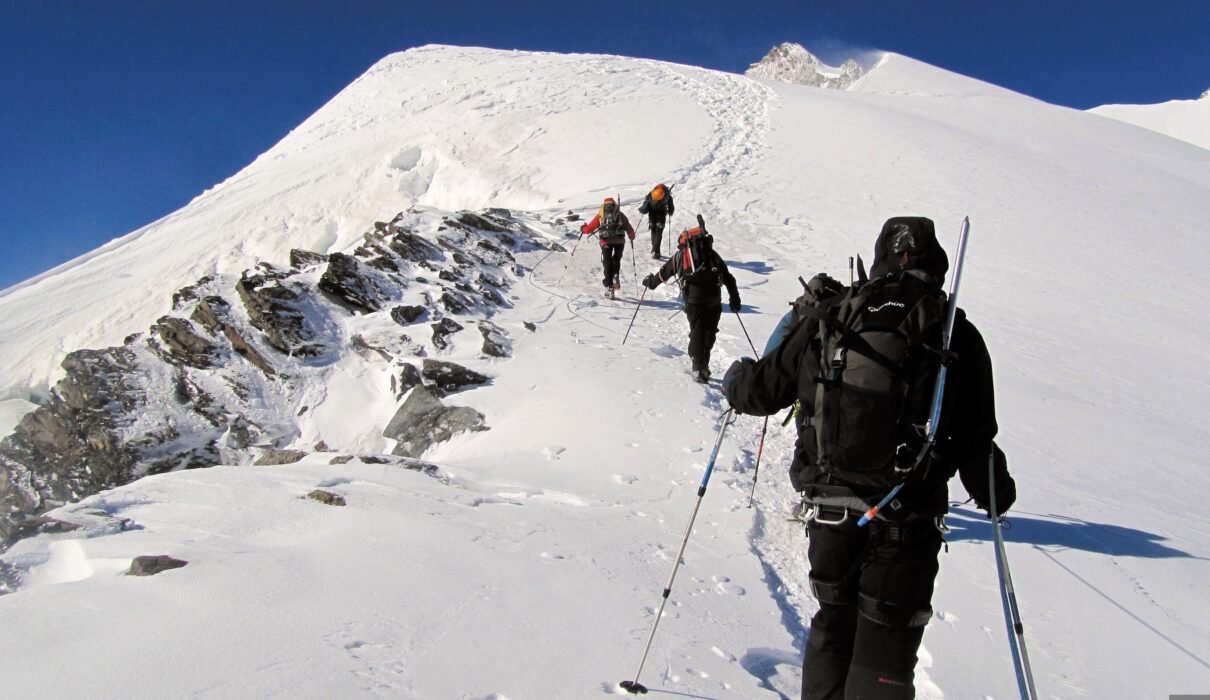
Snow on Kilimanjaro: Annual Photo Report is not simply a collection of beautiful summit images, but a visual story of environmental change, scientific observation and human responsibility on Africa’s highest mountain. Every photograph taken near the summit of Kilimanjaro now carries more meaning than ever before, because the ice fields and permanent snow that made the mountain world-famous are shrinking and transforming in ways that can be clearly seen from year to year.
This report explains what the photos truly show, how scientists interpret these visible changes, and why climbers and travelers should understand the fragile future of Kilimanjaro’s snow. When you travel with a responsible local company such as Eddy Tours & Safaris, your journey becomes part of a wider effort to protect the mountain through awareness, respectful travel and conservation-driven tourism.
Snow on Kilimanjaro: Annual Photo Report and what the images really reveal
The main purpose of Snow on Kilimanjaro: Annual Photo Report is to help people understand what repeated photography from the crater rim and summit areas shows over time. Scientific image analysis supported by the NASA Climate Program demonstrates that satellite and ground photography together provide reliable visual evidence of ice retreat and surface change on high-altitude mountains.
Researchers working with data platforms such as the National Snow and Ice Data Center and climate records maintained by the National Oceanic and Atmospheric Administration use photographic time series to confirm that Kilimanjaro’s remaining ice is extremely sensitive to temperature, cloud cover and moisture patterns. Each photo captured near the summit therefore contributes to a growing visual archive that complements scientific measurement.
Snow on Kilimanjaro: Annual Photo Report and global climate science
At the heart of Snow on Kilimanjaro: Annual Photo Report lies climate science. Global climate assessments published by the Intergovernmental Panel on Climate Change explain that tropical glaciers respond rapidly to even small shifts in air temperature and precipitation. Kilimanjaro’s snow cover is therefore considered one of the most sensitive indicators of environmental change in East Africa.
International atmospheric monitoring supported by the World Meteorological Organization further confirms that changes in cloud formation, wind circulation and humidity strongly influence snow persistence at high altitude. These factors are clearly visible in annual photographic comparisons, where some slopes lose snow faster than others depending on exposure and weather patterns.
Snow on Kilimanjaro: Annual Photo Report and geological perspective
Understanding Snow on Kilimanjaro: Annual Photo Report also requires a geological view of the mountain. Kilimanjaro is a massive stratovolcano whose shape, crater structure and slope angles affect how snow and ice accumulate and melt. Geological mapping and long-term terrain monitoring carried out by the United States Geological Survey help explain why certain sections of the summit retain ice longer than others.
Scientific analysis published through Frontiers in Earth Science and peer-reviewed studies available via ScienceDirect show that slope stability, volcanic rock composition and surface roughness strongly affect how solar radiation is absorbed. Annual photographs clearly reflect these geological influences, especially along the crater rim.
Snow on Kilimanjaro: Annual Photo Report and environmental monitoring
Another key role of Snow on Kilimanjaro: Annual Photo Report is to support environmental monitoring. Global environmental coordination bodies such as the United Nations Environment Programme and conservation authorities including the International Union for Conservation of Nature use visual documentation as part of broader ecosystem observation strategies.
High-altitude environments are particularly fragile, and conservation planning supported by Conservation International shows that repeated visual records help identify erosion, visitor pressure and infrastructure impact in protected mountain areas. Annual photography therefore becomes both a scientific and management tool.
Snow on Kilimanjaro: Annual Photo Report and wildlife conservation context
Although snow and glaciers sit far above wildlife habitats, Snow on Kilimanjaro: Annual Photo Report still connects directly to wildlife conservation. Changes in water availability and seasonal flow patterns influence lower-altitude ecosystems that support wildlife populations. Research programs coordinated by the World Wide Fund for Nature and the African Wildlife Foundation show how mountain hydrology affects savannah and forest ecosystems below.
Large-scale conservation assessments produced by the Wildlife Conservation Society confirm that climate-driven changes in water cycles create long-term consequences for wildlife movement and habitat stability. The story of Kilimanjaro’s snow is therefore inseparable from broader ecosystem health.
Snow on Kilimanjaro: Annual Photo Report and scientific research platforms
The scientific interpretation behind Snow on Kilimanjaro: Annual Photo Report is strengthened by open research platforms. High-altitude environmental studies published through Nature Research and multidisciplinary climate papers distributed by Frontiers Journals provide important peer-reviewed evidence that complements visual data.
Medical and environmental field research linked to high-altitude exposure and climate stress can also be accessed through the PubMed database and the U.S. National Library of Medicine, which document how environmental change affects both ecosystems and human health.
Snow on Kilimanjaro: Annual Photo Report and cultural and educational value
Beyond science, Snow on Kilimanjaro: Annual Photo Report has strong educational importance. Mountains such as Kilimanjaro are recognized as global heritage and learning landscapes. Environmental education and cultural protection frameworks promoted by UNESCO emphasize how visual storytelling helps communities and visitors understand the urgency of conservation.
Educational research supported by global learning networks such as the United Nations Academic Impact demonstrates that visual records are among the most powerful tools for communicating climate science to non-specialists.
Snow on Kilimanjaro: Annual Photo Report and sustainable tourism responsibility
A responsible Snow on Kilimanjaro: Annual Photo Report also reminds travelers that tourism has a role to play in protecting fragile summit environments. Labour and sustainability frameworks promoted by the International Labour Organization and community development guidance published by Oxfam International show how ethical operations strengthen conservation partnerships.
Well-managed trekking programs limit waste, control movement at sensitive locations and ensure that staff working in high-altitude environments are protected and supported. Many climbers choose structured and environmentally responsible itineraries offered through Kilimanjaro climbing programs that integrate safety, conservation and education.
Snow on Kilimanjaro: Annual Photo Report and risk and disaster planning
The changing ice environment highlighted in Snow on Kilimanjaro: Annual Photo Report also affects mountain safety and infrastructure planning. Environmental risk assessments supported by the World Bank Disaster Risk Management Programme emphasize how climate-driven changes influence slope stability, trail safety and emergency response planning in mountainous regions.
Visual monitoring helps park authorities and rescue teams anticipate potential hazards such as unstable ice walls, rockfall exposure and changing trail conditions near the crater rim.
Snow on Kilimanjaro: Annual Photo Report for modern climbers and photographers
For today’s travelers, Snow on Kilimanjaro: Annual Photo Report represents both a rare visual experience and a responsibility. Climbers who capture images near the summit are documenting a landscape that is actively changing. Understanding the scientific and conservation context behind these images transforms photography into meaningful environmental storytelling.
Visitors planning a wildlife and mountain journey often combine their climb with professionally guided safari experiences through Tanzania safari programs, allowing them to understand how Kilimanjaro’s snow story connects with broader ecosystem health across the country.
Snow on Kilimanjaro: Annual Photo Report and responsible local travel
Choosing a local and responsible operator is an important part of Snow on Kilimanjaro: Annual Photo Report. Local teams understand seasonal weather patterns, safe photography locations and environmental restrictions far better than distant resellers.
Travelers who wish to document Kilimanjaro responsibly can receive honest guidance and personalized planning through local climbing consultation support, ensuring that photography and observation do not disturb fragile summit environments.
Why this annual photo report truly matters
In reality, Snow on Kilimanjaro: Annual Photo Report is far more than a visual album. It is a scientific record, a conservation message and a reminder of how closely human activity, climate systems and fragile ecosystems are connected on Africa’s highest mountain.
By traveling responsibly and supporting conservation-focused tourism through experienced local professionals such as Eddy Tours & Safaris, every visitor becomes part of the wider effort to protect Kilimanjaro’s remaining snow and the extraordinary natural heritage it represents.