
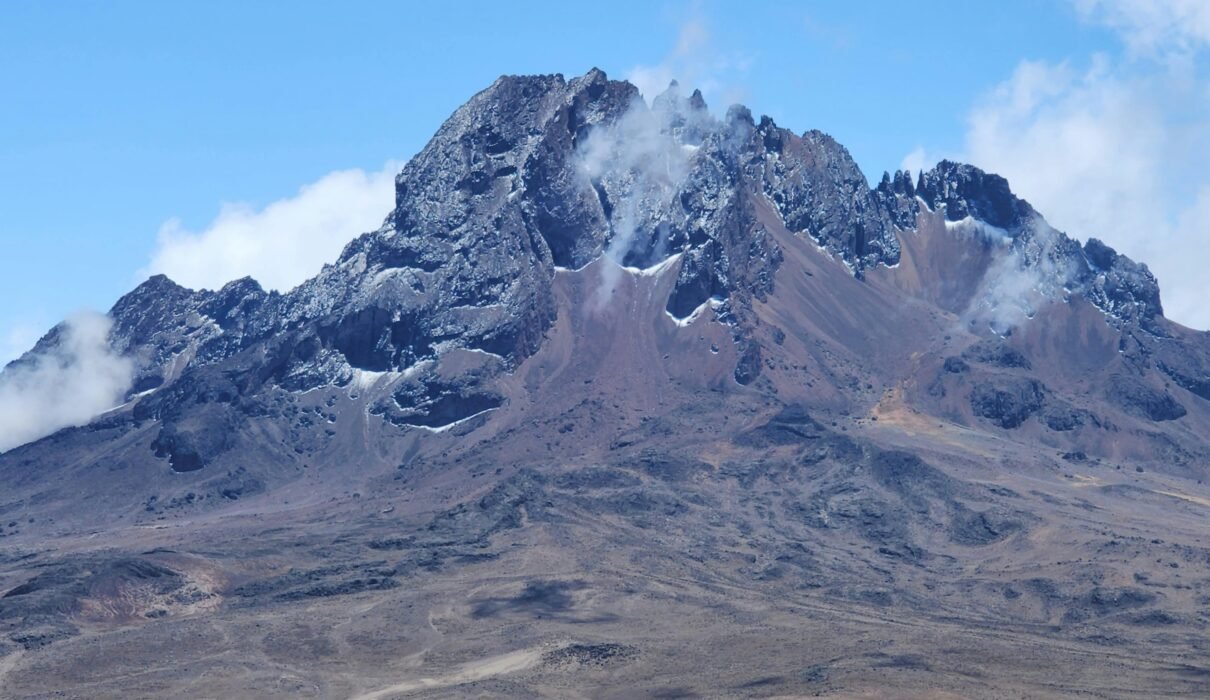
Lava Tower: A Major Landmark on Kilimanjaro is one of the most talked-about locations along the southern climbing routes, not because it is a summit, but because it represents a powerful meeting point between geology, human endurance and environmental change. For many climbers, reaching Lava Tower is the first time they truly feel the scale of Mount Kilimanjaro and the seriousness of altitude, weather and isolation. This place quietly shapes how your body adapts, how your mind responds to height and how your entire summit journey will unfold.
Understanding what Lava Tower really represents adds deep meaning to your climb and helps you prepare in a smarter and safer way. Climbers who plan their journey with experienced local specialists such as Eddy Tours & Safaris often describe Lava Tower as the moment when Kilimanjaro changes from a beautiful mountain walk into a true high-altitude adventure.
Lava Tower: A Major Landmark on Kilimanjaro and its geological origin
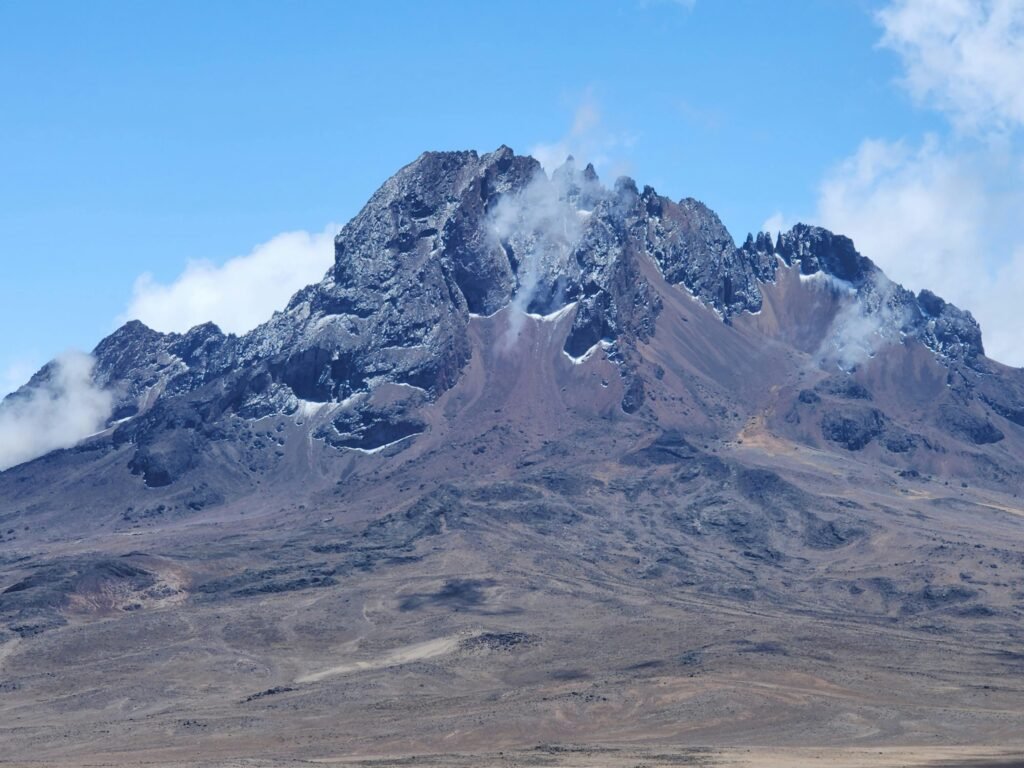
The story of Lava Tower: A Major Landmark on Kilimanjaro begins with the volcanic history of the mountain itself. Mount Kilimanjaro is a massive stratovolcano built through long and complex volcanic activity. Geological studies coordinated by the United States Geological Survey and peer-reviewed research available through Frontiers in Earth Science explain how lava flows, vents and intrusive formations created the rugged landscape seen today. Lava Tower is one of these dramatic remnants of volcanic activity, standing as a natural monument to the mountain’s fiery past.
Scientific publications indexed by the U.S. National Library of Medicine and academic papers distributed via ScienceDirect show how volcanic landforms also influence soil development, drainage patterns and slope stability. The rocky environment around Lava Tower reflects these geological processes and explains why this area feels so dry, exposed and visually striking.
Lava Tower: A Major Landmark on Kilimanjaro and altitude science
For climbers, Lava Tower: A Major Landmark on Kilimanjaro is often the first real confrontation with thin air. Medical and physiological research published by the Centers for Disease Control and Prevention and clinical guidance provided by the International Society for Mountain Medicine clearly show that rapid exposure to higher elevation can trigger headaches, nausea and unusual fatigue if the body does not adapt gradually.
Studies available through PubMed and health resources from the World Health Organization explain why controlled ascent profiles and short exposure strategies are commonly used in high-altitude trekking. Passing through Lava Tower allows guides to observe how each climber reacts to altitude before moving on to higher and more demanding camps.
Lava Tower: A Major Landmark on Kilimanjaro and the “climb high, sleep low” principle
One of the main operational reasons behind Lava Tower: A Major Landmark on Kilimanjaro is its role in the famous acclimatization strategy known as “climb high, sleep low.” Outdoor leadership research and expedition planning principles promoted by institutions such as the National Outdoor Leadership School show that short exposure to higher elevation followed by descent supports the body’s natural adjustment to reduced oxygen.
This practice is now widely supported by medical field studies referenced through Johns Hopkins Medicine and altitude health resources from the Cleveland Clinic. Visiting Lava Tower and later descending to a lower sleeping camp helps stimulate adaptation while reducing the risk of serious altitude illness.
Lava Tower: A Major Landmark on Kilimanjaro and climate exposure
The environment surrounding Lava Tower: A Major Landmark on Kilimanjaro sits in the alpine desert zone, where weather conditions change rapidly and water availability becomes extremely limited. Climate research published by NASA Climate and assessments produced by the Intergovernmental Panel on Climate Change highlight how high-altitude regions experience stronger temperature variation, intense solar radiation and unpredictable wind systems.
Environmental monitoring supported by the United Nations Environment Programme and ecological vulnerability assessments coordinated by the International Union for Conservation of Nature show that this zone is particularly sensitive to climate stress. The harsh conditions around Lava Tower make it a valuable reference site for observing how Kilimanjaro’s ecosystems respond to environmental change.
Lava Tower: A Major Landmark on Kilimanjaro and fragile ecosystems
Although the landscape looks barren, Lava Tower: A Major Landmark on Kilimanjaro lies within a fragile ecological system. Conservation organizations such as the World Wide Fund for Nature, the African Wildlife Foundation and the Wildlife Conservation Society explain that alpine desert habitats support slow-growing plant species and highly specialized microorganisms.
Research and conservation strategies promoted by Conservation International and educational projects supported by the National Geographic Society emphasize that even small disturbances, such as waste mismanagement or off-trail walking, can permanently damage high-altitude ecosystems. This is why regulated movement and professional guidance are essential when passing through Lava Tower.
Lava Tower: A Major Landmark on Kilimanjaro and human performance research
The high-altitude environment around Lava Tower: A Major Landmark on Kilimanjaro has also become important for human performance studies. Physiological research published in Frontiers in Physiology and behavioral studies reported by Nature Research show how fatigue, dehydration and cold exposure influence decision-making and emotional stability during prolonged physical effort.
This knowledge has helped shape modern guiding practices on Kilimanjaro, where observation, communication and pacing become just as important as physical strength when crossing demanding points such as Lava Tower.
Lava Tower: A Major Landmark on Kilimanjaro and responsible route design
Route planning plays a major role in how Lava Tower: A Major Landmark on Kilimanjaro is used today. Risk management frameworks developed through the World Bank Disaster Risk Management programme and land-use planning guidance published by the Food and Agriculture Organization show how controlled access points and trail management reduce environmental impact and accident risk.
Climbers who follow professionally designed itineraries such as those offered through Kilimanjaro climbing programs benefit from realistic daily distances, proper acclimatization profiles and well-managed transitions through sensitive zones like Lava Tower.
Lava Tower: A Major Landmark on Kilimanjaro and cultural and educational value
The wider meaning of Lava Tower: A Major Landmark on Kilimanjaro also includes education and cultural awareness. Global heritage and environmental learning frameworks promoted by UNESCO and academic field research initiatives supported by Harvard University research programs highlight how natural landmarks help people understand long-term environmental change.
Learning about Lava Tower encourages climbers to see Kilimanjaro not only as a personal challenge, but also as a scientific and cultural landscape that deserves careful protection.
Lava Tower: A Major Landmark on Kilimanjaro for first-time climbers
For many beginners, Lava Tower: A Major Landmark on Kilimanjaro becomes the most memorable part of the ascent before summit day. Public health research coordinated by the Harvard T.H. Chan School of Public Health shows that psychological confidence and realistic expectations strongly influence performance in demanding outdoor environments.
Experienced local operators such as Tanzania safari and trekking specialists help travelers understand what to expect at Lava Tower and how to manage breathing, hydration and pace in a calm and practical way.
Lava Tower: A Major Landmark on Kilimanjaro and ethical tourism practice
Ethical operations shape the future of Lava Tower: A Major Landmark on Kilimanjaro. Labour standards promoted by the International Labour Organization and community development initiatives supported by Oxfam International show how fair working conditions for guides and porters improve safety, morale and environmental care.
Responsible tourism protects both people and the mountain, ensuring that sensitive locations such as Lava Tower remain accessible for future generations of climbers and researchers.
Plan your journey through Lava Tower with local expertise
Understanding Lava Tower: A Major Landmark on Kilimanjaro changes how you approach your climb. It becomes clear that this place is not simply a scenic stop, but a scientific reference point, an acclimatization tool and an environmental responsibility zone combined into one powerful landmark.
If you would like realistic advice and carefully designed itineraries that respect both your safety and the mountain itself, you can speak directly with experienced local professionals through personal planning support. Your journey through Lava Tower becomes far more meaningful when guided by knowledge, care and local experience.