
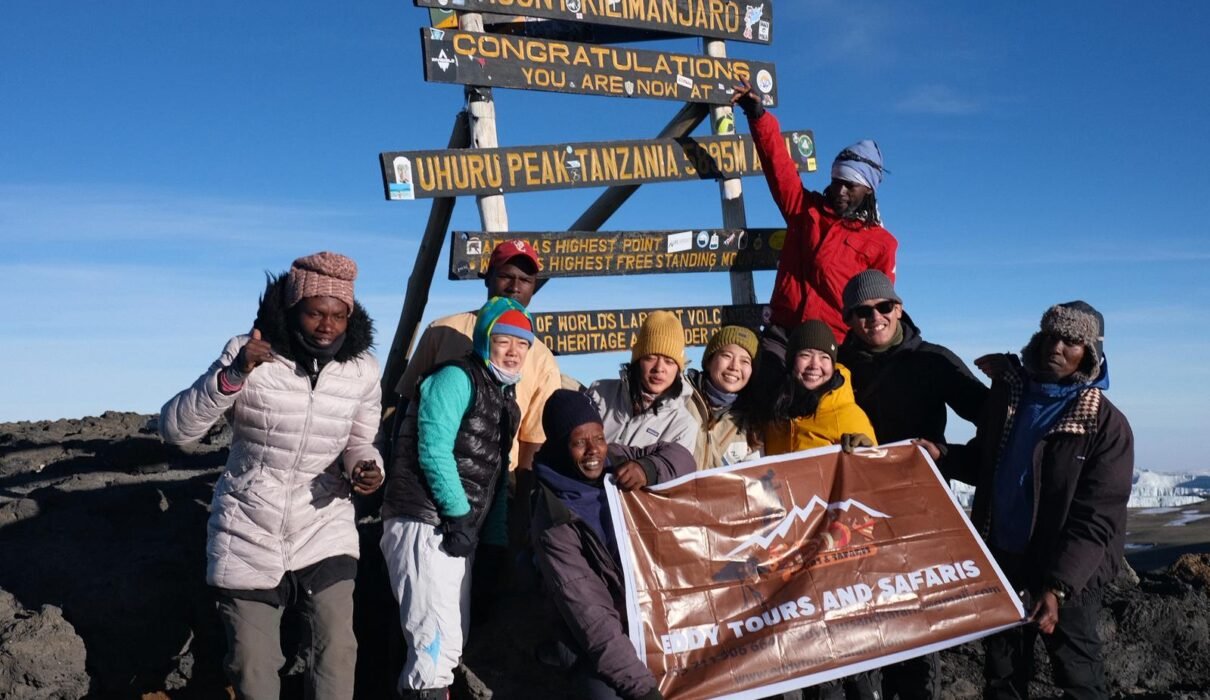
Umbwe Route: The Steepest and Most Challenging Route is widely known among experienced trekkers as the most direct and physically demanding way to approach the summit of Mount Kilimanjaro, and it is often chosen by climbers who are searching for a quieter, tougher and more technical experience rather than comfort or popularity. This route rises extremely fast through dense forest and steep ridges, creating a powerful but unforgiving journey where preparation, discipline and professional support become more important than motivation alone
In this guide, you will clearly understand why this route has such a strong reputation, what science says about its risks and rewards, how environmental protection is managed along the trail, and what kind of climber should realistically consider this path. If you are planning your ascent with a professional local operator such as Eddy Tours & Safaris, this information will help you make a responsible decision before choosing the Umbwe Route
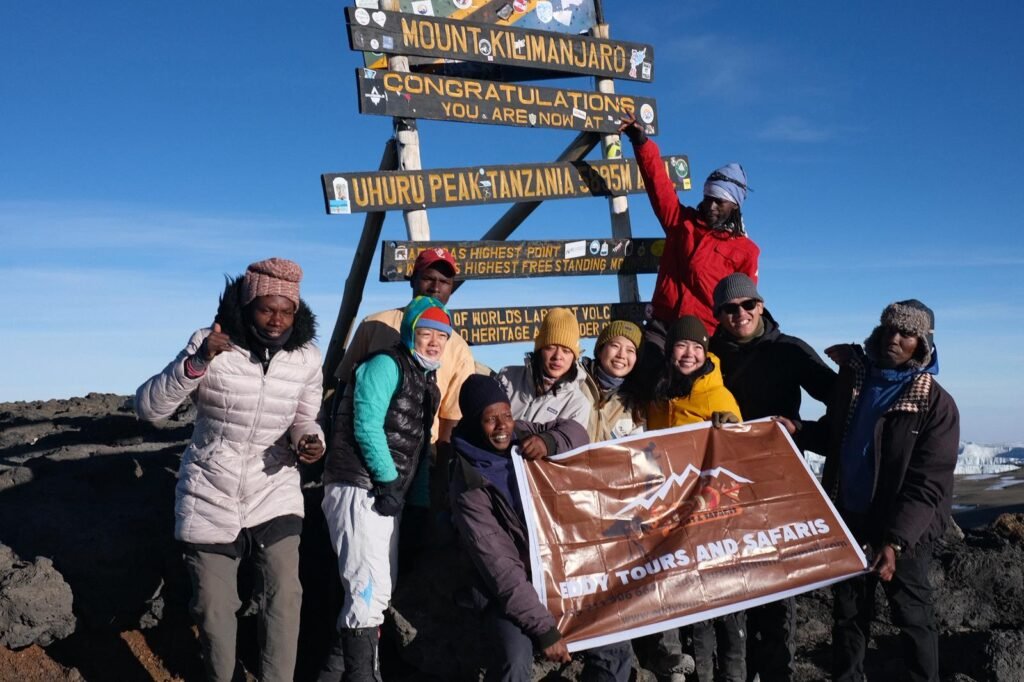
Umbwe Route: The Steepest and Most Challenging Route and its position on Kilimanjaro
Umbwe Route: The Steepest and Most Challenging Route begins on the southern side of Mount Kilimanjaro and climbs aggressively through some of the steepest terrain found on the mountain. The route quickly leaves cultivated land and enters montane forest before rising sharply toward exposed ridges that lead to the alpine desert zone. Geological and landscape research published by the United States Geological Survey explains how steep volcanic slopes and unstable soil structures influence trail safety and erosion patterns in stratovolcanic mountains such as Kilimanjaro.
Environmental mapping and protected area monitoring supported by the International Union for Conservation of Nature also highlight that southern access routes like Umbwe pass through highly sensitive ecological corridors, making responsible trail management and controlled visitor flow essential for long-term conservation.
Umbwe Route: The Steepest and Most Challenging Route and altitude science
The defining challenge of Umbwe Route: The Steepest and Most Challenging Route is the extremely rapid gain in elevation. Medical and physiological research published through the U.S. National Library of Medicine and summarized in PubMed shows that fast ascents greatly increase the risk of acute mountain sickness because the body does not receive enough time to adapt to reduced oxygen availability.
Clinical guidance provided by the Centers for Disease Control and Prevention and the International Society for Mountain Medicine confirms that conservative ascent profiles significantly improve physical performance, sleep quality and decision-making capacity at altitude. This scientific reality is the main reason why the Umbwe Route is not recommended for beginners.
Umbwe Route: The Steepest and Most Challenging Route and physical strain
Another major feature of Umbwe Route: The Steepest and Most Challenging Route is continuous physical strain caused by steep gradients and limited recovery sections. Human performance research published by Frontiers in Physiology and exercise fatigue studies discussed by ScienceDirect demonstrate that steep terrain increases muscular fatigue, dehydration rates and overall metabolic stress compared to gradual trails.
Clinical sports and endurance studies supported by Johns Hopkins Medicine show that prolonged uphill load without proper pacing often leads to early exhaustion and slower recovery during subsequent climbing days. This is why professional guides strongly manage walking rhythm, hydration and rest even when climbers feel motivated to push faster.
Umbwe Route: The Steepest and Most Challenging Route and weather exposure
Weather conditions strongly influence the real difficulty of Umbwe Route: The Steepest and Most Challenging Route. Climate monitoring published by NASA Climate and global assessments prepared by the Intergovernmental Panel on Climate Change explain how mountain weather becomes increasingly unpredictable as elevation rises.
Environmental monitoring coordinated by the United Nations Environment Programme shows that rapid cloud formation, temperature drops and wind acceleration are common on steep ridges. These conditions create additional cold stress and psychological fatigue for climbers moving along exposed sections of the Umbwe Route.
Umbwe Route: The Steepest and Most Challenging Route and mental resilience
Beyond physical demands, Umbwe Route: The Steepest and Most Challenging Route places strong pressure on mental focus and emotional control. Psychological resilience studies published through Nature Research and behavioural performance research available from ScienceDirect demonstrate that steep terrain combined with cold, fatigue and reduced oxygen increases emotional instability and risk-taking behaviour.
Leadership and expedition psychology models promoted by the National Outdoor Leadership School emphasize calm communication, realistic goal setting and continuous group monitoring when teams move through high-stress environments such as Umbwe’s steep forest and ridge sections.

Umbwe Route: The Steepest and Most Challenging Route and medical preparedness
At high altitude, medical readiness becomes a decisive factor on Umbwe Route: The Steepest and Most Challenging Route. Clinical health advice provided by the Cleveland Clinic and emergency response principles promoted by the International Federation of Red Cross and Red Crescent Societies highlight the importance of symptom recognition, early intervention and structured evacuation procedures.
Professional Kilimanjaro operations follow medical screening and emergency response practices that align with public health standards published by the World Health Organization, especially for operations in remote and resource-limited environments
Umbwe Route: The Steepest and Most Challenging Route and environmental protection
Environmental protection is an essential part of managing Umbwe Route: The Steepest and Most Challenging Route. Conservation organizations such as the World Wide Fund for Nature, the African Wildlife Foundation and Conservation International highlight how steep mountain ecosystems are extremely vulnerable to erosion, waste accumulation and trail widening.
Scientific assessments coordinated by the National Geographic Society and terrain stability studies supported by the United States Geological Survey show that unmanaged foot traffic on steep slopes leads to rapid soil loss and vegetation damage, particularly within forest transition zones found along the Umbwe approach.
Umbwe Route: The Steepest and Most Challenging Route and porter welfare
Another hidden but critical aspect of Umbwe Route: The Steepest and Most Challenging Route is ethical workforce management. Labour protection frameworks promoted by the International Labour Organization and social development programs supported by Oxfam International demonstrate how fair working conditions improve team safety, efficiency and morale in physically demanding tourism environments.
Healthy, well-equipped and respected support teams are essential when operating on a route where steepness and fatigue affect both climbers and crew.
Umbwe Route: The Steepest and Most Challenging Route and professional route design
Risk management research coordinated through the World Bank Disaster Risk Management programme and field safety frameworks developed by the International Climbing and Mountaineering Federation show that structured access control and experienced leadership significantly reduce incident rates on difficult mountain routes.
This is why many climbers rely on professionally structured itineraries such as those offered through Kilimanjaro climbing programs, which are designed to connect Umbwe with safer acclimatisation sections later in the climb.
Umbwe Route: The Steepest and Most Challenging Route for experienced climbers only
Public health and endurance research conducted by the Harvard T.H. Chan School of Public Health and environmental physiology studies published in Frontiers in Environmental Science confirm that steep, rapid-ascent routes are best suited to climbers who already understand how their bodies respond to altitude and prolonged exertion.
For first-time trekkers, alternative routes that allow slower altitude progression provide significantly better outcomes. Experienced climbers, however, may find Umbwe deeply rewarding when managed correctly and responsibly.
Umbwe Route: The Steepest and Most Challenging Route and safety-driven logistics
Logistics planning is especially demanding on Umbwe Route: The Steepest and Most Challenging Route. Transport and operational safety studies published by the International Energy Agency and road-safety frameworks developed by the World Health Organization road safety programme show that vehicle reliability and driver training remain critical even before climbers reach the trailhead.
Professional operators ensure proper equipment distribution, weight limits and coordinated resupply, especially when terrain restricts rapid evacuation.
Umbwe Route: The Steepest and Most Challenging Route and your booking decision
Choosing Umbwe Route: The Steepest and Most Challenging Route should never be driven by curiosity alone. It requires honest self-assessment, professional consultation and realistic planning. Many climbers prefer to receive detailed route advice directly from local experts through personal Kilimanjaro consultation before committing to such a demanding trail.
For travelers combining wildlife experiences and mountain adventures, professionally integrated programs are also available through Tanzania safari and trekking specialists, allowing balanced travel planning without unnecessary physical overload.
Umbwe Route: The Steepest and Most Challenging Route and the final reality
In real terms, Umbwe Route: The Steepest and Most Challenging Route is not simply a harder path to the summit. It is a route that tests your physical endurance, emotional stability, discipline and respect for environmental limits. It rewards climbers who prepare properly, move patiently and listen carefully to professional guidance.
If your goal is to experience Kilimanjaro in its most raw and demanding form, and you are prepared to accept the responsibility that comes with such a choice, then planning your climb with experienced local professionals such as Eddy Tours & Safaris can help you approach this powerful route safely, ethically and with the respect it truly deserves.