
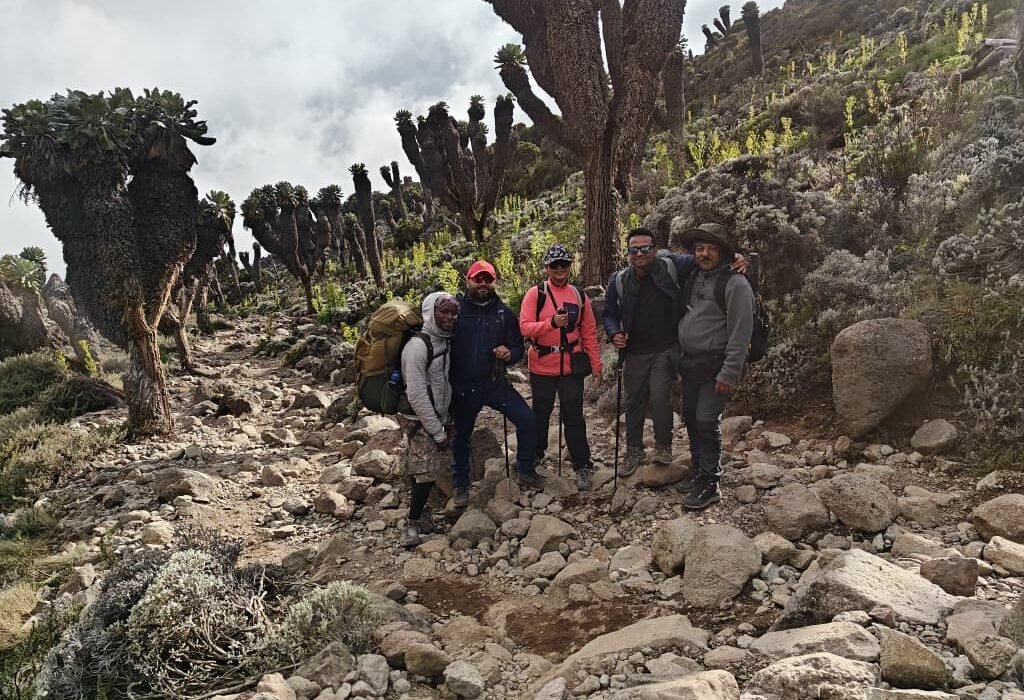
Stella Point: One of Kilimanjaro’s Main Summit Points is often the first true moment when climbers feel that the dream of standing on Africa’s highest mountain is becoming real. Reaching this famous crater-rim landmark is not only a physical achievement, but also a powerful emotional turning point where exhaustion, hope and respect for the mountain meet in one quiet place above the clouds.
Many people rush through this location without fully understanding what it represents. This guide explains the geographical role, historical background, scientific importance and conservation meaning of Stella Point in a clear and human way. If you are preparing your climb with an experienced local team such as Eddy Tours & Safaris, learning the real story behind this summit point will make your journey deeper, safer and far more memorable.
Stella Point: One of Kilimanjaro’s Main Summit Points and its position on the mountain
To understand why Stella Point: One of Kilimanjaro’s Main Summit Points is so important, it helps to first understand where it sits on the mountain itself. Stella Point lies on the rim of Kibo crater, the central volcanic cone of Mount Kilimanjaro. From a geographical and geological perspective, this rim forms one of the most dramatic natural features of the entire mountain. Geological mapping and long-term monitoring published by the United States Geological Survey explain how volcanic processes created the crater structure that still defines Kilimanjaro’s summit landscape today.
Scientific studies shared through Frontiers in Earth Science and global geological research platforms show that crater rims are important natural reference points for understanding erosion, rock stability and long-term landform change. Stella Point is therefore not just a marker for climbers, but also a natural observation point for scientists studying the evolution of high-altitude volcanic environments.
Stella Point: One of Kilimanjaro’s Main Summit Points in the history of exploration
The story of Stella Point: One of Kilimanjaro’s Main Summit Points is closely connected to the early scientific exploration of Kilimanjaro. Long before modern trekking routes existed, researchers and geographers were already documenting the mountain’s volcanic structure, glaciers and climate patterns. Historical scientific documentation and modern reviews published through Nature Research and ScienceDirect show how summit and crater-rim locations were central to early mountain studies in East Africa.
Stella Point became a recognised reference on the crater rim because it provides a relatively direct access point from the southern routes. Over time, this made it an important landmark in both scientific records and modern mountaineering culture.
Stella Point: One of Kilimanjaro’s Main Summit Points and climate science
Another major part of Stella Point: One of Kilimanjaro’s Main Summit Points lies in its role within global climate and glacier research. Kilimanjaro’s disappearing ice fields have become one of the most widely studied examples of climate stress in tropical mountain systems. Climate observations from NASA Climate and assessments published by the Intergovernmental Panel on Climate Change clearly show how rising temperatures and changing precipitation patterns affect high-altitude glaciers.
Environmental monitoring supported by the United Nations Environment Programme and conservation assessments from the International Union for Conservation of Nature confirm that crater-rim zones such as Stella Point are extremely sensitive indicators of environmental change. These areas allow scientists to observe how climate stress reshapes fragile alpine desert ecosystems.
Stella Point: One of Kilimanjaro’s Main Summit Points and human physiology at altitude
For climbers, Stella Point: One of Kilimanjaro’s Main Summit Points also marks a critical physiological threshold. At this elevation, the human body is operating under severe oxygen limitation. Medical research published through the U.S. National Library of Medicine and clinical summaries available via PubMed describe how reduced oxygen pressure affects heart rate, breathing efficiency and cognitive function.
Health guidance from the Centers for Disease Control and Prevention and expert explanations from the International Society for Mountain Medicine show that this altitude zone is where symptoms of acute mountain sickness most often become noticeable. Clinical insight from Johns Hopkins Medicine further explains why slow movement, hydration and careful pacing become essential near crater-rim locations such as Stella Point.
Stella Point: One of Kilimanjaro’s Main Summit Points and environmental protection
Environmental responsibility is a central part of understanding Stella Point: One of Kilimanjaro’s Main Summit Points. The alpine desert surrounding the crater rim is one of the most fragile ecosystems on the entire mountain. Conservation organisations including the World Wide Fund for Nature, the African Wildlife Foundation and the Wildlife Conservation Society consistently highlight how high-altitude environments recover extremely slowly from physical disturbance.
Research and public education supported by Conservation International and the National Geographic Society demonstrate that strict movement control, waste management and visitor education are essential to preserve crater-rim landscapes such as those surrounding Stella Point.
Stella Point: One of Kilimanjaro’s Main Summit Points and cultural learning
Beyond science, Stella Point: One of Kilimanjaro’s Main Summit Points also holds strong educational and cultural value. Mountains have long served as places of learning and reflection for human societies. Cultural and natural heritage frameworks promoted by UNESCO recognise that protected landscapes are living classrooms where people develop deeper awareness of nature and sustainability.
Educational research initiatives supported by Harvard University research programmes and global learning networks promoted through the United Nations Academic Impact show how direct experience in natural environments strengthens long-term environmental responsibility and scientific understanding.
Stella Point: One of Kilimanjaro’s Main Summit Points and responsible tourism
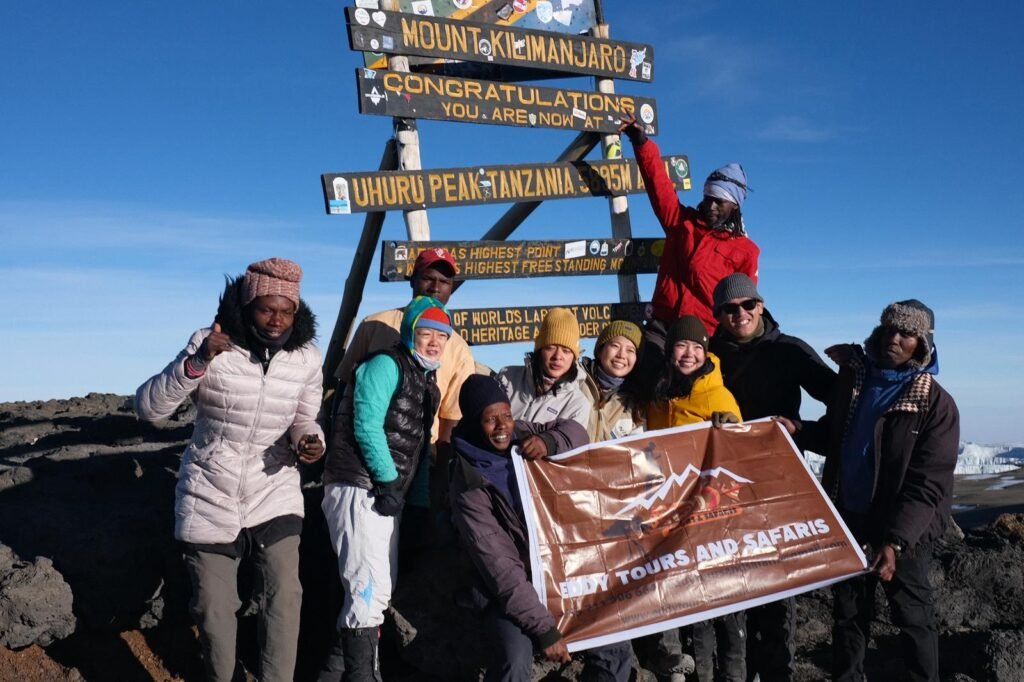
Modern tourism plays an important role in shaping how Stella Point: One of Kilimanjaro’s Main Summit Points is experienced and protected. Ethical labour standards promoted by the International Labour Organization and community development principles supported by Oxfam International show that fair working conditions improve safety, morale and environmental stewardship among mountain crews.
Many climbers now choose professionally structured routes such as those available through Kilimanjaro climbing programs, where safety protocols, environmental limits and porter welfare are integrated into daily operations.
Stella Point: One of Kilimanjaro’s Main Summit Points and scientific collaboration
Scientific collaboration continues to expand the global understanding of Stella Point: One of Kilimanjaro’s Main Summit Points. Environmental and biodiversity research published through Frontiers in Environmental Science supports long-term monitoring of mountain ecosystems and climate responses.
Field access and conservation planning are also supported by international organisations such as the World Bank Disaster Risk Management programme, which promotes structured risk management for both conservation and scientific field operations in sensitive and high-risk environments.
Stella Point: One of Kilimanjaro’s Main Summit Points for today’s climbers
For modern trekkers, Stella Point: One of Kilimanjaro’s Main Summit Points represents far more than a checkpoint. It is the place where many people first step onto the crater rim, where the scale of the mountain becomes visible in every direction, and where the decision to continue toward the highest point must be made with honesty and humility.
Climbers who travel with experienced local teams such as Tanzania travel specialists benefit from accurate interpretation of the landscape, realistic pacing and strong safety awareness during this demanding part of the climb.
Plan your Stella Point journey with knowledge and care
Understanding Stella Point: One of Kilimanjaro’s Main Summit Points transforms a simple trek into a meaningful encounter with history, science and conservation. This knowledge encourages respect for fragile environments and for the people who work daily to protect Kilimanjaro’s summit region.
If you would like local guidance and professionally designed itineraries that respect both the mountain and its communities, you can speak directly with experienced planners through personal Kilimanjaro consultation support. Your journey to Stella Point becomes far more powerful when it is guided by understanding, responsibility and genuine local expertise.