
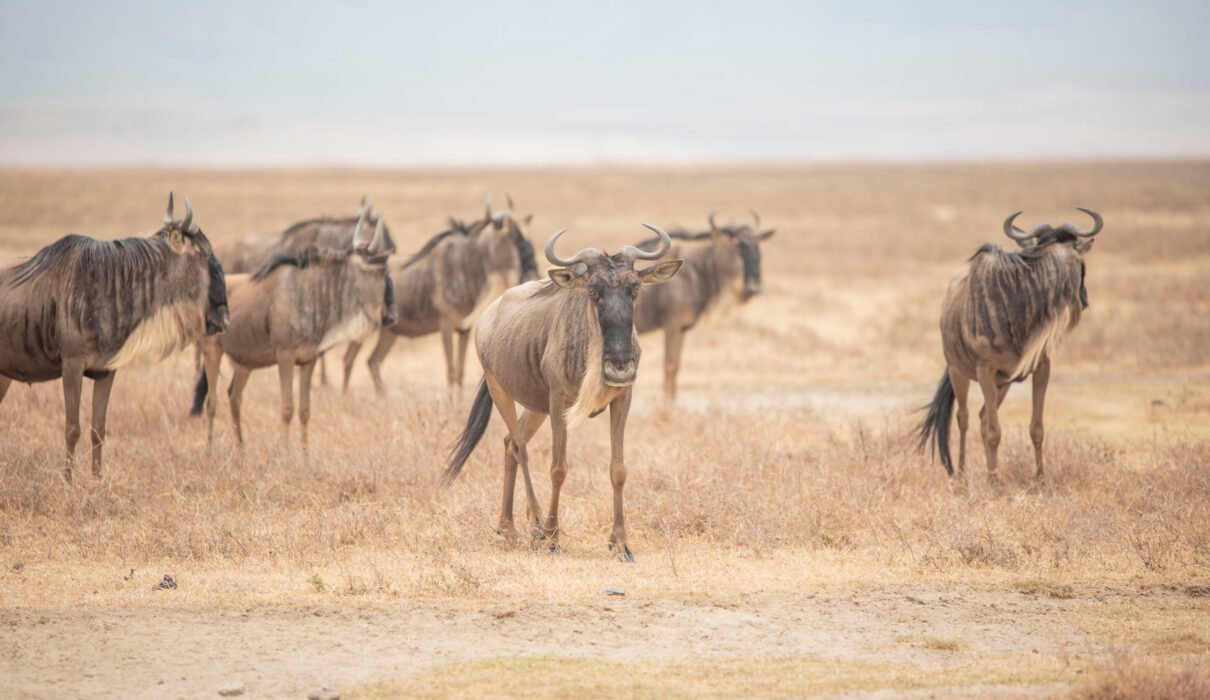
The Great Wildebeest Migration Explained is one of the most searched wildlife topics by travelers who want to understand what really happens behind the famous river crossings and dramatic predator scenes. This natural movement is not a simple circular journey. It is a complex survival system driven by rainfall, grass quality, soil nutrients, predator pressure and long-term ecological balance across northern Tanzania and southern Kenya.
This guide explains the real science, history and conservation importance behind this extraordinary wildlife movement, using trusted research institutions and global conservation organizations. If you plan to experience this phenomenon with a responsible local operator such as Eddy Tours & Safaris, understanding how the migration truly works will make your safari deeper, more respectful and far more meaningful.
The Great Wildebeest Migration Explained and why it exists at all
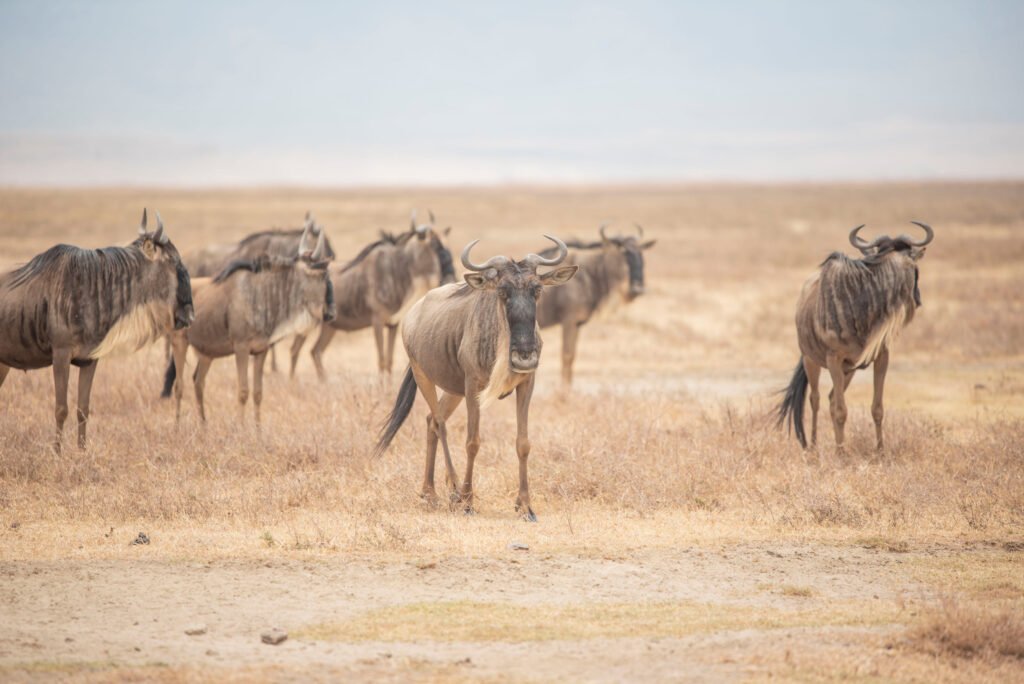
To understand The Great Wildebeest Migration Explained, we must begin with one simple truth. The movement exists because animals follow food and water. Ecological studies by the Wildlife Conservation Society and the African Wildlife Foundation show that wildebeest, zebra and gazelle respond very quickly to fresh grass growth triggered by rainfall patterns across the Serengeti–Mara ecosystem.
Long-term ecosystem research coordinated by the International Union for Conservation of Nature confirms that this seasonal movement maintains grazing balance and prevents localized land degradation. The migration is therefore not only about animals moving, but about sustaining one of the most productive savannah systems on Earth.
The Great Wildebeest Migration Explained through rainfall and grass science
A central part of The Great Wildebeest Migration Explained is rainfall distribution. Climate and environmental monitoring by NASA Climate and global assessments from the Intergovernmental Panel on Climate Change show how rainfall variability controls plant growth across East Africa.
Grass nutrient studies published through the Food and Agriculture Organization demonstrate that mineral-rich volcanic soils in the southern Serengeti support short, highly nutritious grasses that attract large herds during calving periods. As those grasses dry, animals shift northward toward areas where new rain supports taller grasslands.
The Great Wildebeest Migration Explained and the scale of animal movement
When people hear The Great Wildebeest Migration Explained, they often underestimate its scale. Scientific population monitoring conducted by the World Wide Fund for Nature confirms that this system involves well over one million large herbivores moving across thousands of square kilometres.
Large mammal movement research supported by Panthera and BirdLife International further shows that predator and scavenger populations are directly shaped by this migration, making it a foundation for the entire food web in the region.
The Great Wildebeest Migration Explained and river crossings
One of the most dramatic chapters in The Great Wildebeest Migration Explained is the famous river crossings. Research and field observation programs supported by the National Geographic Society show that river crossings are not planned events. They occur when herd pressure, water availability and predator presence reach a tipping point.
Hydrological and landscape studies published by the United States Geological Survey explain how river depth, bank slope and sediment structure influence where herds attempt to cross, which is why some locations become repeated crossing points over many seasons.
The Great Wildebeest Migration Explained and predator–prey balance
Another essential layer of The Great Wildebeest Migration Explained is predator regulation. Scientific publications from Nature Research and ecological field data distributed via ScienceDirect demonstrate how lions, hyenas, leopards and crocodiles depend heavily on migration timing for breeding success and survival.
Without the seasonal arrival of migrating herds, predator populations would decline sharply in large parts of the ecosystem. The migration therefore stabilizes predator distribution and reduces long-term conflict pressure around permanent water sources.
The Great Wildebeest Migration Explained and biodiversity protection
From a conservation perspective, The Great Wildebeest Migration Explained is inseparable from habitat protection. Biodiversity governance initiatives led by the Intergovernmental Science-Policy Platform on Biodiversity and Ecosystem Services and land-use planning supported by United Nations Environment Programme show that migration corridors are among the most vulnerable ecological features on the continent.
Fragmentation caused by fencing, roads and unplanned settlement can permanently disrupt migration pathways. This is why large-scale conservation programs supported by Conservation International focus strongly on cross-boundary landscape protection rather than isolated park management.
The Great Wildebeest Migration Explained and climate pressure
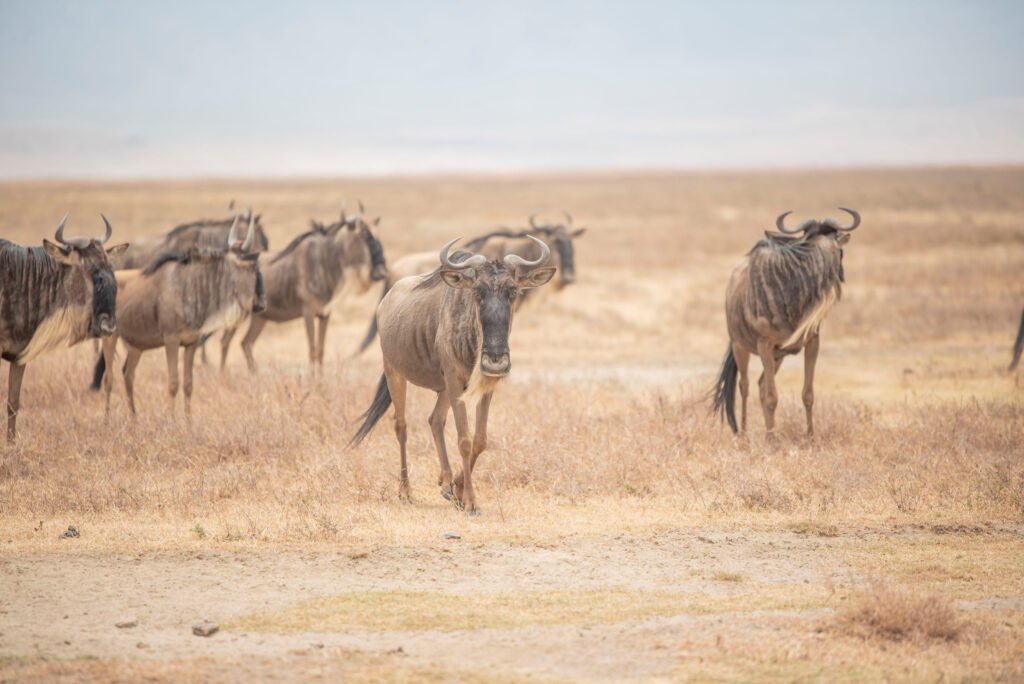
Modern research increasingly links The Great Wildebeest Migration Explained to climate stress. Long-term ecosystem monitoring published by Frontiers in Ecology and Evolution shows that shifts in rainfall timing alter calving synchronisation and grazing intensity.
Climate vulnerability assessments coordinated by the United Nations Environment Programme confirm that increased drought frequency could force herds to compress into smaller areas, intensifying disease risk and land degradation.
The Great Wildebeest Migration Explained and scientific research value
Beyond tourism, The Great Wildebeest Migration Explained represents one of the most important long-term wildlife research systems in the world. Large mammal ecology programmes supported by the Smithsonian Institution and environmental modelling projects coordinated through Harvard University research initiatives rely heavily on data collected in the Serengeti ecosystem.
These research programmes contribute to global understanding of disease transmission, climate resilience and land-use planning in savannah systems across Africa and beyond.
The Great Wildebeest Migration Explained and cultural importance
The cultural dimension is also part of The Great Wildebeest Migration Explained. Cultural landscape protection frameworks promoted by UNESCO recognize that pastoral communities have coexisted with migrating wildlife for generations.
Human–wildlife coexistence research published through international development networks supported by the United Nations Academic Impact highlights how indigenous knowledge helps shape sustainable grazing systems and conflict-reduction strategies.
The Great Wildebeest Migration Explained and ethical tourism
Responsible tourism plays a growing role in protecting this system. Ethical labour and field operation standards promoted by the International Labour Organization and community development frameworks supported by Oxfam International show how fair employment strengthens conservation partnerships.
Professionally guided safaris reduce wildlife disturbance, support conservation financing and improve visitor understanding of ecological limits. Carefully designed programs such as responsible Tanzania safari itineraries allow travelers to experience migration areas while respecting seasonal pressure and park regulations.
The Great Wildebeest Migration Explained and how visitors should observe it
For travelers, The Great Wildebeest Migration Explained should encourage patience and flexibility. Animal movement follows natural conditions, not visitor schedules. Professional safari teams focus on habitat reading, animal behaviour interpretation and respectful positioning rather than chasing dramatic scenes.
Experienced local guides working through professional safari operations understand daily movement patterns and help visitors experience migration behaviour without disturbing herds or creating vehicle congestion.
The Great Wildebeest Migration Explained and route planning in Tanzania
Planning correctly is essential for anyone seeking The Great Wildebeest Migration Explained through real field experience. Seasonal accessibility, road conditions and wildlife concentration zones change continuously.
Well-structured itineraries designed by local experts such as direct safari planning support help balance travel time, wildlife viewing quality and comfort while respecting park management rules.
The Great Wildebeest Migration Explained and why local expertise matters
Local knowledge transforms The Great Wildebeest Migration Explained from theory into real understanding. Tanzanian guides follow conservation updates, ranger reports and community observations that are not always visible in global reports.
For travelers combining migration viewing with other adventures, carefully integrated journeys such as wildlife and mountain experiences allow visitors to explore Tanzania responsibly while supporting local conservation and livelihoods.
The Great Wildebeest Migration Explained for future generations
Ultimately, The Great Wildebeest Migration Explained is not only about today’s wildlife spectacle. It is about preserving a functioning ecological system that regulates soil health, predator populations, vegetation dynamics and water cycles across an entire landscape.
When travelers choose ethical operators, respect park rules and support conservation-aligned tourism, they become part of the protection system that keeps this migration alive. Experiencing it responsibly is one of the most powerful ways to support Africa’s natural heritage while creating unforgettable personal memories.