
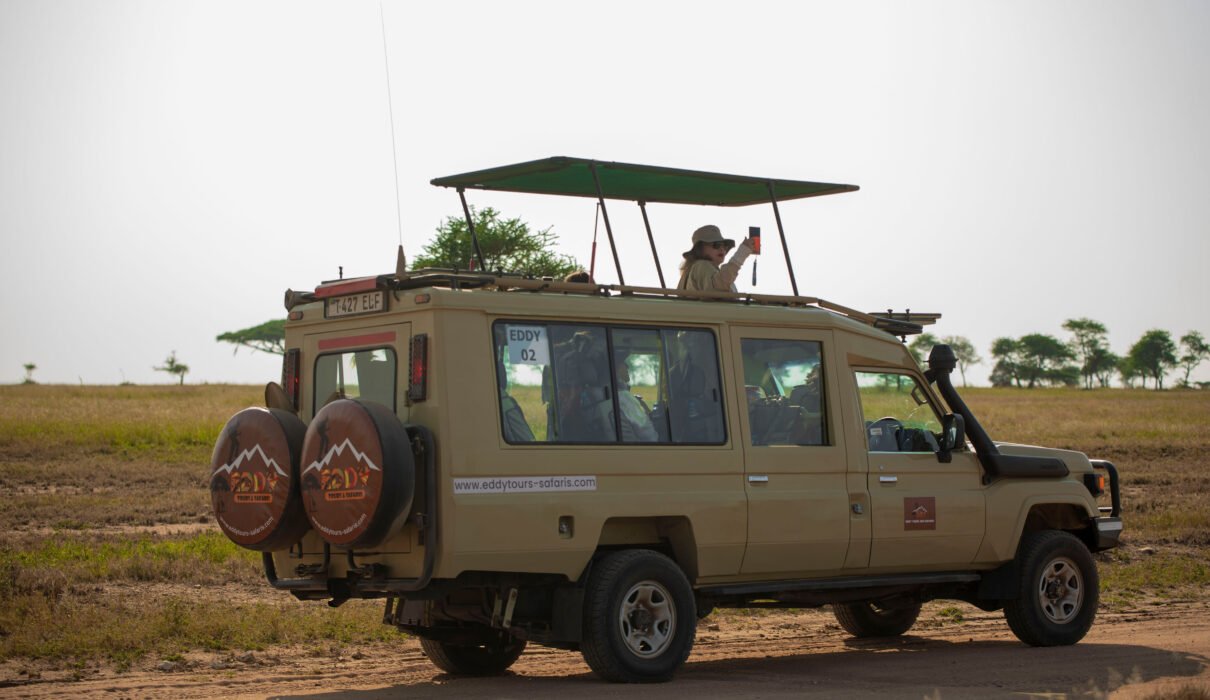
Wildlife Photography Tips for Safari Beginners is one of the most important subjects for anyone visiting Africa for the first time with a camera in hand, because photographing wild animals is very different from taking pictures at home, in parks, or in zoos. On a real safari, animals move freely, light changes very fast, dust and heat affect your equipment, and your behaviour directly affects wildlife safety and conservation.
This guide explains how beginners can photograph responsibly, confidently and with real respect for nature. It follows scientific wildlife-protection standards, ethical photography practices and field research recommendations. If you are planning your safari with a trusted local operator such as Eddy Tours & Safaris, these Wildlife Photography Tips for Safari Beginners will help you enjoy your experience, protect animals and still come home with meaningful images.
Wildlife Photography Tips for Safari Beginners and why ethics come first
Good wildlife images start with respect, and this is the foundation of all Wildlife Photography Tips for Safari Beginners. International conservation organisations such as the World Wide Fund for Nature, the Wildlife Conservation Society and the African Wildlife Foundation clearly show that repeated disturbance from vehicles and people can change animal behaviour and feeding patterns.
Responsible photographers follow ethical field guidance promoted by the International Union for Conservation of Nature and biodiversity protection frameworks supported by the Intergovernmental Science-Policy Platform on Biodiversity and Ecosystem Services. You should never pressure your guide to move closer, surround animals, block movement routes or interrupt hunting and breeding behaviour simply to get a better photo.
Wildlife Photography Tips for Safari Beginners and understanding animal behaviour
One of the most valuable Wildlife Photography Tips for Safari Beginners is learning how animals behave before raising your camera. Scientific research published through Nature Research and field studies shared by ScienceDirect show that understanding feeding, resting and movement patterns greatly improves both safety and photographic timing.
Conservation and species-monitoring organisations such as Panthera and BirdLife International publish detailed information on predator behaviour and bird movement. When you recognise warning signs such as raised tails, ear positions, sudden silence or defensive grouping, you can anticipate action without forcing animals into stress.
Wildlife Photography Tips for Safari Beginners and choosing the right equipment
Many beginners believe expensive cameras guarantee good images, but Wildlife Photography Tips for Safari Beginners focus more on knowing your equipment than upgrading it. Research on environmental field equipment and optical performance published by National Geographic Society highlights that basic cameras with a good zoom range and stable handling can produce professional results when used correctly.
Dust, vibration and heat strongly affect electronics. Environmental field research standards supported by the United States Geological Survey show that protective storage, lens covers and controlled lens changes significantly reduce equipment failure in remote environments. Always prepare cleaning cloths, sealed bags and spare batteries before entering the park.
Wildlife Photography Tips for Safari Beginners and camera settings in real conditions
Lighting conditions change rapidly on safari, and this makes Wildlife Photography Tips for Safari Beginners very different from studio photography. Climate and light reflection studies published by NASA Climate show how dust particles and strong sun angles influence colour temperature and contrast in open landscapes.
In practical terms, beginners should prioritise fast shutter speeds for moving animals, moderate ISO values for clean images and continuous focus tracking. These basic settings help you react quickly to unpredictable behaviour without missing moments or producing blurred results.
Wildlife Photography Tips for Safari Beginners and staying safe in the field
Safety must always come before photography, and this principle is central to all Wildlife Photography Tips for Safari Beginners. Health and field safety guidance published by the World Health Organization and emergency response standards promoted by the International Federation of Red Cross and Red Crescent Societies stress that travellers must follow local safety instructions at all times.
Never stand outside the vehicle unless your guide clearly confirms it is permitted. Always keep limbs and equipment inside the vehicle, and never attempt to walk closer to animals. Professional safari teams follow risk-management models supported by the World Bank Disaster Risk Management programme to protect both guests and staff.
Wildlife Photography Tips for Safari Beginners and composition that tells a story
Photography becomes powerful when it communicates more than just an animal’s face. Wildlife Photography Tips for Safari Beginners strongly encourage storytelling through habitat, interaction and environmental context. Ecological storytelling methods promoted by Conservation International and visual conservation education supported by the United Nations Environment Programme show that images connecting animals to their environment improve public understanding of conservation challenges.
Including grasslands, rivers, termite mounds and tree lines helps viewers understand scale and ecosystem structure. These background elements make your photos meaningful and educational rather than simply decorative.
Wildlife Photography Tips for Safari Beginners and responsible distance
Keeping distance is one of the most important Wildlife Photography Tips for Safari Beginners. Research coordinated by the Frontiers in Ecology and Evolution journal shows that close human presence can elevate stress hormones in wild animals even when no visible reaction occurs.
Global animal welfare and conservation policy supported by the World Organisation for Animal Health and scientific wildlife welfare studies distributed through the Royal Society strongly recommend long-lens photography rather than physical approach.
Wildlife Photography Tips for Safari Beginners and working with your guide
Your guide is your greatest asset when applying Wildlife Photography Tips for Safari Beginners. Professional field interpretation standards promoted by the National Geographic Education Program show that local guides understand animal movement corridors, seasonal patterns and safe observation zones far better than visitors.
When you communicate your photographic goals calmly and respectfully, guides can position the vehicle safely and ethically. Many travellers prefer to work with experienced local operators such as professional Tanzania safari teams who combine wildlife knowledge, driving skill and ethical responsibility.
Wildlife Photography Tips for Safari Beginners and protecting fragile ecosystems
Photographers also influence the land itself. Wildlife Photography Tips for Safari Beginners include strict respect for tracks and designated stopping areas. Environmental impact studies supported by the Food and Agriculture Organization and land-use monitoring conducted by the United States Geological Survey show that off-road driving accelerates soil erosion and damages vegetation used by grazing species.
Scientific conservation planning promoted by the UNESCO protected-area framework confirms that visitor discipline directly supports long-term ecosystem stability.
Wildlife Photography Tips for Safari Beginners and cultural respect
Wildlife photography often includes people, villages and cultural landscapes. Wildlife Photography Tips for Safari Beginners must therefore include cultural ethics. Community and heritage protection frameworks supported by the United Nations Academic Impact and social research programmes conducted through Harvard University research initiatives show that respectful photography strengthens trust and community partnerships.
Always ask before photographing people and respect guidance provided by your local guide. Cultural sensitivity is as important as technical skill.
Wildlife Photography Tips for Safari Beginners and climate awareness
Changing climate patterns directly affect wildlife movement and light conditions, and this is becoming part of modern Wildlife Photography Tips for Safari Beginners. Climate assessments produced by the Intergovernmental Panel on Climate Change explain how rainfall changes influence grazing zones and migration routes.
By understanding seasonal variation and environmental pressure, photographers can plan more responsibly and reduce unnecessary travel impact while still achieving rewarding results.
Wildlife Photography Tips for Safari Beginners and post-processing honesty
Editing should support truth, not create false reality. Wildlife Photography Tips for Safari Beginners follow scientific communication ethics promoted by the American Association for the Advancement of Science, which encourage accuracy when sharing images related to nature and research.
Basic colour correction and exposure balancing are acceptable. Altering animal behaviour scenes or removing environmental context misleads audiences and weakens conservation education.
Wildlife Photography Tips for Safari Beginners and choosing a responsible safari operator
Your entire photographic experience depends on how your safari is organised. Wildlife Photography Tips for Safari Beginners strongly recommend working with professional local operators who follow safety, conservation and labour standards promoted by the International Labour Organization and sustainable tourism development models supported by Oxfam International.
For photographers who want ethical wildlife access and knowledgeable guiding, many choose to plan their journey through Eddy Tours & Safaris because of strong conservation awareness and local experience.
Wildlife Photography Tips for Safari Beginners and building your full safari experience
Photography is only one part of a meaningful safari. Wildlife Photography Tips for Safari Beginners work best when combined with good logistics, relaxed pacing and carefully selected destinations. You can explore responsible itineraries through professionally designed safari programs that allow enough time for ethical observation and learning.
If your journey includes mountain landscapes or high-altitude environments, structured options are also available through responsible Kilimanjaro adventure programs designed with strong safety and environmental standards.
Wildlife Photography Tips for Safari Beginners and personal local guidance
Every photographer has different goals, skills and comfort levels. Wildlife Photography Tips for Safari Beginners become more effective when supported by real local advice. Weather conditions, animal movement and park regulations change often and cannot always be predicted online.
For personalised planning and honest guidance, you can speak directly with local professionals through direct safari consultation support. A well-planned safari helps you focus on photography without stress.
Why Wildlife Photography Tips for Safari Beginners truly matter
Wildlife Photography Tips for Safari Beginners are not only about getting better pictures. They protect animals, reduce environmental impact and strengthen conservation awareness worldwide. Ethical photography allows your images to become powerful tools for education and protection rather than sources of disturbance.
When you travel responsibly, respect wildlife behaviour and work with professional local teams, your photographs become part of a larger story that supports both conservation and community livelihoods across Tanzania’s remarkable landscapes.