
Africa’s Ugly Five Animals Explained reveals a powerful story about survival, adaptation, and misunderstood beauty in the wild. While many travelers chase the glamour of the Big Five, seasoned safari experts know that Africa’s ecosystems are also shaped by species often labeled unattractive. These animals may not win beauty contests, but they play vital ecological roles across the savannas, wetlands, and forests of the continent. Understanding them deeply transforms any safari from ordinary sightseeing into meaningful wildlife appreciation.
Why Africa’s Ugly Five Animals Explained Matters for Every Safari Traveler
When visitors book a safari through trusted operators like Eddy Tours & Safaris, they often focus on lions and elephants, yet conservationists from organizations such as World Wildlife Fund, IUCN, and National Geographic Society emphasize the importance of lesser-celebrated species. Africa’s Ugly Five Animals Explained helps travelers understand that ecosystems depend on balance, not popularity. These creatures contribute to soil health, population control, and nutrient recycling, making them essential to the landscapes visitors come to admire.
Africa’s Ugly Five Animals Explained: Meet the Uncelebrated Icons
1. The Warthog – The Savanna’s Resilient Survivor
The warthog’s facial warts and curved tusks may seem intimidating, yet research shared by Smithsonian Magazine highlights its remarkable adaptation to harsh environments. Warthogs kneel while grazing and use abandoned burrows for shelter, improving soil aeration. According to studies referenced by Nature, their grazing patterns influence grass regeneration cycles. On guided drives such as those offered via Tanzania safaris, travelers quickly learn that warthogs are intelligent and surprisingly social animals.
2. The Hyena – Misunderstood Predator and Cleaner
Often portrayed negatively, hyenas are among Africa’s most efficient hunters. Behavioral studies from ScienceDirect and conservation insights from Panthera show their complex social systems and matriarchal clans. Hyenas also act as nature’s cleanup crew, preventing disease spread by consuming carcasses. Africa’s Ugly Five Animals Explained would be incomplete without recognizing that hyenas maintain ecosystem hygiene, a fact supported by wildlife health programs at Wildlife Conservation Society.
3. The Vulture – Nature’s Essential Recycler
With bald heads and hunched posture, vultures rarely inspire admiration, yet they are critical to disease control. Data from BirdLife International and Raptor Research Foundation confirms that vulture population declines can increase rabies and other infections. Their highly acidic stomachs neutralize dangerous bacteria, a biological marvel documented in publications linked to NCBI. Observing vultures during a Serengeti safari provides a raw yet educational wildlife encounter.
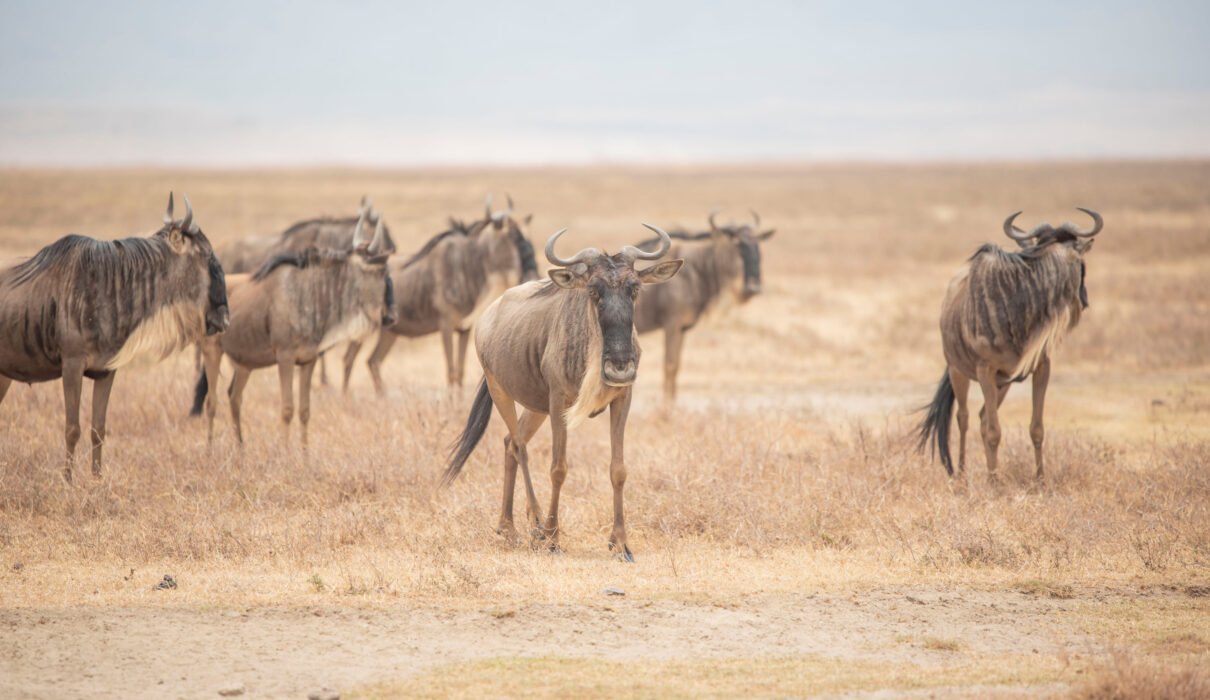
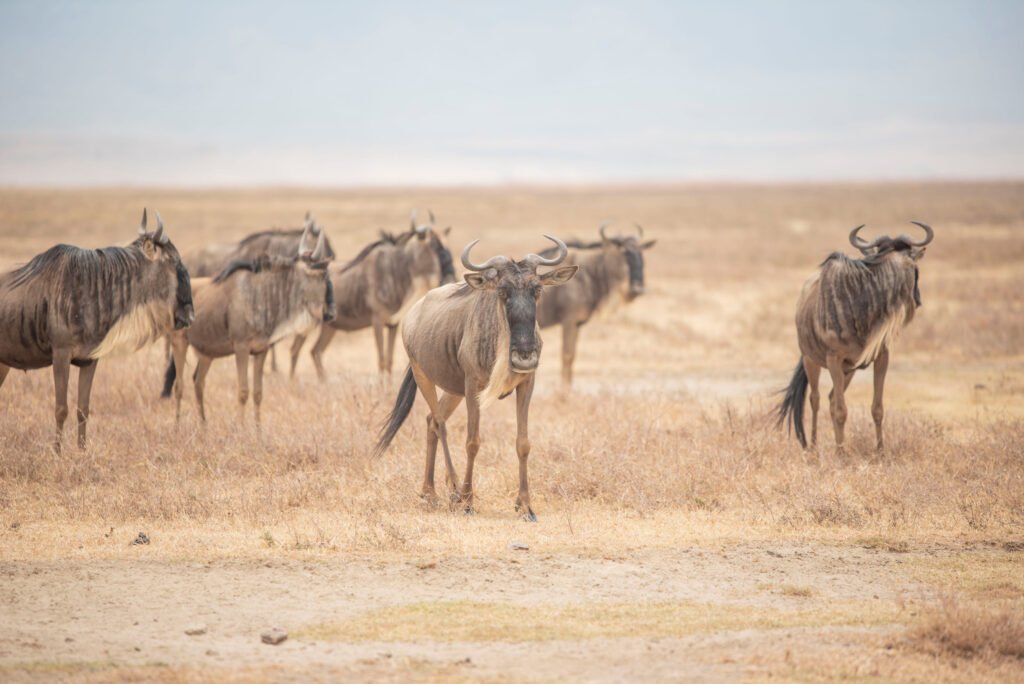
4. The Wildebeest – The Engine of the Great Migration
The wildebeest’s awkward build hides one of nature’s most impressive survival strategies. Migration data analyzed by National Park Foundation and ecological research shared by Encyclopaedia Britannica describe how their seasonal movement fertilizes plains and supports predators. Africa’s Ugly Five Animals Explained emphasizes that without wildebeest, the famous migration spectacle would not exist. Their journey sustains entire food chains, attracting photographers and conservationists worldwide.
5. The Marabou Stork – The Wetland Opportunist
The marabou stork’s bald head and heavy bill make it appear almost prehistoric. However, wetland studies published through Ramsar Convention on Wetlands illustrate how scavenging birds help maintain water quality. Insights from United Nations Environment Programme also show that wetland biodiversity depends on such species. When visiting lakes during Lake Manyara safaris, guests often witness these birds cleaning shorelines efficiently.
The Ecological Importance Behind Africa’s Ugly Five Animals Explained
Every species in this group contributes uniquely to environmental stability. Research collaborations from Conservation International and African Parks demonstrate how scavengers and grazers regulate disease and vegetation growth. Climate research shared by IPCC further indicates that healthy wildlife systems improve carbon balance. Africa’s Ugly Five Animals Explained encourages travelers to view wildlife through a scientific lens, understanding that beauty does not define ecological value.
Conservation Challenges Facing the Ugly Five
Habitat loss and poisoning threaten many of these species. Reports from Convention on Biological Diversity and wildlife crime analysis by TRAFFIC reveal alarming trends in illegal activities affecting scavengers. Hyenas and vultures often suffer from misconceptions, leading to persecution. Educational programs supported by African Wildlife Foundation aim to shift public perception, reinforcing why Africa’s Ugly Five Animals Explained is essential reading for responsible travelers.
Safari Experiences That Highlight These Species
Choosing ethical operators makes a difference. Visitors planning Kilimanjaro extensions through Kilimanjaro Climb Specialist often combine mountain trekking with wildlife tours. Planning tools such as Google help travelers research conservation-focused camps, but firsthand guidance from experienced safari guides ensures meaningful encounters. Africa’s Ugly Five Animals Explained becomes far more impactful when travelers observe these animals behaving naturally in protected areas.
Changing Perceptions Through Education
Educational outreach programs from UNESCO and biodiversity data platforms like GBIF highlight the value of species diversity. Universities and research institutions publish ongoing studies through portals such as JSTOR, confirming that every species fills an ecological niche. Africa’s Ugly Five Animals Explained invites readers to replace outdated stereotypes with science-based respect.
Responsible Tourism and Wildlife Protection
Travelers can directly support conservation by choosing eco-conscious safaris and respecting wildlife guidelines. Organizations including Global Wildlife Conservation stress that tourism revenue funds ranger programs and habitat restoration. Booking with operators like local safari experts strengthens community involvement while protecting fragile ecosystems. Africa’s Ugly Five Animals Explained ultimately shows that appreciation leads to protection.
Frequently Asked Questions About Africa’s Ugly Five Animals Explained
Why are they called the Ugly Five?
The term reflects human perception rather than biological reality. These animals were humorously labeled based on appearance, not ecological value.
Are these animals dangerous?
Like all wildlife, they require respectful distance. Most attacks occur only when animals feel threatened.
Where can I see them?
They are widely distributed across East and Southern Africa, especially in national parks and conservation areas.
Do they face extinction risks?
Some species, particularly vultures, face significant threats due to poisoning and habitat loss.
How do they benefit ecosystems?
They recycle nutrients, control prey populations, and maintain vegetation balance.
Can tourism help protect them?
Yes, responsible tourism generates funding and awareness that supports conservation initiatives.
Final Thoughts
Africa’s Ugly Five Animals Explained reshapes how travelers view safari wildlife. These species may lack the glamour of the Big Five, yet they form the backbone of Africa’s ecological systems. By learning their stories and supporting conservation-focused travel, visitors gain deeper respect for the continent’s biodiversity. The next time you head into the wild, look beyond appearances and witness the extraordinary role these remarkable animals play in sustaining life across Africa.