
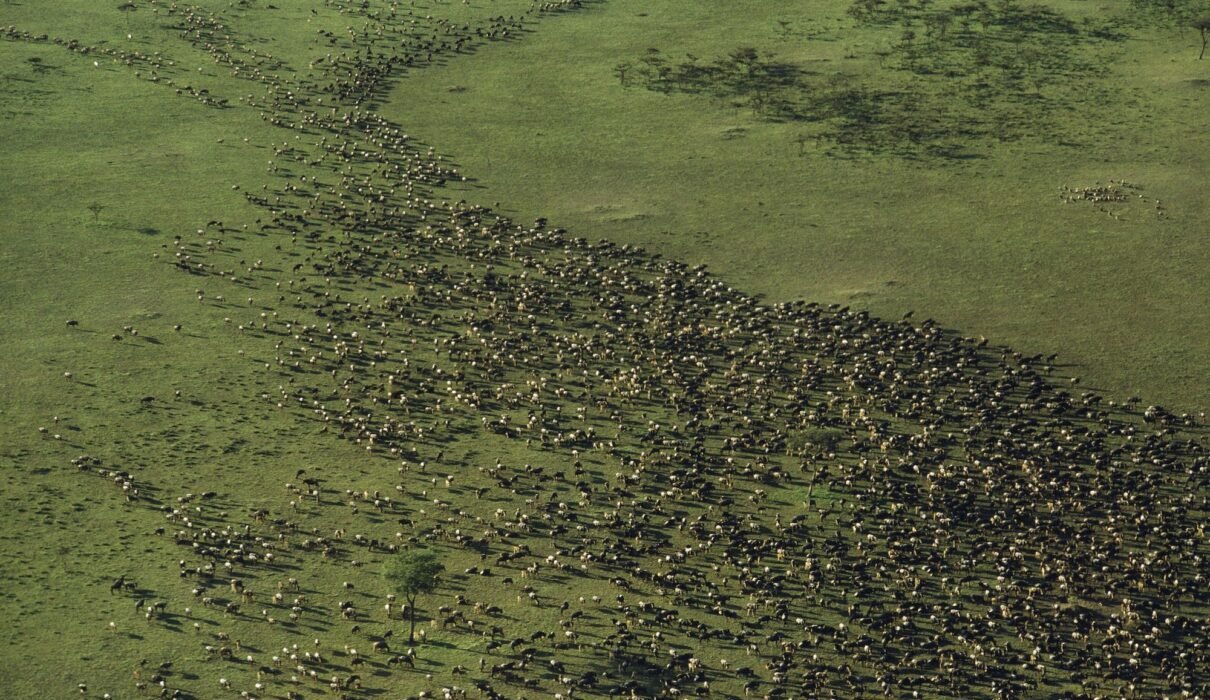
Satellite Images Reveal New Insights into the Great Migration in ways scientists and conservationists could only imagine a decade ago. Across Tanzania and Kenya, advanced space technology now tracks wildlife movements with remarkable precision, offering fresh understanding about animal behavior, climate change effects, and conservation planning. In 2026, 2027, and beyond, these tools are reshaping how experts protect one of the world’s most extraordinary natural events while helping travelers appreciate its deeper meaning.
The Great Migration remains a breathtaking natural phenomenon, drawing attention from researchers, conservationists, and travelers alike. By combining satellite data with ground-based observation, scientists are learning how rainfall patterns, vegetation growth, and human activity shape movement patterns across the Serengeti–Mara ecosystem. Organizations such as NASA, NASA Earth Observatory, and European Space Agency continue to support groundbreaking research that strengthens conservation strategies and sustainable tourism development.
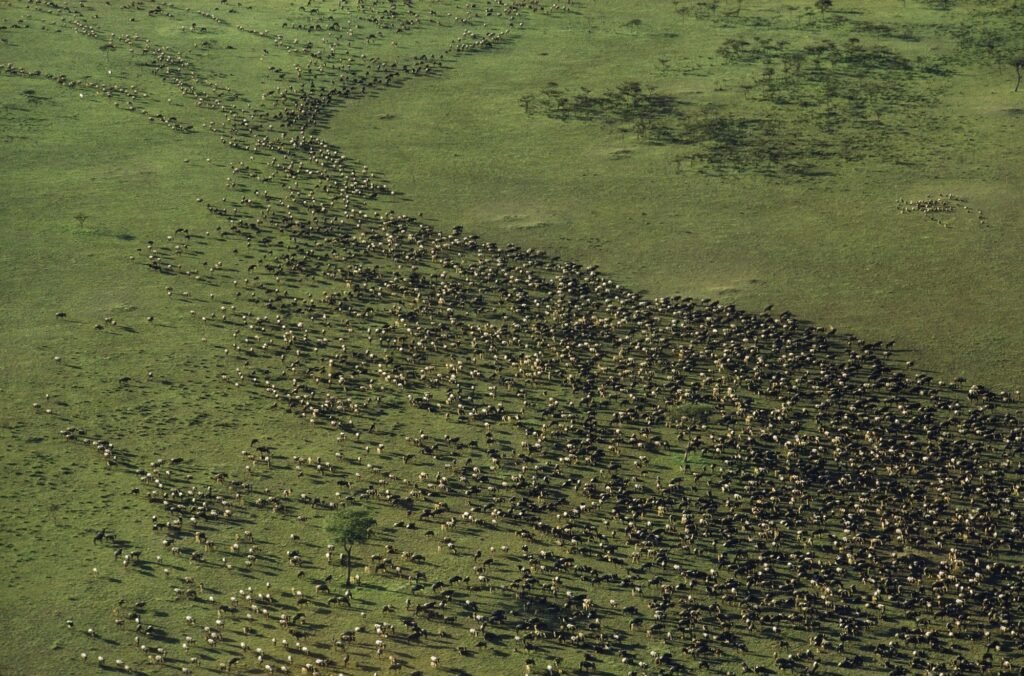
Satellite Images Reveal New Insights into the Great Migration and Its Changing Patterns
For decades, scientists relied heavily on aerial surveys and ranger reports to understand migration patterns. Today, satellite monitoring allows researchers to observe herd movement continuously across vast landscapes without disturbing wildlife. According to studies from institutions such as Smithsonian Institution and National Geographic Society, new data shows migration timing shifts slightly each year depending on rainfall distribution and pasture quality. This fresh knowledge helps wildlife managers predict herd routes and prevent human-wildlife conflict.
In recent years, satellite imagery has also highlighted how drought cycles influence herd dispersal patterns. Research shared by World Wildlife Fund and IUCN demonstrates that unpredictable climate conditions increasingly affect migration timing. As rainfall becomes less consistent, herds adjust routes to access greener grazing areas, a trend closely monitored by conservation scientists.
How Modern Satellite Technology Tracks Wildlife Movement
Modern satellites equipped with multispectral imaging capture detailed information about vegetation density, water availability, and terrain conditions. Researchers from United Nations Environment Programme and US Geological Survey use this data alongside GPS collar tracking to map migration corridors accurately. The result is a clearer understanding of how herds respond to seasonal changes across ecosystems.
These insights are essential for wildlife authorities working across borders, including agencies supported by UNESCO. They help identify critical conservation zones where grazing pressure peaks during dry seasons. This data also informs infrastructure planning to minimize disruptions to natural migration pathways.
Climate Change and Habitat Influence on Migration Routes
Climate change is altering rainfall patterns across East Africa, which directly affects grazing cycles. Reports from Intergovernmental Panel on Climate Change and NOAA highlight how rising temperatures and shifting weather systems influence grass growth and water sources. Satellite observations now reveal that some herds arrive earlier or later than historical averages, showing remarkable adaptability to changing environments.
Such findings emphasize the importance of preserving large landscapes. Conservation organizations like African Parks and Conservation International advocate for ecosystem-wide protection strategies based on satellite research outcomes.
Why Satellite Data Matters for Conservation and Tourism
The value of satellite research extends beyond science into tourism planning and sustainability. Governments and conservation bodies increasingly use data from institutions such as CGIAR and Wildlife Conservation Society to balance visitor access with ecosystem protection. Accurate forecasting helps tour operators position camps responsibly while avoiding sensitive wildlife zones.
Travelers benefit as well. Understanding seasonal herd movement helps visitors choose optimal travel periods. For instance, guests exploring with Eddy Tours & Safaris often enjoy personalized guidance based on migration forecasts derived from satellite-based monitoring systems.
Supporting Sustainable Tourism Development
Responsible tourism plays a vital role in conservation funding. Reports from UN World Tourism Organization emphasize that sustainable safari tourism supports local communities and conservation programs. Satellite technology helps ensure tourism remains environmentally responsible by guiding visitor distribution and reducing pressure on fragile ecosystems.
Leading universities such as University of Cambridge and University of Oxford also collaborate with conservation groups to analyze satellite data trends for long-term planning.
Enhancing Visitor Experience Through Knowledge
Visitors who understand migration science often gain deeper appreciation for what they witness. Educational insights shared during safaris booked through Tanzania safari packages enrich travel experiences by connecting observation with scientific understanding.
Tour operators also work closely with conservation networks such as African Wildlife Foundation to ensure guest activities align with conservation priorities.
Scientific Discoveries Emerging from Satellite Research
One of the most fascinating developments revealed by satellite analysis is the discovery of micro-migration cycles within larger herd movements. Studies supported by Nature Research and ScienceDirect show that smaller groups often split temporarily before rejoining main herds. This behavior allows animals to adapt quickly to changing grazing conditions.
Satellite data also confirms that water availability remains the strongest migration driver. Findings from JSTOR archives demonstrate how seasonal river crossings correlate with rainfall intensity and vegetation growth patterns.
Predator–Prey Dynamics Observed from Space
Researchers now use satellite imagery to analyze predator activity patterns in relation to migration routes. Conservationists from Panthera and Lion Recovery Fund monitor lion and hyena distribution across migration corridors. Their findings reveal how predator populations adapt alongside migratory prey.
This knowledge strengthens ecosystem protection efforts while supporting balanced wildlife management strategies.
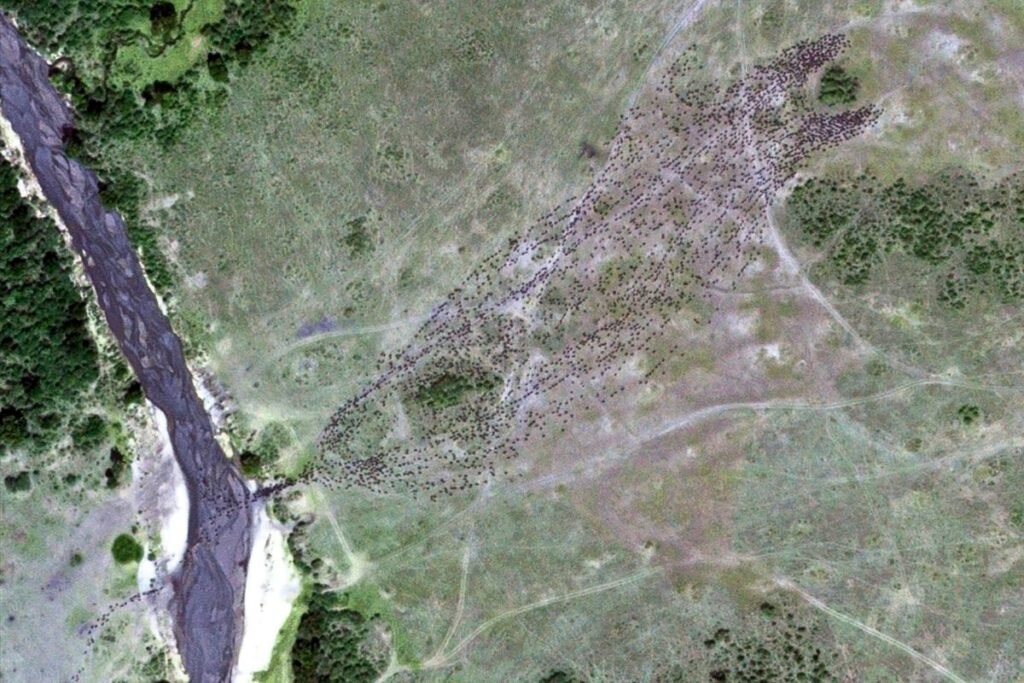
The Future of Migration Research with Space Technology
Looking ahead, satellite monitoring is expected to become even more precise. New technologies from SpaceX and Blue Origin may enhance environmental observation capabilities in coming years. Conservation scientists anticipate improved real-time tracking systems capable of detecting environmental threats early.
Local authorities continue working with international partners such as Food and Agriculture Organization and World Bank to integrate satellite findings into conservation planning frameworks.
Implications for Future Travelers
For travelers planning safaris in 2027 and 2028, satellite-driven insights promise more accurate trip timing. Visitors exploring through Serengeti safari experiences often benefit from updated forecasts that maximize wildlife sightings while supporting responsible tourism practices.
Additionally, combining satellite forecasts with expert guiding ensures unforgettable wildlife encounters grounded in conservation awareness.
How Travelers Can Experience the Migration Responsibly
Witnessing the migration is unforgettable, but responsible travel remains essential. Organizations such as WWF UK encourage visitors to support eco-friendly operators and follow park regulations. Travelers booking through luxury safaris often find responsible practices integrated into every aspect of their journey.
Visitors can also explore nearby adventures such as Kilimanjaro climbing expeditions, which highlight East Africa’s diverse landscapes and conservation efforts.
Practical Tips for Sustainable Safari Travel
Choosing eco-certified lodges, respecting wildlife distances, and supporting community initiatives help protect fragile ecosystems. Insights shared by Greenpeace and RSPB encourage travelers to minimize environmental impact during wildlife experiences.
By staying informed and supporting conservation-focused tourism, visitors contribute to preserving this global treasure.
Conclusion: A New Era of Understanding the Great Migration
Satellite Images Reveal New Insights into the Great Migration that continue transforming wildlife science and conservation strategies. As satellite technology evolves, scientists gain deeper knowledge about migration behavior, climate adaptation, and ecosystem health. These discoveries benefit not only conservationists but also travelers seeking meaningful and responsible wildlife experiences.
By combining advanced science with sustainable tourism practices, the Serengeti–Mara ecosystem can thrive for generations to come. Visitors who travel thoughtfully help ensure that this spectacular natural event remains one of the world’s greatest wildlife wonders.