
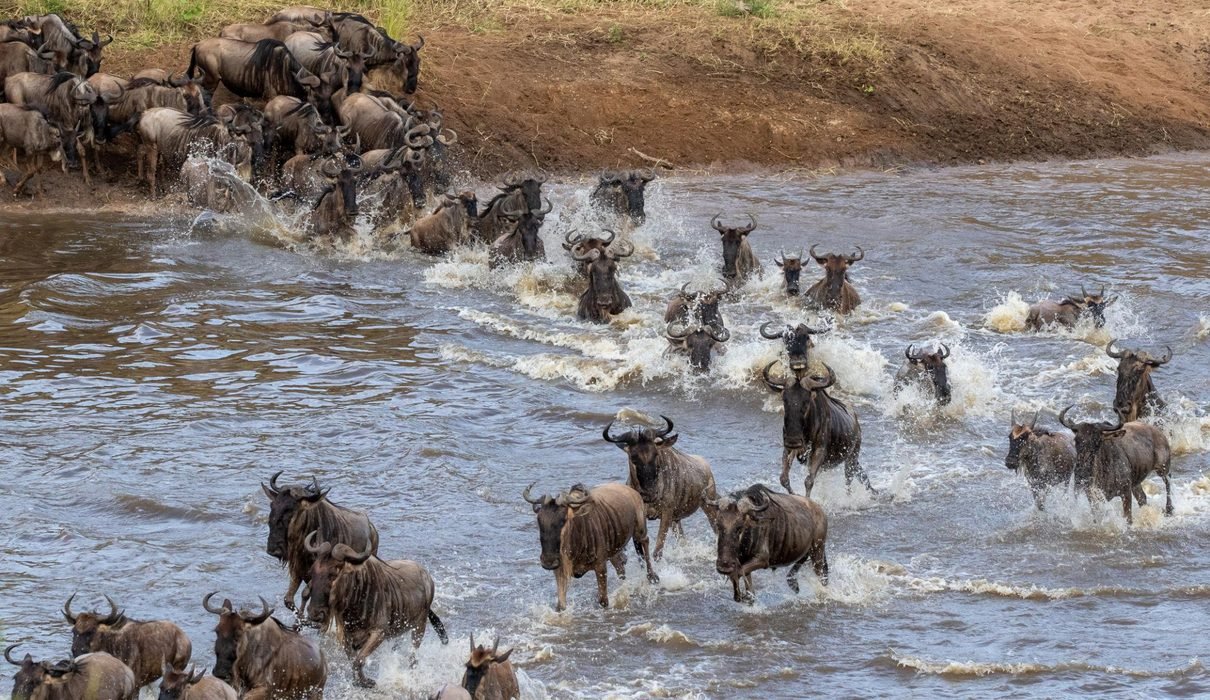
The Serengeti Great Migration remains one of Tanzania’s most remarkable wildlife experiences, attracting visitors who want to witness enormous wildebeest herds moving across the plains in search of fresh grazing and water. For travellers planning a Serengeti safari in 2027, understanding the migration’s seasonal movements is essential because the animals do not remain in one location throughout the year. Their journey takes them through the southern Serengeti, central plains, Western Corridor and northern Serengeti before eventually returning south to begin another cycle.
The Great Migration involves more than 1.5 million wildebeest, accompanied by large numbers of zebras and gazelles. Their movements create opportunities to observe newborn calves, hunting predators, large herds travelling across open grasslands and the famous river crossings. According to Tanzania National Parks Authority (TANAPA), the Serengeti supports one of the world’s most important large mammal migrations and provides wildlife viewing opportunities throughout the year.
This 2027 Serengeti migration guide explains where the herds are expected to move, which months offer the best wildlife experiences, how rainfall affects their journey and what travellers should consider before booking. Whether you are interested in the calving season, Grumeti River crossings or Mara River crossings, Eddy Tours & Safaris can help you plan a Tanzania safari around the migration’s natural seasonal patterns.
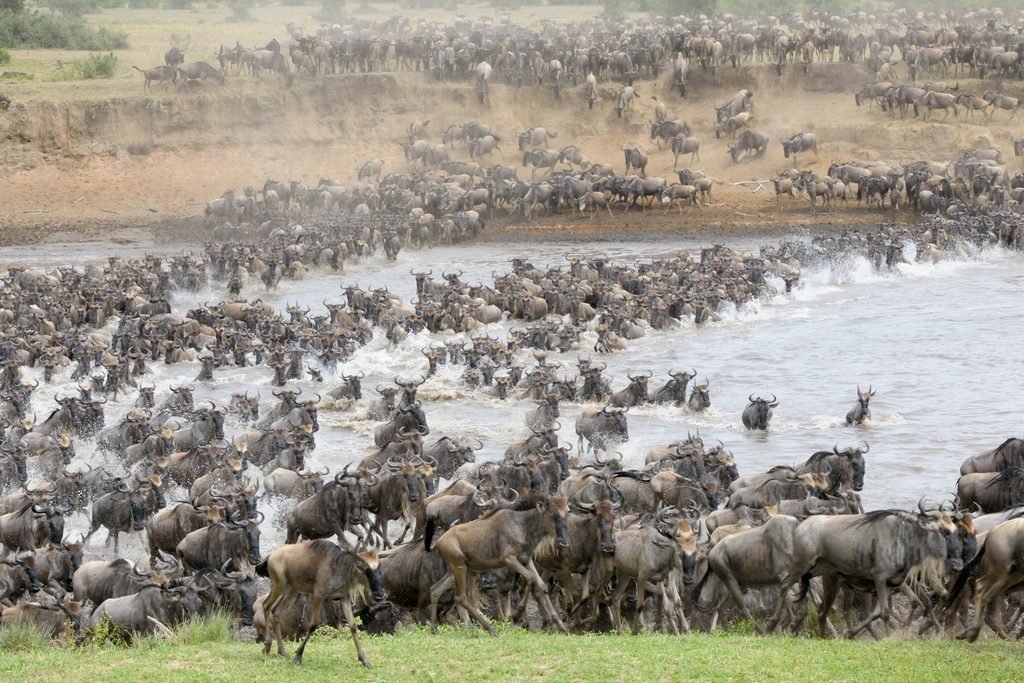
Latest Serengeti Migration Update for 2027: What Travellers Should Know
Updated: November 2026 | 2027 migration outlook and safari planning information
The 2027 Serengeti migration season is approaching, and travellers planning their safaris can use established seasonal movement patterns to decide when and where to visit. However, the exact position of the wildebeest herds during 2027 cannot yet be confirmed. Their movements will depend on rainfall, the availability of fresh grass, water sources and changing environmental conditions across the Serengeti ecosystem.
Based on the usual annual migration cycle, the wildebeest are expected to concentrate around the southern Serengeti and Ndutu plains during the early months of 2027. As the southern grasslands begin to dry, many herds will gradually move toward central and western Serengeti before travelling north during the dry season. Between July and October, northern Serengeti is generally the most suitable region for visitors hoping to witness the famous Mara River crossings.
These are seasonal expectations rather than confirmed 2027 field observations. The migration is a natural process, and significant changes in rainfall can alter the timing or direction of the herds. Travellers should therefore avoid relying on fixed crossing dates and instead choose safari itineraries that allow sufficient time in the most promising regions.
For visitors preparing their holidays, our Tanzania safari planning information provides a starting point for choosing suitable travel dates, accommodation and safari destinations.
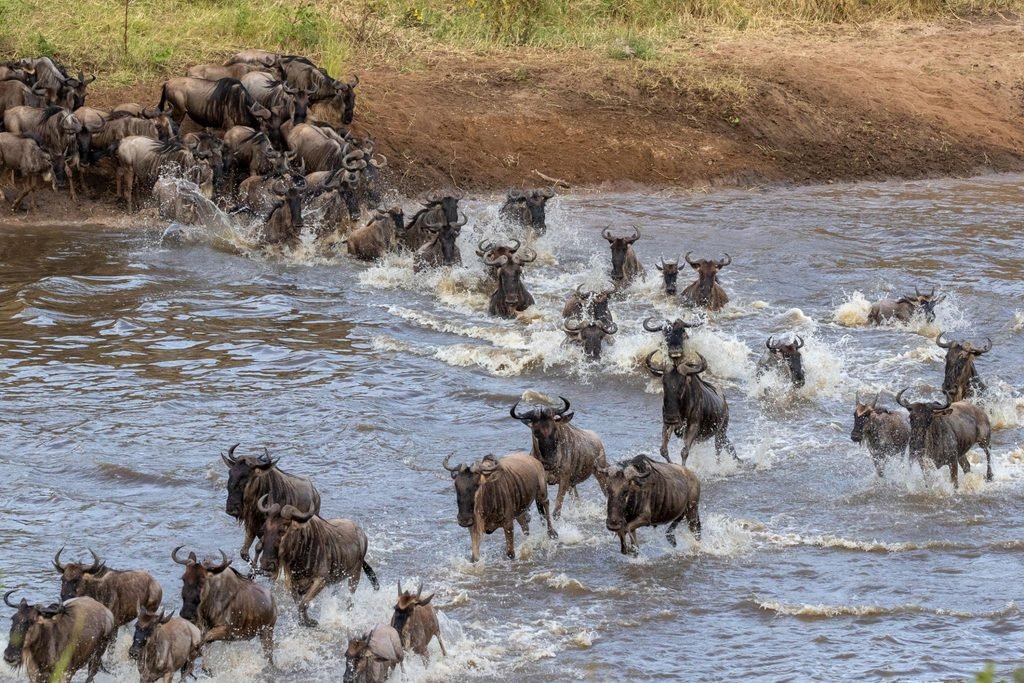
Understanding the Great Wildebeest Migration in Serengeti
The Great Migration is a continuous movement of wildebeest, zebras and other grazing animals across the wider Serengeti–Mara ecosystem. Although it is often associated with dramatic river crossings, the migration involves several important stages, including calving, mating, long-distance movement and the search for suitable grazing grounds.
The migration is largely influenced by rainfall. When seasonal rains reach the southern Serengeti, fresh grass begins growing across the short-grass plains, attracting wildebeest in large numbers. These areas provide important feeding grounds for pregnant females and newborn calves. As the grass becomes less suitable during the changing seasons, the animals begin travelling toward other regions where food and water are more readily available.
The movement is not a single organised procession. Different herds may travel along separate routes, remain in certain areas for several days or change direction unexpectedly. Some animals may reach northern Serengeti earlier than others, while smaller groups may remain in central or western areas.
This explains why experienced safari guides pay close attention to rainfall, recent wildlife sightings and information from other guides operating in the park. Understanding these conditions can help visitors spend more time in areas where significant wildlife movement is likely to occur.
The Serengeti is also recognised internationally for its ecological importance. The UNESCO World Heritage Centre identifies Serengeti National Park as one of the world’s outstanding natural ecosystems, supporting large populations of migrating herbivores and their predators.
Serengeti Migration 2027: Month-by-Month Wildlife Movement Forecast
The following migration calendar provides a practical overview of the regions where the herds are generally expected during each month of 2027. It is based on established seasonal behaviour and should be used for safari planning rather than as a guarantee of exact animal locations.
| Month | Expected Migration Location | Main Wildlife Experience |
|---|---|---|
| January | Southern Serengeti and Ndutu | Large grazing herds and early calving |
| February | Ndutu and southern plains | Peak wildebeest calving season |
| March | Southern and central Serengeti | Late calving and gradual movement |
| April | Central Serengeti | Rainy-season grazing and herd movement |
| May | Central and Western Corridor | Herds moving northwest |
| June | Western Corridor and Grumeti | Migration movement and possible river crossings |
| July | Western and northern Serengeti | Northward movement and possible Mara crossings |
| August | Northern Serengeti and Kogatende | Mara River crossing opportunities |
| September | Northern Serengeti and Mara region | Continued river crossings |
| October | Northern and eastern Serengeti | Late crossings and possible return movement |
| November | Eastern and central Serengeti | Southward migration following seasonal rains |
| December | Southern Serengeti and Ndutu | Herds gathering on fresh grazing plains |
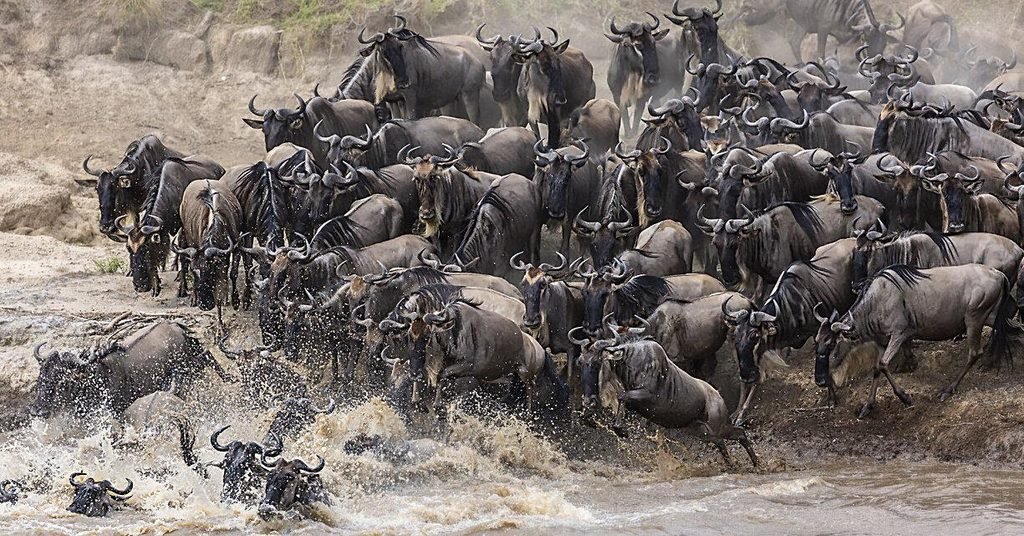
January 2027: Wildebeest Gathering in Southern Serengeti
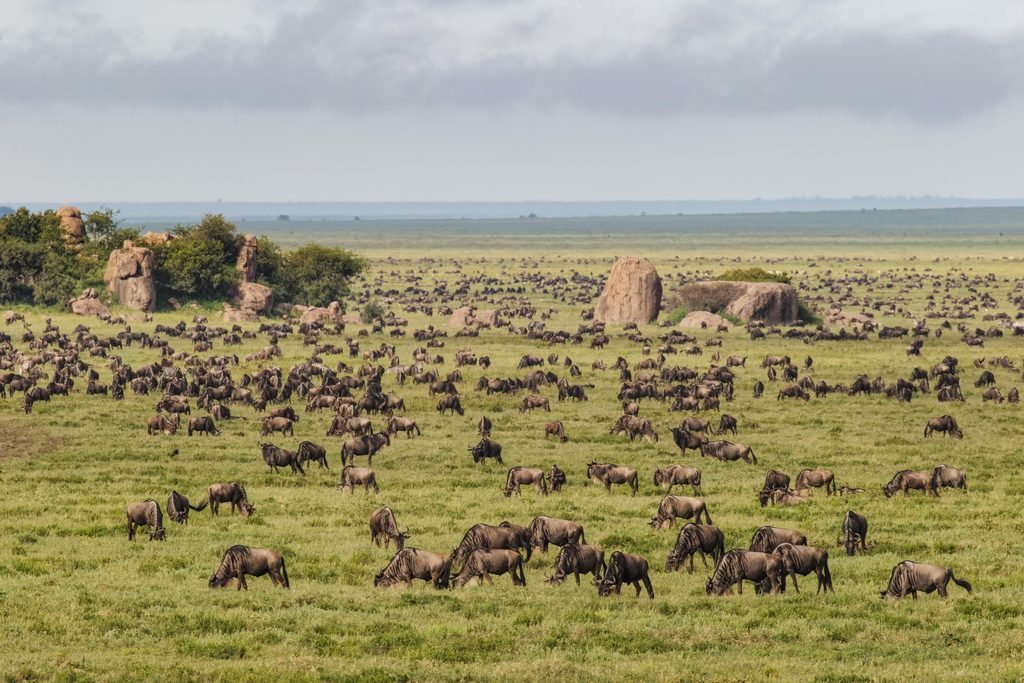
January is expected to be an important month for wildlife viewing in the southern Serengeti and Ndutu region. Seasonal rains usually encourage fresh grass growth across the plains, providing favourable grazing conditions for wildebeest preparing for the calving season. Visitors travelling during this period may encounter large concentrations of animals, including pregnant females, zebras and gazelles feeding across the open landscape.
The southern plains are particularly attractive for wildlife photography because their open terrain allows visitors to observe large groups of animals over considerable distances. Lions, cheetahs and spotted hyenas are also present, creating opportunities to observe predator behaviour. January can be an excellent choice for travellers who prefer green scenery and want to experience the migration before the main calving period.
February 2027: Peak Wildebeest Calving Season
February is traditionally one of the most rewarding months for visiting Ndutu and the southern Serengeti. During the main calving season, enormous numbers of wildebeest calves are born within a relatively short period. The concentration of newborn animals attracts predators, making this an important time for observing interactions between wildebeest and carnivores.
Visitors may see newborn calves attempting to stand shortly after birth, mothers protecting their young and predators searching for hunting opportunities. The short grass provides good visibility, particularly for photographers interested in cheetahs and other predators that hunt in open terrain. However, successful hunts and specific wildlife encounters remain unpredictable.
Travellers interested in this season should consider spending several nights around Ndutu rather than relying on a single game drive. Accommodation in the southern migration areas can become popular during the calving period, so advance planning is advisable.
March 2027: Late Calving and Changing Herd Movements
March generally marks the transition between the main calving season and the beginning of broader migration movement. Many wildebeest remain around the southern plains, particularly when grazing conditions are favourable, while other groups may begin spreading toward central Serengeti.
The arrival of the long rains can change road conditions and influence how far safari vehicles can travel. Nevertheless, March offers attractive opportunities for wildlife viewing, especially for visitors who enjoy green landscapes and fewer vehicles than during the busiest dry-season months. Predators remain active around the herds, and the combination of open plains and changing weather can provide excellent photographic conditions.
April 2027: Migration Movement Toward Central Serengeti
April falls within Tanzania’s main rainy season, and the wildebeest may begin moving away from the southern plains as grazing conditions change. Some herds travel through the central Serengeti, while others remain scattered across areas where rainfall continues to support fresh grass.
Although April is sometimes overlooked by international travellers, it can provide rewarding wildlife experiences for visitors who are comfortable with occasional rain and variable road conditions. The landscape becomes greener, birdlife is active and many areas receive fewer tourists. Central Serengeti also supports resident wildlife, including lions, elephants, giraffes and leopards, so game viewing is not limited to the migrating wildebeest.
May 2027: Herds Moving Toward the Western Corridor
May is usually associated with increasing migration activity through central and western Serengeti. As the seasonal conditions change, wildebeest may begin travelling in large groups toward the Western Corridor, creating impressive scenes of animals moving across the plains.
This period can also coincide with important mating behaviour among wildebeest. Visitors may observe males competing for access to females, while predators continue following or hunting near the moving herds. The Western Corridor offers a different landscape from the southern plains, with woodland, river systems and varied habitats.
For travellers interested in observing the migration without concentrating exclusively on the Mara River crossings, May can be an attractive option, although the precise position of the herds remains dependent on rainfall.
June 2027: Western Serengeti and Grumeti River Crossings
June is generally an important month for the migration in western Serengeti. Many herds move through the Western Corridor, where the Grumeti River forms part of the landscape they must navigate. Depending on water levels and the location of the herds, visitors may have opportunities to witness wildebeest crossing sections of the river.
The Grumeti River is known for its crocodile populations, and river crossings can create tense wildlife encounters. However, not every herd crosses at the same location, and some animals may move through shallower sections or use alternative routes. Visitors should not expect every game drive to produce a crossing.
June also marks the beginning of the drier safari season in many parts of northern Tanzania. As vegetation gradually becomes less dense, wildlife viewing can improve in certain areas, making this a useful month for combining migration viewing with general game drives.
July 2027: Migration Approaching Northern Serengeti
July is an important transition month as many wildebeest herds move toward northern Serengeti. Depending on the timing of seasonal movement, some groups may already be approaching the Mara River, while others continue travelling through western or central areas.
Visitors planning a July safari should consider the possibility that the migration may be spread across a broad region. An itinerary combining central Serengeti with northern Serengeti can provide greater flexibility than concentrating on one location for a short period.
The northern region is particularly attractive for travellers interested in river crossings, but the first major crossing activity can vary from year to year. Staying several nights near Kogatende or other suitable northern areas can improve the opportunity to observe the herds as they approach the river.
August 2027: Mara River Crossing Season
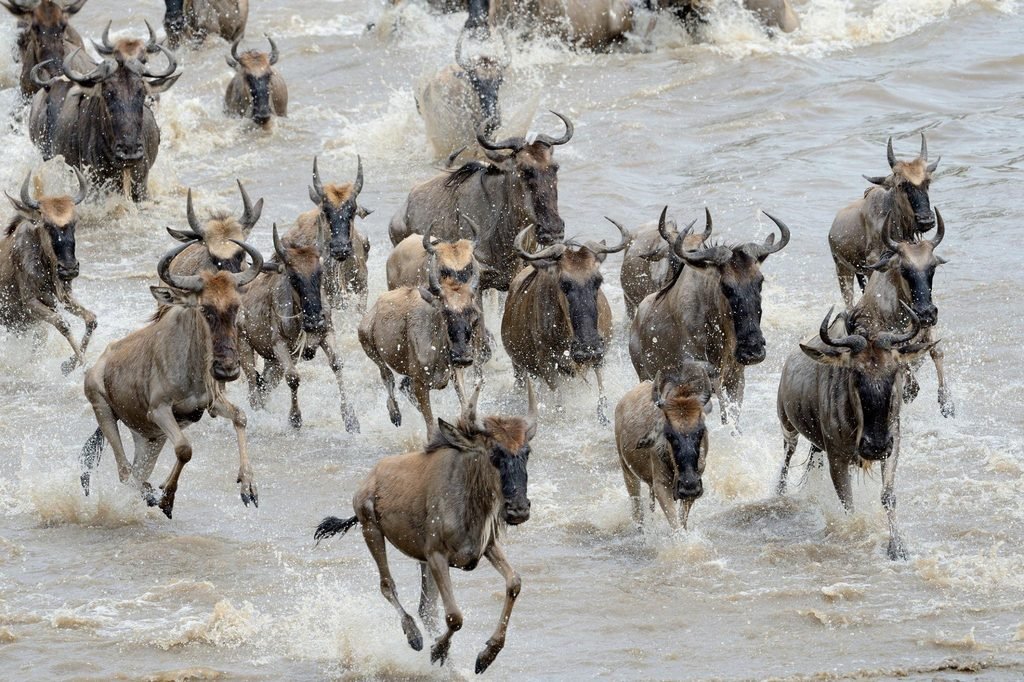
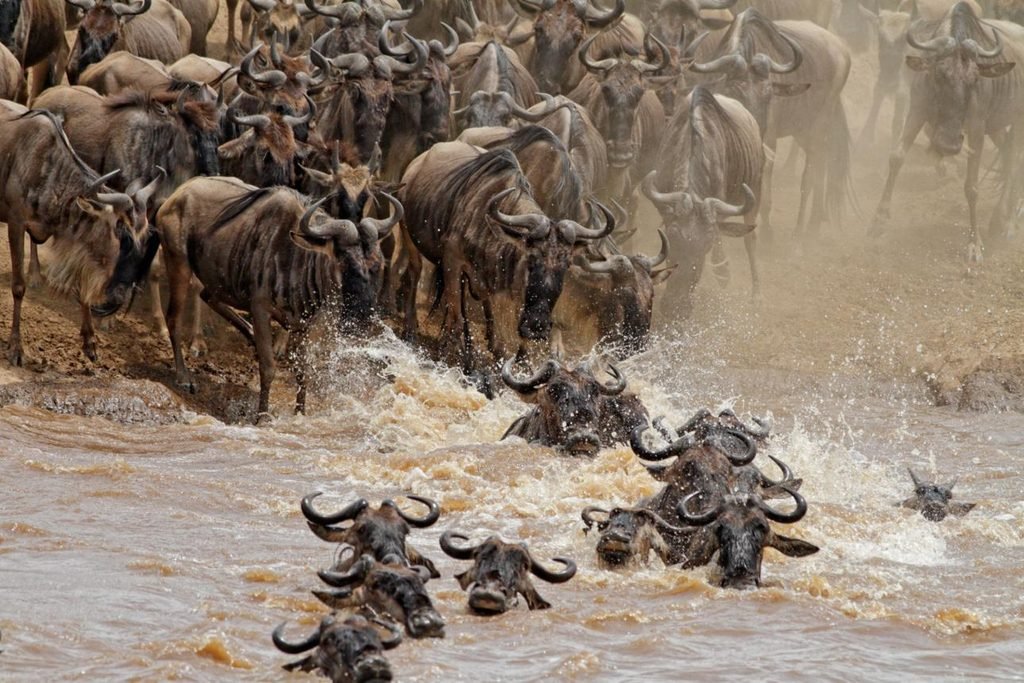
August is among the most popular months for visiting northern Serengeti because large numbers of wildebeest are often present around the Mara River. The river crossings are among the most widely photographed events of the Great Migration, with animals gathering along the banks before attempting to cross.
Crossing behaviour can be difficult to predict. Wildebeest may approach the water, remain nearby for hours and then turn away without crossing. At other times, a group may suddenly enter the river, followed by many more animals. Crocodiles, strong currents and steep riverbanks can make these crossings dangerous.
Travellers should understand that a river crossing is never guaranteed, even during August. A well-planned northern Serengeti safari should allow enough time for patient observation while also including game drives to explore other wildlife areas.
September 2027: Continued Migration Activity in Northern Serengeti
September is another excellent month for travellers hoping to observe migration activity around the Mara River. Depending on grazing conditions, wildebeest may remain in northern Serengeti, move into Kenya’s Maasai Mara or cross back into Tanzania.
The herds do not necessarily cross the river only once. Some groups move back and forth as they respond to changing conditions on either side of the ecosystem. This means that visitors staying in northern Serengeti may encounter different crossing opportunities during their safari.
September is also part of the dry season, when wildlife often concentrates around reliable water sources. Apart from wildebeest, visitors may encounter elephants, giraffes, lions, leopards and various antelope species. The combination of migration activity and resident wildlife makes this an attractive period for a longer safari.
October 2027: Late Crossings and the Beginning of the Return Journey
October is generally a transition period between the northern migration season and the gradual return toward the southern plains. Some wildebeest may still be present around the Mara River, particularly when rainfall patterns delay their movement, while other groups begin travelling through northern and eastern Serengeti.
Visitors travelling during October may still have opportunities to observe river crossings, although the location and timing of the herds can become increasingly variable. This makes it important to seek recent wildlife information before deciding where to stay.
October can also provide good general wildlife viewing because dry-season conditions may continue across much of the Serengeti. Travellers interested in both the migration and Tanzania’s wider wildlife attractions can combine northern Serengeti with Ngorongoro Crater or Tarangire National Park.
November 2027: Wildebeest Returning Toward Southern Serengeti
November usually brings the short rains to parts of the Serengeti ecosystem, encouraging new grass growth and drawing many migrating animals back toward central, eastern and southern regions. The precise timing depends on when rainfall begins and how quickly grazing conditions improve.
During this period, the migration may be spread across several locations rather than concentrated in one large group. Visitors should therefore plan their safari around broader wildlife viewing opportunities instead of expecting the entire migration to be visible in a single area.
November can be attractive for travellers seeking quieter safari conditions, green landscapes and opportunities to photograph wildlife against changing skies. Some accommodation providers may also offer more competitive seasonal rates, although availability and pricing should always be checked before booking.
December 2027: Migration Returning to the Southern Plains
December generally completes the annual migration cycle as many wildebeest return toward the southern Serengeti and Ndutu plains. The fresh grass that follows seasonal rainfall provides important feeding grounds for animals preparing for the next calving season.
Visitors travelling in December may encounter large herds gathering across the southern plains, although their exact distribution depends on rainfall. The landscape becomes increasingly green, and predators begin concentrating around areas where wildebeest are present.
December is particularly suitable for travellers who want to combine wildlife viewing with Christmas or New Year holidays in Tanzania. Because the festive season is popular, advance accommodation reservations are advisable, especially for families and groups travelling during the final weeks of the year.
Best Time to Visit Serengeti for the Great Migration in 2027
Choosing the best month for a Serengeti migration safari depends on the type of wildlife experience a traveller wants. There is no single month that guarantees every stage of the migration, and visitors should understand the differences between the southern calving season, western movement and northern river crossings before booking.
For travellers interested in newborn wildebeest and predator activity, January to March is generally the most suitable period, with February traditionally offering the strongest calving opportunities. The southern Serengeti and Ndutu region provide extensive open grasslands where visitors can observe large herds and wildlife interactions.
For visitors interested in long columns of migrating animals, mating behaviour and possible Grumeti River crossings, May to June can be particularly rewarding. During this period, western Serengeti becomes an important migration region, although the timing of herd movements may vary considerably.
Travellers hoping to witness the famous Mara River crossings should generally focus on July to October, particularly August and September. These months offer good seasonal opportunities in northern Serengeti, but visitors should allow several days because river crossings cannot be predicted precisely.
Those who prefer fewer tourists and greener landscapes may consider April, May or November, depending on the specific wildlife experiences they want. The migration remains active throughout the year, and every season offers different advantages.
Where to See the Great Migration in Serengeti During 2027
Southern Serengeti and Ndutu
Southern Serengeti and Ndutu are particularly important during the calving season, usually between December and March. The region’s short-grass plains provide favourable grazing conditions for wildebeest and offer excellent opportunities to observe newborn calves and predators.
Ndutu lies within the wider southern Serengeti ecosystem, with much of the well-known Ndutu safari area located in the Ngorongoro Conservation Area. This distinction is important when planning accommodation, park entry arrangements and safari routes.
Central Serengeti and Seronera
Central Serengeti is an important wildlife destination throughout the year and can serve as a practical base for exploring different parts of the park. Although the main migration herds may move through this region at particular times, the area also supports resident populations of lions, leopards, elephants, giraffes and other wildlife.
For travellers visiting Serengeti for the first time, central Serengeti can be a valuable addition to a migration-focused itinerary because it provides wildlife viewing opportunities even when the migrating herds are elsewhere.
Western Corridor and Grumeti River
The Western Corridor is particularly relevant during the migration’s northwest movement, generally between May and July. Its river systems, woodland and open grasslands provide a different wildlife environment from the southern Serengeti.
The Grumeti River is an important feature of the region, and visitors may encounter wildebeest moving through the surrounding landscape or attempting river crossings when conditions are suitable.
Northern Serengeti, Kogatende and Mara River
Northern Serengeti is the main destination for travellers hoping to witness Mara River crossings. Between July and October, large numbers of wildebeest may gather around the river and surrounding grazing areas.
Kogatende is one of the main access areas for northern Serengeti safaris, and visitors can choose accommodation that provides convenient access to migration viewing areas. Because the region is extensive, selecting the right camp location can reduce unnecessary driving and provide more time for wildlife observation.
How Rainfall Will Influence the Serengeti Migration in 2027
Rainfall is one of the most important factors controlling wildebeest movement across the Serengeti ecosystem. The animals depend on seasonal grass growth and reliable water sources, meaning their migration is closely connected to changes in weather conditions.
When rainfall arrives earlier than usual, fresh grazing may become available in certain areas sooner, encouraging wildebeest to move before their typical seasonal period. When rains are delayed, herds may remain longer in regions where suitable grazing is still available.
The long rains, generally associated with March through May, can influence movement through central and western Serengeti. The short rains, commonly beginning around November, are particularly important because they encourage fresh grass growth across the southern plains and help attract animals back toward their calving grounds.
For 2027, travellers should monitor seasonal conditions rather than assuming that previous years’ migration dates will repeat exactly. Weather forecasts can provide useful information, but direct wildlife observations from guides operating in the Serengeti are often more helpful when determining the herds’ recent positions.
Mara River Crossings in 2027: What Travellers Should Expect
The Mara River crossings are among the most sought-after wildlife experiences in East Africa. During the northern migration season, wildebeest may gather along the riverbanks in large numbers before attempting to cross to reach grazing areas on the opposite side.
The crossings are unpredictable because wildebeest respond to several factors, including herd behaviour, river conditions and perceived danger. A large group may approach the river without crossing, while another herd may enter the water unexpectedly.
Visitors should therefore avoid booking a Serengeti safari based on promises of a crossing at a particular time or location. Even experienced guides cannot guarantee when the animals will cross.
A northern Serengeti itinerary of three or four nights can provide more opportunities than a single overnight visit, although additional time does not guarantee a crossing. Travellers should also remember that the northern Serengeti offers excellent wildlife viewing beyond the migration, including lions, elephants, giraffes and other animals.
For more information about Tanzania’s national parks and conservation areas, travellers can consult the official Tanzania National Parks Authority website.
How Many Days Are Recommended for a Serengeti Migration Safari?
The ideal duration depends on the visitor’s travel dates, budget and preferred wildlife experiences. Travellers with limited time may include Serengeti in a three- or four-day safari, although such itineraries provide less flexibility when the migration herds are far from central access routes.
A five- to seven-day Tanzania safari is often a more practical option because it allows visitors to combine Serengeti with other major destinations such as Ngorongoro Crater and Tarangire National Park. This arrangement provides a broader wildlife experience while allowing time to explore the Serengeti region most relevant to the migration season.
Travellers whose main priority is witnessing Mara River crossings should consider allocating several nights specifically to northern Serengeti. Spending too much time driving between distant destinations can reduce opportunities to observe wildlife around the river.
For those interested in combining a safari with mountain trekking, Tanzania also offers Mount Kilimanjaro climbing experiences. Travellers can explore trekking information through Kilimanjaro Climb Specialist, which provides an additional starting point for researching Kilimanjaro climbing routes and preparations.
Planning a Serengeti Migration Safari from Arusha in 2027
Arusha is one of the main starting points for northern Tanzania safaris, with road and domestic flight connections to Serengeti and other wildlife destinations. Travellers can arrange private safaris, group departures or fly-in itineraries depending on their budget and available time.
A road safari from Arusha commonly travels through the Ngorongoro Conservation Area before reaching Serengeti. This route allows visitors to experience changing landscapes and may include additional wildlife viewing opportunities along the journey.
For northern Serengeti migration safaris, domestic flights can reduce travel time and make it easier to reach remote areas such as Kogatende. However, flight schedules, luggage restrictions and seasonal airstrip operations should be checked during the planning process.
Accommodation should also be selected according to the migration season. A lodge that is well positioned for central Serengeti wildlife viewing may not be the most convenient base for Mara River crossings. Similarly, travellers visiting during the calving season should consider accommodation around Ndutu or the southern Serengeti.
Eddy Tours & Safaris can assist with arranging safari itineraries from Arusha, selecting suitable accommodation and combining Serengeti with other destinations in Tanzania.
Serengeti Migration Safari Costs in 2027: What Affects the Price?
The cost of a Serengeti migration safari in 2027 will depend on several factors, including the number of travel days, accommodation category, transport arrangements, group size and the regions included in the itinerary.
Accommodation is often one of the largest expenses, particularly during the popular northern migration season. Camps located near the Mara River may charge higher rates during July, August and September because demand increases significantly during this period.
Transport arrangements also affect the total cost. A private safari vehicle provides flexibility for wildlife viewing and allows travellers to spend more time in preferred locations, while group-joining safaris may reduce the cost per person by sharing transport and guiding expenses.
Fly-in safaris can be convenient for travellers with limited time, although domestic flights generally increase the overall price. Park fees, conservation fees and other applicable charges must also be considered when calculating the total safari cost.
Travellers should request a detailed quotation showing the services included, accommodation standard, transport arrangements and any additional expenses. Because park fees and supplier rates may change, 2027 quotations should be based on the applicable rates confirmed at the time of booking.
Combining the Serengeti Migration with Other Tanzania Destinations
A Serengeti migration safari can be combined with several other destinations to create a more varied Tanzania holiday. Ngorongoro Crater is one of the most popular additions because it offers excellent wildlife viewing within a relatively compact area and is commonly included in northern circuit itineraries.
Tarangire National Park is another worthwhile destination, particularly during the dry season when wildlife may gather around permanent water sources. The park is well known for elephants, baobab trees and varied landscapes that provide a different safari experience from the Serengeti plains.
Lake Manyara National Park can also be included in longer itineraries, offering forest habitats, birdlife and scenic views along the Great Rift Valley.
Travellers who want to relax after their safari may add several days in Zanzibar, where beaches, historic Stone Town and coastal activities provide a contrast to wildlife viewing on the mainland.
For more active travellers, a Kilimanjaro climb can be arranged before or after the safari. The Kilimanjaro Climb Specialist website offers information relevant to travellers researching trekking routes, preparation and climbing experiences.
Important Travel Tips for Serengeti Migration Safaris in 2027
Travellers planning a migration safari should begin by choosing their preferred wildlife experience rather than selecting travel dates without considering the migration’s seasonal pattern. Someone interested in calving will usually require a different itinerary from someone hoping to witness Mara River crossings.
Accommodation should be booked sufficiently early, especially during February and the popular northern migration months. Choosing accommodation near the expected migration area can make a considerable difference to the amount of time available for game drives.
Visitors should also prepare for changing weather conditions. Morning game drives can be cool, while afternoons may become warm, and rain is possible during the wetter months. Lightweight clothing, a warm layer, comfortable footwear, sunscreen and binoculars are useful throughout the year.
A camera with a suitable zoom lens is particularly helpful for wildlife photography because animals may be some distance from the safari vehicle. Travellers should follow their guide’s instructions, remain inside vehicles where required and avoid behaviour that disturbs wildlife.
It is equally important to maintain realistic expectations. The Serengeti is a natural ecosystem, and no safari operator can guarantee specific animal encounters, hunting events or river crossings. A successful safari should be planned around strong wildlife opportunities rather than a promise that nature will behave according to a fixed schedule.
Frequently Asked Questions About the Serengeti Migration in 2027
Where will the Great Migration be in January 2027?
The wildebeest are generally expected to be around the southern Serengeti and Ndutu plains during January 2027, depending on rainfall and grazing conditions. This period is associated with large grazing herds and the beginning of the calving season. Exact locations will require confirmation from wildlife observations closer to the travel date.
What is the best month to see the Serengeti Migration in 2027?
February is generally one of the best months for witnessing the calving season in southern Serengeti, while August and September are popular for Mara River crossing opportunities in northern Serengeti. The best month depends on which stage of the migration the traveller wants to experience.
When will the wildebeest cross the Mara River in 2027?
Mara River crossings are generally associated with July through October, but exact dates cannot be predicted. Rainfall, grazing conditions and herd behaviour will determine when and where crossing events occur.
Can tourists see the Great Migration throughout 2027?
Yes, the Great Migration is a year-round natural movement, although the herds occupy different parts of the Serengeti–Mara ecosystem at different times. Visitors should select their safari region according to the expected seasonal movement.
Is February or August better for a Serengeti migration safari?
February is generally better for visitors interested in newborn wildebeest, predator activity and green southern plains. August is more suitable for travellers hoping to witness Mara River crossings in northern Serengeti. Both months offer excellent but very different wildlife experiences.
Is the Serengeti migration guaranteed during a safari?
The migration is an ongoing natural phenomenon, but sightings of large herds in a particular location cannot be guaranteed. River crossings, predator hunts and other specific wildlife encounters depend on natural conditions.
How far in advance should I book a Serengeti migration safari for 2027?
Booking several months in advance is advisable, particularly for February, August and September. Travellers requiring specific accommodation or planning to visit during school holidays should consider arranging their safari even earlier.
Book Your 2027 Serengeti Great Migration Safari with Eddy Tours & Safaris
Planning a successful Serengeti migration safari involves more than choosing a travel date. The location of the wildebeest herds changes throughout the year, and selecting the appropriate region, accommodation and safari duration can greatly improve the overall experience.
At Eddy Tours & Safaris, we help travellers plan Tanzania safaris based on their interests, preferred travel dates and available budget. Whether you want to visit the southern Serengeti during the calving season, explore the Western Corridor or spend several days in northern Serengeti looking for Mara River crossings, our team can assist with preparing a suitable itinerary.
We also arrange Tanzania wildlife safaris that combine Serengeti with Ngorongoro Crater, Tarangire National Park, Lake Manyara and other destinations, allowing visitors to experience more of the country’s natural attractions.
Start planning your 2027 Serengeti migration safari today.
Website: Eddy Tours and Safaris
Email: sales@eddytours-safaris.com
Alternative Email: eddytoursandsafaris@gmail.com
Location: Arusha, Tanzania
Contact Eddy Tours & Safaris to discuss your preferred travel dates, safari duration and the migration experience you would most like to see. Our team can help you prepare a practical itinerary that follows the seasonal movement of the wildebeest while allowing time to enjoy the wider wildlife and landscapes of Tanzania.