

Climbing Mount Kilimanjaro is a dream for many travelers, but organizing a private expedition is not always the most practical option. Some people travel alone, others prefer meeting fellow adventurers, and many want to keep their climbing costs manageable without compromising on professional mountain support.
A Kilimanjaro group joining climb via the Machame Route offers an opportunity to share the experience with other climbers on a scheduled departure. Instead of arranging a separate expedition, travelers join a group following the same route, camping schedule, and summit plan.
The Machame Route, commonly known as the Whiskey Route, is one of the most popular ways to climb Kilimanjaro. It is famous for its rainforest trails, the Shira Plateau, Lava Tower, Barranco Wall, and the final climb to Uhuru Peak at 5,895 meters above sea level.
For travelers planning their Kilimanjaro adventure in 2027, 2028, or 2029, a fixed-departure climbing plan can make organizing flights, accommodation, mountain equipment, and the rest of a Tanzania holiday much easier.
At Eddy Tours and Safaris, travelers can inquire about Machame Route joining groups, private climbs, and suitable travel dates. Our recommended fixed-departure itinerary is the seven-day Machame Route because it includes an additional night at Karanga Camp, providing more time for acclimatization before summit night.
This guide explains how Kilimanjaro joining groups work, the complete seven-day Machame itinerary, how to plan fixed departures for 2027–2029, estimated costs, inclusions, equipment, and important safety considerations.
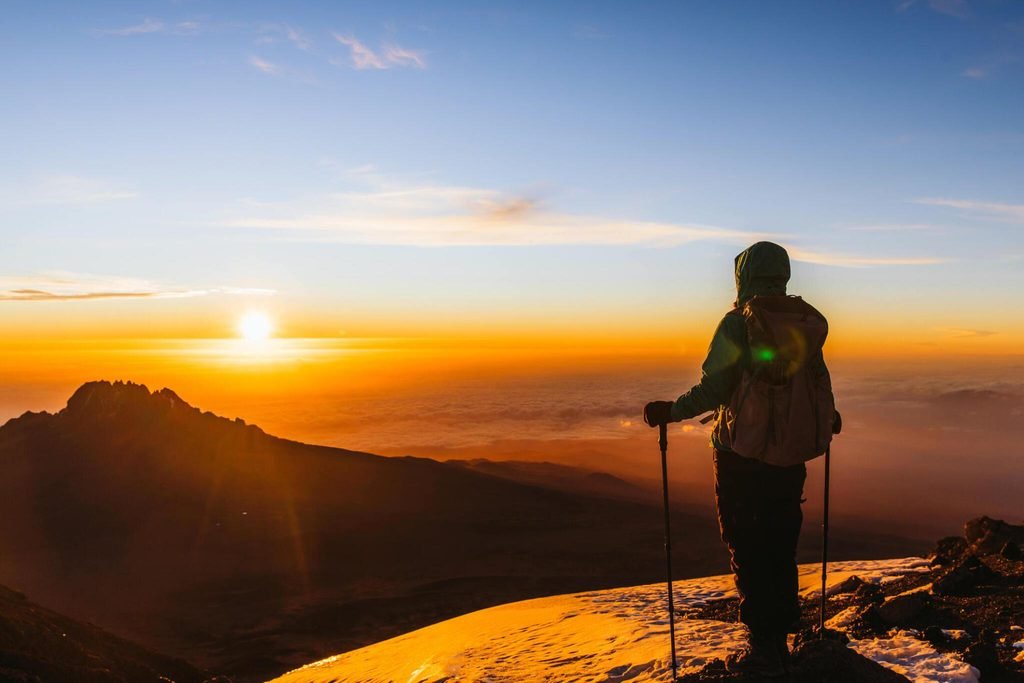
Kilimanjaro Machame Route Group Joining Climb Overview
| Tour information | Details |
|---|---|
| Tour name | Kilimanjaro Machame Route Group Joining Climb |
| Destination | Mount Kilimanjaro, Tanzania |
| Route | Machame Route |
| Recommended duration | 7 days / 6 mountain nights |
| Alternative | 6-day Machame Route |
| Maximum altitude | Uhuru Peak, 5,895 meters |
| Starting point | Machame Gate |
| Finishing point | Mweka Gate |
| Accommodation | Shared mountain camping arrangements |
| Climbing style | Guided group expedition |
| Main attractions | Shira Plateau, Lava Tower, Barranco Wall, Uhuru Peak |
| Difficulty | Challenging |
| Suitable travelers | Solo travelers, couples, friends and small groups |
| Planned travel years | 2027, 2028 and 2029 |
| Departure status | Dates and available places require confirmation |
| Recommended seasons | January–March and June–October |
What Is a Kilimanjaro Group Joining Climb?
A Kilimanjaro group joining climb is a mountain expedition where individual travelers or smaller parties join other climbers on a shared itinerary.
Instead of booking a completely private climbing team, participants travel with a group supported by professional mountain guides, porters, cooks, and other necessary crew members.
The group normally follows the same daily schedule, uses designated campsites, and attempts the summit together, although individual pacing and safety decisions remain the responsibility of the guides.
Group joining climbs are particularly attractive to solo travelers because they provide opportunities to meet other people who share an interest in mountain trekking.
Couples and friends may also prefer joining groups because some operating costs can be shared among participants.
However, joining a group does not mean everyone must walk at exactly the same speed. A properly organized expedition should provide appropriate guide support and respond to the needs of individual climbers.
The most important consideration is choosing a professionally managed group with clear arrangements for altitude monitoring, equipment, mountain crew welfare, and emergencies.
Why Choose the Machame Route for a Kilimanjaro Joining Group?
The Machame Route is a popular option for joining groups because it combines beautiful scenery with a well-established trekking itinerary.
The route begins on Kilimanjaro’s southwestern slopes and passes through several different environments.
During the first day, climbers walk through dense rainforest before continuing into open moorland and the rocky landscape of the Shira Plateau.
The route then crosses toward Lava Tower, where climbers reach a higher elevation before descending to Barranco Camp.
This is followed by the famous Barranco Wall, a steep section that requires some scrambling, and the ascent toward Barafu Camp.
The final summit attempt begins from Barafu and continues toward Stella Point and Uhuru Peak.
Unlike the Marangu Route, which uses permanent mountain huts, Machame is a camping route. Climbers sleep in tents at designated campsites.
The route also uses a different descent trail, finishing at Mweka Gate.
For group expeditions, the seven-day itinerary is particularly attractive because the additional overnight stay at Karanga Camp provides a more gradual schedule before the summit attempt.
The Smart Fixed Departure Plan for 2027, 2028 and 2029
A fixed departure is a climbing trip planned to begin on a particular date, with a shared itinerary and a defined booking process.
This arrangement helps travelers coordinate international flights, accommodation in Moshi, mountain equipment rental, and optional safari or Zanzibar extensions.
However, it is important to distinguish between planned departure periods and confirmed departure dates.
A planned departure period shows when travelers may inquire about joining a group. A confirmed departure means the operator has approved the specific starting date and booking arrangements.
For 2027, 2028, and 2029, travelers should request the latest confirmed schedule directly from Eddy Tours and Safaris before booking non-refundable international flights.
Suggested Departure Planning Calendar
| Month | General climbing conditions | Group departure planning |
|---|---|---|
| January | Often relatively favorable | Popular inquiry period |
| February | Often relatively favorable | Popular inquiry period |
| March | Conditions may become wetter | Check dates carefully |
| April | Long rainy season | Wet-weather planning required |
| May | Long rainy season | Wet-weather planning required |
| June | Beginning of the main dry-season period | Popular inquiry period |
| July | Generally drier conditions | High demand possible |
| August | Generally drier conditions | High demand possible |
| September | Generally drier conditions | High demand possible |
| October | Often suitable, with changing conditions | Popular inquiry period |
| November | Short rains may occur | Check forecast and arrangements |
| December | Variable conditions | Holiday-period inquiries |
This is a seasonal planning calendar, not a published list of confirmed Eddy Tours and Safaris departures.
How to Choose Your Group Departure Date
The best departure date depends on your travel schedule, preferred season, and the availability of a suitable climbing group.
Travelers who prefer generally drier conditions often consider January, February, July, August, or September.
Those planning to combine Kilimanjaro with a Tanzania safari may also consider the wildlife viewing seasons in northern Tanzania.
Before confirming a date, ask whether the expedition has enough participants to operate, whether the departure is guaranteed, and what happens if the group does not reach the required number.
You should also confirm the number of mountain days, the hotel arrangements, and the exact date on which the summit attempt is expected.
Complete 7 Days Machame Route Group Joining Climb Itinerary
The following seven-day itinerary is recommended for Machame Route joining groups because it includes an overnight stay at Karanga Camp.
Day 1: Moshi to Machame Gate – Hike to Machame Camp
Starting elevation: Approximately 1,800 meters
Ending elevation: Approximately 3,000 meters
Hiking distance: Approximately 11 kilometers
Walking time: 5–7 hours
Habitat: Rainforest
Your Kilimanjaro adventure begins with a morning transfer from your hotel in Moshi to Machame Gate.
Before departure, your mountain guide checks your trekking equipment and explains the group arrangements, walking pace, and safety procedures.
At Machame Gate, the climbing team completes the national park registration procedures while porters organize the mountain equipment and supplies.
The hike begins through Kilimanjaro’s rainforest.
The trail passes beneath tall trees surrounded by ferns, moss, and thick vegetation. Rainfall is possible throughout the year, and some sections can become muddy.
Your guide will encourage the group to walk slowly and take regular breaks.
As you gain elevation, the trail gradually becomes steeper before reaching Machame Camp.
After arriving, you settle into your tent and enjoy dinner with your fellow climbers.
Accommodation: Machame Camp
Meals: Lunch and dinner
Day 2: Machame Camp to Shira Camp
Starting elevation: Approximately 3,000 meters
Ending elevation: Approximately 3,840 meters
Hiking distance: Approximately 5 kilometers
Walking time: 4–6 hours
Habitat: Heath and moorland
After breakfast, the group continues ascending toward the Shira Plateau.
The rainforest gradually disappears, and the landscape changes into open moorland with giant heather, shrubs, and rocky ridges.
The trail climbs steadily, offering beautiful views of the surrounding mountain slopes when the weather is clear.
Although the hiking distance is shorter than the first day, the increasing altitude can make walking more demanding.
Your guide will maintain a comfortable pace and monitor the group’s condition.
After reaching Shira Camp, you have time to rest, enjoy the scenery, and prepare for the following day’s acclimatization walk.
Accommodation: Shira Camp
Meals: Breakfast, lunch and dinner
Day 3: Shira Camp to Lava Tower – Descend to Barranco Camp
Starting elevation: Approximately 3,840 meters
Highest walking elevation: Approximately 4,600 meters
Ending elevation: Approximately 3,960 meters
Hiking distance: Approximately 9–11 kilometers
Walking time: 6–8 hours
Habitat: Alpine desert and moorland
Day three is an important part of the Machame Route because the group climbs toward Lava Tower before descending to a lower sleeping altitude.
After breakfast, you leave Shira Camp and begin walking eastward through increasingly rocky terrain.
Vegetation becomes sparse as the trail enters the alpine desert zone.
Near Lava Tower, the group reaches approximately 4,600 meters above sea level.
At this elevation, walking can feel more demanding because of the reduced oxygen available to the body.
Your guide will encourage a slow pace and check how everyone is feeling.
After spending time near Lava Tower, you descend toward Barranco Valley.
The landscape becomes greener as you approach Barranco Camp, where giant groundsels and other unusual high-altitude plants grow.
Barranco Camp is located beneath the famous Barranco Wall.
After arriving, you enjoy dinner and rest before the following day’s hike.
Accommodation: Barranco Camp
Meals: Breakfast, lunch and dinner
Day 4: Barranco Camp to Karanga Camp via Barranco Wall
Starting elevation: Approximately 3,960 meters
Ending elevation: Approximately 4,000 meters
Hiking distance: Approximately 5 kilometers
Walking time: 4–5 hours
Habitat: Alpine desert
After breakfast, the group begins climbing the famous Barranco Wall.
Although the wall looks steep from below, the standard trail follows an established scrambling route.
Some sections require using your hands for balance while stepping over rocks.
Your guides will help the group navigate the more demanding sections.
After reaching the top of the wall, you continue across rocky ridges and valleys.
The trail eventually descends into Karanga Valley before climbing toward Karanga Camp.
The shorter hiking day provides additional time for rest and acclimatization.
After arriving at camp, you enjoy lunch and spend the afternoon relaxing.
This extra overnight stop is one of the main advantages of the seven-day Machame itinerary.
Accommodation: Karanga Camp
Meals: Breakfast, lunch and dinner
Day 5: Karanga Camp to Barafu Camp
Starting elevation: Approximately 4,000 meters
Ending elevation: Approximately 4,670 meters
Hiking distance: Approximately 4 kilometers
Walking time: 3–4 hours
Habitat: Alpine desert
After breakfast, the group continues ascending toward Barafu Camp.
The trail passes through rocky and exposed terrain with very little vegetation.
Although the walking distance is relatively short, the altitude makes the ascent more demanding.
Your guide will encourage a slow and steady pace.
After reaching Barafu Camp, you settle into your tent and prepare for the summit attempt.
Your guide explains the expected departure time, weather conditions, route details, and safety procedures.
You should prepare your warmest clothing, insulated gloves, headlamp, water containers, and snacks.
Dinner is normally served early, followed by several hours of rest before the overnight summit attempt.
Accommodation: Barafu Camp
Meals: Breakfast, lunch and dinner
Day 6: Barafu Camp to Uhuru Peak – Descend to Mweka Camp
Starting elevation: Approximately 4,670 meters
Summit elevation: 5,895 meters
Ending elevation: Approximately 3,100 meters
Hiking distance: Approximately 15–17 kilometers
Walking time: 11–16 hours
Habitat: Summit zone and alpine descent
Today is the most demanding day of your Kilimanjaro expedition.
The group normally wakes late at night or around midnight and prepares for the final ascent.
After a light meal or warm drink, you begin climbing toward Stella Point with your mountain guides.
The trail ascends steeply over loose volcanic scree and rocky terrain.
Temperatures can be well below freezing, and strong winds may make conditions even colder.
Your guides will maintain a slow pace and monitor the condition of each climber.
After several hours, you reach Stella Point on the crater rim.
If your health and weather conditions allow, you continue toward Uhuru Peak at 5,895 meters.
Reaching the highest point in Africa is a remarkable achievement.
When visibility is good, you may enjoy views of the volcanic crater and Kilimanjaro’s remaining glaciers.
After taking photographs, you begin descending toward Barafu Camp.
Following a short rest and meal, you continue downhill to Mweka Camp.
The descent is long and can be tiring after the demanding summit attempt.
You arrive at Mweka Camp for dinner and overnight rest.
Accommodation: Mweka Camp
Meals: Breakfast, lunch and dinner
Day 7: Mweka Camp to Mweka Gate – Return to Moshi
Starting elevation: Approximately 3,100 meters
Ending elevation: Approximately 1,640 meters
Hiking distance: Approximately 10 kilometers
Walking time: 3–5 hours
Habitat: Rainforest
After breakfast, you begin the final descent through Kilimanjaro’s rainforest.
The trail passes beneath tall trees, with increasingly dense vegetation as you lose altitude.
The air becomes warmer and more humid, and the path may be muddy after rainfall.
After several hours, you reach Mweka Gate.
Your guide completes the national park exit procedures, and eligible climbers receive the appropriate summit certificates.
You then meet your arranged transport and return to Moshi.
At your hotel, you can rest after completing seven days on Mount Kilimanjaro.
Travelers with additional time in Tanzania may continue with a wildlife safari or Zanzibar beach holiday.
Meals: Breakfast and lunch
End of the 7 Days Machame Route Group Joining Climb.
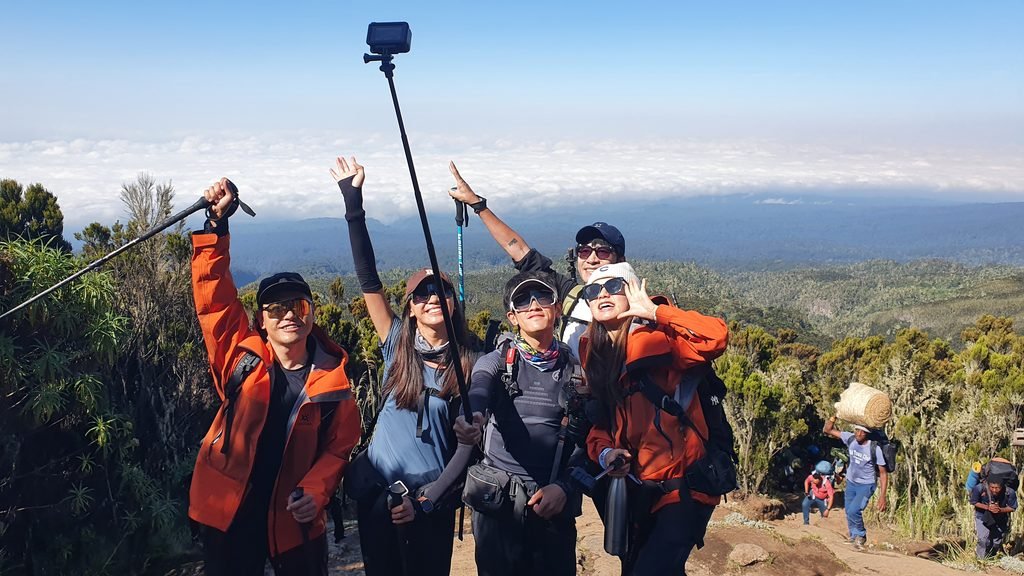
Seven-Day Machame Route Itinerary Summary
| Day | Route | Overnight |
|---|---|---|
| Day 1 | Machame Gate to Machame Camp | Machame Camp |
| Day 2 | Machame Camp to Shira Camp | Shira Camp |
| Day 3 | Shira Camp to Lava Tower, descend to Barranco | Barranco Camp |
| Day 4 | Barranco Camp to Karanga Camp | Karanga Camp |
| Day 5 | Karanga Camp to Barafu Camp | Barafu Camp |
| Day 6 | Barafu Camp to Uhuru Peak, descend to Mweka | Mweka Camp |
| Day 7 | Mweka Camp to Mweka Gate | Return to Moshi |
Six Days vs Seven Days Machame Route for Joining Groups
The Machame Route can be completed in either six or seven days.
The main difference is that the six-day itinerary combines the walk from Barranco Camp through Karanga Valley to Barafu Camp into one longer day.
The seven-day itinerary includes an overnight stay at Karanga Camp.
| Feature | 6-Day Machame | 7-Day Machame |
|---|---|---|
| Mountain duration | 6 days | 7 days |
| Overnight at Karanga | No | Yes |
| Acclimatization time | Less | More |
| Day before summit | Longer | Shorter |
| Camping accommodation | Yes | Yes |
| Barranco Wall | Included | Included |
| Lava Tower | Included | Included |
| Summit attempt | From Barafu Camp | From Barafu Camp |
| Recommended for group departures | Less preferred | Preferred |
For most travelers, the seven-day Machame Route is the better option because it provides a more gradual schedule before summit night.
However, neither itinerary guarantees reaching Uhuru Peak, and altitude sickness remains a significant risk.
Kilimanjaro Machame Group Joining Climb Prices 2027–2029
The cost of a Machame Route joining-group climb depends on the itinerary length, group size, national park fees, mountain crew arrangements, and services included.
The following prices are broad planning estimates rather than confirmed Eddy Tours and Safaris rates.
| Climbing package | Illustrative price per person |
|---|---|
| 6 Days Machame Joining Group | US$1,550–$2,250 |
| 7 Days Machame Joining Group | US$1,750–$2,500 |
| 6 Days Machame Private Climb | Request quotation |
| 7 Days Machame Private Climb | Request quotation |
The actual price for a 2027, 2028, or 2029 departure must be confirmed in writing.
Why Joining Groups Can Cost Less
A joining-group climb allows participants to share some expedition costs.
These may include transportation, cooking equipment, mountain crew arrangements, and other shared services.
However, each climber still requires appropriate guiding support, food, national park arrangements, and accommodation.
A lower price should never come at the expense of mountain safety or proper treatment of guides and porters.
What Is Included in a Machame Route Joining-Group Package?
A typical professionally organized package may include:
- Kilimanjaro National Park entry and camping fees.
- Licensed professional mountain guides.
- Mountain porters and cooking crew.
- Meals during the mountain expedition.
- Drinking water prepared according to the operator’s procedures.
- Camping tents and shared mountain equipment.
- Transport from Moshi to Machame Gate and from Mweka Gate back to Moshi.
- Pre-climb briefing and equipment checks.
- Mountain safety monitoring and emergency arrangements.
The exact inclusions should be confirmed in the official booking quotation.
What Is Usually Excluded?
Common exclusions include international flights, Tanzania visa fees, personal travel insurance, personal trekking equipment, sleeping bag rental, tips for the mountain crew, additional hotel nights, and optional safari or Zanzibar extensions.
Travelers should ensure that their insurance covers high-altitude trekking to 5,895 meters and appropriate emergency evacuation.
How Does Accommodation Work on a Group Joining Climb?
The Machame Route uses camping tents at designated mountain campsites.
Unlike the Marangu Route, Machame does not provide permanent sleeping huts.
Group expeditions normally use shared camping arrangements, although the exact tent occupancy depends on the package.
Solo travelers should ask whether they will share a tent with another participant or whether a single-tent arrangement is available.
The mountain crew generally transports and sets up the shared camping equipment.
Climbers carry a daypack containing water, snacks, waterproof clothing, personal medication, and other essentials needed during the hike.
Is the Machame Route Suitable for Solo Travelers?
Yes. The Machame Route is a popular choice for solo travelers who want to join a guided Kilimanjaro expedition.
A joining group provides opportunities to meet fellow climbers and share the experience with people from different countries.
However, solo travelers should confirm the group’s departure status, accommodation arrangements, expected group size, and any additional single-person charges before booking.
How to Prepare for a Kilimanjaro Group Joining Climb
Preparing for Kilimanjaro involves more than simply booking a departure date.
Travelers should begin physical preparation well before the expedition.
Regular hiking, walking on hills, stair climbing, and other aerobic activities can help build endurance.
Strengthening the legs and practicing with a daypack can also be useful.
However, physical fitness does not prevent altitude sickness.
Climbers should discuss relevant medical concerns with a qualified healthcare professional before attempting high-altitude trekking.
It is also important to arrive with suitable equipment and realistic expectations about the physical demands of the expedition.
What Should You Pack for the Machame Route?
The Machame Route passes through several different climate zones, so climbers need clothing suitable for warm rainforest conditions and freezing summit temperatures.
Important items include:
- Waterproof hiking boots.
- Thermal base layers.
- Warm fleece or insulated clothing.
- Waterproof jacket and trousers.
- Insulated summit jacket.
- Warm gloves and hat.
- Trekking poles.
- Headlamp with spare batteries.
- Sunglasses and sunscreen.
- Sleeping bag suitable for freezing conditions.
- Comfortable daypack.
- Reusable water bottles or hydration system.
- Personal medication and hygiene supplies.
Your climbing operator should provide a complete packing list before departure.
Altitude Sickness and Safety on Kilimanjaro
Altitude sickness is one of the most important risks associated with climbing Mount Kilimanjaro.
As climbers ascend, the air pressure decreases, reducing the amount of oxygen available to the body.
Symptoms may include headaches, nausea, dizziness, unusual fatigue, and difficulty sleeping.
These symptoms should be reported promptly to your mountain guide.
Severe symptoms such as confusion, difficulty walking normally, or breathlessness at rest require urgent medical attention and appropriate descent.
The seven-day Machame itinerary provides more time for acclimatization than the six-day version, but it does not eliminate altitude-related risks.
A responsible expedition should include guides trained to recognize altitude illness, appropriate health monitoring, emergency communication arrangements, and a clear evacuation plan.
Best Time to Join a Machame Route Climb in 2027, 2028 or 2029
Mount Kilimanjaro can be climbed throughout the year, but January through early March and June through October are generally popular periods.
January and February often provide relatively favorable conditions, while June through October is the main dry-season period.
July, August, and September are particularly popular months for Kilimanjaro climbing.
April and May are commonly associated with the long rainy season, while November may bring additional rainfall.
Even during the drier months, climbers should prepare for freezing temperatures, rain, strong winds, and possible snow near the summit.
How to Book a Fixed-Departure Kilimanjaro Joining Group
Booking a group joining climb should begin with choosing your preferred travel dates and the itinerary that best suits your experience.
Contact Eddy Tours and Safaris with your preferred month, number of travelers, and whether you want the six-day or seven-day Machame Route.
Our team can discuss the available arrangements and provide a quotation based on the requested dates and services.
Before paying a deposit, make sure you receive written confirmation of the exact departure date, itinerary, total price, inclusions, exclusions, cancellation conditions, and any minimum group-size requirement.
You should also confirm the planned hotel accommodation and transport arrangements.
If your international flights are not yet booked, consider waiting until the departure arrangements have been confirmed.
Can You Combine a Kilimanjaro Joining Group with a Tanzania Safari?
Yes. Many travelers combine their Kilimanjaro expedition with a wildlife safari in northern Tanzania.
After completing the climb, you can visit Serengeti National Park, Ngorongoro Crater, Tarangire National Park, or Lake Manyara National Park.
A three- to five-day safari can provide opportunities to observe elephants, lions, giraffes, zebras, buffaloes, and other wildlife.
Allowing some time to recover after the climb is advisable before beginning a long safari journey.
Can You Visit Zanzibar After Your Kilimanjaro Climb?
Yes. Zanzibar is a popular destination for travelers who want to relax after climbing Kilimanjaro.
The island offers beautiful beaches, historical attractions, comfortable resorts, and opportunities for snorkeling and other coastal activities.
A Zanzibar holiday can provide a relaxing conclusion to your Tanzania adventure.
Frequently Asked Questions About Kilimanjaro Machame Joining Groups
What is a Kilimanjaro group joining climb?
It is a guided mountain expedition where individual travelers or small parties join other climbers on a shared itinerary.
Is the Machame Route good for joining groups?
Yes. Machame is an established and popular route that can be organized for guided group departures.
How many days does the Machame Route take?
Machame is commonly completed in six or seven days. The seven-day version includes an additional overnight stay at Karanga Camp.
Which Machame itinerary is better for a joining group?
The seven-day itinerary is generally preferable because it provides more time for acclimatization and a shorter walking day before the summit attempt.
Are fixed departure dates available for 2027, 2028 and 2029?
Travelers can inquire about departures for these years. Exact dates and available places must be confirmed directly with the operator.
Can solo travelers join a Kilimanjaro climbing group?
Yes. Joining groups are suitable for solo travelers, subject to available departures and accommodation arrangements.
How much does a Machame joining-group climb cost?
Illustrative prices may range from approximately US$1,550 to US$2,500 per person depending on the itinerary and inclusions. Actual prices require a confirmed quotation.
Do climbers sleep in tents on Machame?
Yes. The Machame Route uses mountain camping tents at designated campsites.
Does the Machame Route include Lava Tower?
Yes. The standard itinerary includes a walk toward Lava Tower before descending to Barranco Camp.
Does Machame include the Barranco Wall?
Yes. Both the six-day and seven-day itineraries include the Barranco Wall.
Is the Machame Route difficult?
Yes. Machame is a challenging high-altitude trek involving steep trails, rocky terrain, and a demanding summit attempt.
What is the highest point on the Machame Route?
Uhuru Peak, at 5,895 meters above sea level.
What is the best month to join a Machame climb?
January, February, and the main dry-season months from June through October are generally popular choices.
Can beginners join a Machame climbing group?
Physically prepared beginners may consider the seven-day itinerary, although altitude sickness remains a significant risk.
What happens if I cannot continue to the summit?
Your mountain guides should assess your condition and arrange an appropriate response, including descent when necessary. Your health and safety take priority over reaching the summit.
Can I combine my climb with a Serengeti safari?
Yes. Many travelers combine Kilimanjaro climbing with a wildlife safari to Serengeti, Ngorongoro, and other northern Tanzania destinations.
Final Thoughts: Is a Machame Route Group Joining Climb Worth It?
A Kilimanjaro group joining climb through the Machame Route offers a memorable way to experience Africa’s highest mountain while sharing the adventure with fellow travelers.
The route passes through rainforest, open moorland, the Shira Plateau, Lava Tower, Barranco Valley, and the famous Barranco Wall before reaching the summit area.
For travelers planning a climb in 2027, 2028, or 2029, a fixed-departure arrangement can simplify travel planning and provide a clear itinerary.
The seven-day Machame Route is generally the better choice because it provides more acclimatization time than the six-day version.
However, reaching Uhuru Peak remains a serious high-altitude challenge, and climbers should prepare carefully.
Choosing a suitable itinerary, confirming the departure arrangements, and climbing with a professional mountain team are essential parts of planning a successful Kilimanjaro adventure.
Book Your Kilimanjaro Machame Route Joining Group with Eddy Tours and Safaris
Are you planning to climb Mount Kilimanjaro through the Machame Route in 2027, 2028, or 2029?
Eddy Tours and Safaris can help you inquire about group joining departures, private climbing arrangements, available travel dates, mountain equipment requirements, and the services included in your expedition.
Contact our team with your preferred travel month, number of climbers, and previous hiking experience.
Website: www.eddytours-safaris.com
Contact page: Plan Your Kilimanjaro Climb
Email: sales@eddytours-safaris.com
WhatsApp: +255 711 906 664
Request the latest confirmed Machame Route joining-group departure dates and your personalized quotation for 2027, 2028 or 2029.