
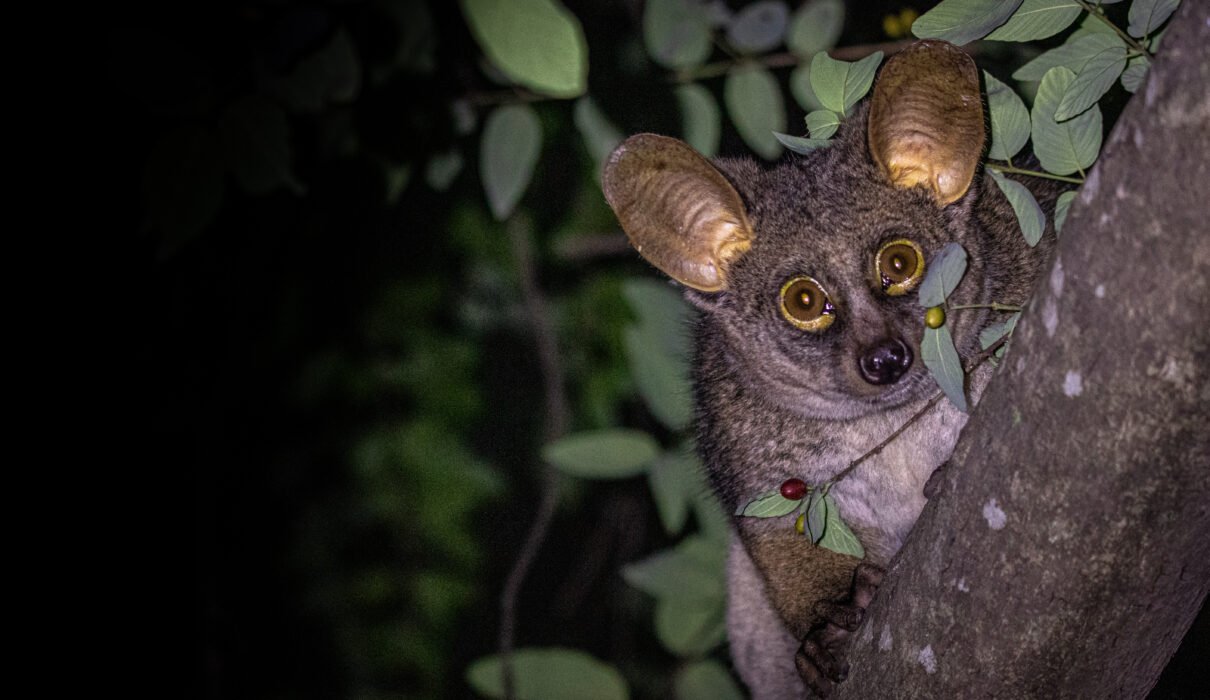
Bushbaby: Tanzania’s Nocturnal Primate is one of the most mysterious and enchanting creatures you can encounter in East Africa. Hidden in the shadows of acacia woodlands and riverine forests, this tiny primate comes alive when the sun sets. With its enormous eyes, soft fur, and powerful leaps, it captures the imagination of every traveler who is lucky enough to spot it. While lions and elephants dominate daytime safaris, the bushbaby quietly rules the night, adding a magical touch to Tanzania’s wild landscapes.
Many visitors to Tanzania focus on the Great Migration or the Big Five, yet few realize that the country’s forests and savannahs are also home to this agile nocturnal primate. Observing one in its natural habitat requires patience, silence, and an experienced guide. At Eddy Tours & Safaris, our customized night game drives are designed to give you a safe and unforgettable wildlife experience beyond the ordinary.
Bushbaby: Tanzania’s Nocturnal Primate and Its Unique Appearance
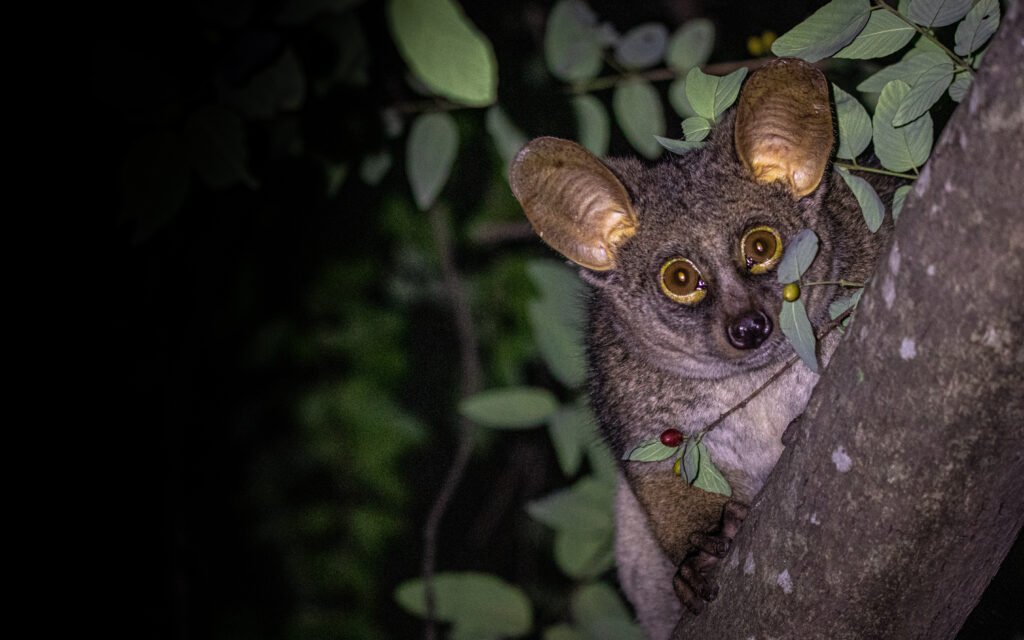
The first thing you notice about a bushbaby is its striking eyes. These large, round eyes are perfectly adapted for night vision, allowing the animal to navigate trees and detect predators in near darkness. According to research shared by the National Geographic Society, nocturnal primates depend heavily on visual and auditory senses, and the bushbaby is a prime example of this adaptation.
Its soft, woolly fur ranges from grey to brown, blending seamlessly with tree bark and dry grass. The long, bushy tail helps with balance when leaping between branches, sometimes covering distances many times its body length. Studies referenced by the International Union for Conservation of Nature explain that such physical features are essential for survival in habitats where stealth and agility mean the difference between life and death.
Natural Habitat Across Tanzania
Bushbaby: Tanzania’s Nocturnal Primate thrives in diverse ecosystems, including miombo woodlands, coastal forests, and national parks like Serengeti and Tarangire. The World Wildlife Fund highlights East Africa as a biodiversity hotspot, and Tanzania stands out for its protected areas. These small primates prefer areas with dense tree cover where they can sleep in tree hollows during the day and forage safely at night.
Organizations such as the Jane Goodall Institute and the African Wildlife Foundation emphasize the importance of habitat conservation in maintaining healthy primate populations. When forests are preserved, species like the bushbaby continue to thrive alongside larger mammals.
Behavior and Feeding Habits of Bushbaby: Tanzania’s Nocturnal Primate
The bushbaby is an omnivore with a surprisingly varied diet. It feeds on insects, fruits, tree gum, and small vertebrates. According to ecological findings from Encyclopaedia Britannica, this flexible diet allows it to adapt to seasonal changes in food availability. During the dry season, tree sap becomes a crucial energy source, while insects provide essential protein throughout the year.
Communication among bushbabies is equally fascinating. They use high-pitched calls to mark territory and warn others of danger. Research published through institutions like Nature and ScienceDirect reveals that vocalizations play a significant role in social bonding and survival strategies among nocturnal primates.
Incredible Jumping Ability
One of the most impressive traits of Bushbaby: Tanzania’s Nocturnal Primate is its extraordinary jumping skill. Its powerful hind legs allow it to spring between branches with remarkable speed and accuracy. Biomechanics studies shared by National Geographic Animals show that these leaps are supported by specialized ankle joints designed for explosive movement.
This ability helps the bushbaby escape predators such as snakes and birds of prey. Conservation experts from the Conservation International note that agility is often the best defense for small mammals in African ecosystems.
Why Bushbaby: Tanzania’s Nocturnal Primate Matters for Conservation
Although bushbabies are not as famous as chimpanzees or gorillas, they are important indicators of forest health. The United Nations Environment Programme and the IPBES underline the value of protecting lesser-known species to maintain ecological balance. Bushbabies help control insect populations and assist in seed dispersal, supporting overall biodiversity.
Deforestation and habitat fragmentation remain key threats. Reports from the Food and Agriculture Organization and Global Forest Watch show how forest loss affects wildlife corridors. Responsible tourism plays a role in conservation by generating income that supports protected areas and community awareness initiatives.
Responsible Safari Experiences
Experiencing Bushbaby: Tanzania’s Nocturnal Primate in the wild requires careful planning. Ethical safari operators follow strict guidelines to avoid disturbing natural behavior. At Eddy Tours & Safaris, we promote low-impact night drives that respect wildlife and adhere to conservation standards recommended by organizations such as World Animal Protection and the Wildlife Conservation Society.
Travelers interested in combining wildlife safaris with mountain adventures can also explore trekking opportunities through trusted partners like Kilimanjaro Climb Specialist, ensuring a complete Tanzanian experience rooted in sustainability.
Where to See Bushbaby: Tanzania’s Nocturnal Primate
Prime locations include Serengeti National Park, Tarangire National Park, and parts of Lake Manyara. Scientific mapping from Global Biodiversity Information Facility confirms their distribution across East Africa. Night game drives, guided walking safaris, and lodge-based spotlighting are effective ways to observe them without causing stress.
Booking with experienced local operators such as Eddy Tours & Safaris increases your chances of a successful sighting. Our guides are trained to identify subtle sounds and movements, ensuring you witness this elusive primate safely and responsibly.
Tips for Spotting Them
Patience is essential. Move quietly, avoid sudden lights, and listen for distinctive calls. Research insights from IUCN Primate Specialist Group highlight that minimal disturbance improves wildlife viewing success. Combining scientific knowledge with local expertise makes the experience both educational and thrilling.
Photography and Ethical Viewing
Capturing images of Bushbaby: Tanzania’s Nocturnal Primate requires specialized equipment suited for low-light conditions. Photographers should use red-filtered lights and avoid flash photography, as recommended by wildlife welfare guidelines from RSPB and other conservation bodies. Respecting natural behavior ensures future generations can enjoy the same magical encounters.
Travelers can also learn more about global biodiversity conservation through platforms like UNESCO and general research tools such as Google, which provide access to scientific publications and conservation resources.
Conclusion: Discover the Magic of Bushbaby: Tanzania’s Nocturnal Primate
Bushbaby: Tanzania’s Nocturnal Primate represents the quiet wonder of Africa’s night. Its wide eyes, graceful leaps, and soft calls remind us that the wilderness holds secrets beyond the spotlight of daytime safaris. By choosing responsible operators like Eddy Tours & Safaris, you not only increase your chance of witnessing this extraordinary primate but also contribute to conservation efforts that protect Tanzania’s rich ecosystems.
When you plan your next safari, look beyond the usual checklist. Step into the night, listen to the forest, and discover a small creature that leaves a lasting impression. The experience is subtle, powerful, and unforgettable.