
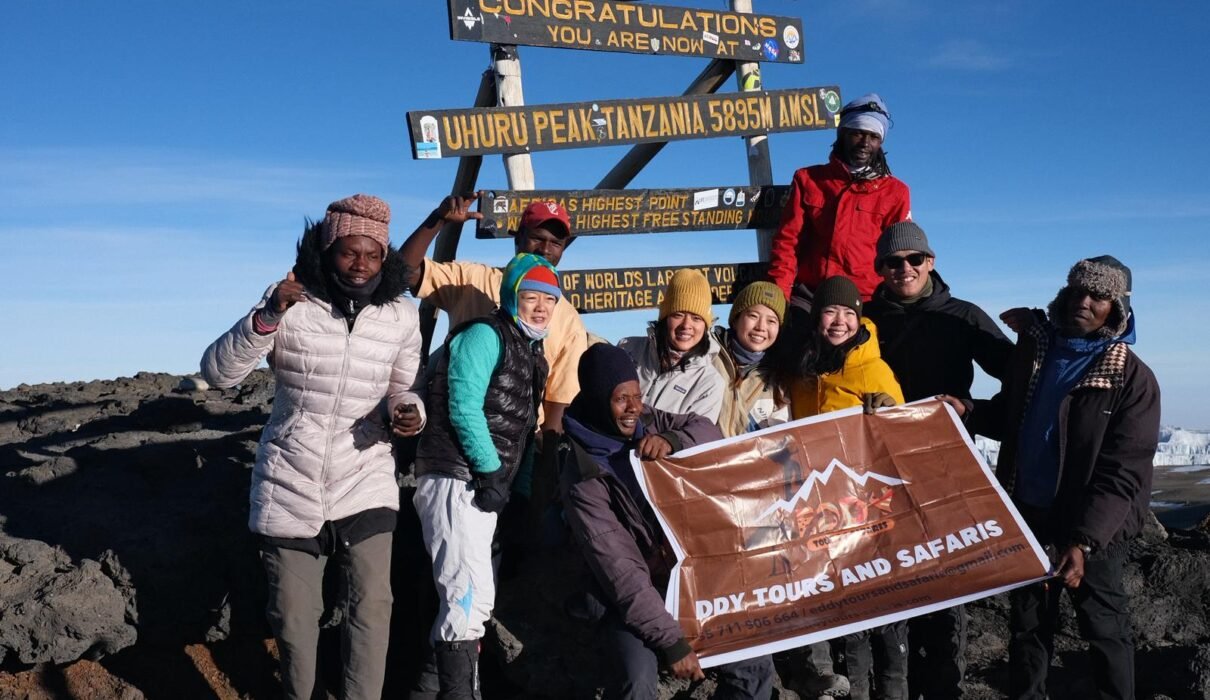
High-Altitude Acclimatization on Mount Kilimanjaro is the single most important factor that determines whether your climb becomes a healthy, confident and successful journey or a painful struggle that ends before the summit. Many people believe fitness alone will carry them to the top, but science shows that your body must slowly adapt to low oxygen levels if you want to climb safely and enjoy the experience instead of fighting constant headaches, nausea and extreme fatigue.
This guide explains how acclimatization truly works, why Kilimanjaro is unique among the world’s high mountains, and how responsible planning improves your chances of standing on the roof of Africa. If you are preparing your climb with a trusted local company such as Eddy Tours & Safaris, understanding these principles will help you choose the right route, the right pace and the right support for your body.
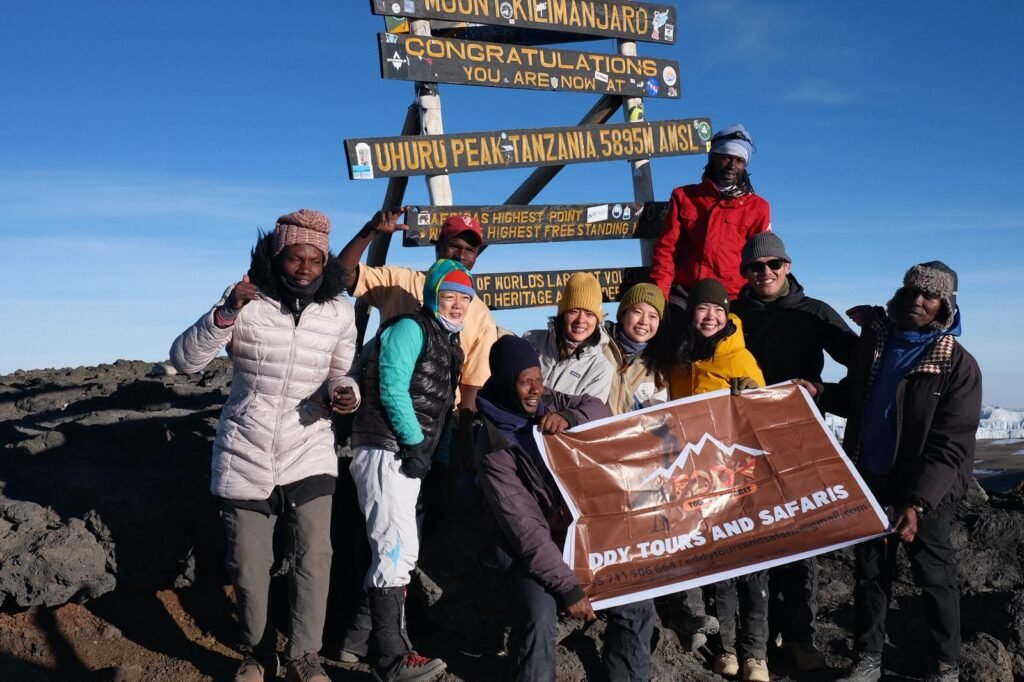
High-Altitude Acclimatization on Mount Kilimanjaro and why this mountain is different
Understanding High-Altitude Acclimatization on Mount Kilimanjaro begins with knowing why this mountain is physiologically demanding. Kilimanjaro rises rapidly from lowland plains to extreme altitude without long transitional valleys, forcing the body to adjust quickly. Medical and environmental studies published through the U.S. National Library of Medicine and summarized by PubMed show that fast elevation gain increases the likelihood of altitude illness compared to mountain systems with slower approach profiles.
Geographical and climate research from the United States Geological Survey and environmental observations coordinated by the United Nations Environment Programme confirm that Kilimanjaro’s steep ecological zones create sudden changes in temperature, humidity and oxygen availability. These combined stresses make proper acclimatization planning essential for safe climbing.
High-Altitude Acclimatization on Mount Kilimanjaro and how the human body adapts
The science behind High-Altitude Acclimatization on Mount Kilimanjaro is well documented. When oxygen levels drop, the body increases breathing rate, heart output and red blood cell production. Medical guidance published by the Centers for Disease Control and Prevention and the International Society for Mountain Medicine explains that these adaptations take time and cannot be forced through training alone.
Clinical research supported by Johns Hopkins Medicine and the Cleveland Clinic confirms that the most reliable protection against serious altitude illness is gradual ascent combined with careful monitoring of symptoms such as headache, nausea, dizziness and loss of appetite.
High-Altitude Acclimatization on Mount Kilimanjaro and common altitude illnesses
A realistic discussion of High-Altitude Acclimatization on Mount Kilimanjaro must include the three major altitude-related conditions. These are acute mountain sickness, high-altitude cerebral edema and high-altitude pulmonary edema. Detailed medical explanations published through the World Health Organization and emergency guidance developed by the International Federation of Red Cross and Red Crescent Societies emphasize that early recognition and descent remain the most effective treatments.
Peer-reviewed clinical reviews available on Frontiers in Physiology and global medical literature shared through ScienceDirect show that most severe cases occur when climbers ignore early warning signs and continue ascending without sufficient rest days.
High-Altitude Acclimatization on Mount Kilimanjaro and route design
Route structure plays a central role in High-Altitude Acclimatization on Mount Kilimanjaro. Outdoor leadership research published by the National Outdoor Leadership School and expedition safety standards promoted by the International Climbing and Mountaineering Federation clearly demonstrate that daily elevation gain and rest-day placement strongly influence success rates.
Professionally designed itineraries offered through Kilimanjaro climbing programs follow internationally recommended ascent profiles that give your body enough time to adapt before reaching the extreme altitude zone. This structured approach consistently produces better physical responses and calmer summit nights.
High-Altitude Acclimatization on Mount Kilimanjaro and climate influence
Environmental stress also affects High-Altitude Acclimatization on Mount Kilimanjaro. Climate data published by NASA Climate and assessments produced by the Intergovernmental Panel on Climate Change show that temperature variability, wind exposure and solar radiation increase physiological strain at altitude.
Ecological research supported by the International Union for Conservation of Nature explains how fragile alpine environments amplify dehydration and cold stress, both of which can worsen altitude symptoms if climbers fail to manage fluid intake and layering properly.
High-Altitude Acclimatization on Mount Kilimanjaro and hydration and nutrition
One of the most underestimated aspects of High-Altitude Acclimatization on Mount Kilimanjaro is daily hydration and energy intake. Scientific nutrition guidance published through the Food and Agriculture Organization and human performance research discussed in Nature Research confirm that dehydration and low caloric intake reduce oxygen delivery efficiency and slow recovery between climbing days.
Professional mountain teams encourage frequent small meals, warm fluids and balanced electrolytes, which improve sleep quality and stabilize heart rate during adaptation phases.
High-Altitude Acclimatization on Mount Kilimanjaro and psychological readiness
Mental strength directly supports High-Altitude Acclimatization on Mount Kilimanjaro. Cognitive and behavioral research published through PubMed Central shows that stress, anxiety and poor sleep amplify physical symptoms and slow physiological adjustment.
Expedition psychology studies supported by the Harvard University research programmes demonstrate that calm leadership, clear communication and realistic expectations improve coping capacity during extreme environmental exposure.
High-Altitude Acclimatization on Mount Kilimanjaro and medical monitoring in the field
Responsible operators treat High-Altitude Acclimatization on Mount Kilimanjaro as an active process, not a passive waiting period. International emergency medicine guidance developed by the International Red Cross and risk management principles promoted by the World Bank Disaster Risk Management programme recommend continuous observation, clear evacuation procedures and trained response teams.
Local teams monitor oxygen saturation, appetite, hydration and movement coordination daily. When symptoms worsen, immediate adjustments prevent serious complications and protect long-term health.
High-Altitude Acclimatization on Mount Kilimanjaro and environmental responsibility
Environmental care supports High-Altitude Acclimatization on Mount Kilimanjaro by maintaining clean water sources, stable trails and low pollution levels. Conservation organisations such as the World Wide Fund for Nature, the African Wildlife Foundation and Conservation International show that unmanaged trekking pressure damages sensitive alpine habitats and water catchments.
Strict waste control and designated camping zones protect ecosystems and reduce contamination risks that directly affect human health in high mountain environments.
High-Altitude Acclimatization on Mount Kilimanjaro and community and crew welfare
Human support systems are part of High-Altitude Acclimatization on Mount Kilimanjaro. Social protection standards promoted by the International Labour Organization and community development programs supported by Oxfam International highlight how fair working conditions improve performance, communication and safety.
Healthy and well-supported crew members are more attentive to early warning signs among climbers and provide better assistance during difficult adaptation phases.
High-Altitude Acclimatization on Mount Kilimanjaro and scientific collaboration
Long-term research continues to refine High-Altitude Acclimatization on Mount Kilimanjaro. Biodiversity and environmental studies coordinated by the Wildlife Conservation Society and global observation networks supported by the National Geographic Society rely on responsible access and accurate field practices.
Scientific publications in Frontiers in Environmental Science continue to examine how altitude ecosystems respond to human activity and climate stress, shaping future conservation and trekking management strategies.
High-Altitude Acclimatization on Mount Kilimanjaro and responsible trip planning
Practical planning transforms High-Altitude Acclimatization on Mount Kilimanjaro from theory into reality. Climbers who choose realistic schedules and experienced support teams experience fewer medical problems and stronger recovery after summit day.
You can review professionally designed itineraries that prioritize gradual ascent through Tanzania travel programs or receive personalized guidance from local experts using direct consultation support. These services help match your fitness, time availability and medical considerations to the safest possible climb structure.
Why acclimatization determines your Kilimanjaro experience
In real terms, High-Altitude Acclimatization on Mount Kilimanjaro determines whether your climb becomes inspiring or overwhelming. Your body needs patience, structured ascent and professional monitoring more than strength or speed. Ignoring acclimatization principles is the most common reason climbers fail to reach the summit or experience serious discomfort.
If your goal is a safe, confident and deeply rewarding journey, working with a responsible local team such as experienced Kilimanjaro specialists gives you the strongest foundation for successful adaptation and lasting memories on Africa’s highest mountain.