
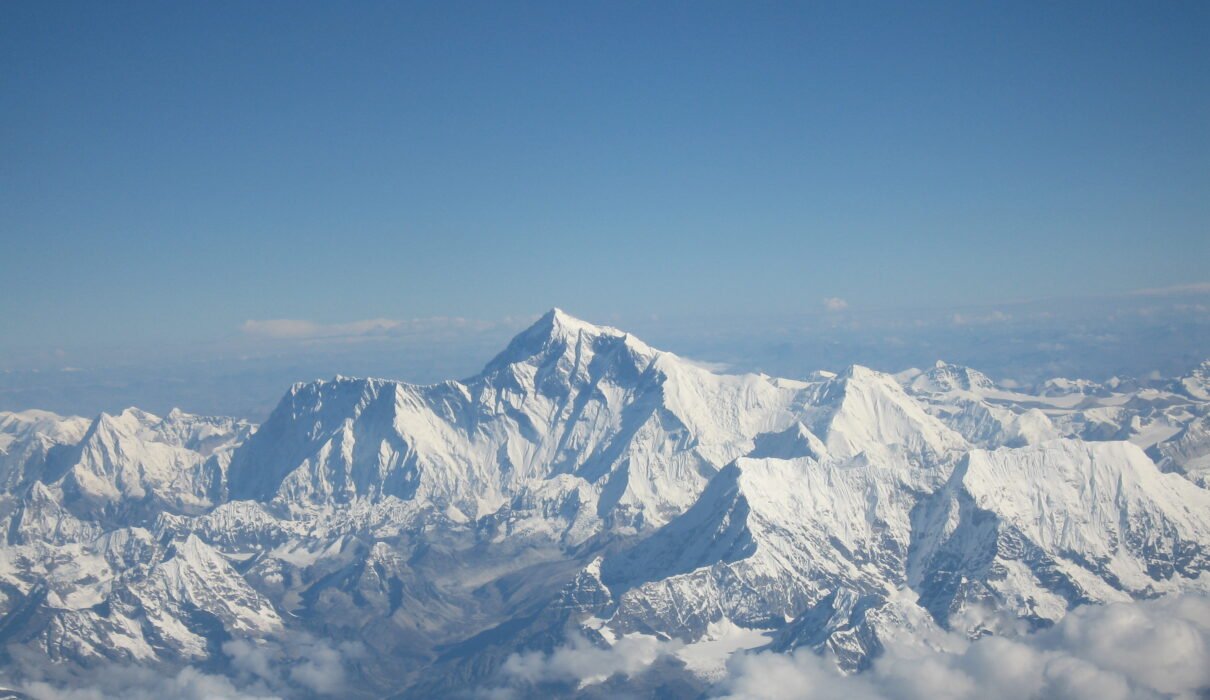
Is Mount Everest Really the Tallest Mountain? This fascinating question has sparked debate among climbers, geographers, scientists, and curious travelers across the globe. For generations, Mount Everest has been proudly labeled as the highest mountain on Earth, towering above all others in textbooks, documentaries, and adventure stories. However, when you look deeper into scientific measurements, geological definitions, and different ways of calculating height, the answer becomes far more interesting than a simple yes or no.
Understanding mountain height is not as straightforward as it seems. Depending on how height is measured—whether from sea level, from the base to the summit, or from the center of the Earth—the title of the tallest mountain can change. This article explores scientific perspectives, expert research, and surprising global comparisons to uncover the real truth behind the famous peak.
Understanding How Mountain Height Is Measured
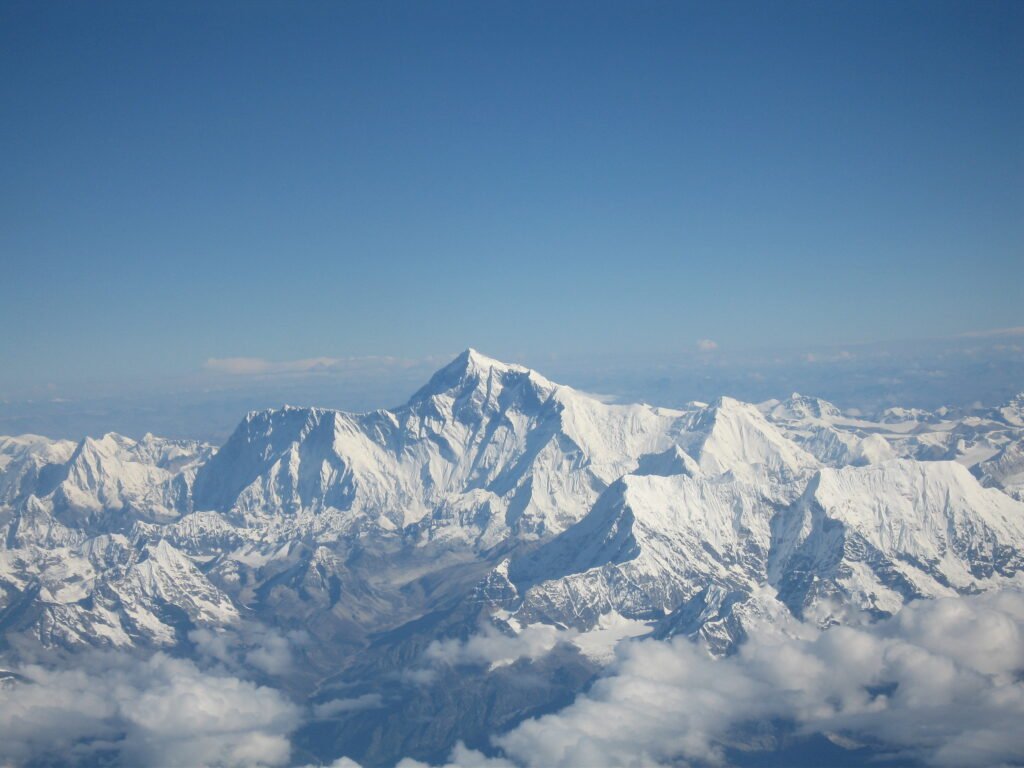
To truly answer the question, Is Mount Everest Really the Tallest Mountain?, we must first understand how mountains are measured. Traditionally, height is calculated from mean sea level to the summit. Using this method, Everest stands at 8,848.86 meters above sea level, based on measurements confirmed by international survey teams and geological authorities.
Sea level measurement is widely accepted because it provides a consistent global reference point. Organizations such as the National Geographic Society, United States Geological Survey, and NASA rely on this method when mapping and studying Earth’s topography. This is why Everest officially holds the title of the highest mountain above sea level.
However, measuring from sea level does not tell the full story. The Earth is not a perfect sphere, and mountains do not all begin at sea level. Some rise from ocean floors, while others begin on high plateaus. These differences change how “tallest” can be defined.
Mount Everest: The Highest Above Sea Level
Mount Everest sits in the Himalayas on the border of Nepal and Tibet. It is part of a powerful tectonic region formed by the collision of the Indian and Eurasian plates. Scientific institutions such as the British Geological Survey and NASA Earth Observatory have studied how this ongoing collision continues to push Everest slightly higher every year.
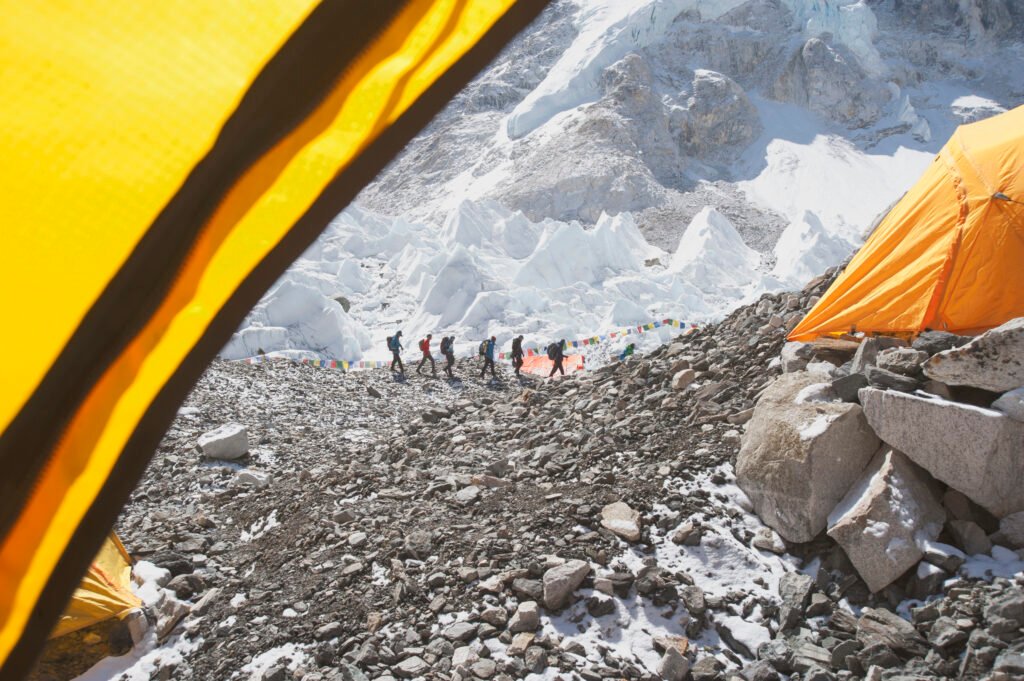
Because of this geological uplift, Everest remains the highest point above sea level. Climbers who attempt the summit face extreme conditions, including low oxygen levels, freezing temperatures, and powerful winds. Research from the National Geographic and the Alpine Club has documented the physical challenges faced at high altitudes.
Adventure companies such as Kilimanjaro Climb Specialist and experienced safari operators like Eddy Tours & Safaris often highlight Everest when discussing extreme altitude trekking and mountain safety training.
If Measured from Base to Summit: Mauna Kea Takes the Lead
If we shift the question from sea level measurement to total height from base to summit, the answer changes. Hawaii’s Mauna Kea rises approximately 10,210 meters from its underwater base to its peak. Although only about 4,207 meters are visible above sea level, most of the mountain lies beneath the Pacific Ocean.
Data from the National Oceanic and Atmospheric Administration and research conducted by the University of Hawaii School of Ocean and Earth Science and Technology confirm these measurements. When considering total vertical rise, Mauna Kea is technically taller than Everest.
This distinction often surprises readers. It shows that the definition of tallest depends entirely on measurement criteria, reinforcing why the question Is Mount Everest Really the Tallest Mountain? requires deeper understanding.
Measured from the Earth’s Center: Chimborazo Competes
Another fascinating measurement involves calculating which mountain peak is farthest from the center of the Earth. Because the planet bulges at the equator, mountains near this region gain extra distance from the Earth’s core.
Ecuador’s Mount Chimborazo benefits from this equatorial bulge. Studies by NASA and research from the Smithsonian Institution reveal that Chimborazo’s summit is actually farther from the Earth’s center than Everest’s summit.
Although Chimborazo is not the highest above sea level, this measurement method gives it a unique claim. This scientific fact demonstrates that “tallest” can be interpreted in multiple valid ways.
Geological Forces Behind the Himalayan Giants
The Himalayas were formed through powerful tectonic activity. According to the UNESCO geological reports and data from the American Geosciences Institute, the Indian tectonic plate continues to push northward, causing gradual uplift across the region.
Everest grows by a few millimeters annually. This movement is monitored using satellite systems developed by agencies such as European Space Agency and JAXA. The mountain’s height is therefore not fixed but dynamic, influenced by natural geological forces.
Environmental Challenges at Extreme Altitudes
Climate change is impacting high-altitude regions significantly. Reports from the Intergovernmental Panel on Climate Change and the World Wildlife Fund show that glaciers in the Himalayas are melting at accelerated rates.
This environmental shift affects climbing routes, local ecosystems, and communities living in surrounding regions. Organizations like the International Centre for Integrated Mountain Development conduct ongoing research to monitor these changes.
Responsible travel companies such as Eddy Tours & Safaris promote sustainable tourism practices in mountain and safari regions to help protect fragile ecosystems worldwide.
Why the Debate Matters for Travelers and Adventurers
For many adventurers, the prestige of climbing the highest mountain above sea level remains unmatched. Everest represents human endurance, ambition, and achievement. Scientific distinctions do not reduce its symbolic importance.
However, understanding these differences broadens our appreciation of Earth’s geography. Whether trekking Kilimanjaro with Eddy Tours & Safaris or studying global peaks through research institutions like National Geographic Society, knowledge enhances every adventure.
Frequently Asked Questions
Is Mount Everest Really the Tallest Mountain?
Yes, Everest is the tallest mountain above sea level. However, depending on measurement methods, other mountains can claim different types of height records.
Which mountain is tallest from base to summit?
Mauna Kea in Hawaii is tallest when measured from its underwater base to its summit.
Which mountain is farthest from the Earth’s center?
Mount Chimborazo in Ecuador holds that distinction due to the Earth’s equatorial bulge.
Is Everest still growing?
Yes, geological studies show that tectonic activity continues to raise the Himalayas slightly each year.
Why do we measure mountains from sea level?
Sea level provides a standardized reference point used globally by scientists and mapping agencies.
Does climate change affect Everest?
Yes, glacier melt and temperature changes are impacting the Himalayan region significantly.
Final Verdict: The Truth Behind the Title
So, Is Mount Everest Really the Tallest Mountain? The answer depends on how you define “tallest.” If measured from sea level, Everest proudly holds the crown. If measured from base to summit, Mauna Kea takes the lead. If measured from the Earth’s center, Chimborazo wins.
Despite these technical differences, Everest remains the highest point above sea level and continues to inspire explorers worldwide. Understanding these scientific distinctions does not diminish its grandeur; instead, it enriches our perspective on the remarkable planet we call home.