
Kilimanjaro Camps: Comparing Comfort Levels is one of the most important topics for anyone planning to climb Mount Kilimanjaro, because where you sleep, eat and recover every night directly affects your energy, your mood, your health and your ability to continue safely toward the summit. Many climbers focus only on routes and summit success, but in real life the quality of each camp experience shapes how well your body adapts to altitude and how comfortable you feel during the long and demanding days on the mountain.
This guide looks carefully at what comfort really means on Kilimanjaro. It explains the differences between permanent hut camps and fully supported tented camps, how location and altitude influence rest, how weather and terrain change your sleeping conditions, and why professional camp management matters more than luxury equipment. If you are planning your climb with a local and experienced operator such as Eddy Tours & Safaris, understanding these comfort factors helps you choose the right route and camp style for your personal needs.
Kilimanjaro Camps: Comparing Comfort Levels and what “comfort” truly means on the mountain
When people discuss Kilimanjaro Camps: Comparing Comfort Levels, they often think about beds and shelters only. In reality, comfort at high altitude is a combination of warmth, protection from wind, access to food and water, hygiene facilities, crowd levels and how well your body can recover overnight. Scientific research published through the U.S. National Library of Medicine and medical summaries available on PubMed clearly show that sleep quality and hydration play a major role in high-altitude adaptation.
Environmental conditions also strongly influence comfort. Climate and mountain environment studies coordinated by NASA Climate and global assessments published by the Intergovernmental Panel on Climate Change confirm that temperature, wind and solar radiation increase rapidly with elevation on isolated mountains such as Kilimanjaro.
Kilimanjaro Camps: Comparing Comfort Levels between huts and tented camps
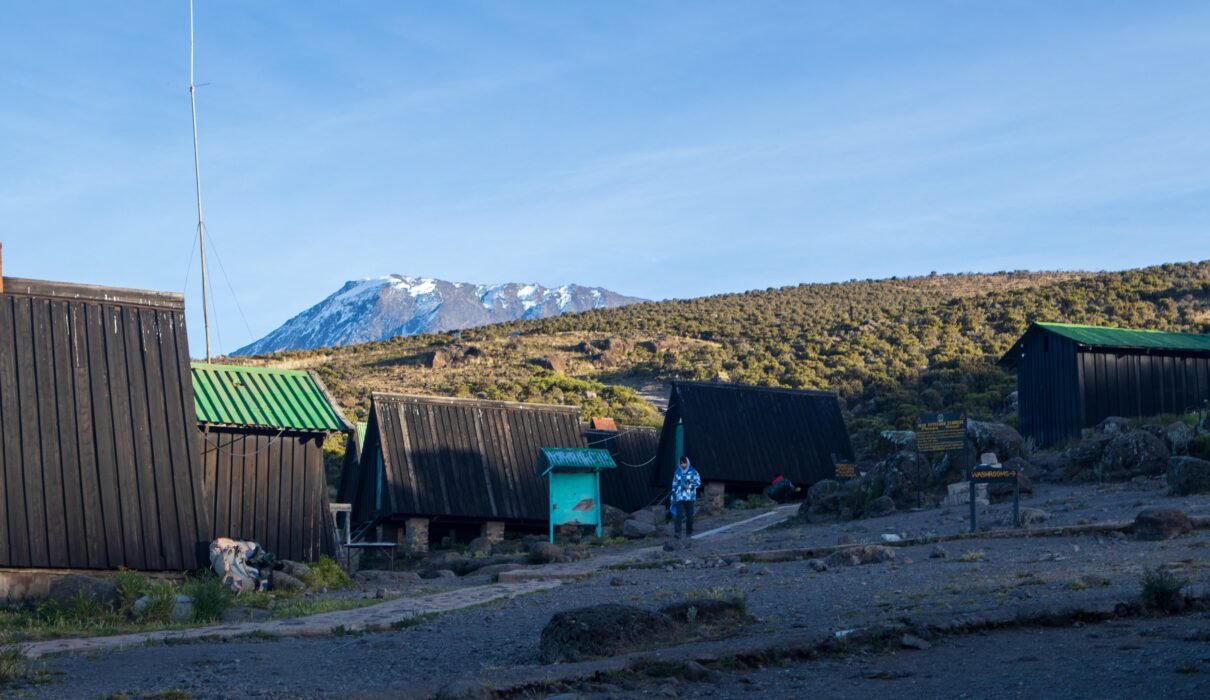
The most visible difference in Kilimanjaro Camps: Comparing Comfort Levels is between permanent hut accommodation and temporary tented camps. On Kilimanjaro, only the Marangu Route uses mountain huts, while all other routes use fully supported tent camps. Permanent structures are carefully regulated by park authorities to reduce environmental impact, following conservation planning principles promoted by the United Nations Environment Programme and protected-area management frameworks developed by the International Union for Conservation of Nature.
Huts offer solid walls and roofs, which reduce wind exposure and rain intrusion. However, research on crowding and indoor air quality published through ScienceDirect and environmental health studies referenced by the World Health Organization show that shared sleeping spaces can reduce sleep quality and increase discomfort when camps are busy.
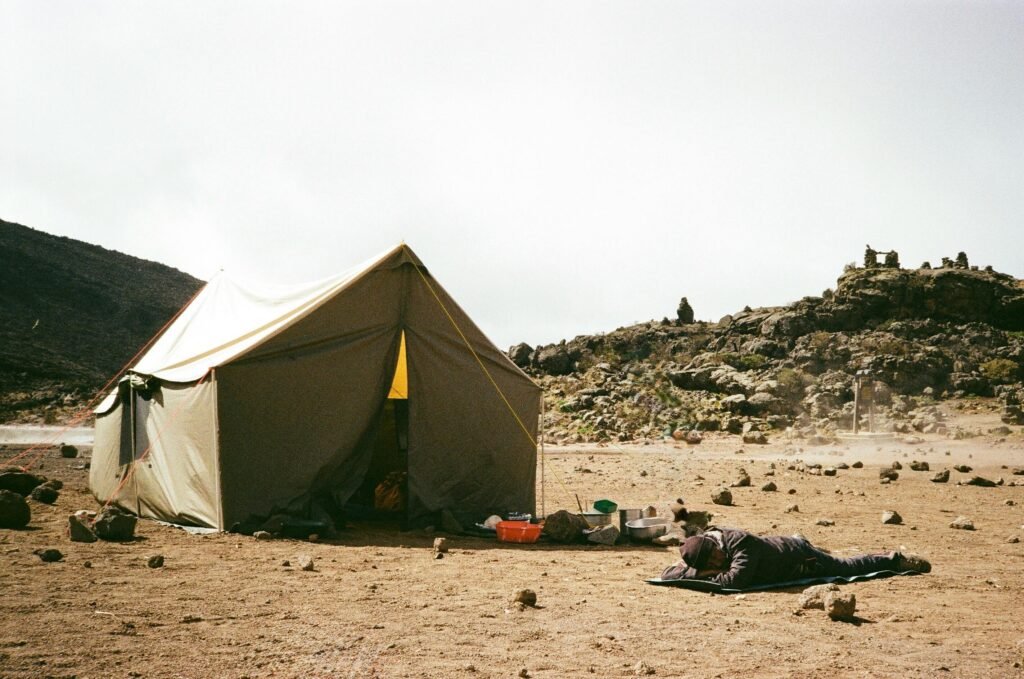
Tented camps, when professionally managed, provide more personal space, better control of cleanliness and flexible camp layout. With an experienced team such as those operating professional programs through Kilimanjaro climbing services, tents are positioned away from strong wind corridors and high-traffic areas, improving both noise levels and night-time rest.
Kilimanjaro Camps: Comparing Comfort Levels and altitude influence on sleep
Another critical part of Kilimanjaro Camps: Comparing Comfort Levels is how altitude itself changes the quality of rest. Medical research supported by the International Society for Mountain Medicine and clinical guidance from the Centers for Disease Control and Prevention explains that reduced oxygen pressure causes fragmented sleep, frequent waking and breathing irregularities.
Scientific reviews published by Frontiers in Physiology and research articles accessible through Nature Research show that short, poor-quality sleep is normal at high altitude. The difference between a comfortable and uncomfortable camp is how well the environment supports warmth, hydration and calm recovery after demanding hiking days.
Kilimanjaro Camps: Comparing Comfort Levels and temperature protection
Cold exposure is one of the strongest factors affecting Kilimanjaro Camps: Comparing Comfort Levels. Atmospheric studies coordinated by National Oceanic and Atmospheric Administration demonstrate how wind chill dramatically lowers perceived temperature in high mountain environments. This explains why camp placement and tent orientation matter so much.
Environmental field monitoring supported by the United States Geological Survey shows that rocky alpine terrain loses heat rapidly after sunset. Professionally supported tented camps use ground insulation layers, sheltered cooking areas and controlled lighting to reduce heat loss and allow climbers to prepare properly for the next day.
Kilimanjaro Camps: Comparing Comfort Levels and hygiene facilities
Hygiene and sanitation strongly affect Kilimanjaro Camps: Comparing Comfort Levels, especially during multi-day climbs. Public health research promoted by the World Health Organization Water, Sanitation and Health Programme highlights how access to clean hand-washing systems and controlled waste disposal reduces illness and discomfort in temporary settlements.
Environmental protection organisations such as Conservation International and scientific conservation planning bodies including the Food and Agriculture Organization emphasize that mountain ecosystems are extremely sensitive to waste mismanagement. Well-organized tented camps operate with portable toilets, controlled grey-water handling and strict waste carry-out systems.
Kilimanjaro Camps: Comparing Comfort Levels and crowd pressure
Crowd density directly changes Kilimanjaro Camps: Comparing Comfort Levels. Visitor management studies published by the UNESCO World Heritage Programme and tourism pressure assessments produced by IPBES show that concentrated visitor use increases noise, reduces privacy and accelerates site degradation.
Tented camps offer greater flexibility to spread groups across wider areas, while hut camps concentrate visitors into fixed buildings. Many climbers find that tented camps feel calmer and more personal, especially during busy climbing periods.
Kilimanjaro Camps: Comparing Comfort Levels and food preparation areas
Food and hydration play an underestimated role in Kilimanjaro Camps: Comparing Comfort Levels. Nutrition and altitude performance research published through PubMed Central demonstrates that regular warm meals and sufficient fluid intake support recovery and reduce fatigue.
Environmental food safety standards referenced by the FAO food safety programme emphasize clean preparation surfaces and proper storage even in remote environments. Professionally equipped tent kitchens allow better hygiene control than crowded shared dining areas.
Kilimanjaro Camps: Comparing Comfort Levels and mental well-being
Psychological comfort is part of Kilimanjaro Camps: Comparing Comfort Levels. Environmental psychology and stress studies published through American Psychological Association and peer-reviewed articles available on ScienceDirect show that noise, crowding and lack of privacy increase mental fatigue.
Quiet camps, predictable routines and calm leadership reduce anxiety and help climbers feel more confident before difficult stages. Many guests value the personal space created by private tents, especially during higher camps where emotional stress is naturally higher.
Kilimanjaro Camps: Comparing Comfort Levels and environmental sustainability
Responsible operations strongly shape Kilimanjaro Camps: Comparing Comfort Levels in the long term. Conservation organisations such as the World Wide Fund for Nature, the African Wildlife Foundation and the Wildlife Conservation Society show how unmanaged tourism infrastructure damages sensitive mountain habitats.
Environmental education and low-impact camping systems supported by the National Geographic Society help reduce trampling, waste accumulation and soil erosion around campsites.
Kilimanjaro Camps: Comparing Comfort Levels and porter welfare
Porter welfare directly affects Kilimanjaro Camps: Comparing Comfort Levels. Labour standards promoted by the International Labour Organization and social responsibility programmes supported by Oxfam International demonstrate that healthy, well-supported teams work more carefully and manage camps more efficiently.
When staff have proper shelter, meals and fair working conditions, camp setup is faster, kitchens are cleaner and safety checks are more reliable, all of which improve the comfort of climbers.
Kilimanjaro Camps: Comparing Comfort Levels for first-time climbers
For beginners, Kilimanjaro Camps: Comparing Comfort Levels becomes especially important. Public health research from the Harvard T.H. Chan School of Public Health and physiological studies published by Frontiers confirm that reduced stress, stable routines and good sleep improve acclimatisation success.
First-time climbers often feel more relaxed in private tented environments where they can control light, noise and personal belongings more easily than in shared hut systems.
Kilimanjaro Camps: Comparing Comfort Levels and route planning choices
Route selection strongly influences Kilimanjaro Camps: Comparing Comfort Levels. Some routes reach higher camps more quickly, while others allow gradual altitude gain and better rest opportunities. Professional itinerary planning reduces fatigue and improves recovery time.
Carefully designed programs offered through Tanzania adventure itineraries and structured climbing routes available via Kilimanjaro route options allow travelers to match camp style with personal comfort expectations and physical readiness.
Kilimanjaro Camps: Comparing Comfort Levels and personal support from local experts
Local knowledge greatly improves Kilimanjaro Camps: Comparing Comfort Levels. Teams who work on the mountain every week understand where wind funnels form, where water access is easiest and how crowd patterns shift throughout the season.
If you want personal advice about camp styles, route selection and comfort expectations, you can speak directly with local specialists through professional Kilimanjaro consultation support.
Choosing the right camp style for your climb
In reality, Kilimanjaro Camps: Comparing Comfort Levels shows that no camp is luxurious, but some environments support rest, hygiene and emotional stability far better than others. Comfort on Kilimanjaro is created through good planning, professional camp management, ethical staff support and respect for fragile mountain ecosystems.
By choosing a responsible local operator and selecting the camp style that fits your needs, you protect both your own health and the future of the mountain. A well-managed camp is not only a place to sleep. It is where your body recovers, your confidence grows and your summit journey quietly continues.