
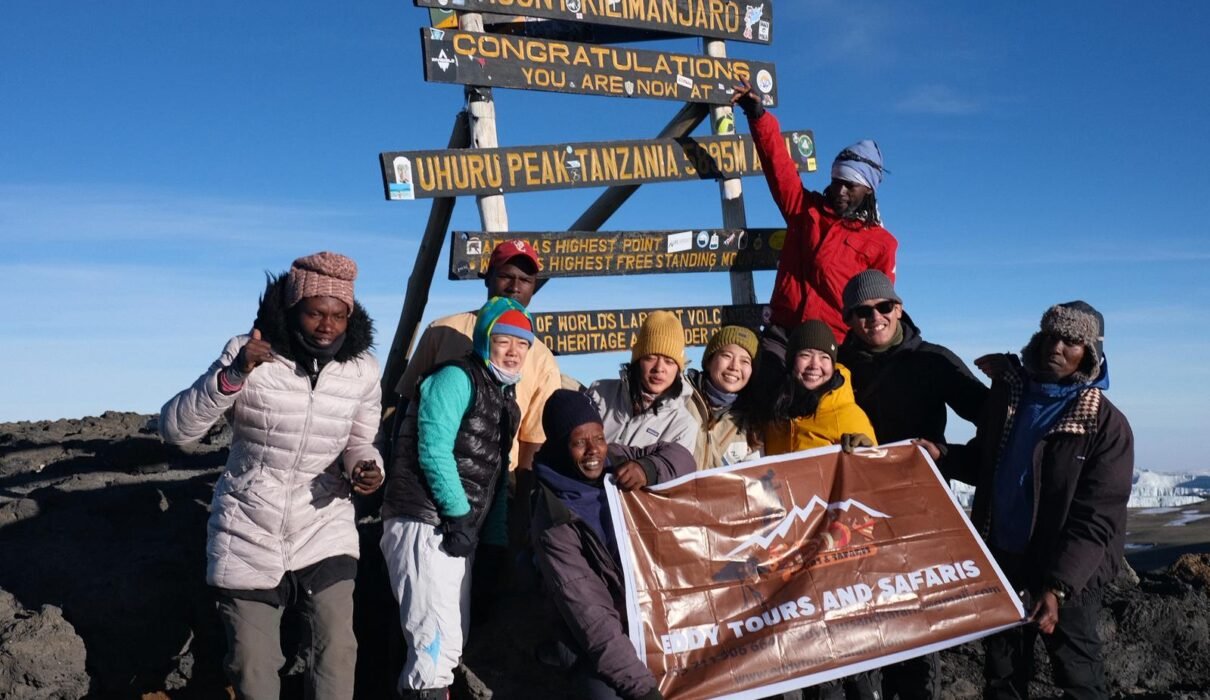
Kilimanjaro First-Time Climbers’ Checklist is the most practical starting point for anyone planning their very first journey to Africa’s highest mountain, because success on Kilimanjaro is not about being the strongest hiker, but about being the best prepared one. Many first-time climbers fail to reach the summit simply because they underestimate altitude, ignore professional advice, or rush the planning stage. A clear and realistic checklist protects your health, your confidence, and your entire travel investment.
This guide brings together real medical research, conservation standards, and field safety practices used around the world. It is written for people who want honest preparation, not marketing promises. If you are organizing your climb with a reliable local company such as Eddy Tours & Safaris, this checklist will help you understand exactly what matters most before you step onto the mountain.
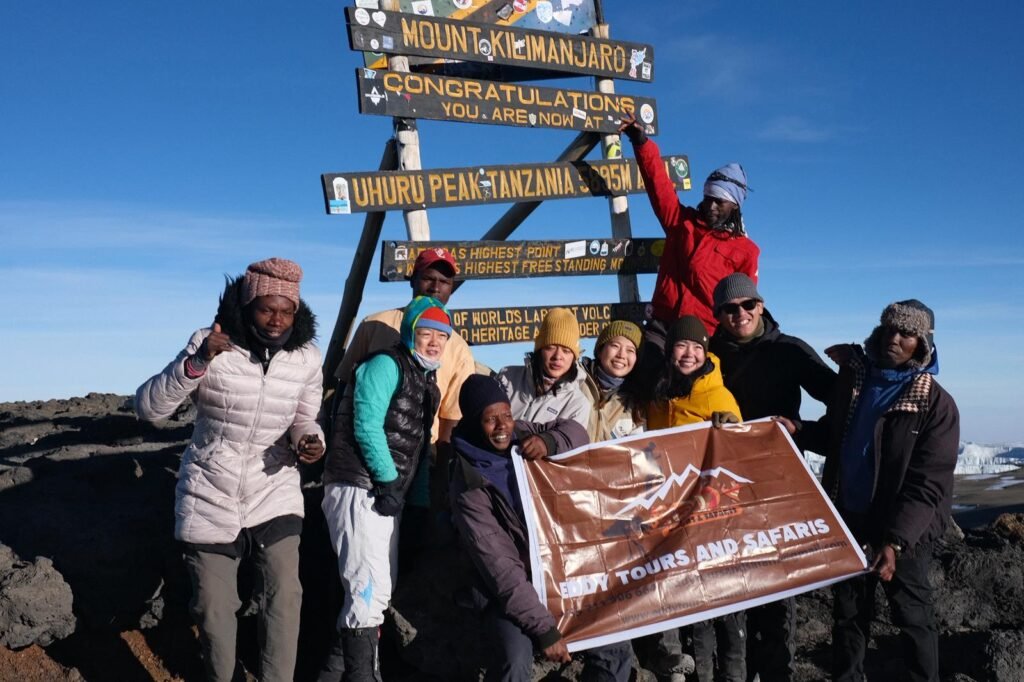
Kilimanjaro First-Time Climbers’ Checklist for understanding altitude risk
The most important part of any Kilimanjaro First-Time Climbers’ Checklist is understanding how altitude affects your body. Medical studies published by the U.S. National Library of Medicine and summarized through PubMed show that reduced oxygen pressure changes breathing, heart rate and sleep patterns long before serious symptoms appear.
Guidance from the Centers for Disease Control and Prevention, the International Society for Mountain Medicine and the Wilderness Medical Society confirms that slow ascent and proper acclimatization are the strongest protection against altitude illness. This is why the length of your itinerary and the number of acclimatization days must never be treated as optional.
Kilimanjaro First-Time Climbers’ Checklist for medical readiness
A serious Kilimanjaro First-Time Climbers’ Checklist must include a personal medical review before travel. Clinical guidance provided by Johns Hopkins Medicine and the Cleveland Clinic explains how early symptoms such as headache, dizziness and nausea should be managed immediately instead of ignored.
Global public health principles published by the World Health Organization emphasize that travelers with heart, lung or sleep-related conditions must receive professional medical advice before attempting high-altitude travel. Carrying personal medication, understanding your limits and communicating honestly with your guide team are essential parts of safe preparation.
Kilimanjaro First-Time Climbers’ Checklist for choosing the right route and schedule
Another critical section of the Kilimanjaro First-Time Climbers’ Checklist focuses on route selection and daily pacing. Outdoor leadership research promoted by the National Outdoor Leadership School shows that physical recovery and decision-making improve significantly when daily distances and elevation gains are well balanced.
International safety and mountaineering standards published by the International Climbing and Mountaineering Federation clearly state that conservative ascent profiles improve success and reduce emergency evacuations. For beginners, professionally designed itineraries offered through Kilimanjaro climbing programs provide a safer structure than short, compressed routes.
Kilimanjaro First-Time Climbers’ Checklist for climate and weather awareness
A realistic Kilimanjaro First-Time Climbers’ Checklist must include awareness of rapid weather changes. Climate data from NASA Climate and global assessments produced by the Intergovernmental Panel on Climate Change show that isolated mountains experience strong wind shifts, temperature drops and solar radiation changes within very short periods.
Environmental risk monitoring coordinated by the United Nations Environment Programme explains why professional teams must adjust walking times, rest periods and clothing strategies based on real conditions rather than fixed schedules prepared months earlier.
Kilimanjaro First-Time Climbers’ Checklist for environmental responsibility
Every responsible Kilimanjaro First-Time Climbers’ Checklist must include your role in protecting fragile mountain ecosystems. Conservation guidance from the International Union for Conservation of Nature, the World Wide Fund for Nature and the African Wildlife Foundation shows how poorly managed tourism contributes to erosion, waste pollution and water contamination.
Environmental protection initiatives led by Conservation International and habitat research supported by the United States Geological Survey confirm that strict campsite management and waste control significantly reduce long-term damage along climbing corridors.
Kilimanjaro First-Time Climbers’ Checklist for wildlife and park regulations
A practical Kilimanjaro First-Time Climbers’ Checklist must also respect wildlife and park management systems. Research and conservation programs run by the Wildlife Conservation Society and the National Geographic Society highlight how controlled visitor movement helps protect biodiversity in protected landscapes.
Although wildlife encounters are rare at higher elevations, following ranger instructions and designated trails supports conservation strategies that benefit surrounding forest zones and wildlife corridors.
Kilimanjaro First-Time Climbers’ Checklist for safety and emergency systems
An essential part of any Kilimanjaro First-Time Climbers’ Checklist is understanding how emergencies are managed. Field safety standards promoted by the International Federation of Red Cross and Red Crescent Societies and the International Red Cross emphasize communication, trained responders and clear evacuation procedures in remote environments.
When selecting your operator, confirm the availability of radios, oxygen systems and evacuation plans. Reliable teams integrate global emergency response principles into daily mountain operations rather than relying on improvisation.
Kilimanjaro First-Time Climbers’ Checklist for training and physical preparation
Your Kilimanjaro First-Time Climbers’ Checklist should focus on endurance and consistency rather than extreme fitness. Public health and physical activity research from the Harvard T.H. Chan School of Public Health explains how moderate aerobic conditioning improves cardiovascular efficiency and recovery under stress.
What matters most is your ability to walk slowly for many hours, maintain hydration and manage fatigue. Short but regular training hikes with light backpacks prepare your body far better than intense gym sessions alone.
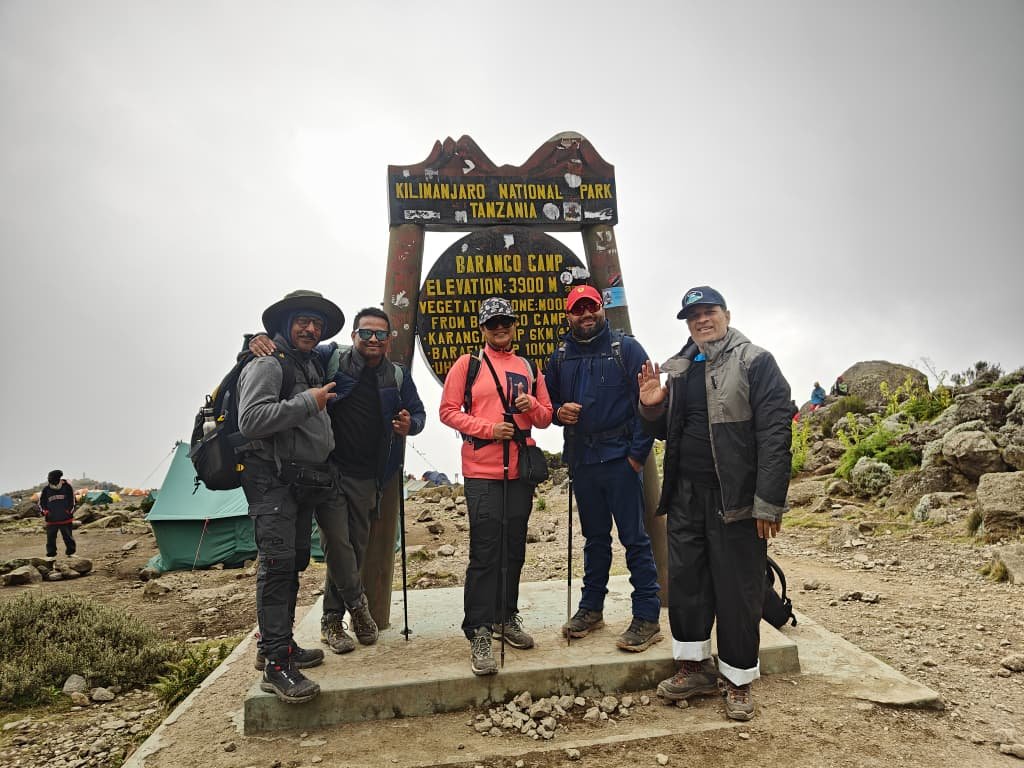
Kilimanjaro First-Time Climbers’ Checklist for mental readiness
Psychological resilience is often overlooked in the Kilimanjaro First-Time Climbers’ Checklist. Performance and decision-making studies published through Nature Research and behavioral research hosted by ScienceDirect show that cold exposure, sleep disruption and prolonged effort significantly affect emotional control and judgment.
Preparing mentally for slow progress, changing weather and physical discomfort helps you remain calm during summit night when stress levels naturally increase.
Kilimanjaro First-Time Climbers’ Checklist for porter and crew welfare
A responsible Kilimanjaro First-Time Climbers’ Checklist must also consider the people supporting your climb. Labor and working-condition standards promoted by the International Labour Organization and community protection programs supported by Oxfam International demonstrate that fair employment improves safety, morale and service quality.
Healthy and respected crew members are more attentive to weather changes, trail hazards and climber well-being, which directly improves your own safety on the mountain.
Kilimanjaro First-Time Climbers’ Checklist for choosing a local professional team
Local knowledge is one of the strongest advantages in the Kilimanjaro First-Time Climbers’ Checklist. Local professionals understand daily weather patterns, trail conditions and operational coordination with park authorities far better than overseas booking agents.
Many first-time climbers prefer working with experienced local specialists through Tanzania travel programs that combine professional logistics, cultural understanding and conservation awareness.
Kilimanjaro First-Time Climbers’ Checklist for honest communication and planning
Clear communication should always appear in your Kilimanjaro First-Time Climbers’ Checklist. Transparency and ethical business practices promoted by Transparency International show how clear information reduces misunderstandings and travel stress.
Professional operators explain inclusions, equipment expectations and safety procedures before you arrive, not during the climb when it is too late to adjust your plans.
Kilimanjaro First-Time Climbers’ Checklist for personal gear and packing strategy
Your Kilimanjaro First-Time Climbers’ Checklist should prioritize warmth, layering and comfort rather than expensive brand names. Scientific field equipment studies referenced by the Food and Agriculture Organization highlight how appropriate clothing and hydration systems improve performance in high-altitude and dry environments.
Simple choices such as properly fitting boots, thermal layers and wind protection make a significant difference during long cold nights on the upper slopes.
Plan your climb with confidence and real local support
Following a complete Kilimanjaro First-Time Climbers’ Checklist protects your health, your finances and your entire travel experience. The mountain is not dangerous when approached with patience, professional support and respect for science and conservation principles.
If you would like realistic guidance and personalized preparation support, you can speak directly with local specialists through professional Kilimanjaro consultation. Your first climb should not be about rushing to the top, but about reaching it safely, responsibly and with confidence.