
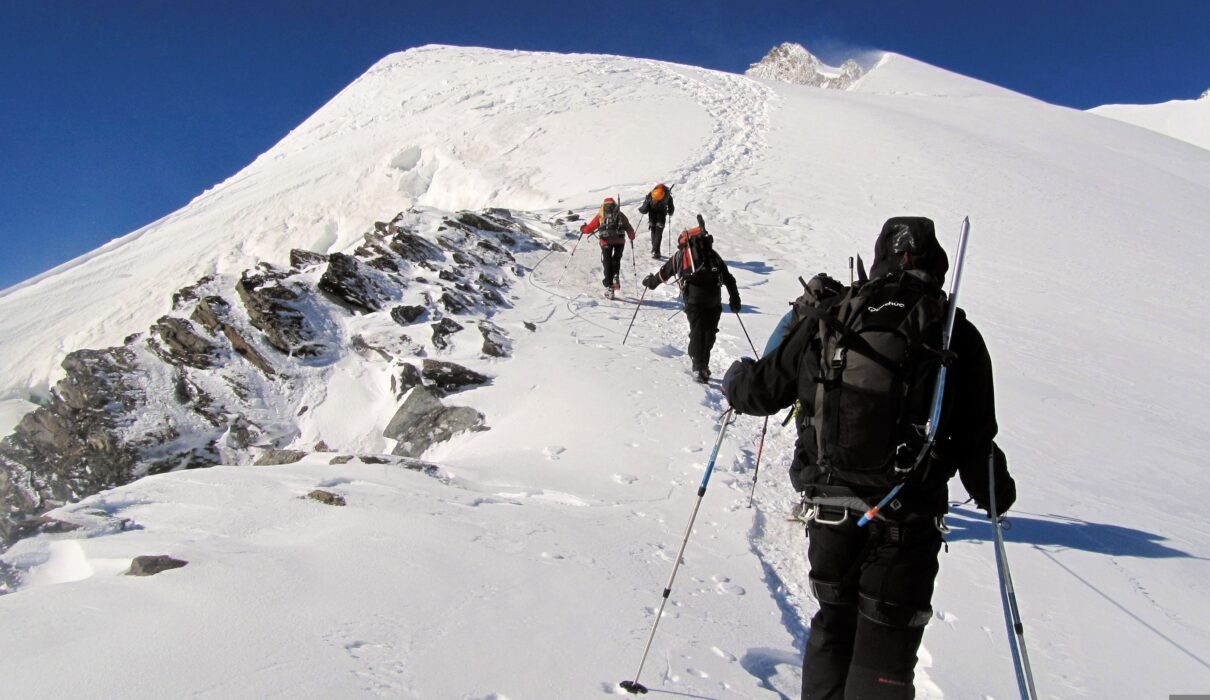
Kilimanjaro Glaciers are one of the most fragile and powerful symbols of climate change in Africa, quietly telling a story that scientists, conservation organisations and local communities have been watching with growing concern. High above the forests and savannahs of northern Tanzania, these ice fields remain as silent witnesses to shifting weather patterns, rising temperatures and long-term environmental pressure on one of the world’s most famous mountains.
For travellers who choose to experience the mountain responsibly through trusted local teams such as Eddy Tours & Safaris, understanding this natural wonder adds real meaning to the journey. This guide explains the science, the conservation importance and why responsible travel now plays a role in protecting the future of Kilimanjaro’s disappearing ice.
Kilimanjaro Glaciers and why scientists call them a global warning sign
The story of Kilimanjaro Glaciers has been carefully studied by climate researchers and glaciologists for decades. According to long-term environmental observations supported by the NASA Climate Program and global climate monitoring through the National Oceanic and Atmospheric Administration, tropical glaciers are extremely sensitive to changes in air temperature, cloud cover and atmospheric moisture.
Scientific assessments from the Intergovernmental Panel on Climate Change confirm that high-altitude ice bodies respond rapidly to long-term climate shifts. The ice on Kilimanjaro is not controlled only by snowfall, but also by radiation balance and dry air circulation, which makes its survival even more fragile than glaciers in colder regions.
Kilimanjaro Glaciers and what environmental research really shows
Independent environmental research led by institutions such as the United Nations Environment Programme and the International Union for Conservation of Nature demonstrates that mountain ecosystems are among the most vulnerable natural systems on Earth. The rapid transformation of alpine zones directly affects water regulation, vegetation patterns and long-term biodiversity stability.
Glacier monitoring and ecological studies published through the United States Geological Survey show how shrinking ice alters surface runoff and soil moisture across mountain catchments. These changes are not isolated to the summit alone but influence downstream environments and surrounding communities that depend on predictable rainfall and groundwater recharge.
Kilimanjaro Glaciers and their link to biodiversity protection
The disappearance of Kilimanjaro Glaciers is not only a climate story. It is also a biodiversity story. Conservation organisations including the World Wide Fund for Nature and the African Wildlife Foundation highlight that mountain ecosystems provide essential refuge for specialised plant and animal species adapted to narrow temperature ranges.
Research supported by Conservation International confirms that even small environmental disruptions in alpine zones can trigger broader ecosystem shifts at lower elevations. The mountain functions as a connected system, linking forests, heathlands and grasslands through shared water cycles and ecological processes.
Kilimanjaro Glaciers and how water security is affected
One of the less discussed aspects of Kilimanjaro Glaciers is their role in regional hydrology. Studies coordinated by the Food and Agriculture Organization explain how mountain water systems support agriculture, soil stability and seasonal water availability in many developing regions.
Hydrological modelling research published through the UNESCO water and environmental programmes shows that shrinking ice fields change the timing and reliability of water release. This increases long-term pressure on already vulnerable rural communities living around the slopes of the mountain.
Kilimanjaro Glaciers and what glaciology studies reveal
Scientific field studies examining Kilimanjaro Glaciers have been widely published in international research platforms such as Nature and ScienceDirect. These studies describe how solar radiation, wind exposure and dry atmospheric conditions drive ice loss even when snowfall still occurs.
Peer-reviewed research shared through Proceedings of the National Academy of Sciences and the Frontiers scientific journals confirms that tropical glaciers behave very differently from polar ice sheets, making Kilimanjaro a unique natural laboratory for climate science.