
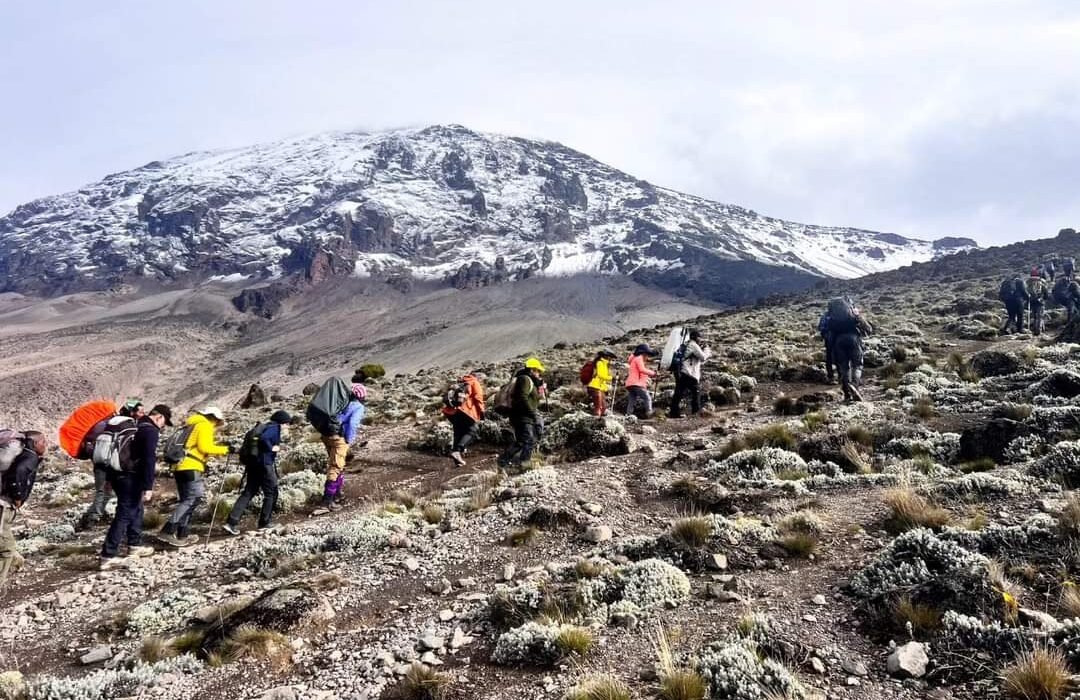
Climb Africa’s highest mountain alongside other travelers on a Kilimanjaro group joining tour in 2027 or 2028. With Eddy Tours & Safaris, you can enquire about a shared departure that matches your travel dates, preferred route, and available trekking time.
A group climb combines a common itinerary with the company of fellow trekkers. You share parts of the expedition’s transport, camp arrangements, and supporting services while working towards the same goal: reaching Uhuru Peak at 5,895 metres.
You do not need to arrive with your own group. Solo travelers, couples, and friends can request places on an available departure. The confirmed route, group size, price, and departure conditions should be provided before booking.
A shared expedition still requires individual preparation. Everyone brings different hiking experience and responds differently to altitude, so choose a departure for its itinerary and guiding arrangements as well as its dates.
Kilimanjaro Group Tour Overview
| Detail | Arrangement to confirm |
|---|---|
| Destination | Mount Kilimanjaro, Tanzania |
| Travel years | 2027 and 2028 |
| Tour format | Shared group climbing expedition |
| Summit objective | Uhuru Peak, 5,895 metres |
| Trekking duration | Depends on the selected route and departure |
| Starting base | Usually Moshi; confirm the booked hotel |
| Mountain accommodation | Camping on most routes; shared huts on Marangu |
| Supporting team | Mountain guides, cooks, and porters |
| Suitable travelers | Solo travelers, couples, and friends comfortable sharing an itinerary |
| Departure dates | Available on enquiry |
| Price | Quoted for the specific departure |
| Summit outcome | Dependent on health, weather, and conditions |
TANAPA identifies Kilimanjaro’s summit elevation as 5,895 metres and provides official visitor information for planning a climb.
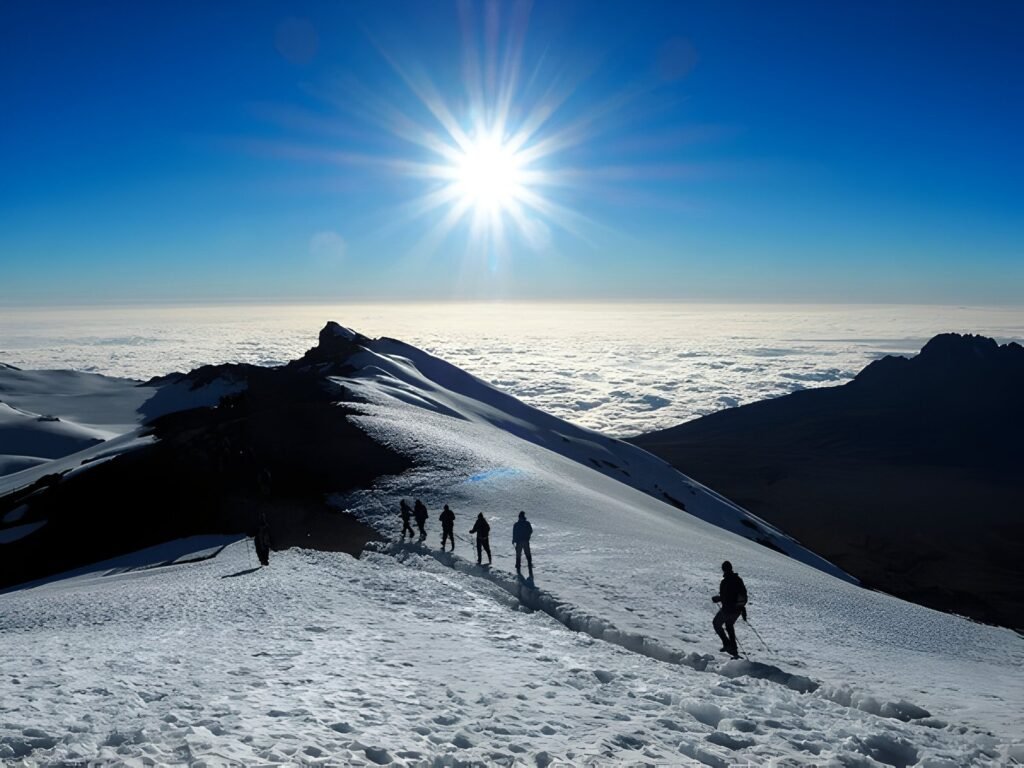
Why Join a Group Kilimanjaro Climb?
Travel without organizing a full expedition yourself
A joining departure gives you a structured mountain itinerary. Once your place is confirmed, you can arrange your flights and preparation around the agreed schedule.
This is particularly useful if you are traveling alone and want companions for the trek.
Share selected expedition costs
Group arrangements spread some operating costs across several climbers. The actual saving depends on the departure, group size, service level, and package inclusions.
Compare complete quotations. A lower headline price may exclude hotel nights, transfers, rentals, or other services included elsewhere.
Enjoy company on the trail
Shared meals and conversations can become an important part of the climb. You may meet travelers from different countries and backgrounds, all preparing for the same mountain.
Group encouragement is valuable, provided it respects each person’s condition and pace.
Follow a defined schedule
A joining tour has agreed trekking days, camps, and transfer arrangements. This makes planning easier, but also means you have less flexibility to change the itinerary independently.
Read the daily schedule carefully before choosing your departure.
Choosing Your Kilimanjaro Group Route
The route determines much of the expedition’s character: terrain, daily walking demands, accommodation, and time spent on the mountain.
The options below are routes to discuss when requesting availability. They are not a confirmed departure calendar.
| Route | Trekking duration to discuss | Main consideration |
|---|---|---|
| Machame | Seven days | Camping, varied terrain, and the Barranco section |
| Rongai | Seven days | Northern approach, with descent via Marangu |
| Marangu | Six days | Shared mountain huts and a return along the same route |
| Lemosho | Eight days | Western approach, subject to current access confirmation |
| Northern Circuit | Nine days | Longer itinerary around the mountain’s northern side |
These durations describe commonly offered itinerary versions. Request the exact daily plan for the departure being quoted.
Machame group tours
Machame appeals to travelers who want a camping expedition through varied mountain landscapes.
A seven-day version separates the journey between Barranco and the summit base into shorter stages than some more compressed itineraries. Review the overnight elevations and walking demands rather than assuming that every seven-day package is identical.
Tell the operator if scrambling or exposure concerns you, particularly when discussing Barranco Wall.
Rongai group tours
Rongai approaches from Kilimanjaro’s northern side.
A seven-day itinerary can include additional time around Mawenzi Tarn before continuing towards Kibo. Ask whether the quoted departure includes that schedule and how the acclimatization day is used.
Rongai normally descends via Marangu. Sleeping in huts during that descent should not be assumed; camping expeditions need their accommodation arrangements confirmed.
Marangu group tours
Marangu uses mountain huts rather than the tent accommodation associated with most other routes. TANAPA’s visitor guide identifies Mandara, Horombo, and Kibo as its hut accommodation.
A six-day version usually includes an additional night at Horombo. Request the planned activities for that day.
Huts are shared facilities. Choosing Marangu does not mean booking a private room or avoiding the mountain’s altitude demands.
Lemosho and Northern Circuit group tours
These routes can interest travelers who have more trekking days available.
Access needs specific confirmation: TANAPA published a September 2026 notice concerning the suspension of Lemosho and Londorosi access. For a 2027 or 2028 departure using a western approach, confirm the current park position before booking. A future reopening date should not be assumed.
Your operator should explain any proposed alternative entry and how it changes the daily schedule.
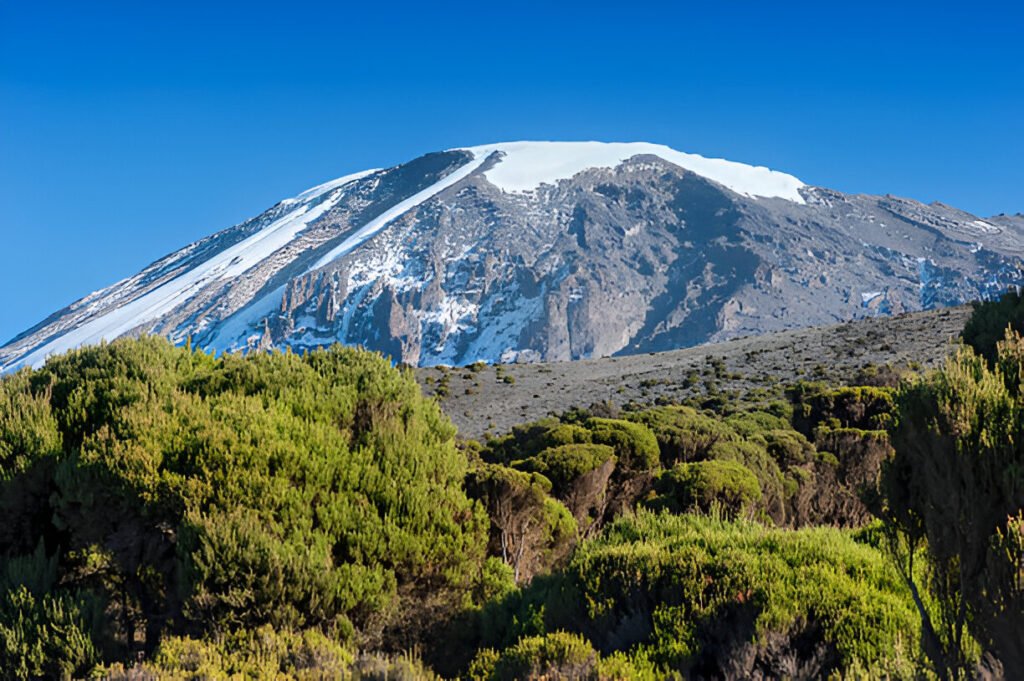
Sample Seven-Day Machame Group Itinerary
The following example shows how a group expedition may be organized. The final departure itinerary must confirm its camps, timing, and services.
Arrival Day: Hotel Check-In and Trek Briefing
Arrive in Tanzania and transfer to the booked hotel if that service is included.
Meet the team for a briefing covering the route, equipment, luggage, and practical arrangements. Discuss dietary requirements and any information relevant to expedition planning.
Allow enough time for equipment checks. Arrival day is separate from the seven trekking days.
Trek Day 1: Machame Gate to Machame Camp
Transfer to Machame Gate for registration and entry procedures.
Begin walking through the forest towards Machame Camp. Settle into your tent and meet the camp routine over dinner.
Trek Day 2: Machame Camp to Shira 2 Camp
Continue uphill as the landscape opens beyond the forest.
Walk towards Shira 2 Camp, taking breaks according to the guide’s instructions and the group’s needs. Prepare warm layers for the evening.
Trek Day 3: Shira 2 to Barranco via Lava Tower
Follow the route towards Lava Tower before descending to Barranco Camp.
This day includes a higher section followed by a lower overnight stop. Your guides assess conditions and individual wellbeing throughout the walk.
Trek Day 4: Barranco to Karanga Camp
Climb the Barranco Wall with guidance, then continue towards Karanga.
Take care with footing and allow space for other trekkers and crew. Arrive at camp with time to prepare for the following stage.
Trek Day 5: Karanga to Barafu Camp
Continue towards Barafu, the base for the summit attempt.
Your team briefs you on the intended departure time, clothing, food, water, and turnaround decisions. Rest as much as the schedule allows.
Trek Day 6: Summit Attempt and Descent to Mweka Camp
The summit attempt usually begins overnight.
Climb towards Stella Point and, where your condition and circumstances permit, continue to Uhuru Peak. Afterward, descend to Barafu and continue towards Mweka Camp according to the agreed plan.
This is the expedition’s most demanding day. Reaching the summit depends on more than determination, and descent may be necessary before reaching the top.
Trek Day 7: Mweka Camp to Mweka Gate
Descend through the forest to Mweka Gate, complete exit procedures, and transfer to the booked hotel.
Confirm whether the post-climb hotel night and meals are included. Avoid planning a tightly timed flight immediately after leaving the mountain.
Group Size, Walking Pace, and Shared Accommodation
How many people join?
Ask for both the maximum group size and the number currently booked.
Also request the guide coverage for that departure and the arrangements for managing different walking speeds. A group number alone does not explain the level of support.
Must everyone walk together?
Guides should explain how the expedition accommodates different paces while maintaining appropriate supervision.
Do not assume that you must keep up with the fastest person. Equally, do not assume that individual route changes are possible within a shared schedule.
Who will share my tent?
Confirm tent occupancy and the process for pairing solo travelers.
If you want a separate tent, ask about availability and any supplement before booking. Marangu hut accommodation follows different sharing arrangements.
What happens if someone descends early?
Request a practical explanation of who accompanies the climber, how transport is arranged, and how the remaining group continues.
Clarify any additional costs and how accommodation after an early descent is handled.
Group Joining Dates for 2027 and 2028
Contact Eddy Tours & Safaris for the current departure list.
For each option, request:
- Route and number of trekking days.
- Hotel arrival date.
- Mountain starting date.
- Planned mountain completion date.
- Available places and maximum group size.
- Minimum number required to operate.
- Confirmation status.
- Full price and booking terms.
Do not book nonrefundable flights solely because a date has been proposed. First establish whether the departure is confirmed and what happens if the minimum group size is not reached.
Christmas and New Year enquiries should specify the intended summit date as well as the holiday period. A December 31 sunrise summit and a January 1 sunrise summit require different schedules.
Proposed Package Inclusions
Your written booking proposal should specify:
- Mountain guides, cooks, and porters.
- Park charges for the agreed itinerary.
- Camping or hut charges.
- Applicable park rescue levy.
- Mountain meals.
- Drinking-water provision.
- Tents and sleeping mattresses for camping routes.
- Group cooking and dining arrangements.
- Transfers between the agreed hotel and park gates.
- Pre-climb briefing and equipment review.
Confirm hotel nights, airport transfers, sleeping bags, emergency equipment, and rentals separately.
A park rescue levy is not equivalent to personal insurance or a guarantee of helicopter evacuation.
Usually Excluded Unless Confirmed
- International flights.
- Visa costs.
- Personal travel insurance.
- Tips.
- Personal trekking clothing and footwear.
- Equipment rentals not listed as included.
- Single-room or separate-tent supplements.
- Meals outside the specified package.
- Optional safari or Zanzibar extensions.
- Additional accommodation or transport following itinerary changes.
Ask about payment, cancellation, and future government-fee changes before paying.
Preparing for Your Group Climb
Begin preparation well before departure. Build walking endurance gradually and practise using your intended boots, daypack, and layers.
Include hills, descents, and consecutive walking days where practical. Discuss medical suitability with a qualified clinician if you have health concerns or previous altitude illness.
Share relevant requirements with the operator early. This includes dietary needs, equipment requirements, and arrangements that may affect your participation.
Learn the group’s mountain procedures before the trek. Know how to report concerns, whom to approach at camp, and how turnaround decisions are made.
A supportive group respects an individual decision to descend. Nobody should feel obliged to continue because others are progressing.
Add a Safari or Zanzibar Holiday
After your climb, you can request a Tanzania safari or a Zanzibar extension through Eddy Tours & Safaris.
Allow time to rest before another demanding excursion. For a combined itinerary, ask for one proposal covering hotel nights, transfers, safari accommodation, and onward travel.
If only some members of the climbing group want an extension, confirm the separate arrangements and price.
Frequently Asked Questions
Can I join as a solo traveler?
Yes, you can request a place on an available group departure. Confirm room and tent sharing, supplements, and departure conditions.
Are all 2027–2028 departures confirmed?
Availability must be checked. A proposed date is different from a guaranteed operating departure.
Is joining a group cheaper than climbing privately?
It may reduce some shared operating costs. Compare complete quotations for equivalent routes and services.
Do beginners join group climbs?
They can, provided the itinerary suits their preparation and circumstances. Prior mountaineering experience is not the only consideration.
Can I change routes after joining?
A shared expedition follows an agreed route. Any change needs to be discussed with the operator and may require a different booking.
Can the group guarantee summit success?
No. Weather, health, and individual altitude response remain uncertain.
Can friends book together?
Yes. Tell the operator how many places you need and whether you want to share accommodation.
Request Your Kilimanjaro Group Departure
Contact Eddy Tours & Safaris to enquire about Kilimanjaro group joining tours for 2027–2028.
Provide your preferred month, number of travelers, available trekking days, and route preference. Request the confirmed itinerary, departure status, accommodation arrangements, and complete quotation.
Website: eddytours-safaris.com
Email: sales@eddytours-safaris.com
Alternative email: eddytoursandsafaris@gmail.com
Phone and WhatsApp: +255 711 906 664
For independent planning information, consult TANAPA’s Kilimanjaro visitor guide.