
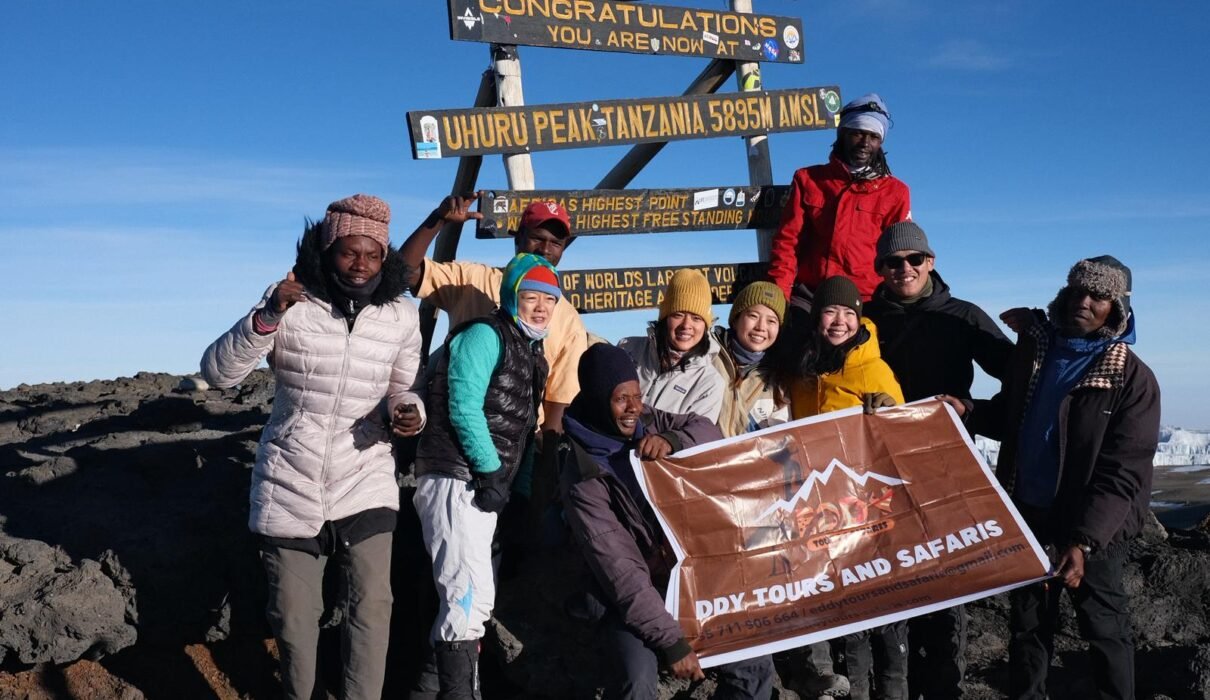
Joining a scheduled Kilimanjaro group climb is one of the most practical ways to take on Africa’s highest mountain. You travel with other trekkers who have chosen the same route and start date, while an experienced Tanzanian mountain team manages the logistics: park registration, guides, porters, food, tents or huts, safety checks and transport to the gate. It is social when you want company, but it remains a serious high-altitude trek that requires personal preparation and sensible pacing.
For 2027 and 2028, the best Kilimanjaro group climb date is not simply the first available space. It is the departure that matches your fitness, route preference, travel window and tolerance for rain, cold and other hikers. This guide explains how to choose a group departure honestly, why route length matters and what to confirm before paying a deposit. Exact group dates and places should always be confirmed directly before booking, because availability changes as other climbers join and flights are finalised.
What is a Kilimanjaro joining group?
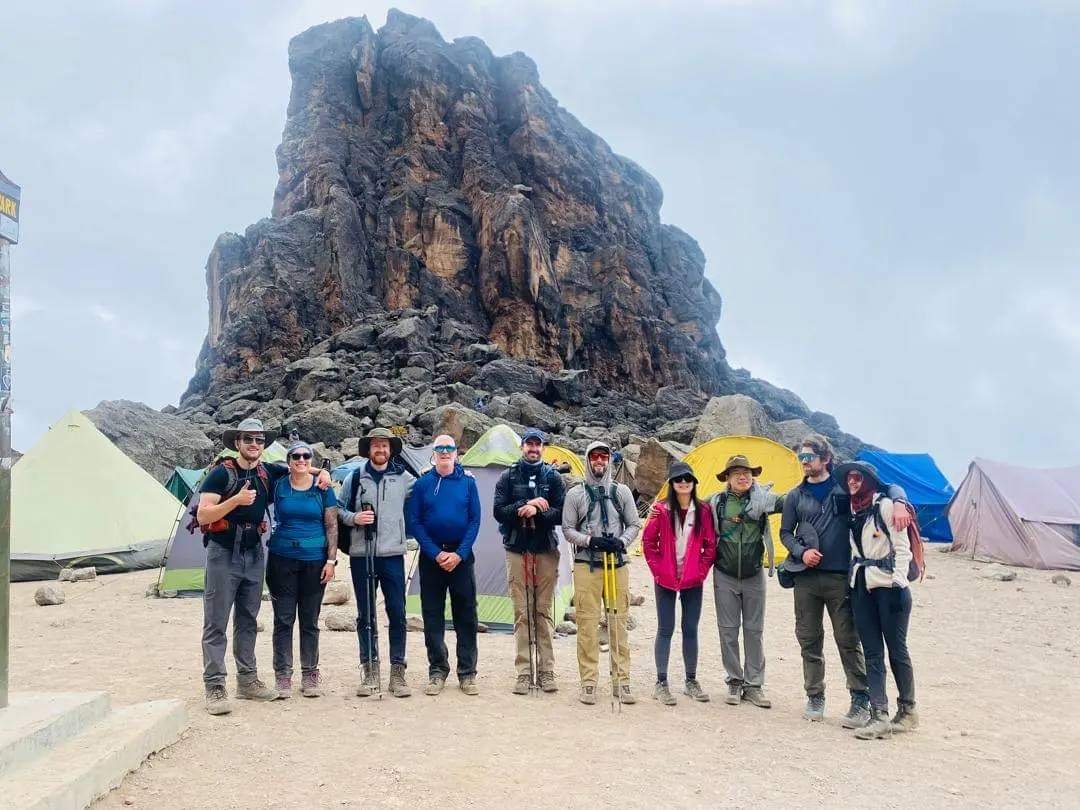
A joining group, sometimes called an open group or scheduled group departure, brings together individual travellers, couples or small parties on the same Kilimanjaro route and date. Everyone shares the mountain team and camp arrangements, while each guest has their own personal gear, sleeping space and packing needs. Group size can vary; a smaller group often feels more personal, while a larger group can have a lively team atmosphere.
The key difference from a private climb is the start date. On a private climb, the dates and route are arranged around you. On a joining group, you choose from confirmed departures. That can reduce the cost per person and make it easier to meet people from different countries, but it also means you should not book a flight until the departure is confirmed in writing.
Why choose a scheduled group climb?
Many climbers choose a group departure for companionship. You share early starts, long walking days, camp meals and the anticipation of summit night with people who understand exactly what the challenge feels like. Encouragement from other trekkers can be helpful when the weather changes or the climb becomes tiring.
It can also offer good value. The fixed route allows the operator to plan staff, food and transport efficiently. However, price should never be the only deciding factor. Kilimanjaro park fees, fair crew support, food, tents, safety equipment and qualified guides all cost money. A very low price may reflect shortcuts in areas that matter. Ask what is included and whether staff are properly supported rather than comparing only the headline figure.
A group climb still needs individual attention. Every hiker acclimatises differently. The guide should check how you feel, encourage a steady pace and make safety decisions based on symptoms, not on pressure to keep the whole group moving. No operator should promise that every person will reach the summit; good trekking practice puts health first.
Best Kilimanjaro group-climb seasons for 2027/2028
Kilimanjaro can be climbed throughout the year, but weather affects trail conditions, views and the kind of group you may join. The main dry periods are generally January to early March and June to October. These are popular times for scheduled departures because trails are often drier and views can be clearer. They are not weather guarantees: rain, wind and cold can occur at any time on a mountain of this height.
January and February are warm on the lower slopes and can offer clear mornings, though afternoons may bring cloud. June to October is generally cooler and drier, with July through September often in particularly high demand. These months suit travellers who prefer firmer trails and have flexible booking lead time, but camps can be busier.
March to May is the long-rain period. Climbs are still possible, particularly on quieter routes, but muddy trails and persistent rain are more likely. November and December often bring shorter rains. These shoulder months can be appealing for travellers who want fewer people on the mountain and are comfortable with changing conditions. The right date is the one you can prepare for properly, not simply the driest-looking date on a chart.
Which Kilimanjaro route is best for a group climb?
Machame Route: sociable and scenic
Machame is one of the most popular Kilimanjaro group routes. It is scenic, climbing through rainforest, moorland and the volcanic Shira Plateau before reaching the higher desert and summit slopes. It normally takes six or seven days. The seven-day option allows an extra acclimatisation day and is usually the wiser choice for first-time high-altitude trekkers.
Because Machame has frequent departures, it is often easier to find a suitable joining group. It can also be busy in high season. The trail involves some steeper sections, including the Barranco Wall, which requires steady movement and confidence but is not technical climbing.
Lemosho Route: a longer acclimatisation-focused choice
Lemosho usually takes seven or eight days and begins on the quieter western side of Kilimanjaro. It crosses the Shira Plateau before joining sections of the Machame trail. The extra days and gradual approach make it a strong route for climbers whose priority is acclimatisation and scenery rather than the shortest possible itinerary.
Group departures on Lemosho can cost more because of the longer schedule, but many climbers feel the pace is worth it. An eight-day Lemosho climb is particularly suitable for people who can allow more time and want to reduce the pressure of rapid altitude gain.
Marangu Route: hut accommodation
Marangu is known for using mountain huts rather than tents. It normally follows the same route up and down, and six days is preferable to the shorter five-day version because of acclimatisation. Hut accommodation can suit travellers who do not want to camp, but it also means shared sleeping spaces and a busier trail in popular periods.
Do not choose Marangu only because someone calls it “easy.” Kilimanjaro has no easy route. The summit altitude is the same whichever route you take, and the shorter itinerary can make acclimatisation harder.
Rongai Route: quieter northern approach
Rongai approaches Kilimanjaro from the north and is often drier than southern routes during wetter periods. It is generally less crowded and descends via Marangu. The route usually takes six or seven days. It is a good option for climbers who value a quieter trail and a different perspective of the mountain.
Northern Circuit: the longest standard route
The Northern Circuit commonly takes eight or nine days and circles around the northern slopes before joining the summit approach. It provides the most time at altitude among the standard routes and has a quieter feel, but it requires more days, a larger budget and a commitment to the longer expedition.
Why route length matters more than summit promises
The biggest challenge on Kilimanjaro is altitude, not technical climbing. As you rise, the air contains less oxygen. A person may be very fit at sea level and still feel headache, fatigue or nausea at high camp. Extra days allow the body more time to adjust. This is why a seven-day Machame climb, an eight-day Lemosho climb or a longer Northern Circuit itinerary is often a better choice than the fastest possible route.
Never book a group solely because it advertises a high success rate. Ask how the rate is calculated, whether it applies to the exact route length, and what the guides do when someone develops altitude symptoms. A responsible answer will mention daily health checks, hydration, controlled pace and descent when necessary—not a guarantee that determination will overcome illness.
How to choose your 2027/2028 group departure
First, decide how many days you can genuinely allow. Include at least two nights in Moshi or Arusha before the climb if possible: one to arrive, one for the briefing and gear check. After the climb, keep at least one recovery night before a safari or international flight. Delays, fatigue and weather are easier to manage when you are not trying to connect to a flight on the day you leave the mountain.
Next, choose the route length before choosing the exact date. If you are a first-time high-altitude hiker, do not sacrifice acclimatisation days just to save one night of accommodation. Then ask whether the departure is confirmed, how many guests are booked, which hotels are included before and after the trek, and whether airport transfers are part of the quotation.
Finally, make sure your fitness plan matches the route. A group’s pace is measured, but you must be capable of walking for several hours on consecutive days with a day pack. Train for endurance, uphill walking and downhill control—not just gym strength or fast running.
Training for a group Kilimanjaro climb
Begin structured training at least eight to twelve weeks before departure if you can. Walk or hike regularly, gradually increasing duration and elevation gain. Long weekend hikes, stairs, hill repeats and incline treadmill sessions are all useful. Add steady cardio sessions such as cycling, swimming or jogging, plus leg and core work: step-ups, squats, lunges, calf raises and balance exercises.
Practise in your actual hiking boots. Blisters can become a serious problem when you must walk every day. Build up to carrying a light day pack with water, snacks and extra layers. If you plan to use trekking poles, learn how to use them before travel; they are especially helpful on long descents and uneven ground.
What your group-climb package should include
Exact inclusions vary, but a clear Kilimanjaro joining-group quotation should state the following:
- Kilimanjaro National Park entry, camping or hut and rescue-related fees as applicable
- Professional mountain guide, assistant guides, cook and porters
- Mountain accommodation: tents and sleeping arrangements, or Marangu huts
- All meals during the climb and safe drinking water
- Group safety equipment and routine health monitoring
- Transfers between your Moshi/Arusha hotel and the park gates
- Pre-climb briefing and gear check
- Government taxes and any specified VAT
Ask whether sleeping bags, trekking poles, boots and personal clothing are included or available for rent. They are often excluded, which is normal, but you should know before arrival. Also ask about the tipping guidance for the mountain crew. Tips should be handled transparently and fairly, separate from the package price unless stated otherwise.
What to pack
Kilimanjaro conditions range from warm rainforest to freezing summit temperatures. You need broken-in waterproof boots, good socks, base layers, insulated jacket, fleece, waterproof jacket and trousers, warm gloves, hat, sunhat, sunglasses, headlamp with spare batteries, sleeping bag suited to cold conditions and a day pack. A duffel bag is normally carried by porters within the permitted weight allowance, while you carry daily essentials.
Keep your water bottles, rain gear, medication, snacks, camera and a warm layer accessible. A full equipment list should be checked at the briefing. Renting may be an option for some items, but fit and quality matter; avoid relying on an untested pair of boots for your summit attempt.
Life on a joining-group climb
Group life on Kilimanjaro is simple and purposeful. Mornings begin with a wake-up call, hot drink and breakfast before the team packs camp. During the day, hikers spread out slightly according to walking rhythm, but the guide keeps the group connected and checks on everyone. Lunch may be at camp or packed for a longer stage. In the evening, you have time to wash, drink tea, eat dinner and prepare layers for the next morning.
You do not need to be the fastest hiker in the group. The best group climber is usually the person who keeps a comfortable, steady rhythm and speaks up when something feels wrong. Avoid comparing yourself constantly with another trekker. One person may be strong on uphill sections, another may cope better with cold or altitude. The guides set the pace for safety, not for competition.
Be considerate in shared camp areas. Keep your belongings organised, respect quiet time, use your headlamp carefully around other tents and follow the guide’s guidance on water use and toilet facilities. A friendly group atmosphere often develops naturally, but everyone also needs personal space after a long day.
Before you confirm a departure
Ask for a written itinerary showing every night on the mountain, the route, the hotel nights that are included, the start and end transfers, and all park charges. Check the minimum number of trekkers required for the group to operate and what happens if the group does not reach that number. Also confirm the cancellation and postponement terms before booking flights.
It is wise to arrive in Tanzania at least one day before the trek. The briefing is important: the guide checks your equipment, answers questions and reviews health and safety procedures. This extra day also protects you if an international flight is delayed. After the trek, a recovery night in Moshi or Arusha gives you time for a shower, clean clothes and rest before continuing to safari or flying home.
Combine your group climb with a Tanzania safari
Many climbers add a safari after Kilimanjaro. It works well because you can rest in a comfortable vehicle while seeing Tarangire elephants, Ngorongoro Crater wildlife, Lake Manyara’s forest and the Serengeti plains. A short two- or three-day safari is enough for some travellers; others add several Serengeti nights or finish with Zanzibar beach time.
Plan the mountain first, then the safari. Summit day can be tiring, so a rest night after the descent is usually better than starting a long drive immediately. Share your available dates and we can build the most sensible combined itinerary rather than forcing too many places into a short holiday.
That extra planning time also makes travel feel calmer from the first airport transfer to the final departure day.
Altitude safety: the rule that matters most
Listen to your body and tell the guide about symptoms early. Headache, nausea, dizziness, poor coordination, unusual breathlessness or a persistent cough should never be hidden because you do not want to disappoint your group. Guides are trained to assess symptoms and decide whether slowing down, resting or descending is required. The summit is optional; coming down safely is not.
“Pole pole”—slowly, slowly—is more than a local phrase. It is the correct strategy. Walk at a controlled pace, drink regularly, eat what you can and sleep whenever possible. A supportive group can help morale, but it must never pressure an unwell person to continue.
Book a confirmed Kilimanjaro group date
Group departure spaces for 2027 and 2028 will change as climbers book, routes fill and travel plans move. Rather than publishing dates that may already be unavailable, Eddy Tours & Safaris will confirm the current joining-group departures, route length, availability and total inclusions for your preferred month. We can also arrange a private climb if the group schedule does not match your holiday.
Contact us through the Eddy Tours & Safaris contact page, call or WhatsApp +255 711 906 664, or email eddytoursandsafaris@gmail.com or sales@eddytours-safaris.com. For dedicated route advice and a tailored Kilimanjaro climbing plan, you may also visit Kilimanjaro Climb Specialist.